
 English
 русский
 Español
 Português


Xie Wenlan — Modular Bridge Project Sales Specialist
Large-Span Heavy-Load Railway Super Bailey Construction Support
Content
- 1 Designed for Large-Span Railway Construction
- 2 High Load Capacity for Demanding Temporary Works
- 3 Product Advantages Compared with Conventional Temporary Supports
- 4 Engineering Configuration and System Components
- 5 Advanced Manufacturing and Quality Management
- 6 Manufacturing Strengths of the Supplier
- 7 Application Areas in Railway and Infrastructure Projects
- 8 Installation and Project Execution Considerations
- 9 Technical Summary
- 10 Why Manufacturer Selection Matters
- 11 Cost and Life-Cycle Efficiency
- 12 Standards, Compliance, and Engineering Responsibility
- 13 Customer Support and International Supply
- 14 Frequently Asked Questions
- 14.1 What is the Deep River Railway Super Bailey Construction Support?
- 14.2 What is the maximum load capacity?
- 14.3 Why is the single-span design useful?
- 14.4 Can the support be used for railway bridge construction?
- 14.5 Can it be used in tunnel projects?
- 14.6 Is the system reusable?
- 14.7 Does the product require a foundation design?
- 14.8 Can the manufacturer provide customized configurations?
- 14.9 What manufacturing capabilities support this product?
- 14.10 What standards can be considered for the product?
- 14.11 What information should a buyer provide for a quotation?
- 14.12 Is the 900-ton capacity suitable for every 39 m span arrangement?
- 15 Conclusion
- 16 References
- 17 Product: Large Span Heavy Load Railway Super Bailey Construction Support
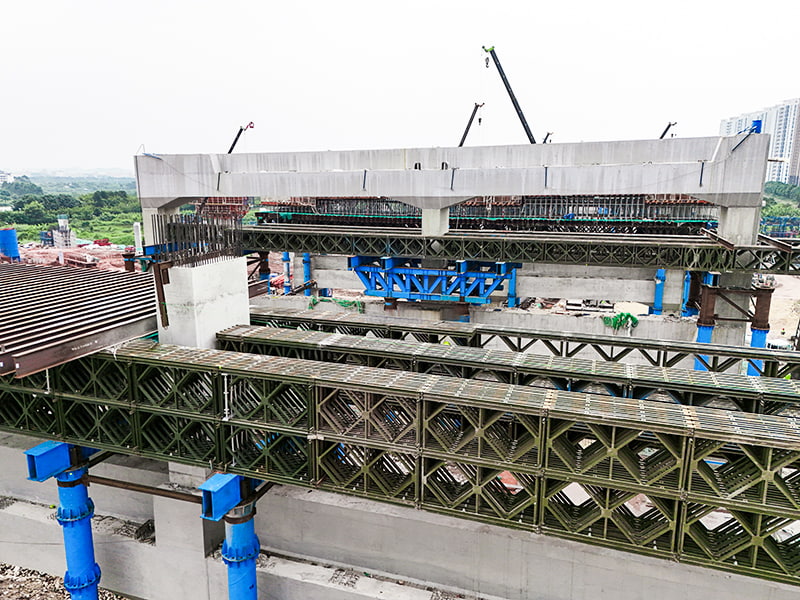
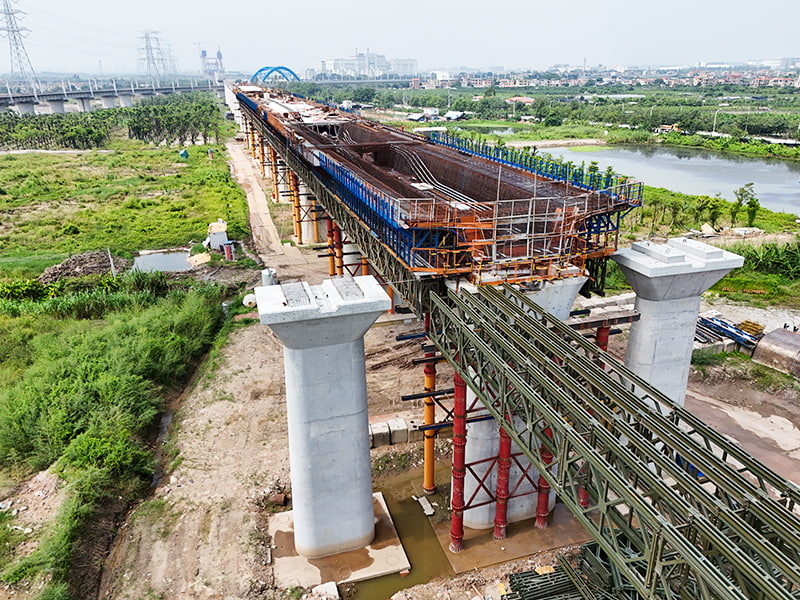
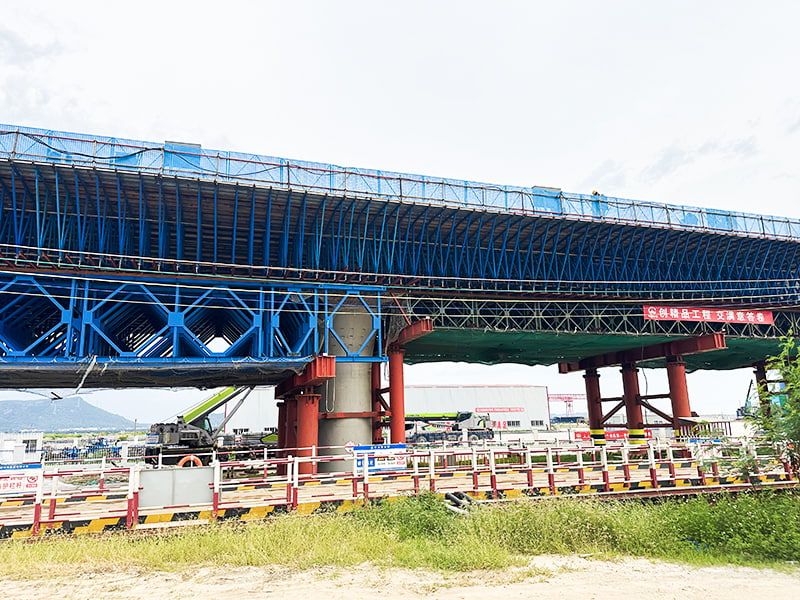
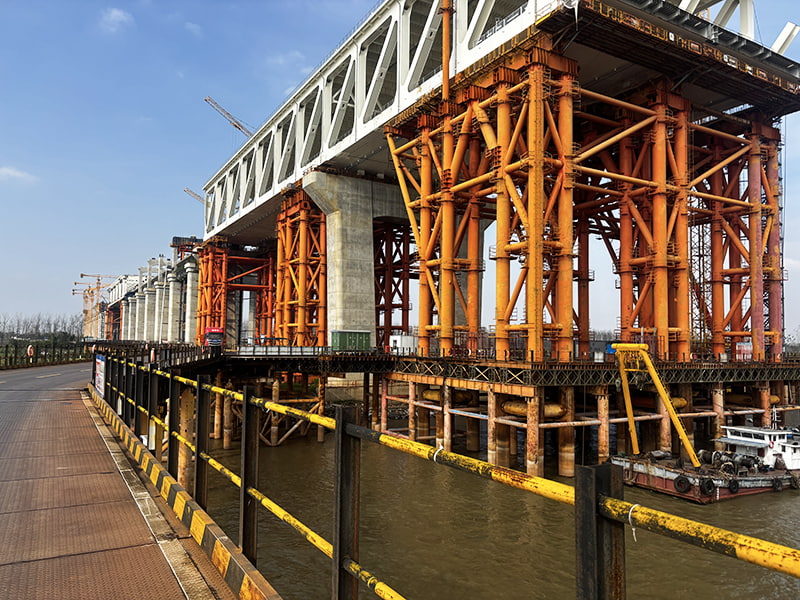
Modern railway construction requires temporary support systems that can carry exceptional loads while maintaining stability, alignment, and construction efficiency. As railway bridges, tunnels, viaducts, and associated structures become larger and more technically demanding, conventional temporary supports may not provide the required combination of span capacity, load performance, adaptability, and installation speed. The Deep River Railway Super Bailey Construction Support has been developed for precisely these conditions. It is a large-span, heavy-load support solution designed for major railway engineering projects where dependable temporary structural performance is essential.
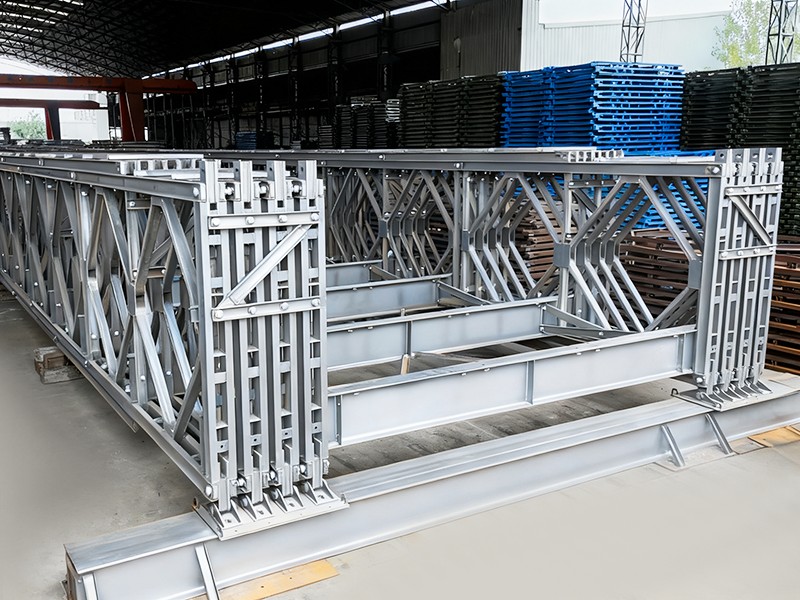
Built around advanced 4 m by 2 m super Bailey panels, the system provides a robust modular framework for demanding construction environments. Its single-span configuration can reach a total length of up to 39 m, while its maximum rated load capacity can reach 900 tons, depending on the specific engineering arrangement and project conditions. These characteristics allow the support system to accommodate heavy construction equipment, temporary works, materials, formwork, and other concentrated or distributed loads used during railway construction.
The product combines the practical advantages of modular steel construction with the enhanced capacity required for large-scale infrastructure work. Instead of relying on a completely custom-built temporary structure for every project, contractors can use standardized but configurable panels and supporting components to create an engineered system that is adapted to the required span, load, access conditions, and construction sequence. This approach helps reduce fabrication complexity, improve site organization, and accelerate project preparation.
Jiangsu Zhonghai Bridge Equipment Co., Ltd. manufactures this type of specialized Bailey construction support as part of its broader portfolio of modular steel bridges, Bailey bridge systems, bridge erection equipment, customized steel components, and precision-fabricated structural products. The company integrates engineering design, material processing, welding, quality control, assembly support, and international delivery into one manufacturing and service process. This integrated capability is particularly valuable when a temporary railway support system must be delivered according to a strict construction schedule.
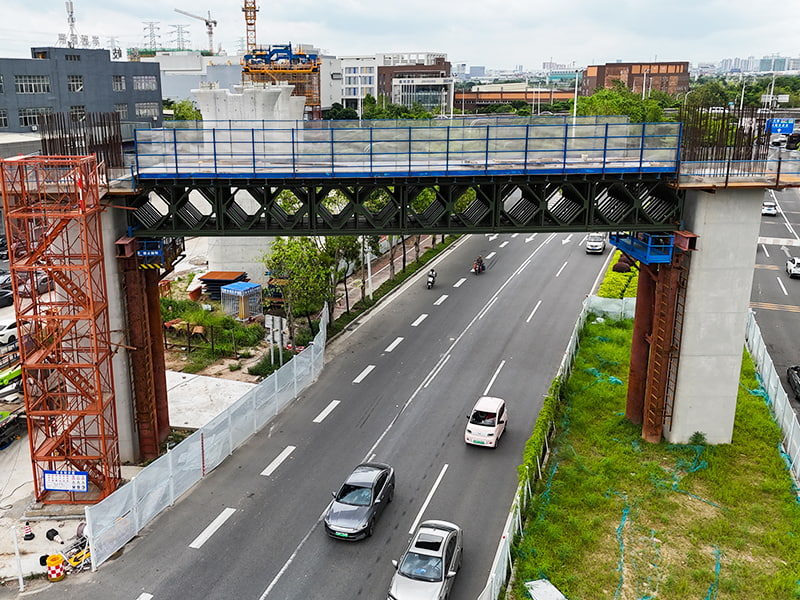
Large Span Heavy Load Railway Super Bailey Construction Support
Designed for Large-Span Railway Construction
Railway construction sites often involve restricted working areas, complex terrain, active transportation corridors, water crossings, deep excavations, and large lifting operations. A temporary support system must therefore perform more than a basic load-bearing function. It must also preserve working clearance, maintain structural geometry, accommodate construction machinery, and provide predictable behavior during successive stages of the project.
The Deep River Railway Super Bailey Construction Support addresses these requirements through a single-span arrangement with a maximum overall length of up to 39 m. A long single span can be advantageous where intermediate supports would interfere with excavation, river flow, road traffic, railway operations, equipment movement, or the construction of permanent foundations. By reducing the need for support points within the working area, the system can simplify site logistics and help create a more open construction zone.
The 39 m span capability is especially relevant to railway bridge and tunnel projects that require temporary support over broad workspaces. It can be considered for supporting heavy temporary platforms, bridge components, construction frames, launching operations, material handling areas, or other engineered temporary works. The final arrangement must always be verified through project-specific structural calculations, but the underlying modular configuration provides a strong starting point for large-span applications.
Unlike light-duty temporary access systems, this product is intended for heavy construction support. Its design emphasis is not only on access for personnel or vehicles, but also on the controlled transfer of substantial loads through a steel truss-based support arrangement. The system is therefore suitable for projects in which temporary works are exposed to high reactions, concentrated equipment loads, repeated loading cycles, or demanding construction sequences.
Why a Single-Span Arrangement Matters
A single-span support configuration can offer several practical benefits. First, it may reduce the number of temporary foundations or towers required within the central work area. Fewer internal support points can reduce excavation, foundation preparation, obstruction, and coordination with other trades. Second, a clear span can improve the movement of machinery and materials beneath the support. Third, it can reduce the risk that temporary columns will conflict with permanent structural elements or underground utilities.
For railway work near watercourses, highways, or existing tracks, a clear span may also help preserve operational clearance. This does not mean that every project should use a single span, because site conditions and load distribution must be evaluated by qualified engineers. However, the ability to configure a super Bailey support for a long single span gives contractors and designers a valuable option when intermediate supports are impractical.
High Load Capacity for Demanding Temporary Works
The system offers a maximum load capacity of up to 900 tons, making it suitable for heavy railway construction applications that exceed the capability of ordinary modular supports. This capacity is a central product advantage because temporary construction structures are often required to carry loads that are much greater than those associated with ordinary pedestrian or light vehicle access.
Heavy loads in railway construction may include lifting equipment, launching machinery, steel segments, precast concrete units, reinforcement assemblies, formwork, construction platforms, hydraulic equipment, material storage, and temporary transfer structures. In some cases, loads are not evenly distributed. A crane, trolley, gantry, or hydraulic jack may introduce high concentrated reactions at specific panel nodes or support points. A heavy-load Bailey support must therefore be evaluated not only for total capacity, but also for load position, local effects, deflection, stability, connection performance, and load transfer.
The 900-ton maximum stated for this product represents a high-capacity engineering potential rather than a universal value for every configuration. Actual permissible loading depends on span length, panel arrangement, bracing, support conditions, connection details, loading pattern, wind exposure, construction sequence, foundation capacity, and other project variables. The correct engineering practice is to confirm the applicable load rating through a project-specific design review before installation and use.
Even with this qualification, the available capacity provides a significant advantage over lighter modular support systems. It allows the product to be considered for major infrastructure projects where contractors need a temporary steel support with a high reserve of structural capability. When appropriately engineered, the system can reduce the need to divide heavy operations into multiple smaller stages or to create numerous independent temporary structures.
Stable Load Transfer Through Modular Steel Panels
The 4 m by 2 m super Bailey panels form the principal modular elements of the support system. Their standardized geometry supports repeatable fabrication, easier inspection, organized transport, and efficient assembly. When connected into a properly designed arrangement, the panels create a truss-based load path that transfers loads toward the end supports and foundations.
Modular truss panels are useful because they combine geometric efficiency with practical site assembly. The open truss form can provide a favorable strength-to-weight relationship, while the panelized construction allows the overall support length and configuration to be adjusted. Engineers can use multiple panels, bracing elements, transoms, deck components, and connection accessories to suit the intended use.
For heavy railway works, load transfer should be considered as a complete system. The panels are only one part of the structural arrangement. Bearings, end supports, temporary foundations, lateral restraints, bracing, lifting points, deck beams, connection pins, and load distribution components must all work together. The performance of the final support depends on the interaction between these components and the site conditions.
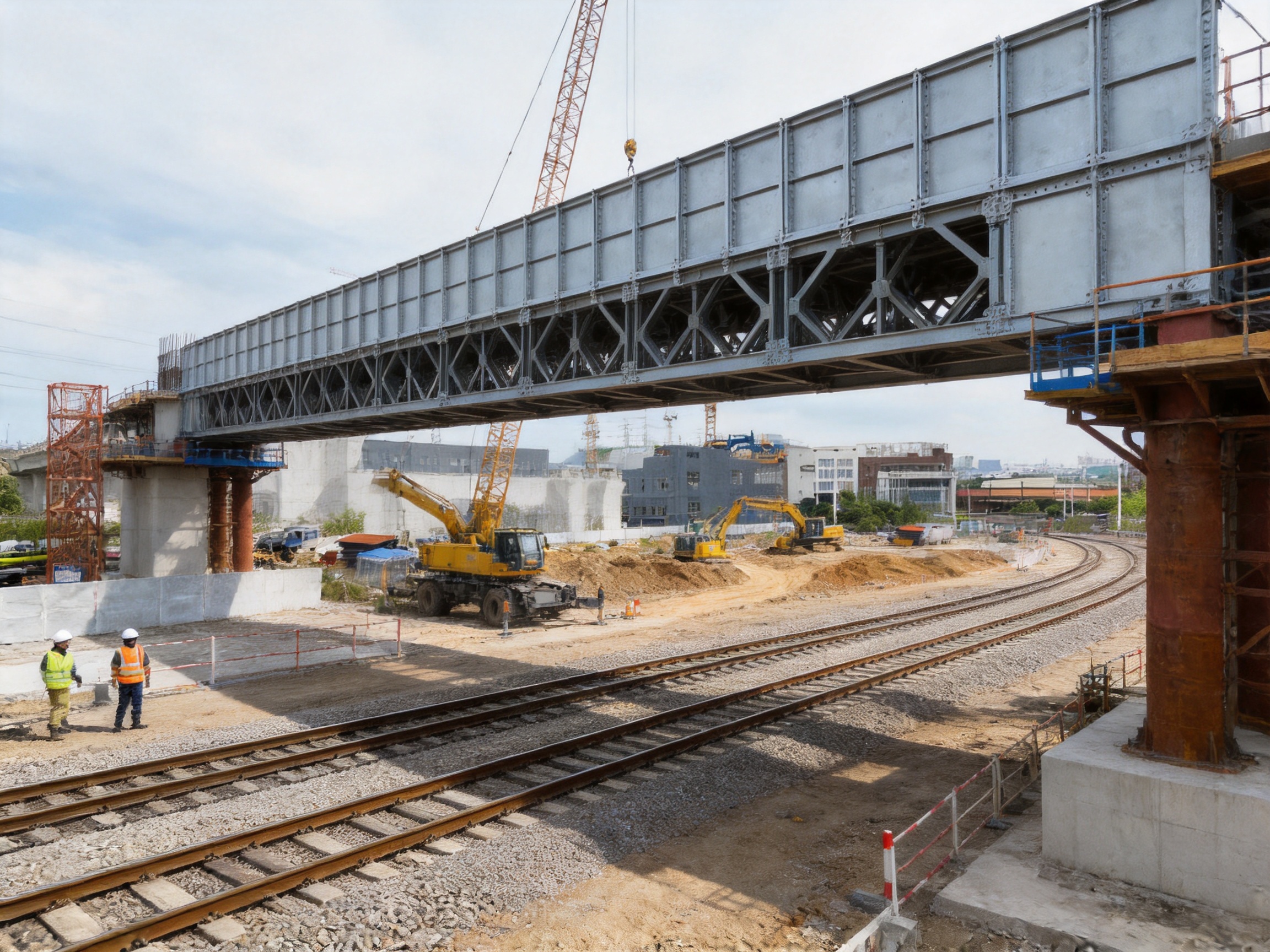
Product Advantages Compared with Conventional Temporary Supports
The Deep River Railway Super Bailey Construction Support offers a number of advantages when compared with conventional temporary steel frames, light-duty modular bridges, or fully site-fabricated support structures. These advantages arise from its combination of high capacity, modularity, long-span potential, standardized manufacturing, and suitability for heavy construction conditions.
1. Greater Span Flexibility
A support system capable of reaching up to 39 m in a single-span arrangement can provide more flexibility than short-span temporary frames that require closely spaced intermediate columns. This is particularly useful when the area below the support must remain accessible or unobstructed. Contractors may be able to maintain a larger working envelope for excavation, equipment circulation, material delivery, or permanent structural construction.
The modular nature of the system also allows the length to be adjusted to project requirements. Rather than treating every support as a completely unique structure, designers can select an appropriate number of panels and supporting elements within the limits of the engineering design. This repeatability helps simplify planning and reduces the time required to develop a constructible temporary works arrangement.
2. High Capacity for Heavy Equipment
Many conventional temporary platforms are designed for personnel, light vehicles, or moderate construction loads. They may not be suitable for railway projects involving heavy lifting, bridge launching, large precast components, or concentrated machinery reactions. With a potential load capacity of up to 900 tons, the super Bailey support is positioned for substantially heavier duties.
High capacity also provides greater flexibility in construction sequencing. A contractor may be able to place several heavy operations on one engineered support system rather than constructing separate platforms for each stage. This can reduce the amount of temporary steel required in the overall work area and improve coordination between construction activities.
3. Faster Assembly Than Fully Custom-Fabricated Frames
A fully welded temporary frame fabricated entirely for one site can require extensive measurement, cutting, welding, trial assembly, surface treatment, transportation, and field modification. Modular Bailey construction reduces this dependence on site-specific fabrication. Standardized panels and accessories can be manufactured under controlled factory conditions and assembled at the project location using planned connection procedures.
Faster assembly does not mean that engineering controls can be omitted. The support must still be erected according to approved drawings, lifting plans, inspection procedures, temporary bracing requirements, and load commissioning instructions. However, the modular principle can shorten the time between material arrival and structural readiness, particularly when the construction team is familiar with Bailey-type systems.
4. Reduced Site Disruption
Railway projects are frequently carried out in environments where disruption must be minimized. Construction may take place near operating lines, public roads, urban areas, waterways, or existing infrastructure. A modular support assembled from prepared components can reduce the amount of cutting, drilling, and welding required near the work zone. This can help improve site safety and reduce interference with adjacent activities.
The system may also be dismantled and relocated after one construction phase. Reusability is an important advantage of modular steel support equipment because it can lower the life-cycle cost of temporary works. Panels and components can be inspected, repaired if necessary, and deployed on future projects, subject to their condition and engineering suitability.
5. Consistent Manufacturing Quality
Factory production allows critical steel components to be manufactured using standardized procedures, controlled welding parameters, repeatable dimensional checks, and documented inspection processes. This is generally more consistent than relying on uncontrolled field fabrication under changing weather, access, and labor conditions.
For a high-load support system, dimensional accuracy is important. Panel geometry, connection holes, bearing surfaces, bracing points, and welded assemblies must be produced within specified tolerances so that the system can be assembled correctly. Controlled production helps reduce the risk of misalignment, forced connections, unplanned field modifications, and inconsistent component behavior.
Engineering Configuration and System Components
A super Bailey construction support is best understood as an engineered system rather than a collection of individual panels. The principal components may include 4 m by 2 m super Bailey panels, longitudinal connectors, transverse members, top and bottom bracing, end posts, support shoes, bearings, deck beams, load distribution plates, lateral restraint systems, and temporary foundation elements.
The exact component list depends on the intended application. A support used beneath a bridge launching arrangement may require different deck and bracing details from a support used for tunnel construction or heavy material storage. This configurability is one of the product’s major strengths, but it also means that the final design must be prepared for the actual loading and site conditions.
Panel Arrangement
The number and arrangement of panels determine the overall length, width, depth, and structural capacity of the support. Panels may be arranged in single or multiple lines, depending on the required load and stability. Multiple lines can increase the effective width and provide a broader load path for deck beams and equipment. The arrangement must account for connection forces, lateral stability, torsional behavior, and load distribution between adjacent panel lines.
For a long single span, deflection and stability become especially important. A structure may possess sufficient ultimate strength but still require control of service deflection to protect construction tolerances, equipment operation, or the geometry of the permanent work. Engineers may therefore specify additional bracing, transverse beams, pre-camber, controlled loading, or staged commissioning.
Bracing and Lateral Stability
Bracing helps maintain the geometry of the modular support and resists lateral movement, distortion, and torsional effects. Railway construction sites can be exposed to wind, vibration, eccentric loads, moving equipment, temporary impact, and changing load positions. The bracing arrangement should therefore be designed as an integral part of the support system.
Particular attention is required when heavy equipment travels across or operates on the supported structure. Moving loads can generate dynamic effects that differ from static load assumptions. Equipment travel paths, wheel loads, braking forces, acceleration, turning behavior, and potential impact should be included in the temporary works assessment. The support should not be used beyond its approved purpose without a technical review.
End Supports and Foundations
The end supports transfer reactions from the super Bailey span into the ground or permanent structural elements. These reactions can be very large when the support carries a high total load. Foundation design must therefore consider vertical reactions, horizontal forces, overturning effects, settlement, sliding, bearing pressure, drainage, and construction-stage stability.
A strong superstructure cannot compensate for inadequate foundations. The supporting ground must be investigated, and temporary foundations must be designed to maintain acceptable settlement and alignment. Where the system is placed on concrete abutments, pile caps, steel grillages, or other prepared supports, the interface must be checked for local bearing and connection behavior.
Advanced Manufacturing and Quality Management
Jiangsu Zhonghai Bridge Equipment Co., Ltd. combines engineering design, precision manufacturing, quality management, and project support in the production of modular steel bridge and construction support systems. This integrated manufacturing model is important for a product that must be delivered as a coordinated set of structural components rather than as unrelated steel parts.
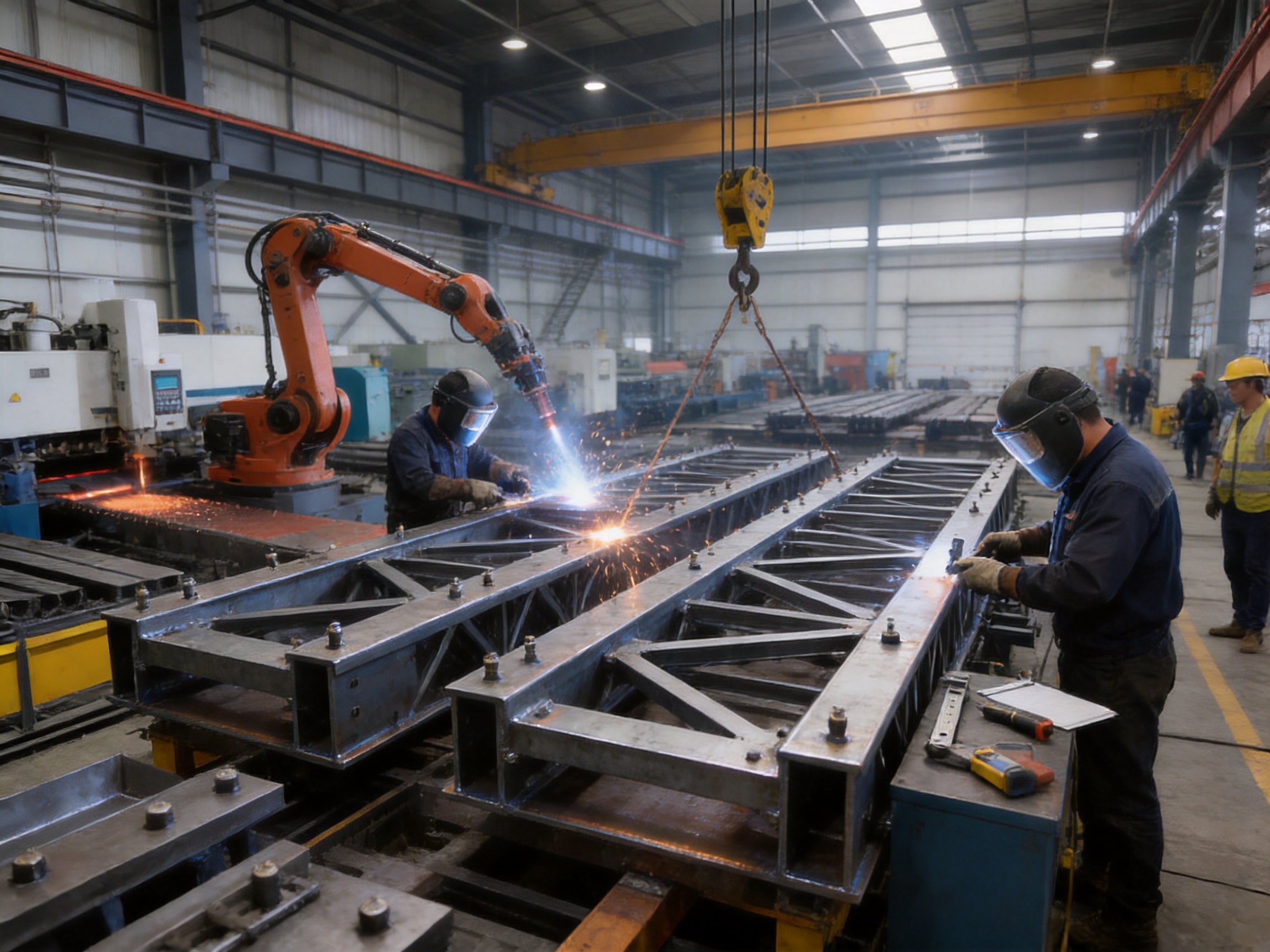
The company’s factory uses advanced automation and standardized workflows to produce high-strength modular bridge systems and engineered steel components. Automated and semi-automated processes can improve repeatability in cutting, forming, welding, and component preparation. Standardized workflows also make it easier to establish inspection points and maintain consistent production records.
Engineering Design Before Fabrication
Manufacturing quality begins with a clear engineering definition of the product. Before fabrication, the required span, load, support arrangement, panel configuration, connection details, bracing, material specifications, surface treatment, and inspection requirements must be established. Design coordination reduces the risk of producing components that do not match the intended site arrangement.
For customized railway support systems, engineering teams may review general arrangement drawings, loading diagrams, construction sequences, foundation conditions, lifting methods, transportation limitations, and site access. This design-led process helps connect the factory production plan with the contractor’s actual installation requirements.
Precision Steel Fabrication
Precision fabrication is essential for modular systems because many components must fit together repeatedly and accurately. Steel plates, rolled sections, pins, connectors, and bracing members require controlled dimensions and appropriate edge preparation. Accurate fabrication helps ensure that components can be assembled without excessive force or unplanned site adjustment.
In addition to dimensional control, steel fabrication must address weld quality, heat input, distortion, material traceability, and surface condition. Automated welding and controlled production procedures can support consistent weld execution, while qualified inspection personnel verify that finished components meet the specified requirements.
Automated Welding and Inspection
Welding is a critical manufacturing process for structural steel components. Automated welding can improve consistency in repetitive welds by controlling travel speed, welding current, electrode or wire feed, and other parameters. Manual welding remains valuable for complex details and areas that require skilled adjustment, but all welding should be performed according to approved procedures by qualified personnel.
Inspection may include visual examination, dimensional verification, weld inspection, material checks, coating inspection, and final assembly review. Depending on the project specification, non-destructive testing may be used for selected welds or critical components. The objective is to identify defects, confirm conformity, and provide confidence that the fabricated components are suitable for their intended structural role.
Surface Protection and Durability
Temporary construction supports are often exposed to rain, humidity, mud, dust, concrete residue, handling damage, and repeated assembly cycles. Appropriate surface preparation and protective coating can help slow corrosion and preserve the service condition of the steel. The required coating system should be selected according to the exposure environment, project duration, maintenance plan, and applicable specification.
Surface protection is also relevant to component reuse. Panels and accessories that are cleaned, inspected, repaired, and recoated when necessary can provide continued service on future projects. Proper storage and transport protection are equally important because damage to coatings or connection surfaces can occur before the system reaches the job site.
Manufacturing Strengths of the Supplier
As a manufacturer and OEM supplier, Jiangsu Zhonghai Bridge Equipment Co., Ltd. is positioned to support customers that require both standard modular bridge products and customized structural solutions. Its stated product scope includes modular steel bridges, Bailey bridge systems, customized steel components, bridge erection and construction support equipment, automated welding, and precision steel fabrication.
This range of capabilities can benefit railway contractors and engineering companies in several ways. A customer may require a complete support system, individual replacement components, special connection details, customized dimensions, or manufacturing based on supplied drawings. A supplier with design and fabrication capabilities can coordinate these requirements more efficiently than a distributor that only supplies off-the-shelf components.
The company is based in Zhenjiang, Jiangsu Province, an industrial and transportation hub with access to manufacturing resources and logistics networks. Its location supports the production and shipment of large steel assemblies and modular components for domestic and international projects. International delivery experience is particularly valuable for infrastructure contractors working under demanding schedules and cross-border procurement conditions.
The company reports experience supporting coastal engineering in the Maldives, temporary access bridges for the Shenzhen–Zhongshan Corridor, structural components for the Hangzhou Expo Center, multi-span Bailey bridges for the Lalin Railway, and flood-response and emergency bridge deployments in multiple regions. These applications demonstrate exposure to different project environments, including transportation infrastructure, coastal conditions, railway construction, major public works, and emergency response.
Application Areas in Railway and Infrastructure Projects
Railway Bridge Construction
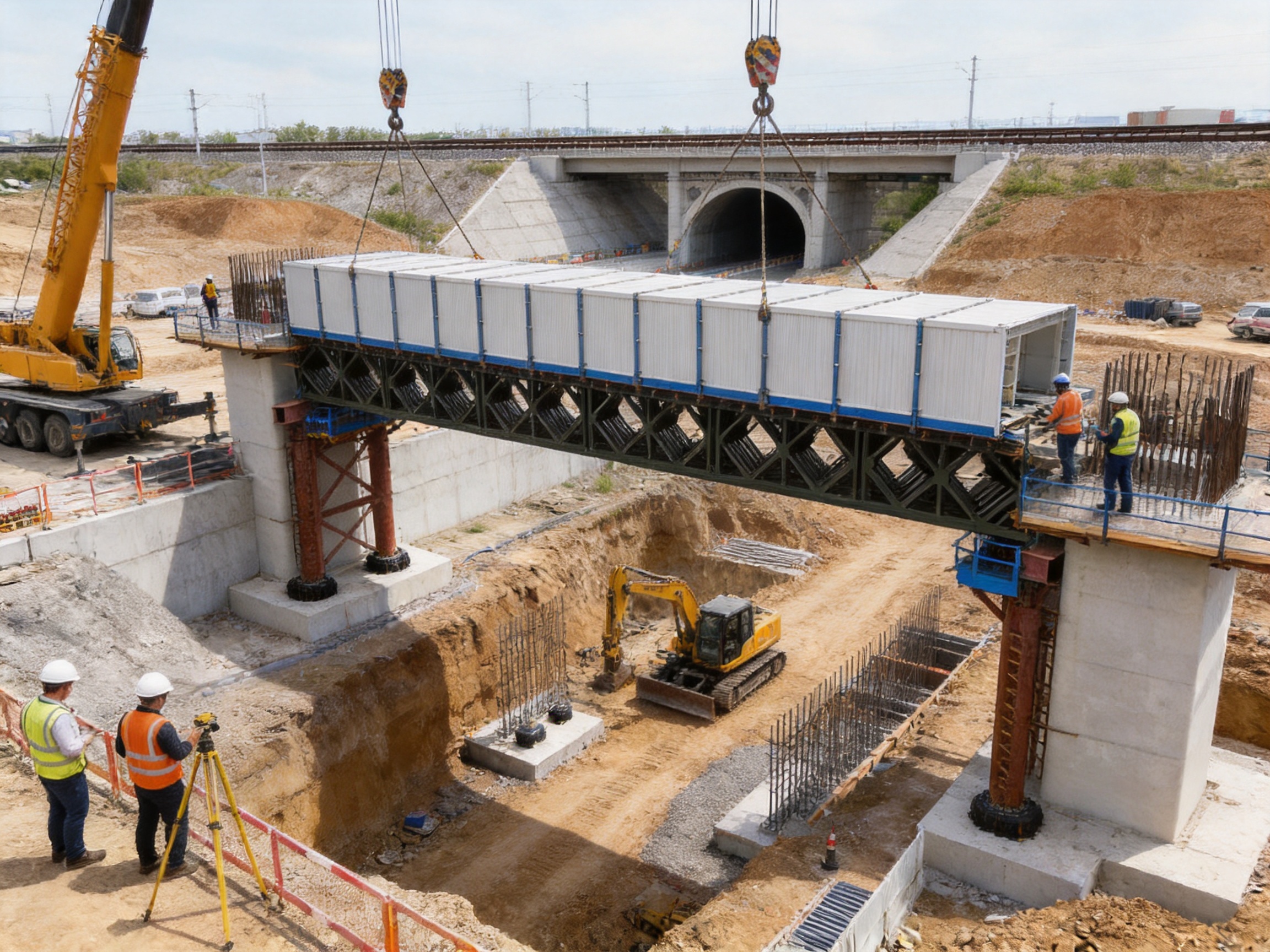
The support system can be considered for temporary works associated with railway bridge construction, including support for formwork, launching operations, steel erection, precast installation, material handling, and construction platforms. The long-span capability may be useful where the area beneath the bridge must remain open for roads, waterways, excavation, or equipment movement.
Railway bridge projects often require accurate control of elevation and alignment. Temporary supports may influence the position of structural components during assembly and connection. For this reason, the support should be installed on properly prepared foundations, surveyed before loading, and monitored during critical construction stages.
Tunnel Construction
Tunnel projects may require heavy temporary platforms, access structures, material support frames, or crossing arrangements near portals, shafts, and excavation zones. The 900-ton capacity potential can make the system suitable for supporting heavy machinery and construction materials when the configuration is engineered for the specific use.
In tunnel environments, access, ventilation, drainage, dust, and limited working space can affect the arrangement and maintenance of temporary supports. A modular system can be advantageous because components can be delivered in manageable units and assembled in stages. The final design should consider fire protection, evacuation routes, equipment clearance, and the possibility of impact from moving machinery.
Launching and Erection Support
Bridge launching and erection operations often involve temporary reactions that change as components move. A support system may be required to carry equipment during launching, provide a temporary runway, or stabilize structural elements before permanent connections are complete. These operations require careful sequencing because the location and magnitude of loads may change continuously.
The super Bailey construction support can provide a modular steel base for such operations when designed with suitable deck beams, guide systems, lateral restraints, and connection details. Engineering review should include the most unfavorable temporary stage rather than only the completed arrangement. Wind, braking, acceleration, lifting tolerances, and emergency stop conditions may also need to be considered.
Emergency and Disaster-Response Construction
Floods, earthquakes, landslides, and other emergencies can damage transport infrastructure and create an urgent need for temporary access and support. Modular Bailey systems are valued in emergency work because they can be transported, assembled, and adapted more rapidly than many permanent construction methods.
A heavy-load super Bailey support may be used where emergency reconstruction requires the movement of construction machinery, materials, and recovery equipment. Its applicability depends on available foundations, transport routes, local conditions, and the ability to perform a rapid but appropriate engineering assessment. Even under emergency conditions, load limits and assembly controls must be respected.
Installation and Project Execution Considerations
Successful use of a large-span temporary support depends on disciplined planning. Before delivery, the contractor should confirm the support location, access route, lifting equipment, foundation readiness, assembly area, storage conditions, and erection sequence. A component schedule should identify every panel, connector, brace, beam, bearing, and accessory required for the approved configuration.
During assembly, components should be checked against drawings and marked records. Connection pins, bolts, retaining devices, and bracing members must be correctly installed. Temporary stability should be maintained at every stage, particularly when the structure is partially assembled or when panels are being lifted into position.
After assembly, the support should be surveyed for line, level, bearing position, connection completeness, and foundation condition. Any unexpected gap, distortion, settlement, damaged coating, or connection difficulty should be investigated before loading. A controlled proof or commissioning process may be specified, depending on the project requirements and applicable standards.
Loading should begin only after the responsible engineer or authorized temporary works manager has confirmed readiness. Heavy equipment should follow the approved travel path and operating restrictions. Loads should not be stored outside designated areas, and unauthorized modifications should not be made to panels, braces, deck beams, or supports.
Inspection During Use
Temporary structures require inspection throughout their service period, not only at the time of installation. Inspections should be scheduled after severe weather, unusual loading, equipment impact, significant construction changes, or any report of movement or abnormal noise. Particular attention should be paid to connections, bearings, bracing, support foundations, deck surfaces, welds, and areas exposed to water or construction debris.
Monitoring may include visual checks, level surveys, displacement measurements, settlement observation, and inspection of load-transfer points. The inspection frequency should reflect the risk level, loading intensity, project duration, and environmental exposure. If movement exceeds the approved tolerance, the support should be unloaded or restricted until a technical assessment is completed.
Technical Summary
| Item | Product Information | Project Relevance |
|---|---|---|
| Product type | Large-span heavy-load railway super Bailey construction support | Designed for demanding temporary works in railway and major infrastructure construction |
| Primary panel size | 4 m by 2 m super Bailey panels | Provides a modular basis for repeatable fabrication and configurable assembly |
| Structural arrangement | Single-span support system | Can reduce the need for intermediate supports within the central work area |
| Maximum overall span | Up to 39 m | Suitable for large clear-span applications when confirmed by project engineering |
| Maximum stated load capacity | Up to 900 tons | Supports consideration for heavy equipment, materials, and construction operations |
| Main application areas | Railway bridges, tunnels, launching works, temporary platforms, and emergency infrastructure | Addresses complex construction environments and heavy temporary loading |
| Manufacturing capabilities | Engineering design, precision steel fabrication, automated welding, and quality management | Supports consistent production and customized project solutions |
| Supply model | Manufacturer and OEM supplier | Enables standard product supply, customized components, and project coordination |
Why Manufacturer Selection Matters
Choosing a temporary support supplier is not simply a matter of comparing steel tonnage or panel prices. The supplier’s ability to understand structural requirements, control production, provide documentation, coordinate logistics, and support installation can directly influence project performance. A high-capacity support system must be delivered as a reliable and traceable package.
A manufacturer with in-house engineering and fabrication capabilities can respond more effectively when project conditions require adjustments. For example, the contractor may need a revised panel arrangement, additional bracing, altered support interfaces, replacement components, or special shipping sections. Direct communication with the manufacturer can reduce coordination delays and help maintain consistency between the design, production, and installation teams.
Quality management is also important when components are intended for repeated use. Bailey panels and accessories may be assembled and dismantled several times during their service life. The manufacturer should provide appropriate material information, inspection records, connection details, maintenance guidance, and any relevant loading or assembly documentation required by the project.
Jiangsu Zhonghai Bridge Equipment Co., Ltd. presents itself as an engineering-oriented supplier rather than only a basic steel fabricator. Its stated experience covers modular bridge systems, structural components, bridge erection equipment, construction support products, and emergency deployment solutions. This broad focus supports its role as a technical partner for contractors, engineering companies, government infrastructure agencies, and international development projects.
Cost and Life-Cycle Efficiency
The economic value of a modular heavy-load support should be evaluated over the full project life cycle. Initial purchase or rental cost is only one factor. Other considerations include engineering time, fabrication lead time, transport, assembly labor, foundation requirements, site disruption, inspection, dismantling, refurbishment, storage, and future reuse.
Standardized 4 m by 2 m panels can help reduce the need for entirely bespoke fabrication. Reusable components may be deployed across several projects, improving the long-term return on investment. Modular assembly can also reduce the amount of hot work and field adaptation, potentially lowering labor and safety-management costs.
The long-span arrangement may provide additional savings where intermediate supports would otherwise require temporary piles, towers, foundations, traffic management, or waterway protection. The value depends on site conditions and the comparative cost of alternative methods, but a clear-span solution can be especially attractive in restricted or environmentally sensitive areas.
Life-cycle efficiency also depends on correct design and maintenance. Overloading, poor foundation preparation, damaged connections, or uncontrolled modifications can reduce service life and create expensive delays. A properly engineered and maintained Bailey support is more likely to deliver the intended economic benefits.
Standards, Compliance, and Engineering Responsibility
The company states that its factory produces high-strength modular bridge systems that comply with ASTM, EN, and national specifications. The applicable standard for a particular project should be confirmed during procurement and design review. The selected standard may govern materials, welding, structural calculations, fabrication tolerances, inspection, coating, loading, and installation.
Compliance should be demonstrated through appropriate technical documentation rather than assumed from product type alone. Project stakeholders may request material certificates, welding procedure qualifications, welder qualifications, inspection reports, dimensional records, coating data, design calculations, assembly drawings, and quality-control documentation.
Because this product is a temporary structural support, the contractor and responsible engineer must establish the design basis for every use. The stated 39 m span and 900-ton capacity are product-level reference values and do not replace project-specific calculations. The permissible load for a particular arrangement may be lower depending on the span, support condition, panel configuration, eccentricity, dynamic effects, and environmental factors.
Clear communication between the manufacturer, designer, contractor, and site supervisor is essential. The approved design should identify load limits, equipment restrictions, inspection requirements, erection stages, emergency procedures, and criteria for unloading or dismantling. This coordinated process ensures that the product’s structural capabilities are used safely and effectively.
Customer Support and International Supply
Infrastructure projects frequently involve multiple parties in different locations. A supplier must therefore be capable of communicating technical information clearly and coordinating production with international delivery schedules. Jiangsu Zhonghai Bridge Equipment Co., Ltd. provides engineering and manufacturing services from Zhenjiang, Jiangsu, China, and supports customers requiring modular steel bridge and construction support products for global projects.
Its experience in overseas and major domestic infrastructure applications indicates familiarity with the practical requirements of project-based supply. These requirements may include export packing, component labeling, shipping documentation, production inspection, drawing review, spare parts, and remote technical coordination. For a large support system, clear packing lists and identification marks are especially important because hundreds of similar components may need to be assembled in a precise sequence.
Customers can contact the company for project consultation, product configuration, OEM requirements, technical discussions, and supply inquiries. Early communication is recommended when the project involves a 39 m span, a high load near the stated maximum, unusual support conditions, restricted transport access, or a compressed construction schedule.
Frequently Asked Questions
What is the Deep River Railway Super Bailey Construction Support?
It is a modular steel temporary support system designed for large-span and heavy-load railway construction applications. It uses 4 m by 2 m super Bailey panels and can be configured as a single-span support with a total length of up to 39 m.
What is the maximum load capacity?
The product has a stated maximum load capacity of up to 900 tons. The actual allowable load for a project depends on the panel arrangement, span, bracing, support conditions, foundation capacity, load distribution, dynamic effects, and other design factors. A project-specific calculation is required before use.
Why is the single-span design useful?
A single-span arrangement can provide a clear workspace below the support and reduce the need for intermediate temporary columns. This may be beneficial over roads, waterways, excavations, operating transport corridors, or areas where internal supports would interfere with construction activities.
Can the support be used for railway bridge construction?
Yes. It is intended for major railway engineering applications and can be considered for bridge erection, launching support, formwork support, heavy construction platforms, material handling, and related temporary works. The final use must be confirmed by the project engineer.
Can it be used in tunnel projects?
Yes. The system may be suitable for temporary platforms, heavy equipment support, material support, and construction access near tunnel portals, shafts, and excavation areas. Tunnel-specific conditions such as ventilation, clearance, drainage, equipment movement, and emergency access must be included in the design.
Is the system reusable?
Modular Bailey panels and associated components are generally suitable for repeated assembly and dismantling when they are properly inspected, maintained, stored, and transported. Reuse must be based on the actual condition of each component and confirmation that it remains suitable for the intended configuration and load.
Does the product require a foundation design?
Yes. The end supports and foundations must be capable of resisting vertical and horizontal reactions, settlement, sliding, overturning, and local bearing effects. Foundation conditions are an essential part of the overall temporary works design.
Can the manufacturer provide customized configurations?
Jiangsu Zhonghai Bridge Equipment Co., Ltd. provides modular bridge systems, customized steel components, bridge erection equipment, and precision steel fabrication. Customers can discuss project-specific span, load, connection, support, and delivery requirements with the company’s engineering and sales team.
What manufacturing capabilities support this product?
The company integrates engineering design, precision steel fabrication, automated welding, standardized production workflows, quality management, and project support. These capabilities help produce repeatable modular components and customized structural assemblies.
What standards can be considered for the product?
The company states that its high-strength modular bridge systems can comply with ASTM, EN, and national specifications. The specific standard, material grade, inspection level, and documentation package should be confirmed for each project during technical review and procurement.
What information should a buyer provide for a quotation?
A buyer should provide the required span, maximum and working loads, load positions, support elevations, site conditions, intended application, panel arrangement if known, installation method, delivery location, project schedule, applicable standards, and any special requirements for coating, inspection, documentation, or OEM manufacturing.
Is the 900-ton capacity suitable for every 39 m span arrangement?
No. Span length and load capacity are related to the complete structural configuration. A 39 m span carrying a high load may require a particular panel depth, multiple panel lines, specialized bracing, suitable bearings, and strong foundations. The final allowable capacity must be confirmed through engineering calculations for the exact arrangement.
Conclusion
The Deep River Railway Super Bailey Construction Support is a high-capacity modular steel solution for railway and major infrastructure projects that demand long spans, substantial load performance, and dependable temporary structural support. Its 4 m by 2 m super Bailey panels, single-span capability, maximum length of up to 39 m, and stated load capacity of up to 900 tons make it suitable for consideration in heavy bridge, tunnel, launching, erection, and emergency construction applications.
Compared with lighter or fully site-fabricated alternatives, the system offers a combination of modular assembly, large-span flexibility, high load potential, reusable components, and controlled factory production. These features can help contractors reduce site disruption, simplify logistics, create clearer working areas, and improve construction efficiency when the system is properly designed and installed.
The product is supported by Jiangsu Zhonghai Bridge Equipment Co., Ltd.’s capabilities in engineering design, precision steel fabrication, automated welding, quality management, customized structural production, and international project delivery. This integrated approach enables the supplier to support both standard modular bridge requirements and specialized railway construction support applications.
For every project, the product should be selected and configured through a qualified engineering process that considers load cases, span, foundation conditions, stability, deflection, connections, construction sequence, environmental exposure, and applicable standards. When these requirements are addressed, the super Bailey support can provide a strong, adaptable, and efficient temporary works platform for complex railway infrastructure development.
References
1. Product technical information supplied for the Deep River Railway Super Bailey Construction Support.
2. Company information supplied by Jiangsu Zhonghai Bridge Equipment Co., Ltd.
3. General principles of modular steel bridge and temporary works engineering.
4. Standard practices for structural steel fabrication, welding quality control, and dimensional inspection.
5. General guidance for temporary support design, construction-stage loading, foundation verification, and site inspection.
6. Applicable ASTM, EN, and national specifications for structural steel, modular bridge systems, welding, and temporary construction works.
Product: Large Span Heavy Load Railway Super Bailey Construction Support

We respond quickly to all international requests and provide technical support when needed.
Product Category
Bailey Bridge/Modular Bridge Modular Steel Bridge Pedestrian Bridge Modular Pipe Bridge Truss Bridge Steel StructureContact Us

+86-511-84522866
+86-13921582699

zhwm@zjql.com

Building 1,83#, dantu New Town, Yanjiang Road, Dantu District, Zhenjiang, Jiangsu, China
Copyright © Jiangsu Zhonghai Bridge Equipment Co., Ltd. All
Rights
Reserved
China bailey bridge for sale
bailey bridge supplier from china
