
 English
 русский
 Español
 Português


Xie Wenlan — Modular Bridge Project Sales Specialist
CB 100 Double-Row Single-Layer Painted Bailey Bridge for Reliable Modular Access
Content
- 1 Product Overview
- 2 Structural Configuration and Engineering Logic
- 3 Suitability for Kyrgyzstan and Mountainous Regions
- 4 Professional Anti-Corrosion Protection
- 5 Advantages Compared with Less Standardized Bridge Solutions
- 6 Manufacturing Strengths and Production Capabilities
- 7 Key Product and Manufacturing Parameters
- 8 Installation and Erection Considerations
- 9 Operation, Inspection, and Maintenance
- 10 Applications Across Infrastructure and Industry
- 11 Why Factory-Controlled Production Matters
- 12 Customization for International Projects
- 13 Procurement Guidance for Buyers
- 14 Safety and Engineering Limitations
- 15 Environmental and Lifecycle Benefits
- 16 Q&A
- 16.1 What is the CB 100 Double-Row Single-Layer Bailey Bridge?
- 16.2 What does “double-row single-layer” mean?
- 16.3 Is the bridge suitable for heavy trucks?
- 16.4 Can the bridge be used as a permanent bridge?
- 16.5 Why is anti-corrosion painting important?
- 16.6 Can the bridge be customized for other spans?
- 16.7 How is a modular bridge transported?
- 16.8 What manufacturing capabilities support this product?
- 16.9 What should be prepared before installation?
- 16.10 How should the bridge be maintained?
- 16.11 Does the manufacturer provide international project support?
- 16.12 What standards can be used for the product?
- 17 Conclusion
- 18 References
- 19 Product: CB 100 Bailey Bridge Double-Row Single-Layer Painted Bailey Bridge
Reliable access infrastructure is essential wherever roads, rivers, construction zones, agricultural areas, and emergency routes must be connected quickly and safely. In regions with difficult terrain, severe weather, limited construction resources, or rapidly changing transportation requirements, a conventional permanent bridge is not always the most practical first solution. A modular steel bridge can provide a faster, more adaptable, and more economical alternative while still delivering dependable structural performance.
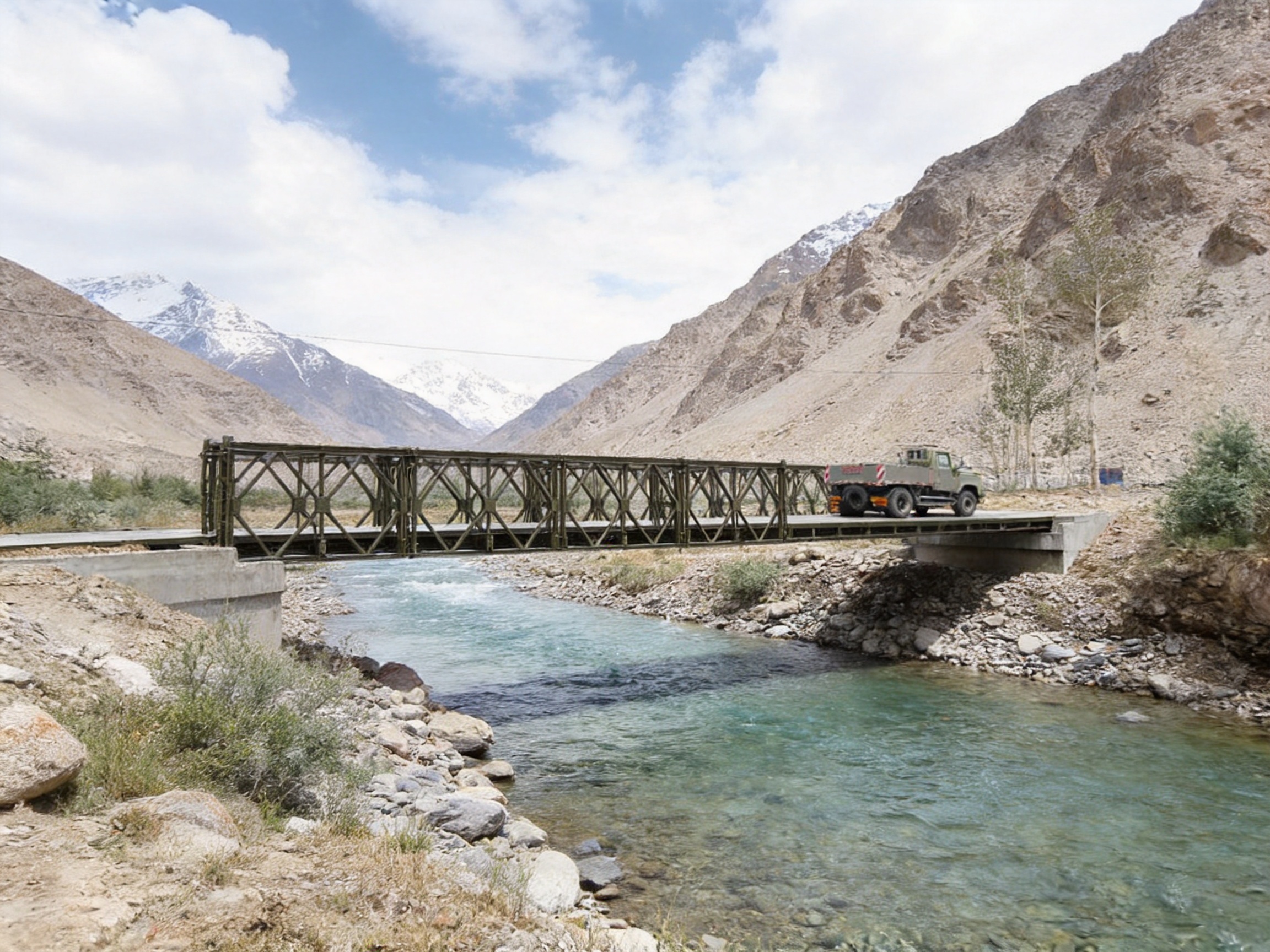
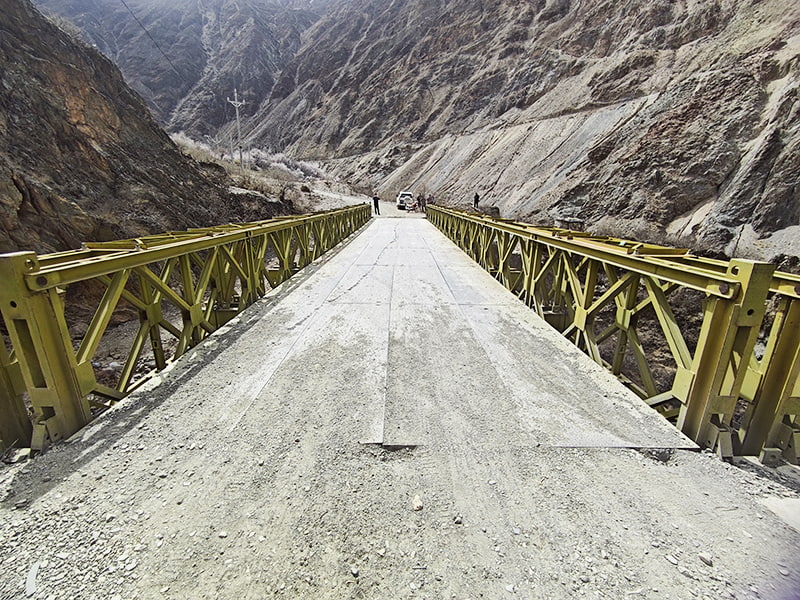
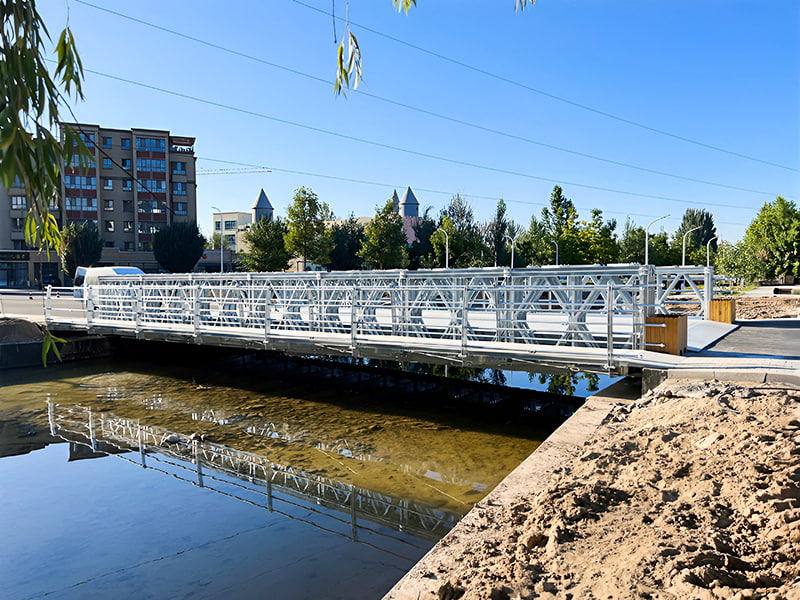
The CB 100 Double-Row Single-Layer Painted Bailey Bridge is a modular bridge solution developed for practical traffic and material transportation requirements. The featured bridge is an 18-meter configuration customized for Kyrgyzstan. It uses a double-row, single-layer Bailey truss arrangement designed to match the required passage span while maintaining a straightforward structure, efficient transportation, and comparatively rapid erection.
As a product manufactured by Jiangsu Zhonghai Bridge Equipment Co., Ltd., the bridge reflects the advantages of standardized modular engineering combined with project-specific customization. Its design is suitable for small vehicle traffic, material transport, temporary access, semi-permanent crossings, construction logistics, and emergency response. Professional anti-corrosion painting further improves its suitability for mountainous environments where rain, snow, humidity, and temperature changes can accelerate steel deterioration.
This article examines the product’s structural concept, manufacturing quality, environmental suitability, installation benefits, customization capabilities, and applications. It also explains how a disciplined production process can help a modular bridge compete effectively with less standardized alternatives and with conventional bridge construction methods.
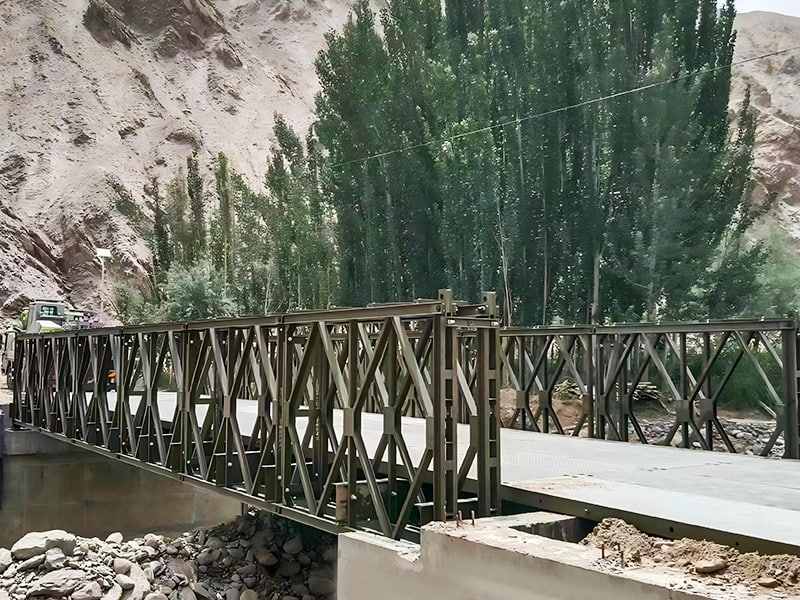
CB 100 Bailey Bridge Double-Row Single-Layer Painted Bailey Bridge
Product Overview
The CB 100 Bailey Bridge is based on a modular steel truss system. Instead of relying on a single, large, permanently fabricated bridge unit, the system consists of standardized components that can be manufactured, transported, assembled, and installed in a coordinated sequence. This modularity is one of the most important reasons Bailey bridge systems remain valuable in modern transportation and construction projects.
The featured configuration uses two rows of Bailey panels arranged side by side and one layer in height. This double-row single-layer layout provides a practical balance between structural capacity, material efficiency, and construction simplicity. The 18-meter bridge length is configured to match the required standard passage span for the Kyrgyzstan project. It is intended for small vehicles and material transportation rather than unrestricted heavy highway traffic, making proper load classification and engineering review essential before use.
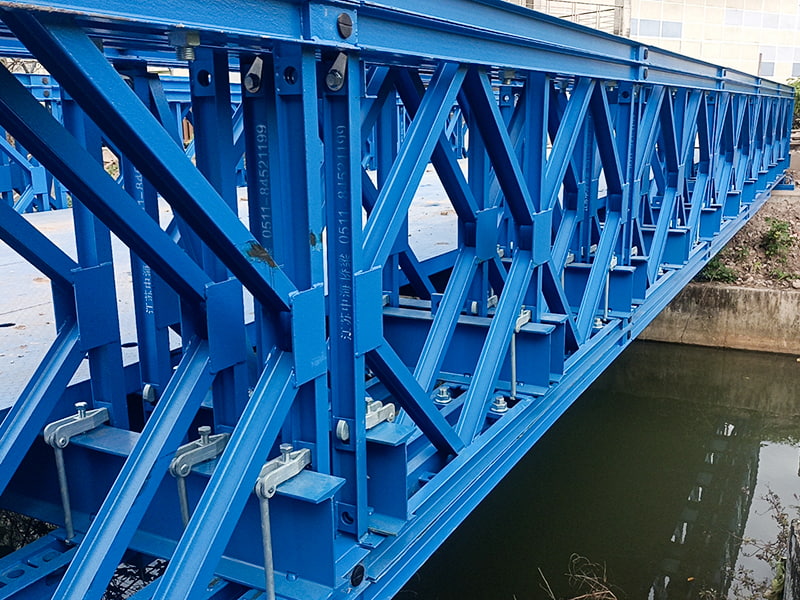
The main structural components are fabricated from steel and assembled into a truss system. Bailey panels, connecting pins, bracing members, transoms, deck components, and associated fastening elements work together to create a continuous load-bearing passage. Loads from vehicles and transported materials are transferred through the bridge deck to the transoms, then into the truss panels and finally to the supports and foundations at both ends.
Because the bridge is assembled from repeatable parts, the system can be adapted to different spans, widths, loading requirements, and site conditions. The same basic product family can support many types of projects, including temporary bypasses, construction access roads, flood relief routes, industrial connections, and remote-area transport links.
Structural Configuration and Engineering Logic
Double-Row Truss Arrangement
A double-row arrangement places two longitudinal rows of truss panels on each side of the deck or in the specified structural positions. This creates a broader and more stable load-bearing system than a single-row arrangement. The two truss lines work together through transoms, bracing, deck members, and connection hardware.
The configuration is particularly suitable when a project requires more capacity or stiffness than a basic single-row assembly can provide, while a heavier double-layer or multiple-story bridge would be unnecessary. Selecting the correct truss arrangement is a matter of balancing span, load, material availability, site access, erection equipment, and required service life.
For the 18-meter Kyrgyzstan bridge, the double-row single-layer design provides an efficient solution for small vehicle movement and material transport. It avoids unnecessary structural complexity while providing a more robust arrangement than a minimal single-line system. This can help reduce assembly time, simplify inspection, and control project cost.
Single-Layer Construction
The single-layer configuration uses one vertical level of Bailey panels. This makes the bridge easier to transport and assemble than a taller multi-layer arrangement. Components can generally be handled with smaller lifting equipment, subject to the site’s safety plan and the weight of individual members.
Single-layer construction can also reduce the amount of temporary bracing and alignment work required during erection. Fewer stacked panel levels mean fewer vertical connections, fewer points requiring close inspection, and a simpler visual inspection process after installation. These benefits are especially useful in remote areas where skilled labor, heavy cranes, and specialized tools may be limited.
However, the single-layer design must always be matched to the required span and design load. It should not be treated as a universal substitute for heavier bridge types. Project engineers must review vehicle weights, axle loads, traffic frequency, wind exposure, foundation conditions, approach geometry, and local regulations before final approval.
Modular Load Transfer
The modular truss is designed to distribute applied loads through a network of connected steel members. The deck supports the vehicle wheels or transported materials, while transoms transfer the load toward the longitudinal trusses. Panel chords and diagonals resist bending, shear, and axial forces generated by traffic and environmental effects.
Correct pin installation, bracing, deck placement, and bearing alignment are essential. The performance of a modular bridge depends not only on the quality of the steel panels but also on the accuracy of assembly. For this reason, standardized components and controlled manufacturing tolerances are important advantages. Components that fit consistently can reduce field modification, improve alignment, and make final inspection more efficient.
Suitability for Kyrgyzstan and Mountainous Regions
The featured bridge was customized for Kyrgyzstan, a country characterized by extensive mountainous terrain, changing elevations, remote settlements, seasonal weather variation, and challenging transport routes. In this environment, access infrastructure must often be delivered to areas where conventional construction is difficult or slow.
Mountainous projects can face narrow roads, steep approaches, unstable ground, limited staging areas, and restricted access for large construction machinery. A modular bridge helps address these difficulties because its components can be transported separately and assembled near the final crossing location. This reduces the need to move a fully fabricated bridge through difficult terrain.
Day and night temperature differences can be substantial in mountainous areas. Repeated temperature changes cause expansion and contraction in steel components and can influence deck movement, bearing behavior, connection stresses, and protective coatings. A properly engineered modular bridge must therefore be installed with appropriate clearances, bearing conditions, and inspection procedures.
Rain and snow can also increase the risk of corrosion, surface deterioration, and foundation erosion. The CB 100 bridge is treated with professional anti-corrosion paint to improve resistance to moisture and environmental exposure. Although paint is not a substitute for inspection or maintenance, a suitable coating system can significantly slow the corrosion process and help preserve the structural section of steel members.
Mountain streams and seasonal watercourses may change rapidly after heavy rainfall or snowmelt. Before installation, project teams should investigate hydraulic conditions, flood levels, scour risks, debris impact, and abutment stability. The modular bridge can provide a reliable crossing, but its overall performance depends on both the superstructure and the supporting civil works.
Professional Anti-Corrosion Protection
Corrosion protection is a major consideration for any steel bridge, especially one installed in a wet, snowy, or remote environment. Unprotected steel may develop surface rust, section loss, connection deterioration, and coating failure over time. These problems can increase maintenance requirements and shorten service life.
The CB 100 product uses professional anti-corrosion painting as part of its finishing process. The purpose of the coating is to isolate the steel surface from moisture and oxygen while improving resistance to rain, snow, humidity, and general atmospheric exposure. The coating also gives the bridge a more uniform finished appearance and makes areas of damage easier to identify during routine inspection.
A high-quality coating process normally depends on several factors. Steel surfaces should be cleaned and prepared to remove oil, mill scale, loose rust, dust, and other contaminants. Coating materials must be selected for the expected environment. Application thickness should be controlled, and sufficient curing time should be allowed before handling, packing, and transport. Edges, corners, weld zones, bolt areas, and connection surfaces require particular attention because these locations can be more vulnerable to coating discontinuity or mechanical damage.
During transport and assembly, painted surfaces may be scratched by lifting equipment, chains, stacking, or contact between components. These areas should be repaired in accordance with the coating specification before the bridge enters service. Periodic inspection should check for peeling, cracking, impact damage, rust staining, water accumulation, and corrosion around connections.
Compared with an untreated or poorly finished modular bridge, a professionally painted system can offer better long-term appearance and improved resistance to environmental deterioration. The advantage is especially meaningful for bridges intended to remain in service for several years or for structures installed in locations where frequent repainting is difficult.
Advantages Compared with Less Standardized Bridge Solutions
Faster Project Mobilization
One of the clearest advantages of a modular Bailey bridge is the ability to move from design to installation more quickly than with many conventional bridge construction methods. Standardized panels and fittings can be prepared in a factory while foundations and approaches are developed at the project site. Once components arrive, the bridge can be assembled through a planned sequence rather than fabricated entirely in place.
This approach can reduce the period during which communities, contractors, industrial facilities, or emergency services are separated by an obstacle. It can also help contractors maintain access to construction sites where a permanent bridge is still being designed or built.
Efficient Transportation
A modular bridge is transported as a collection of manageable components instead of as one oversized structure. This can reduce transportation restrictions, simplify loading and unloading, and make delivery to remote areas more practical. The advantage is particularly important in mountainous regions, where road widths, turning radii, bridge clearances, and vehicle capacities can limit the movement of large prefabricated structures.
Efficient packing also helps reduce wasted space during shipping. Standard components can be organized, counted, and protected before dispatch. Clear packing lists and component identification systems can further improve site logistics and reduce the chance of missing parts during assembly.
Adaptable Configuration
Unlike a one-off fixed structure designed for only one exact situation, a modular Bailey bridge system can be adapted to different project requirements. Components can be combined into different bridge lengths and truss arrangements, provided the final design is verified by qualified engineers.
This adaptability makes the product suitable for contractors, government agencies, disaster-response organizations, industrial operators, and infrastructure developers that require more than one bridge configuration. A component inventory can potentially support several projects, reducing the need to purchase an entirely new structural system for each crossing.
Reduced Field Fabrication
Field fabrication is often affected by weather, site access, temporary power, labor availability, and the skill level of local crews. By completing key fabrication processes in a controlled factory environment, the product reduces the amount of cutting, drilling, welding, and fitting required at the installation site.
Less field fabrication can improve consistency and reduce the risk of dimensional errors. It also limits hot work near water, traffic, fuel, temporary structures, or environmentally sensitive areas. Site work is still significant, but the installation focuses more on organized assembly than on uncontrolled fabrication.
Practical Cost Control
Modular construction can help control costs through repeatable production, reduced site labor, shorter equipment rental periods, and more predictable material usage. The final project cost still depends on foundations, transport distance, erection equipment, traffic management, engineering, and local labor conditions. Nevertheless, a standardized bridge often provides a clearer cost structure than a fully bespoke bridge fabricated from the beginning at the project site.
Serviceability for Temporary and Semi-Permanent Use
The CB 100 bridge is suitable for both temporary and semi-permanent applications. A temporary bridge may be used during road reconstruction, flood recovery, construction works, or the replacement of an existing crossing. A semi-permanent bridge may serve for a longer period where a permanent concrete or steel structure is not immediately available or where the required traffic volume does not justify a larger investment.
Its suitability for a particular service period depends on loading, inspection, coating condition, foundation stability, traffic management, climate, and maintenance. The phrase “temporary” should not be interpreted as meaning that engineering discipline is unnecessary. A temporary bridge still requires proper design, safe erection, approved traffic limits, and systematic inspection.
Manufacturing Strengths and Production Capabilities
Jiangsu Zhonghai Bridge Equipment Co., Ltd. integrates engineering design, precision manufacturing, quality management, and project support. This combination is important because bridge performance is influenced by the entire supply chain, from the initial design interpretation through raw material control, fabrication, coating, packing, delivery, and field assistance.
Industrial-Scale Manufacturing
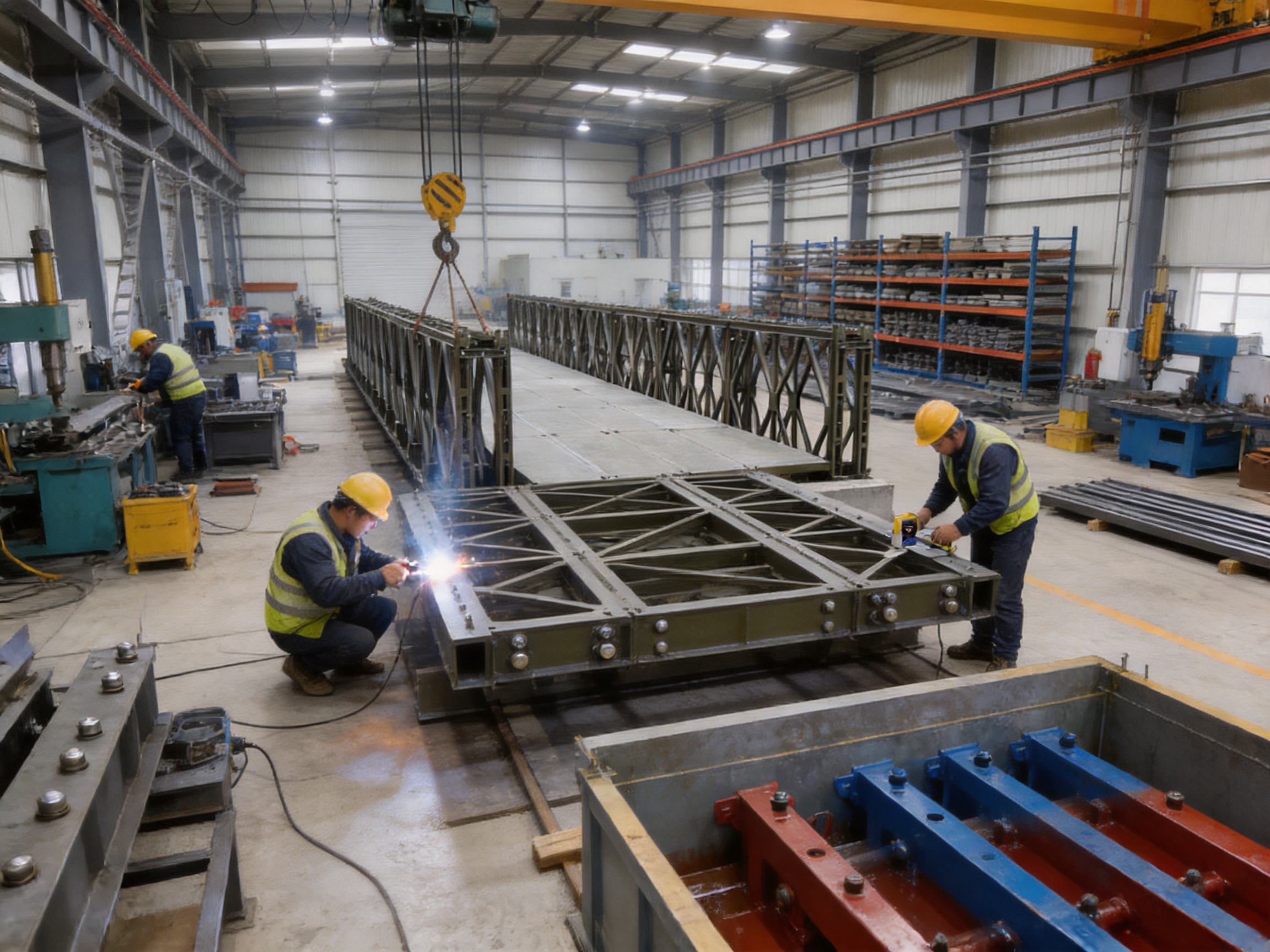
Industrial-scale manufacturing supports consistent production of repeated bridge components. A factory environment allows production teams to establish standardized work instructions, dedicated fabrication areas, repeatable inspection points, and controlled material movement. This is generally more reliable than producing every component under changing field conditions.
Standardization also helps maintain interchangeability. Bailey bridge systems depend on the ability of panels, pins, transoms, bracing members, and deck parts to connect correctly. Manufacturing systems that emphasize repeatability can help minimize dimensional variation and reduce the need for on-site adjustment.
Engineering Design Integration
The company’s capabilities include engineering design and customized modular bridge solutions. This means a project can be evaluated according to its span, width, traffic class, environmental conditions, erection method, and delivery requirements rather than being limited to an off-the-shelf arrangement.
Design integration is especially important when a bridge must fit a specific river width, road alignment, foundation location, vehicle category, or transport constraint. A customized design can identify the appropriate truss layout, deck arrangement, bracing requirements, access details, and protective treatment before production begins.
Precision Steel Fabrication
Precision steel fabrication includes cutting, forming, drilling, welding, dimensional checking, and surface finishing. Automated or semi-automated processes can improve repeatability in long production runs, while experienced technicians remain essential for setup, inspection, quality verification, and handling of specialized components.
Accurate holes and connection interfaces are particularly important in modular bridges. Pins and bolts must align correctly so that the truss can be assembled without excessive force or unauthorized modification. Poorly controlled dimensions can create installation delays, uneven load distribution, or unsafe connection conditions.
Automated Welding
Automated welding can improve consistency in repetitive welds by controlling travel speed, heat input, electrode or wire feed, and weld placement. Consistent welding helps reduce variability between components and can support a more predictable inspection process.
Automated welding does not eliminate the need for skilled supervision. Welding procedures must be appropriately selected for the steel grade, joint design, thickness, and production requirements. Operators and inspectors must monitor equipment settings, pre-welding preparation, visual quality, dimensional distortion, and any required non-destructive testing.
Quality Management
Quality management begins with material identification and continues through every stage of production. Relevant control activities may include reviewing material certificates, checking dimensions, monitoring weld quality, verifying hole locations, inspecting connection hardware, measuring coating thickness, and confirming packing quantities.
A documented quality process provides traceability and helps identify problems before components leave the factory. It also supports communication among the manufacturer, engineering team, contractor, and end user. For international projects, organized documentation can be particularly valuable when customs, local authorities, consultants, or project owners require technical records.
Compliance with Technical Specifications
The company states that its manufacturing workflows support products complying with ASTM, EN, and national specifications. The applicable standard depends on the project, contract, material requirements, design basis, and jurisdiction. Compliance should therefore be confirmed for each order rather than assumed solely from the product category.
Standards may address steel materials, welding, structural design, fabrication tolerances, surface preparation, coating, fasteners, inspection, or testing. A professional supplier should be able to coordinate the required documentation and clarify which specifications apply to the proposed bridge configuration.
Key Product and Manufacturing Parameters
| Item | CB 100 Bridge Characteristics | Project Benefit |
|---|---|---|
| Bridge type | Modular steel Bailey truss bridge | Rapid assembly and adaptable deployment |
| Featured span | 18-meter customized passage span | Suitable for the specified Kyrgyzstan access requirement |
| Truss arrangement | Double-row, single-layer configuration | Balances capacity, stiffness, material use, and erection simplicity |
| Primary material | Fabricated structural steel components | Provides strength and repeatable modular production |
| Surface treatment | Professional anti-corrosion painting | Improves resistance to rain, snow, humidity, and atmospheric exposure |
| Typical traffic role | Small vehicle traffic and material transportation | Supports local access, logistics, construction, and emergency routes |
| Manufacturing approach | Engineering design, precision fabrication, automated welding, and quality control | Improves consistency and reduces field modification |
| Deployment model | Temporary or semi-permanent service | Provides flexibility where permanent construction is delayed or impractical |
The table summarizes the principal characteristics of the featured configuration. Actual design values, allowable loads, roadway width, deck details, foundation requirements, and erection procedures must be confirmed through project-specific technical documents.
Installation and Erection Considerations
Site Investigation
Before assembly begins, the site should be evaluated for span length, water level, soil conditions, access roads, approach alignment, lifting space, flood risk, and foundation stability. A bridge that is correctly fabricated can still perform poorly if the abutments settle, the approaches wash out, or the bearings are not placed at the correct elevations.
For a mountainous crossing, the site investigation should also consider landslides, rockfall, drainage channels, seasonal snowmelt, debris impact, and the stability of cut slopes. The bridge may be modular, but the supporting works must be designed for actual site conditions.
Component Organization
Efficient erection begins with organized components. Panels, transoms, bracing members, deck units, pins, bolts, bearings, and accessories should be checked against the packing list. Components should be placed on stable ground and protected from mud, standing water, excessive impact, and unnecessary dragging.
Clear labeling and a logical assembly sequence help prevent mistakes. They also make it easier to identify damaged or missing parts before the erection crew reaches a critical stage. If a component has been bent, cracked, heavily corroded, or damaged during transport, it should be isolated and assessed rather than installed without approval.
Launching and Lifting
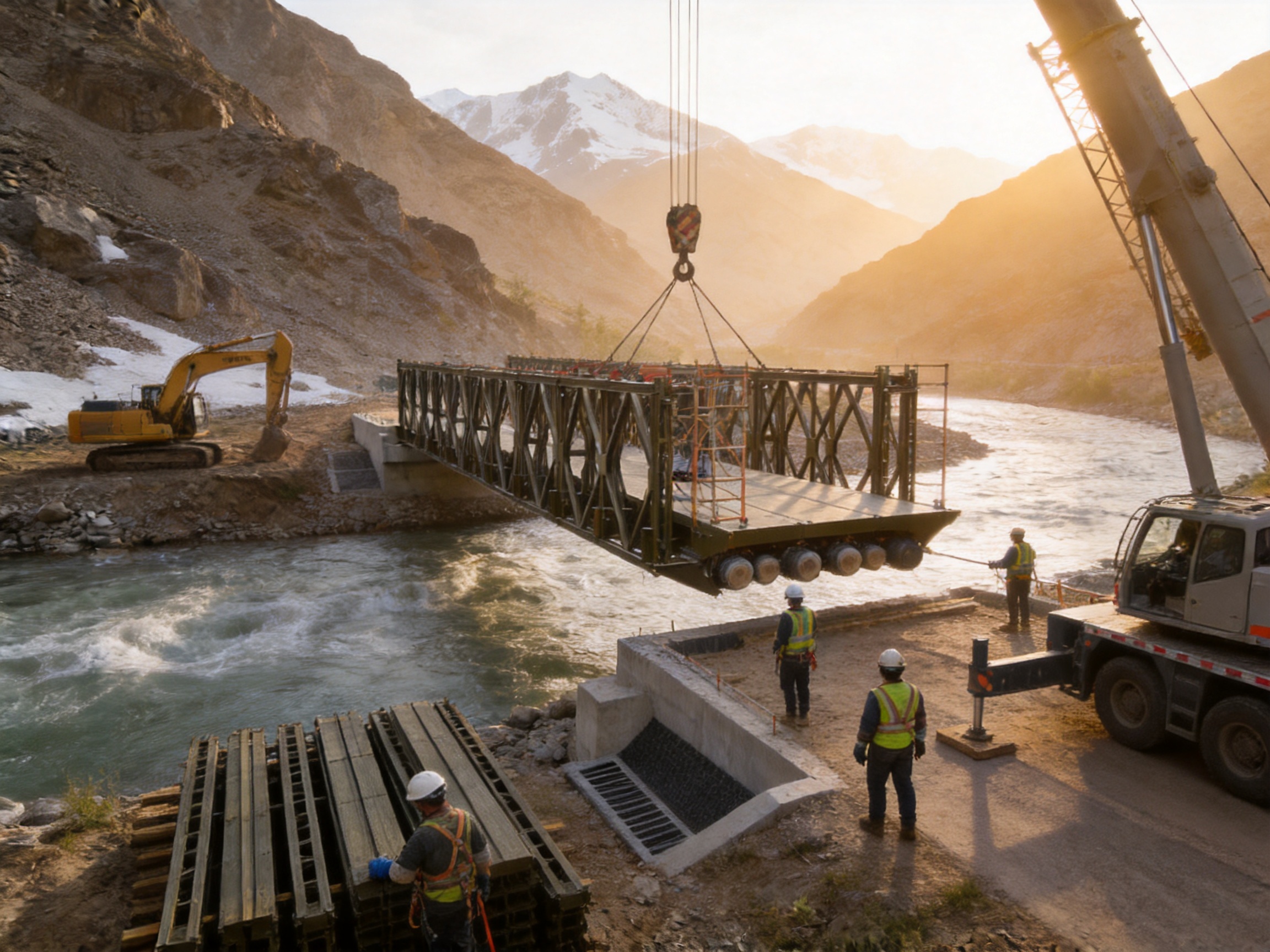
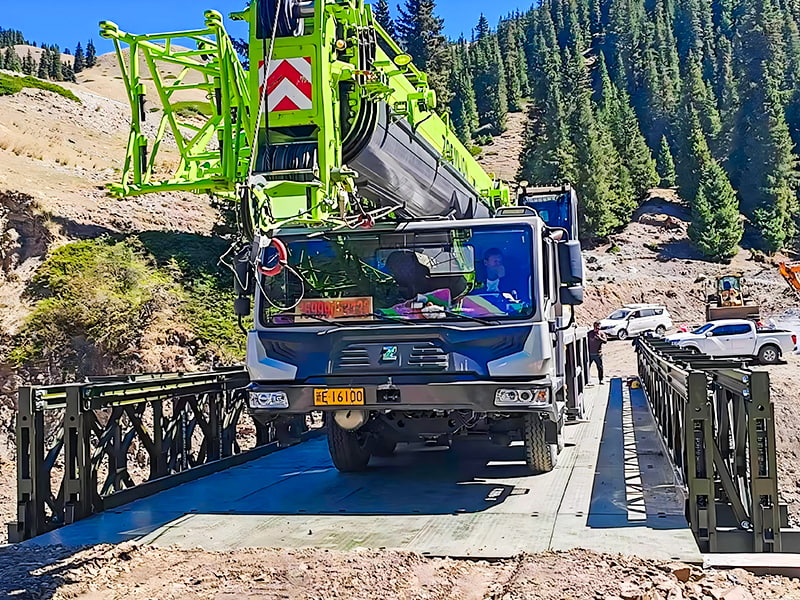
Bailey bridges can be erected using different methods depending on site conditions and available equipment. In some situations, the bridge is assembled on one bank and launched across the gap. In other situations, cranes or temporary supports are used to place sections into position. The chosen method must account for temporary stresses that may differ from the final operating condition.
Launching noses, rollers, temporary supports, lifting points, counterweights, and bracing must be designed and used according to an approved erection plan. Temporary conditions can produce significant forces in the truss, and an apparently stable assembly may become unsafe if the sequence is changed without engineering review.
Connection Inspection
All pins, bolts, clips, bracing connections, deck attachments, and bearing components should be inspected after installation. Connections must be fully seated and secured. Any required retainers should be fitted correctly. The bridge should be checked for alignment, twist, uneven bearing, damaged paint, missing members, and obstruction of drainage paths.
Before opening to traffic, the completed bridge should be reviewed by the responsible engineering or supervisory team. The inspection should confirm that the structure corresponds to the approved configuration and that traffic restrictions, signage, barriers, and approach transitions are in place.
Operation, Inspection, and Maintenance
A modular bridge requires a maintenance program appropriate to its environment and traffic. Routine inspection should be more frequent during the initial operating period and after exceptional events such as floods, heavy snow, collisions, earthquakes, unusual overloads, or strong winds.
Inspection points include truss panels, chord members, diagonal members, pins, bolts, transoms, deck plates, guardrails, bearings, approach slabs, drainage areas, and foundations. Particular attention should be given to locations where water, mud, salt, or debris can accumulate.
Painted surfaces should be checked for scratches, flaking, blistering, rust spots, and exposed steel. Small coating defects are easier and less expensive to repair before corrosion spreads beneath the surrounding paint. Repairs should use compatible materials and follow the original coating system’s preparation and application requirements.
Traffic management is also part of maintenance. The bridge should display its approved load limit, speed restriction, roadway width, and any other operating conditions. Uncontrolled overloading can cause damage even when the bridge is structurally sound for its intended design use. Operators should prevent vehicles exceeding the permitted axle load or gross weight from entering the bridge.
After flooding, the structure and foundations should be examined for scour, undermining, debris accumulation, displaced bearings, and approach erosion. A bridge may appear visually intact while its supporting soil has been weakened. No bridge should be reopened after a significant event until the responsible authority or qualified engineer has completed the required inspection.
Applications Across Infrastructure and Industry
Remote Road Connections
Remote communities often need dependable crossings but may not have immediate access to major construction equipment or long-term infrastructure funding. A modular bridge can connect local roads, agricultural areas, work camps, and public services with a solution that is faster to deploy than a conventional permanent bridge.
Construction Access
Large civil engineering projects frequently require temporary access across rivers, drainage channels, rail corridors, excavation zones, or existing roads. The CB 100 system can provide a controlled route for small vehicles, construction materials, tools, and equipment within the approved load limits.
Flood and Disaster Response
Floods, landslides, earthquakes, and other disasters can destroy road crossings and isolate communities. A modular bridge system is valuable in emergency response because its components can be stored, transported, and assembled as part of a planned recovery operation. The anti-corrosion finish also supports deployment in wet environments, although flood conditions still require careful foundation and hydraulic assessment.
Industrial and Mining Routes
Industrial sites, mining areas, quarries, forestry operations, and material-handling routes may need crossings that can be installed, relocated, or expanded as operations change. A modular steel bridge can offer greater flexibility than a permanent structure designed around a fixed site plan.
Agricultural and Water Conservancy Projects
Agricultural regions may require access across irrigation channels, drainage routes, and seasonal waterways. Water conservancy construction may also need temporary crossings during the development or repair of reservoirs, channels, embankments, and pumping facilities.
Military and Logistics Support
Modular truss bridges have long been associated with rapid logistics and access operations. Their repeatable components and transportable design can support planned mobility requirements, provided the bridge configuration and load rating are suitable for the intended vehicles and operational conditions.
Why Factory-Controlled Production Matters
Purchasers of a modular bridge are not buying only steel panels. They are purchasing a structural system whose performance depends on accurate design interpretation, material selection, fabrication quality, connection compatibility, protective treatment, documentation, and technical support.
Factory-controlled production provides a more stable environment for these activities. Steel can be received and inspected systematically. Cutting and drilling can be carried out with repeatable equipment. Welding can be monitored under controlled conditions. Components can be measured before coating. Painted members can be inspected and packed with suitable protection.
This production model offers an important advantage over informal or highly decentralized fabrication. A low-cost supplier may provide components that appear similar but have inconsistent dimensions, uncertain steel grades, incomplete welding records, inadequate coating preparation, or poor interchangeability. Such issues may not become apparent until the bridge reaches the installation site, where corrections are more expensive and disruptive.
Jiangsu Zhonghai Bridge Equipment Co., Ltd. combines manufacturing with engineering and project support. This integrated approach allows the supplier to consider not only how a component is produced but also how it will be transported, assembled, inspected, and used. For international customers, this can simplify communication and reduce the risk of technical gaps between design and fabrication.
Customization for International Projects
International bridge projects often involve different road standards, vehicle types, climatic conditions, transport routes, inspection requirements, and construction practices. A successful supplier must therefore be able to adapt the product while maintaining the essential advantages of modular standardization.
Customization may involve bridge length, roadway width, truss arrangement, deck type, guardrails, ramps, bearings, bracing, coating color, packing method, documentation, and erection support. The design process should begin with a clear project brief that identifies the required span, intended traffic, environmental exposure, site constraints, foundation concept, and expected service period.
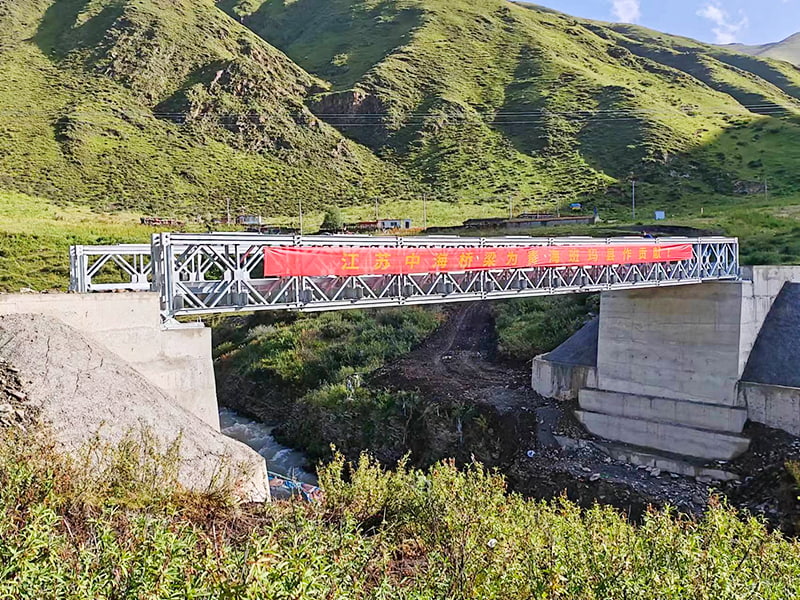
The Kyrgyzstan project demonstrates the value of adapting a standardized bridge system to local conditions. The 18-meter span and double-row single-layer arrangement were selected for a specific passage requirement, while professional painting was used to address the region’s weather exposure. This combination of standard components and project-specific decisions is central to effective modular bridge engineering.
Procurement Guidance for Buyers
Buyers should evaluate a modular bridge supplier on more than price. The following points can help create a sound procurement process:
First, confirm the design basis. The supplier should understand the span, traffic class, vehicle dimensions, roadway width, expected frequency of use, wind conditions, snow conditions, and service period.
Second, request clear information about materials and fabrication. Relevant documents may include steel certificates, welding procedures, inspection records, dimensional reports, coating specifications, and packing lists.
Third, verify that the proposed truss configuration matches the intended load. A double-row single-layer bridge may be suitable for one application but unsuitable for another. The final selection should be based on engineering calculations rather than general product descriptions.
Fourth, assess transport and erection requirements. Buyers should understand component weights, package dimensions, unloading equipment, assembly labor, temporary works, launch methods, and site access conditions.
Fifth, establish responsibility for foundations and approaches. The bridge manufacturer may supply the superstructure while the local contractor constructs abutments, piers, retaining works, drainage, and road transitions. These responsibilities should be defined before the order is placed.
Sixth, review after-sales and technical support. Erection drawings, manuals, inspection guidance, spare connection hardware, and communication with technical personnel can be highly valuable during installation.
Finally, confirm applicable standards and local approvals. Bridge projects may require review by transportation authorities, structural engineers, environmental agencies, or other public bodies. The supplier should provide documentation that supports the approval process.
Safety and Engineering Limitations
The CB 100 bridge is a practical modular product, but it must be used within its approved design parameters. Product descriptions alone cannot establish a safe load rating for every site. The final allowable load depends on the exact configuration, span, deck system, support conditions, steel properties, connection details, fatigue considerations, and local design requirements.
Qualified professionals should review the project before fabrication and installation. They should also verify the bridge after erection, particularly when the site includes poor ground, high water, unstable slopes, unusual wind exposure, or heavy construction vehicles.
Traffic should be controlled through signs, barriers, speed restrictions, and load limits. Unauthorized changes, such as removing bracing, enlarging holes, cutting members, welding additional attachments, or substituting unapproved fasteners, can compromise the structure. Any modification should be reviewed and approved by the responsible engineer.
Temporary works deserve the same attention as the final bridge. Launching equipment, scaffolding, lifting tools, temporary supports, and access platforms must be designed or selected for the forces they will experience. Erection crews should follow an approved method statement and use appropriate personal protective equipment.
Environmental and Lifecycle Benefits
Modular steel construction can provide lifecycle benefits when the system is designed, maintained, and reused effectively. Components may be dismantled and redeployed after a temporary project ends. This can reduce material waste and provide value beyond a single installation.
Standardized parts can also simplify repair. If a component is damaged, the system may allow the affected member to be replaced without dismantling the entire bridge, subject to engineering approval. Repeatable components can be stocked as spare parts, reducing downtime in critical applications.
The professional anti-corrosion coating contributes to lifecycle performance by delaying deterioration and reducing the frequency of major repair. However, environmental benefits depend on responsible production, efficient transport, appropriate maintenance, and eventual reuse or recycling of steel components.
Compared with a permanent bridge built entirely from concrete or heavily fabricated structural steel, a modular bridge may require less initial site work and can reduce construction disturbance in some situations. The most appropriate choice should always consider the full lifecycle, including foundations, traffic requirements, expected service life, maintenance, removal, and future reuse.
Q&A
What is the CB 100 Double-Row Single-Layer Bailey Bridge?
It is a modular steel truss bridge system using two rows of Bailey panels arranged in a single vertical layer. The featured product is an 18-meter bridge customized for Kyrgyzstan and intended for small vehicle traffic and material transportation.
What does “double-row single-layer” mean?
“Double-row” refers to the use of two longitudinal rows of truss panels in the bridge arrangement. “Single-layer” means that the panels are installed at one vertical level rather than stacked into two or more levels.
Is the bridge suitable for heavy trucks?
Suitability depends on the approved design configuration and load rating. The featured bridge is described as meeting local requirements for small vehicle traffic and material transportation. Heavy vehicles should not use the bridge unless a qualified engineer has confirmed that the exact bridge configuration, deck, supports, and foundations are designed for those loads.
Can the bridge be used as a permanent bridge?
The product is suitable for temporary and semi-permanent applications. It may serve for an extended period when properly designed, protected, inspected, and maintained. Whether it can be accepted as a permanent bridge depends on local regulations, project requirements, design life, maintenance plans, and approval by the responsible authorities.
Why is anti-corrosion painting important?
Paint separates the steel surface from moisture and oxygen, helping reduce rust and corrosion. This is valuable in regions with rain, snow, humidity, and temperature changes. Coating damage must still be repaired, and the bridge requires regular inspection throughout its service life.
Can the bridge be customized for other spans?
Bailey bridge systems are modular and can generally be configured for different spans and traffic requirements. The appropriate combination of panels, rows, layers, deck components, bracing, and supports must be verified through project-specific engineering calculations.
How is a modular bridge transported?
The bridge is transported as separate panels and components rather than as one oversized completed structure. This can simplify shipping and delivery to remote locations. Detailed package dimensions, weights, loading plans, and unloading requirements should be confirmed for each order.
What manufacturing capabilities support this product?
The manufacturer integrates engineering design, precision steel fabrication, automated welding, quality management, standardized workflows, and coating processes. These capabilities support component consistency, connection compatibility, and reduced field modification.
What should be prepared before installation?
The project should have an approved design, stable foundations or abutments, a site-specific erection plan, suitable lifting or launching equipment, organized components, trained personnel, traffic controls, and inspection procedures. Site access, drainage, flood risk, and approach roads should also be addressed.
How should the bridge be maintained?
Maintenance should include regular inspection of trusses, pins, bolts, bracing, deck units, bearings, paint, guardrails, approaches, and foundations. The bridge should also be inspected after floods, collisions, unusual overloads, earthquakes, heavy snow, or other exceptional events.
Does the manufacturer provide international project support?
Jiangsu Zhonghai Bridge Equipment Co., Ltd. provides engineering, manufacturing, quality management, and project support for international infrastructure and emergency-response applications. The exact scope of drawings, documentation, erection assistance, and after-sales service should be confirmed in the project contract.
What standards can be used for the product?
The company states that its standardized workflows support products complying with ASTM, EN, and national specifications. The applicable standard depends on the project location, contract, design basis, material requirements, and approval authority. Buyers should identify these requirements before production.
Conclusion
The CB 100 Double-Row Single-Layer Painted Bailey Bridge provides a practical response to the need for fast, adaptable, and reliable access infrastructure. Its 18-meter Kyrgyzstan configuration combines a standardized modular truss system with project-specific customization for small vehicle traffic and material transportation.
The double-row single-layer arrangement offers an effective balance between structural capability and erection simplicity. Modular components improve transportation and deployment, while factory-controlled fabrication helps reduce field modification and improve connection consistency. Professional anti-corrosion painting further enhances suitability for wet, snowy, and temperature-variable environments.
The product’s competitiveness is supported not only by its basic bridge configuration but also by the manufacturing strengths behind it. Jiangsu Zhonghai Bridge Equipment Co., Ltd. combines engineering design, industrial-scale fabrication, precision steel processing, automated welding, quality management, and international project experience. These capabilities help transform a collection of steel components into a coordinated structural solution.
For buyers, the most important advantage is flexibility. The bridge can support temporary access, semi-permanent crossings, construction logistics, emergency response, remote-road development, industrial operations, and water conservancy projects. Proper design, installation, load control, coating maintenance, and inspection remain essential, but the modular concept provides a strong foundation for efficient infrastructure delivery.
When a project requires a bridge that can be transported economically, assembled quickly, adapted to local conditions, and maintained over time, the CB 100 modular Bailey bridge represents a dependable option for carefully engineered applications.
References
1. Bailey, D. C. Modular Military Bridge Systems and Portable Truss Bridge Engineering, technical reference literature.
2. American Institute of Steel Construction. Specification for Structural Steel Buildings, engineering reference.
3. European Committee for Standardization. Eurocode 3: Design of Steel Structures, structural design reference.
4. International Organization for Standardization. Corrosion Protection of Steel Structures by Protective Paint Systems, coating reference.
5. American Welding Society. Structural Welding Code—Steel, fabrication and welding reference.
6. International Federation for Structural Concrete. Guidance on Temporary and Semi-Permanent Bridge Infrastructure, technical reference.
7. Jiangsu Zhonghai Bridge Equipment Co., Ltd. Product and manufacturing information for modular steel bridge systems.
8. Project-specific technical information for the 18-meter CB 100 Bailey Bridge customized for Kyrgyzstan.
Product: CB 100 Bailey Bridge Double-Row Single-Layer Painted Bailey Bridge


We respond quickly to all international requests and provide technical support when needed.
Product Category
Bailey Bridge/Modular Bridge Modular Steel Bridge Pedestrian Bridge Modular Pipe Bridge Truss Bridge Steel StructureContact Us

+86-511-84522866
+86-13921582699

zhwm@zjql.com

Building 1,83#, dantu New Town, Yanjiang Road, Dantu District, Zhenjiang, Jiangsu, China
Copyright © Jiangsu Zhonghai Bridge Equipment Co., Ltd. All
Rights
Reserved
China bailey bridge for sale
bailey bridge supplier from china
