
 English
 русский
 Español
 Português


Xie Wenlan — Modular Bridge Project Sales Specialist
CB100 Type Galvanized Customized Bailey Bridge: Cost-Efficient Modular Infrastructure for Demanding Transport Projects
Content
- 1 1. Understanding the CB100 Modular Bridge Concept
- 2 2. Customized Deck Width for Local Operating Conditions
- 3 3. Compatibility with Multiple Loading Standards
- 4 4. Galvanized Steel for Long-Term Protection
- 5 5. Manufacturing Strength and Integrated Production
- 6 6. Advantages Over Conventional and Competing Bridge Solutions
- 7 7. Cost-First Design Without Sacrificing Adaptability
- 8 8. Applications in the Philippines and Other International Markets
- 9 9. Factory-Based Production and International Delivery
- 10 10. Erection and Construction Considerations
- 11 11. Safety, Durability, and Maintenance Benefits
- 12 12. Why Manufacturer Experience Matters
- 13 13. Selecting the Right Customized Bailey Bridge Supplier
- 14 14. Broader Product and Service Capabilities
- 15 15. Environmental and Logistical Advantages
- 16 16. Project Workflow from Inquiry to Installation
- 17 17. Frequently Asked Questions
- 17.1 What is a CB100 Bailey bridge?
- 17.2 What makes this bridge customized?
- 17.3 What does the three-row, single-layer structure mean?
- 17.4 Which load standards are associated with the bridge?
- 17.5 Why is the bridge galvanized?
- 17.6 Can the bridge be used as a permanent structure?
- 17.7 Can the deck width be changed for another project?
- 17.8 What are the main advantages over a standard bridge package?
- 17.9 Does the manufacturer provide support for installation?
- 17.10 What information should a customer provide for a quotation?
- 17.11 How should the bridge be maintained?
- 18 18. Conclusion
- 19 References
- 20 Product: CB100 Type Galvanized Customized Bailey Bridge
Modern infrastructure projects increasingly require bridge systems that can be delivered quickly, adapted to local conditions, and controlled carefully from both an engineering and financial perspective. In many regions, especially areas affected by seasonal flooding, rapid urban development, remote construction requirements, or emergency transportation needs, a conventional permanent bridge may not be the most practical first solution. A modular steel bridge can provide a faster and more flexible alternative while still offering dependable structural performance.
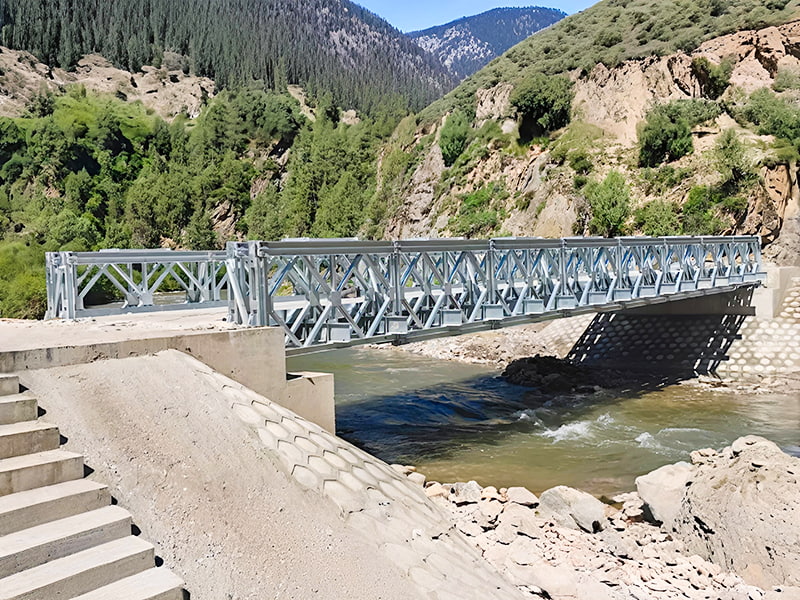
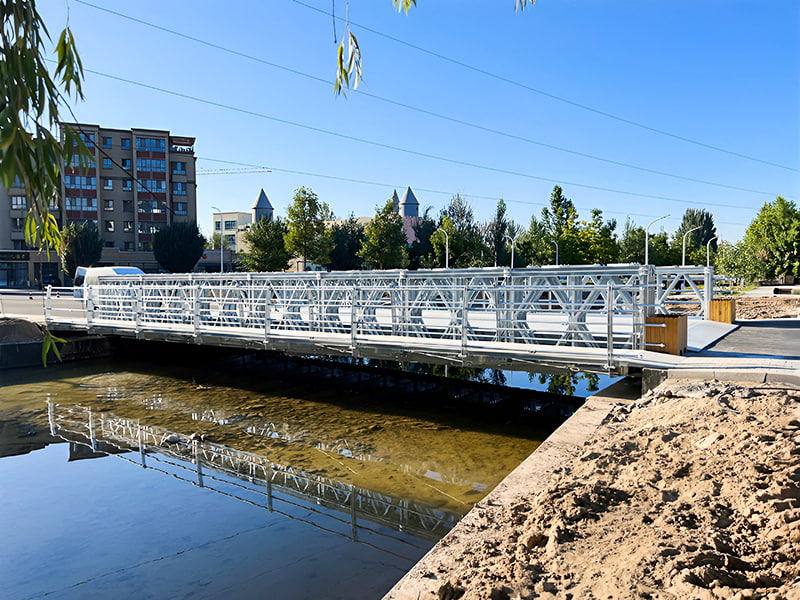
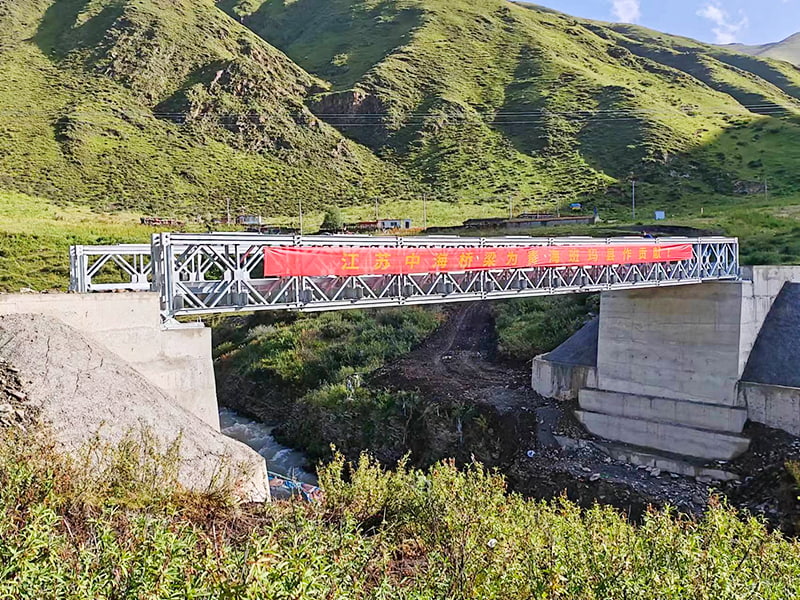
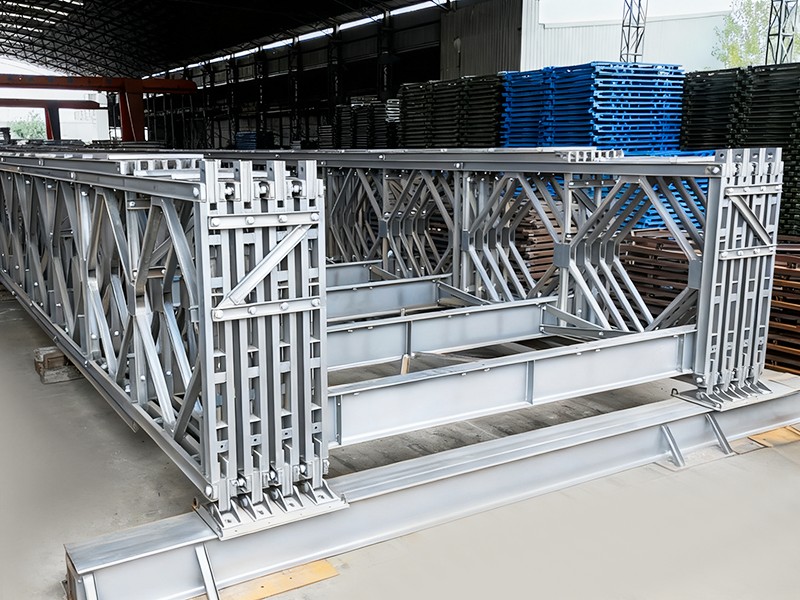
The CB100 Type Galvanized Customized Bailey Bridge is designed for precisely this purpose. Developed for a project in the Philippines, this bridge combines the proven modular concept of a Bailey bridge with a customized three-row, single-layer structural arrangement. Its design accommodates a range of recognized vehicle and military loading standards, including HS-15, HS-20, HS-25, HL-93, and Crawler-50. At the same time, its deck width was adjusted to match the customer’s actual operating requirements rather than forcing the project to use a standard dimension.
This balance between standardized engineering and project-specific adaptation is one of the bridge’s most important advantages. The primary components are based on an established CB100 Bailey bridge framework, allowing the system to benefit from modular production, repeatable assembly, and efficient transportation. However, the bridge is not treated as a one-size-fits-all product. Its width, arrangement, supporting components, and project configuration can be adapted to the site and intended traffic conditions.
Cost control is another central feature of the project. Bailey bridge panels and supporting components were manufactured by Jiangsu Zhonghai Bridge Equipment Co., Ltd., allowing the project to reduce dependence on multiple external suppliers and maintain closer control over quality, dimensional consistency, and production scheduling. The result is a bridge solution that addresses practical local requirements while remaining economically competitive for owners, contractors, and public infrastructure agencies.
1. Understanding the CB100 Modular Bridge Concept
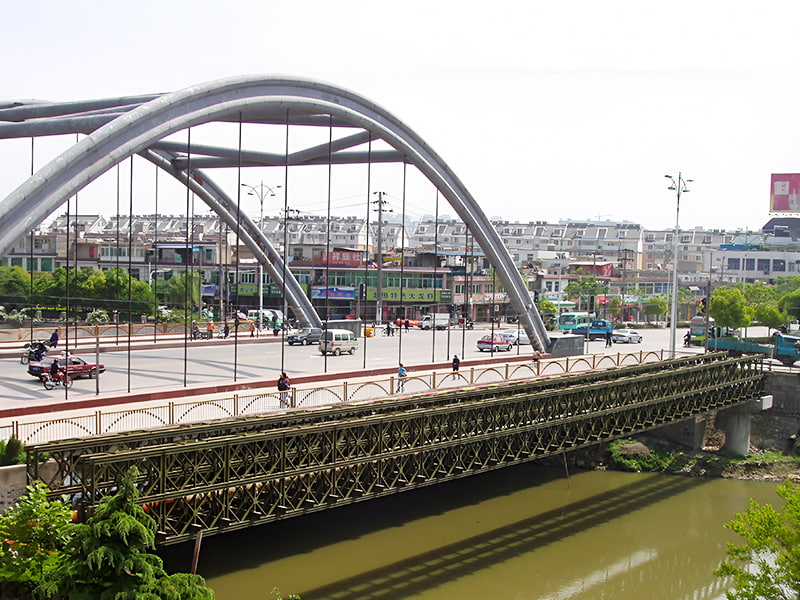
A Bailey bridge is a modular truss bridge assembled from prefabricated steel panels and associated components. Instead of fabricating an entire bridge as one large structure, the system divides the bridge into standardized units that can be manufactured, transported, stored, and assembled more efficiently. These units are connected on site to create a bridge with the required span, width, and load capacity.
The CB100 designation refers to a particular modular bridge framework and panel arrangement. Its value lies in the combination of structural repetition and assembly flexibility. Each panel functions as part of a larger truss system, transferring loads through connected chords, vertical members, diagonal members, bracing, and transverse support components. When the modules are correctly assembled and supported, they form a continuous load-carrying bridge system.
The modular principle offers several practical benefits. First, components can be produced in a controlled factory environment instead of being fully fabricated in difficult field conditions. Second, bridge units can be transported using conventional logistics methods more easily than oversized complete bridge sections. Third, damaged or worn components can often be inspected and replaced individually. Finally, a modular design allows the same basic bridge family to serve multiple projects with different span lengths, deck widths, and traffic requirements.
For project owners, this means that the bridge is not merely a steel structure. It is an infrastructure system supported by a repeatable production and installation method. The system can be planned around the available construction equipment, access conditions, local labor capacity, and required completion schedule.
1.1 Three-Row Single-Layer Configuration
The featured bridge uses a three-row, single-layer arrangement. In a Bailey bridge, the number of panel rows and the relationship between the rows influence the overall structural capacity, stiffness, and load distribution characteristics. A three-row configuration provides a substantial modular truss arrangement while avoiding the additional material and assembly complexity associated with multi-layer designs.
The single-layer configuration can be especially valuable where the project requires a strong and reliable bridge but must maintain tight control over material quantities, transportation weight, and erection effort. By selecting the appropriate panel arrangement, engineers can match the bridge structure to the expected loading requirements without automatically using a heavier configuration than necessary.
The three-row layout also demonstrates how modular bridge design can be adjusted according to the project’s actual needs. The bridge does not rely solely on an abstract standard specification. Instead, the arrangement is selected as part of an engineering process that considers the intended traffic, span, deck width, support conditions, and applicable loading standards.
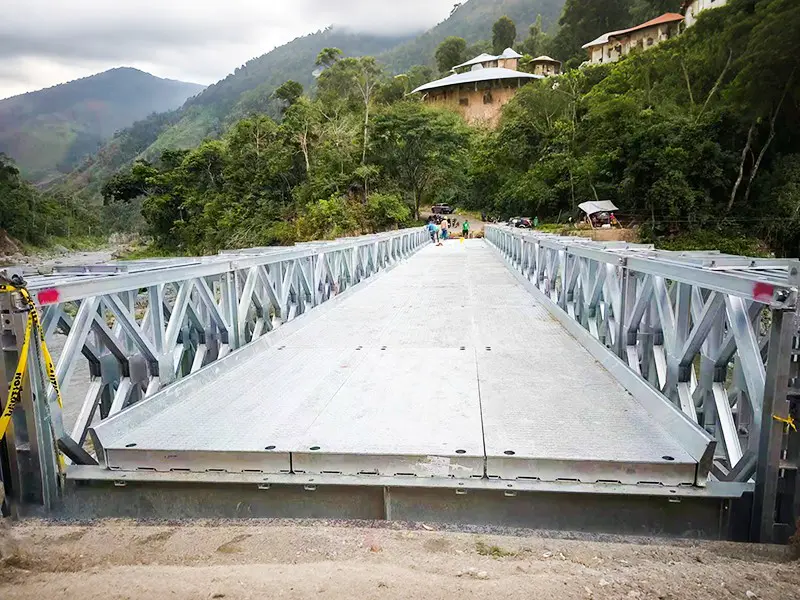
CB100 Type Galvanized Customized Bailey Bridge
2. Customized Deck Width for Local Operating Conditions
One of the clearest differences between a standard modular bridge and a customized modular bridge is the treatment of deck width. A standard product may be available in a limited number of predefined dimensions, but the most economical standard size is not always the most suitable size for a particular location. A deck that is unnecessarily wide can increase steel consumption, transport requirements, and foundation demands. A deck that is too narrow can restrict traffic, reduce operational safety, or prevent the bridge from serving its intended purpose.
For the Philippine project, the deck width was specifically customized to match the customer’s local usage scenario. This decision reflects a practical engineering principle: the bridge should be designed around actual operational requirements instead of adding unnecessary structural and financial burdens.
Customized width may be influenced by several considerations, including the type of vehicles using the bridge, the number of traffic lanes, pedestrian movement, maintenance access, construction equipment, roadside clearances, and the physical limitations of the site. In areas where the bridge is intended to support local transport or temporary access, a carefully selected width can provide adequate service while keeping the project economical.
The ability to adjust the deck width is also valuable for bridges serving mixed-use or special-purpose functions. A project may require space for a single vehicle lane, controlled alternating traffic, emergency access, construction logistics, or a combination of vehicles and pedestrians. By adapting the deck arrangement, the bridge can better reflect the needs of the communities and operators who will use it.
Customization does not mean abandoning standardization. The principal benefit of the CB100 system is retained because the bridge still uses a modular framework and standardized production logic. Customization is applied where it creates meaningful value, such as deck width and project configuration, while the core panels and supporting components remain part of a controlled and repeatable system.
3. Compatibility with Multiple Loading Standards
The CB100 Type Galvanized Customized Bailey Bridge was designed with loading requirements compatible with HS-15, HS-20, HS-25, HL-93, and Crawler-50 standards. These designations represent different vehicle, highway, and heavy equipment loading conditions used in infrastructure engineering. Compatibility with multiple load standards gives the bridge a broader application range and allows project stakeholders to evaluate its suitability according to the governing requirements of a specific project.
HS loading classifications are commonly associated with highway vehicle loading models. The different levels indicate varying design demands and can be used to assess whether a bridge is suitable for specific categories of road traffic. HL-93 is widely used in bridge design practice as a highway live-load model that combines truck and lane loading effects. Crawler-50 represents a heavy tracked vehicle loading condition and is particularly relevant to construction access, military logistics, industrial operations, or emergency deployment scenarios.
The importance of these loading references is not that a bridge should be treated as automatically suitable for every situation. Rather, they provide a structured basis for engineering verification. The final bridge application must still be assessed according to span length, support conditions, impact effects, lane arrangement, lateral stability, wind conditions, foundation capacity, and local regulations.
For owners and consulting engineers, a modular bridge that can be evaluated against several recognized loading models offers greater planning flexibility. A system initially intended for local road traffic may also be considered for construction access, disaster-response routes, temporary detours, or controlled heavy-equipment crossings, provided that the project-specific engineering review confirms the required performance.
3.1 Load Adaptability and Project Planning
Load adaptability is especially valuable in regions where bridge use may change over time. A temporary bridge might initially carry construction vehicles and later become a public access route. A flood-response bridge may be installed for emergency traffic before being integrated into a longer-term transportation plan. A modular system that can be assessed under multiple loading standards can support these changing requirements more effectively than a product designed for only one narrow use.
At the same time, responsible bridge selection requires a clear distinction between design compatibility and unrestricted use. The applicable load model, traffic control plan, speed limits, vehicle restrictions, and inspection requirements should be established before the bridge enters service. Proper design verification and installation are essential to achieving the expected performance of any modular bridge.
4. Galvanized Steel for Long-Term Protection
The bridge is identified as a galvanized customized Bailey bridge. Galvanization provides a protective zinc coating over steel components, helping reduce the risk of corrosion caused by moisture, oxygen, and environmental exposure. This protection is particularly relevant for bridges installed in tropical, coastal, humid, or heavily rainy environments, including many locations in the Philippines.
Bridge structures are frequently exposed to conditions that accelerate corrosion. Rainwater, high humidity, standing water, salt-laden air, mud, road spray, and condensation can all contribute to the deterioration of unprotected steel. Corrosion can increase maintenance requirements, reduce the useful life of components, and create additional inspection and repair costs.
A galvanized finish helps establish a protective barrier and can also provide sacrificial protection to exposed steel. When the zinc coating is properly applied and maintained, it can improve the durability of the bridge components and reduce the frequency of protective repainting compared with some conventional coating systems.
Galvanization is not a substitute for sound drainage, inspection, detailing, or maintenance. Water should not be allowed to remain trapped in connection areas, and components should be checked after transport and erection for damage to the protective layer. Nevertheless, galvanized modular components provide a strong starting point for bridges operating in demanding climates.
For an owner comparing competing bridge products, the galvanized option can offer value beyond its initial appearance. The relevant comparison should include expected service conditions, maintenance frequency, corrosion exposure, access for repair, and the total cost of ownership over the project’s service period.
5. Manufacturing Strength and Integrated Production
The performance of a modular bridge depends not only on the engineering concept but also on the quality and consistency of its manufacturing process. Panels that vary in dimensions, holes that do not align correctly, welds that are inconsistent, or coatings that are applied unevenly can complicate erection and reduce confidence in the completed structure. For this reason, an integrated manufacturing capability is a major advantage when selecting a bridge supplier.
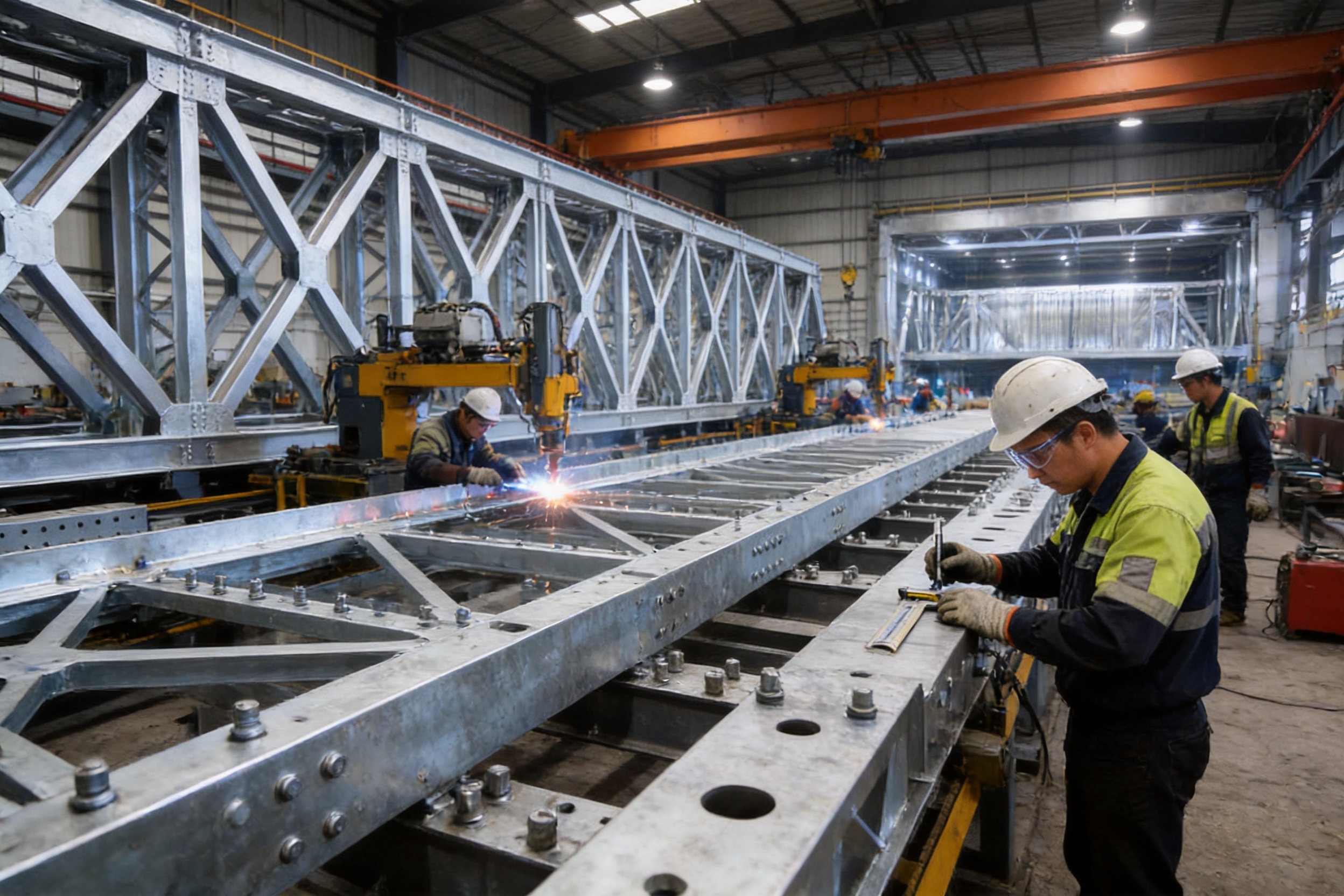
Jiangsu Zhonghai Bridge Equipment Co., Ltd. combines engineering design, precision manufacturing, quality management, and project support. The company specializes in modular steel bridges, Bailey bridge systems, customized steel components, bridge erection equipment, automated welding, and precision steel fabrication. This combination allows the supplier to manage more stages of the project internally instead of relying entirely on disconnected subcontractors.
Producing the Bailey panels and supporting components within the company’s own manufacturing system contributes to tighter control over critical dimensions and production schedules. It also supports more direct communication between engineering, production, quality inspection, and project service teams. When a customer requests a customized deck width or special arrangement, the design change can be coordinated more efficiently with fabrication planning.
5.1 Engineering and Drawing Coordination
A successful modular bridge project begins with clear technical coordination. The engineering process may include reviewing the required span, traffic type, design loading, deck width, support arrangement, approach conditions, construction sequence, and transport limitations. These factors must be coordinated before production begins.
For a customized bridge, drawing control becomes especially important. The supplier must ensure that the approved configuration is reflected consistently in fabrication drawings, component schedules, connection details, packing lists, and erection instructions. A controlled engineering process reduces the risk of producing components that do not correspond to the final site arrangement.
Design coordination also helps identify potential conflicts before they appear in the field. For example, the selected deck width may influence transverse members, roadway surfacing, guardrails, bracing, approach transitions, and lifting points. By addressing these relationships during the design stage, the project can avoid costly modifications during erection.
5.2 Precision Steel Fabrication
Modular bridge components must be fabricated with reliable dimensional accuracy because the system depends on repeated connections between panels and supporting members. The fabrication process may include steel plate preparation, cutting, forming, drilling, welding, dimensional correction, surface treatment, galvanization, inspection, and final packing.
Automated and standardized production workflows can improve repeatability across large quantities of similar components. Automation is particularly useful for welding and repetitive fabrication tasks because it helps maintain consistent production parameters and reduces variation between batches. Skilled technicians and inspectors remain necessary for setup, process monitoring, nonconforming product control, and final verification.
Precision fabrication also supports faster field assembly. When components are produced consistently, connection holes and interfaces are more likely to align as intended. This reduces the need for field correction, minimizes installation delays, and helps contractors maintain the planned erection sequence.
5.3 Quality Management
Quality management for modular bridges should cover the entire production chain rather than only the final visual inspection. Incoming steel materials should be identified and controlled. Cutting and drilling should be checked against approved drawings. Welding should be performed according to applicable procedures. Finished components should be inspected for dimensional accuracy, weld appearance, surface condition, and coating quality.
A structured quality system also provides traceability. Component identification, inspection records, material documentation, coating information, and packing records can help project teams verify that the correct parts are delivered to the site. Traceability is particularly important when a bridge contains many similar panels and connection components.
The company’s manufacturing approach is supported by standardized workflows and production capabilities intended to serve international infrastructure projects. Its products are described as being manufactured in accordance with ASTM, EN, and national specifications, subject to the requirements of the relevant project. This standards-oriented approach helps international customers establish a clearer basis for technical review and procurement.
6. Advantages Over Conventional and Competing Bridge Solutions
The CB100 Type Galvanized Customized Bailey Bridge competes with several alternative solutions, including conventional cast-in-place concrete bridges, welded one-piece steel bridges, imported standard modular bridges, and locally fabricated temporary structures. Its advantages are strongest where speed, adaptability, controlled cost, and transport flexibility are important.
6.1 Compared with Conventional Concrete Bridges
A conventional concrete bridge may offer excellent long-term performance when a permanent foundation and full construction program are available. However, it often requires extensive formwork, reinforcement installation, concrete curing time, heavy equipment, and reliable access to construction materials. These requirements can create difficulties in remote or emergency locations.
A modular steel bridge can be delivered and assembled more quickly because its primary components are prefabricated. The bridge does not require the same level of on-site structural fabrication, and the erection process can proceed after the supports and foundations are ready. This can reduce disruption to roads, rivers, construction sites, and local communities.
The CB100 solution also provides greater adaptability when a project’s future requirements are uncertain. A modular bridge can potentially be dismantled, relocated, extended, or reused, depending on the design and condition of the components. A conventional concrete bridge is generally much less flexible after construction.
6.2 Compared with One-Piece Steel Bridges
Large welded steel bridge sections can provide an efficient permanent structure, but they may require specialized transport vehicles, lifting equipment, and carefully prepared access routes. Oversized sections can be expensive to move through congested urban areas or remote regions with limited roads.
Bailey bridge panels and supporting components are more suitable for modular transport. Their size and weight can be planned around standard cargo methods, which may simplify delivery to islands, flood-affected areas, mountainous communities, or developing infrastructure corridors.
The modular approach also reduces dependence on large fabrication yards near the project site. Components can be manufactured in an established facility, inspected before shipment, and assembled where the bridge is needed.
6.3 Compared with Generic Standard Products
A generic standard Bailey bridge may have a lower initial quotation, but it may not match the customer’s actual deck width, traffic pattern, or loading requirements. Modifying a standard product after delivery can create additional costs and technical risks. It may also result in a compromise between operational efficiency and structural economy.
The CB100 project demonstrates a more balanced alternative. The basic system remains modular and standardized, but the deck width is customized to the local usage scenario. This approach avoids unnecessary redesign of the entire bridge while addressing the specific feature most important to the customer’s operation.
6.4 Compared with Informal Local Fabrication
Local fabrication can appear economical, particularly for small temporary crossings, but it may involve inconsistent material quality, limited welding control, inadequate dimensional inspection, and uncertain documentation. These risks can become serious when the bridge must support public traffic, emergency vehicles, or heavy equipment.
A professionally manufactured modular bridge provides a more controlled alternative. Factory production, standardized components, documented engineering, and quality procedures create a clearer basis for safe installation and long-term maintenance. The lower project cost achieved through integrated manufacturing should not come at the expense of structural reliability.
7. Cost-First Design Without Sacrificing Adaptability
Cost-first design does not mean choosing the cheapest material or reducing the bridge to the minimum possible specification. It means identifying the actual project requirements and avoiding expenditures that do not improve the required performance. In the CB100 project, this principle is reflected in the use of a three-row single-layer configuration, a customized deck width, and components manufactured within the supplier’s own production system.
A bridge can become unnecessarily expensive when it is oversized, over-customized, or assembled from components purchased through multiple channels. Each additional supplier may introduce separate tooling costs, transportation charges, inspection requirements, and coordination delays. Integrated manufacturing can reduce these layers while improving communication and consistency.
Cost control also involves evaluating the entire project life cycle. A lower purchase price may not be economical if the bridge requires frequent repairs, difficult replacement procedures, or extensive corrosion treatment. The galvanized finish, standardized modular components, and maintainable assembly of the CB100 system can contribute to more predictable ownership costs.
7.1 Material Efficiency
The selected three-row single-layer structure uses a defined modular arrangement rather than an unnecessarily complex configuration. Engineers can assess the relationship between the required span, loading, deck width, and panel arrangement to achieve a practical balance between strength and material quantity.
Material efficiency is also supported by repeatable components. Standard panel production allows the supplier to plan material usage, fabrication tooling, and inspection procedures more effectively. Consistent production can reduce waste caused by repeated one-off fabrication and help maintain competitive pricing for customers.
7.2 Reduced Site Labor and Equipment Requirements
Prefabricated bridge components can reduce the amount of cutting, drilling, and welding required at the construction site. This is particularly valuable in locations where skilled steel fabricators are difficult to mobilize or where the project must be completed under adverse weather and access conditions.
Although modular bridge erection still requires qualified supervision and appropriate equipment, the work can be organized around a defined sequence of panel assembly, bracing installation, deck placement, and connection inspection. A predictable erection method helps contractors plan labor and equipment more accurately.
7.3 Lower Coordination Risk
When a single experienced manufacturer supplies the main panels and supporting components, the project team can coordinate technical questions through a more direct channel. This can reduce misunderstandings involving connection details, component compatibility, replacement parts, and site installation procedures.
Lower coordination risk has a financial value that is often overlooked during procurement. Delayed deliveries, missing components, dimensional discrepancies, and unclear instructions can create costs far beyond the initial product price. A supplier with engineering and manufacturing capabilities can help reduce these risks before shipment and during installation support.
8. Applications in the Philippines and Other International Markets
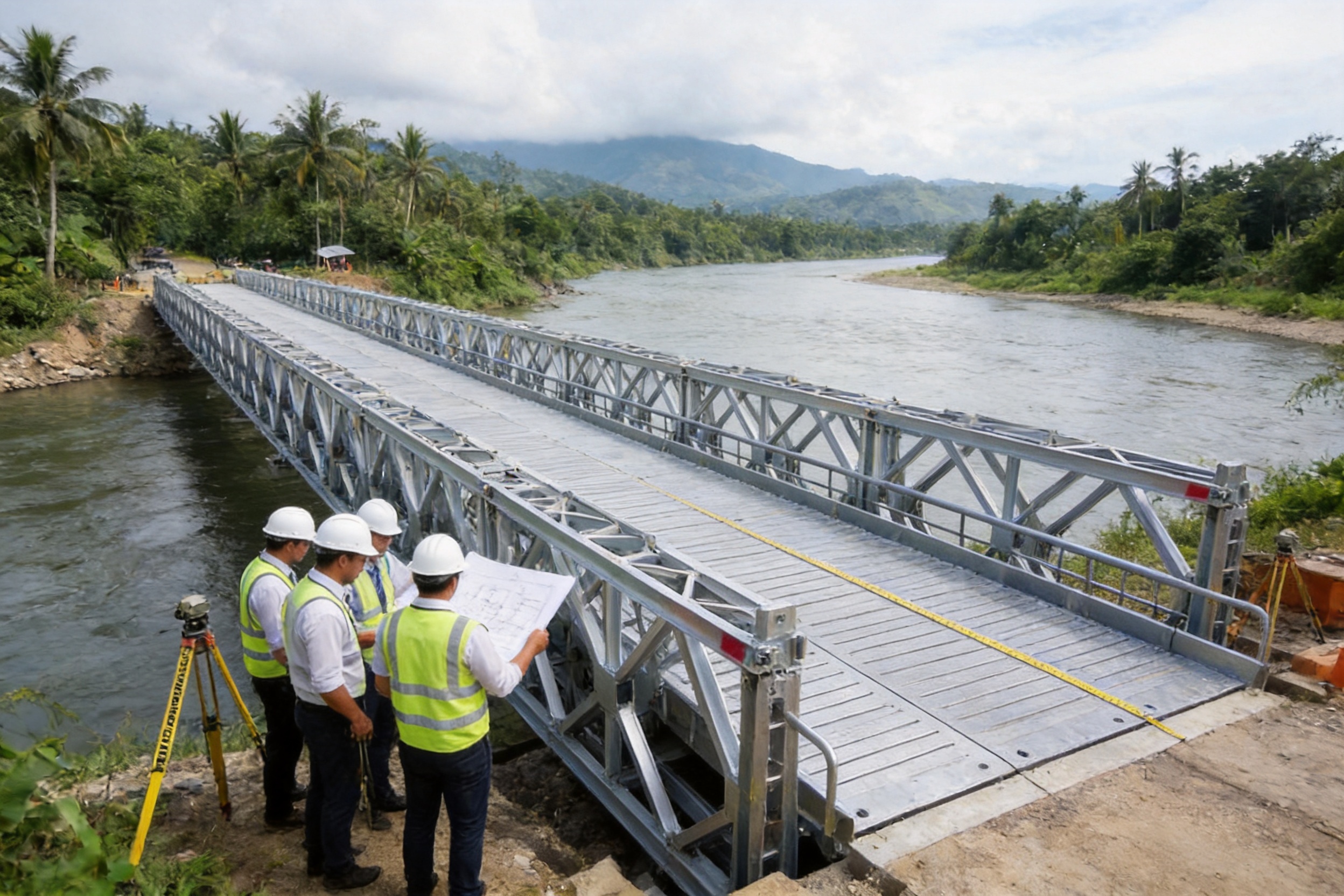
The Philippine market presents many conditions in which modular bridges can provide practical value. Islands, mountainous terrain, heavy rainfall, flood-prone communities, construction corridors, and rapidly growing transportation networks may all benefit from bridge systems that can be delivered and installed efficiently.
The customized CB100 bridge was developed specifically for a Philippine customer, demonstrating the importance of adapting a product to local operating requirements. A bridge designed for one location cannot automatically be assumed to be ideal for another. Road width, vehicle types, climate, soil conditions, water levels, seismic considerations, and local construction practices must all be reviewed.
Beyond the Philippines, modular steel bridges can support a broad range of applications. These include temporary detour bridges, rural road connections, access bridges for infrastructure construction, emergency flood crossings, military logistics routes, industrial service roads, mining access, agricultural transport, and bridge replacement projects.
In disaster-response situations, speed is often a decisive factor. A modular bridge can be stored in advance, transported to the affected location, and assembled after a flood or other event has damaged an existing crossing. Its standardized nature can simplify emergency planning because the required panels, bolts, bracing, and deck components can be cataloged before deployment.
For development projects, the bridge can help connect communities while a permanent infrastructure program is being designed or funded. It may also serve as a long-term modular crossing where future relocation or expansion is expected.
9. Factory-Based Production and International Delivery
International bridge procurement requires more than manufacturing capacity. The supplier must be able to coordinate technical documentation, production planning, packaging, shipment preparation, and communication with overseas customers. Jiangsu Zhonghai Bridge Equipment Co., Ltd. is located in Zhenjiang, Jiangsu Province, an industrial and transportation hub with access to manufacturing resources and logistics networks.
The company’s factory-based approach supports the production of modular bridge panels, structural components, and customized steel products for domestic and international projects. A centralized facility allows production activities to be organized through standardized workflows, helping the supplier manage repeat orders, customized configurations, and project-specific component lists.
International delivery also requires attention to packaging. Bailey bridge components must be protected against impact, moisture, contamination, and loss during handling. Components should be organized in a manner that allows the receiving team to identify and distribute them efficiently at the construction site. Clear marking and packing documentation are especially important when a project includes a large number of similar parts.
Engineering support before shipment can help clarify the erection sequence, component arrangement, connection requirements, and site preparation. After delivery, technical communication can assist contractors with assembly questions and inspection procedures. These services add value because a bridge is only as effective as the installation process that converts the delivered components into a functioning structure.
10. Erection and Construction Considerations
The modular nature of the CB100 bridge supports an organized erection process, but site preparation remains essential. Before assembly begins, the project team should verify foundation or abutment readiness, bearing elevations, approach access, equipment capacity, temporary works, lifting arrangements, and safety controls.
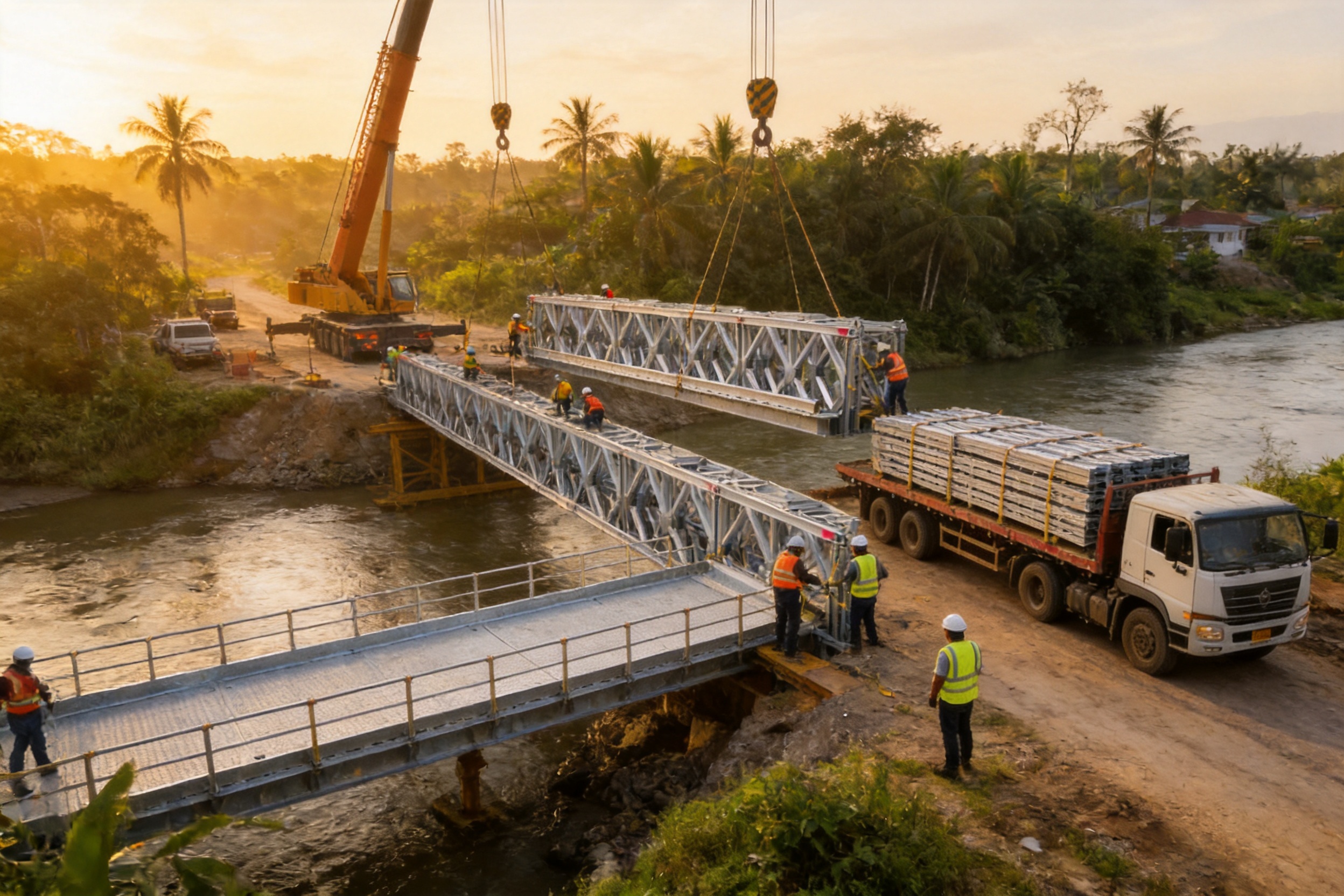
A typical modular bridge erection sequence may involve preparing the supports, assembling panels into truss sections, installing bracing and transverse members, launching or lifting the truss into position, placing deck components, installing guardrails and accessories, and performing final inspection. The exact sequence depends on the span, terrain, available equipment, water conditions, and construction method.
In locations with limited access, incremental launching can be considered when appropriate. In other cases, cranes or other lifting equipment may be more practical. The selected method should be reviewed by competent engineers and construction professionals, with attention to temporary stability during every stage of the process.
Temporary conditions can be more demanding than the completed bridge condition. During assembly, the structure may not yet have all bracing and deck components installed. Wind, uneven support, lifting forces, and temporary loads must therefore be considered carefully. The erection team should follow approved instructions and avoid unauthorized changes to the component arrangement.
Once the bridge is in service, inspection should verify connection tightness, deck condition, guardrail installation, bearing seating, alignment, drainage, coating condition, and approach transitions. A maintenance plan should define inspection intervals and procedures for responding to damage, corrosion, excessive movement, or changes in traffic demands.
11. Safety, Durability, and Maintenance Benefits
Safety begins with correct design and continues through manufacturing, transportation, erection, operation, and maintenance. The CB100 bridge’s modular system provides a clear component arrangement that can be inspected and maintained systematically. Panels, bracing members, deck units, and connections can be examined individually as part of a planned inspection program.
Galvanized surfaces help protect the steel against environmental exposure, but inspection remains necessary. Areas subject to abrasion, impact, trapped moisture, or chemical contamination may require additional attention. Any damaged coating should be evaluated and repaired using an appropriate protective treatment.
Bolted and modular connections also support maintainability. If a component is damaged by an accident or unusual event, the modular design may allow the affected member to be identified and replaced without rebuilding the entire bridge. Replacement procedures must follow engineering guidance, and the bridge should be taken out of service or properly supported when required.
Traffic management is another important maintenance factor. Load restrictions, speed controls, lane arrangements, and vehicle separation can help protect the bridge from excessive dynamic effects. If traffic conditions change significantly, the bridge should be reassessed rather than used beyond its original design assumptions.
12. Why Manufacturer Experience Matters
A modular bridge supplier should be evaluated not only by its catalog but also by its ability to handle engineering variation and project responsibility. A manufacturer experienced in modular bridge systems can better understand the relationship between panel configuration, deck arrangement, loading, fabrication, transport, and erection.
Jiangsu Zhonghai Bridge Equipment Co., Ltd. has supplied bridge-related products and structural components for projects in China and overseas. Its reported project experience includes coastal engineering in the Maldives, temporary access bridges for the Shenzhen–Zhongshan Corridor, structural components for the Hangzhou Expo Center, multi-span Bailey bridges for the Lalin Railway, and emergency bridge deployments in multiple regions.
Such experience is valuable because different projects impose different challenges. Coastal projects emphasize corrosion and logistics. Railway-related projects require careful coordination and reliability. Emergency deployments prioritize speed and adaptability. Large infrastructure projects demand documented quality, production capacity, and communication across multiple parties.
A manufacturer that combines these capabilities can offer a more complete solution than a trading company that simply resells standard components. Engineering knowledge helps define the correct configuration, factory production supports consistent quality, and project support helps convert the design into a usable bridge at the site.
13. Selecting the Right Customized Bailey Bridge Supplier
Customers comparing suppliers should review several factors before placing an order. The first is technical capability. The supplier should be able to discuss span requirements, deck width, loading standards, support conditions, corrosion protection, and erection methods in a clear and practical manner.
The second is manufacturing control. Customers should ask whether the supplier produces the critical panels and supporting components directly, whether quality inspections are documented, and whether the factory can handle customized configurations without excessive subcontracting.
The third is project communication. International projects require timely responses, understandable drawings, component schedules, packing lists, and installation guidance. Delays in technical clarification can affect the entire construction schedule.
The fourth is after-sales support. A bridge supplier should be prepared to answer questions about erection, inspection, replacement components, maintenance, and future expansion. Support is particularly important for customers using modular bridges in areas where local experience with Bailey systems may be limited.
The fifth is total cost. A competitive quotation should be evaluated together with material quality, galvanization, packaging, engineering, delivery, installation support, spare parts, and expected maintenance. The lowest initial price is not always the lowest overall project cost.
| Evaluation Factor | Why It Matters | CB100 Project Relevance |
|---|---|---|
| Structural configuration | Determines how the bridge responds to traffic and environmental loads. | Three-row, single-layer arrangement designed around defined loading requirements. |
| Deck width | Affects traffic operation, safety, material quantity, and site compatibility. | Customized to match the customer’s local usage scenario. |
| Loading compatibility | Provides a basis for engineering verification and application planning. | Compatible with HS-15, HS-20, HS-25, HL-93, and Crawler-50 load standards. |
| Corrosion protection | Influences durability and maintenance requirements in harsh environments. | Galvanized steel components selected for improved environmental protection. |
| Manufacturing integration | Improves dimensional consistency, scheduling, and quality control. | Panels and supporting components produced by the manufacturer. |
| Customization capability | Allows the bridge to fit actual local needs instead of a generic arrangement. | Project-specific width and configuration coordinated with the customer. |
| International support | Helps coordinate documentation, shipment, erection, and technical questions. | Manufacturer serves domestic and international infrastructure projects. |
14. Broader Product and Service Capabilities
The company’s product range extends beyond one customized bridge configuration. Its capabilities include modular steel bridges, Bailey bridge systems, customized steel components, bridge erection and construction support equipment, automated welding, and precision steel fabrication.
This broader scope can benefit customers with projects requiring more than a basic bridge package. A contractor may need additional structural members, temporary support equipment, special steel assemblies, or replacement components. Working with a supplier that understands the complete bridge system can simplify procurement and technical coordination.
Precision steel fabrication is also relevant to projects outside the bridge sector. Industrial platforms, access structures, temporary works, support frames, and specialized structural assemblies may all require controlled cutting, welding, drilling, and surface treatment. Experience gained through bridge production can support these applications because both require dimensional accuracy, repeatable quality, and reliable documentation.
Automated welding and standardized manufacturing are particularly useful for achieving consistent results in repetitive steel components. However, customization remains possible because automated production can be combined with engineering-controlled setups and skilled manual operations where project-specific details require them.
15. Environmental and Logistical Advantages
Modular bridge construction can offer environmental and logistical advantages when compared with more resource-intensive construction methods. Prefabrication reduces the volume of on-site fabrication waste and can shorten the period during which construction equipment occupies sensitive areas. Faster installation may also reduce disruption to waterways, roads, communities, and local ecosystems.
The ability to transport components individually can reduce the need for oversized shipments. This is valuable when bridge sites are located beyond major highways or near areas with limited transport infrastructure. Components can be scheduled according to the erection sequence, helping reduce storage pressure at the site.
Modularity also supports reuse. When a temporary crossing is no longer required, components may potentially be dismantled, inspected, and redeployed for another project. Reuse depends on the condition of the components, the new design requirements, and engineering approval, but it is an important advantage over structures that cannot be easily relocated.
Galvanized components may further support a longer service period by reducing corrosion-related replacement and maintenance. A longer useful life can reduce material consumption over the complete project cycle, although responsible maintenance and inspection remain necessary.
16. Project Workflow from Inquiry to Installation
A professional customized bridge project normally begins with a technical inquiry. The customer provides information about the desired span, road or deck width, traffic type, loading requirements, site conditions, construction schedule, and delivery location. Photographs, topographic information, waterway data, and approach drawings can help improve the accuracy of the initial assessment.
The supplier then reviews the project and proposes a suitable modular arrangement. This stage may include checking the number of panel rows, deck system, bracing, supports, bearings, guardrails, approach transitions, and erection method. If the project involves unusual traffic or environmental conditions, additional engineering review may be required.
After the configuration is agreed, technical drawings and a component list are prepared for customer confirmation. The approved information is transferred into production planning. Materials are procured or allocated, fabrication begins, and quality inspections are carried out at defined stages.
After production, components are surface-treated, galvanized where specified, identified, packed, and prepared for shipment. The customer receives the bridge components together with the relevant documentation and installation guidance. At the site, foundations and supports are checked before erection begins.
During construction, the assembly team follows the approved sequence and verifies connections, bracing, deck placement, alignment, and safety systems. After completion, the bridge is inspected before opening to traffic. Operating rules and maintenance responsibilities should be clearly assigned to the owner or facility manager.
17. Frequently Asked Questions
What is a CB100 Bailey bridge?
A CB100 Bailey bridge is a modular steel bridge system assembled from prefabricated panels and supporting components. The system uses connected truss elements to create a bridge suitable for transportation, temporary access, emergency response, construction, and other infrastructure applications.
What makes this bridge customized?
The bridge was customized for a Philippine project, particularly in relation to deck width and the local operating scenario. Its basic CB100 framework remains modular and standardized, while project-specific dimensions and arrangements are coordinated with the customer’s requirements.
What does the three-row, single-layer structure mean?
It describes the arrangement of the Bailey panels in the bridge truss. Three panel rows are used in a single vertical layer. This configuration provides a practical balance between structural capacity, material use, assembly complexity, and project cost, subject to project-specific engineering verification.
Which load standards are associated with the bridge?
The bridge is designed with compatibility for HS-15, HS-20, HS-25, HL-93, and Crawler-50 loading standards. The actual applicable load model and operating limits must be confirmed through project engineering, including span, support conditions, traffic control, and local regulations.
Why is the bridge galvanized?
Galvanization adds a zinc protective coating to steel components. This helps reduce corrosion caused by moisture and environmental exposure, making the bridge more suitable for humid, rainy, coastal, and tropical conditions. Inspection and maintenance are still required throughout the bridge’s service life.
Can the bridge be used as a permanent structure?
Modular Bailey bridges can be used for temporary, semi-permanent, or longer-term applications, depending on the design, foundations, environment, traffic demands, inspection program, and local approval requirements. The intended service period should be defined during engineering and procurement.
Can the deck width be changed for another project?
Deck width can often be customized as part of the project design, but it should not be changed after delivery without technical review. A change may affect transverse members, bracing, deck components, traffic clearance, and structural calculations.
What are the main advantages over a standard bridge package?
The main advantages are project-specific adaptability, controlled cost, modular transport, factory production, galvanized protection, and compatibility with several recognized loading models. The bridge is adjusted where customization creates value while retaining the efficiency of standardized Bailey components.
Does the manufacturer provide support for installation?
The company provides bridge erection and construction support equipment and integrates engineering, manufacturing, and project support capabilities. The exact level of installation guidance, supervision, or on-site service should be confirmed for each project before ordering.
What information should a customer provide for a quotation?
Useful information includes the required span, deck width, traffic type, design loading, site location, foundation conditions, bridge elevation, environmental exposure, expected service period, construction schedule, and delivery requirements. Site drawings and photographs can also help the supplier prepare a more accurate proposal.
How should the bridge be maintained?
Maintenance should include regular inspection of panels, bolts, bracing, deck units, bearings, guardrails, approach transitions, alignment, drainage, and galvanized surfaces. Any impact damage, loose connection, excessive movement, or corrosion should be evaluated promptly by qualified personnel.
18. Conclusion
The CB100 Type Galvanized Customized Bailey Bridge demonstrates how modular bridge technology can be adapted to meet a real project requirement without losing the efficiency of standardized production. Its three-row, single-layer structure provides a practical modular arrangement, while compatibility with HS-15, HS-20, HS-25, HL-93, and Crawler-50 loading standards supports a broad range of engineering evaluations.
The customized deck width is especially significant because it reflects the customer’s actual local usage scenario in the Philippines. Rather than supplying an unnecessarily wide or inflexible standard bridge, the project applies customization where it can improve operational suitability and control cost.
Galvanized steel contributes to durability in challenging climates, while factory manufacturing helps improve consistency, documentation, and delivery reliability. The fact that the Bailey panels and supporting components were produced by the same manufacturer strengthens quality coordination and helps reduce the risks associated with fragmented procurement.
Jiangsu Zhonghai Bridge Equipment Co., Ltd. combines bridge engineering, precision steel fabrication, automated welding, quality management, and international project support. These capabilities position the company as more than a component vendor. It serves as an engineering and manufacturing partner for customers seeking modular bridges, customized steel structures, emergency access systems, and infrastructure support equipment.
For owners and contractors evaluating bridge options, the CB100 system offers a compelling combination of adaptability, transport efficiency, corrosion protection, recognized loading compatibility, and cost-conscious design. When supported by proper engineering, qualified erection, and regular maintenance, it can provide a fast and dependable connection for transportation, construction, emergency response, and development projects worldwide.
References
1. Project product information for the CB100 Type Galvanized Customized Bailey Bridge, including configuration, loading compatibility, customization requirements, and manufacturing details.
2. Manufacturer information for Jiangsu Zhonghai Bridge Equipment Co., Ltd., including modular bridge systems, precision steel fabrication, automated welding, quality management, and international project services.
3. General principles of modular steel bridge design, prefabricated truss construction, bridge erection planning, and structural component inspection.
4. Highway bridge live-load and vehicle-load classification practices associated with HS-15, HS-20, HS-25, HL-93, and Crawler-50 design models.
5. General engineering guidance concerning hot-dip galvanization, corrosion protection, steel bridge maintenance, and environmental durability.
6. General project management practices for international bridge procurement, prefabricated component logistics, construction coordination, and modular bridge installation.
Product: CB100 Type Galvanized Customized Bailey Bridge


We respond quickly to all international requests and provide technical support when needed.
Product Category
Bailey Bridge/Modular Bridge Modular Steel Bridge Pedestrian Bridge Modular Pipe Bridge Truss Bridge Steel StructureContact Us

+86-511-84522866
+86-13921582699

zhwm@zjql.com

Building 1,83#, dantu New Town, Yanjiang Road, Dantu District, Zhenjiang, Jiangsu, China
Copyright © Jiangsu Zhonghai Bridge Equipment Co., Ltd. All
Rights
Reserved
China bailey bridge for sale
bailey bridge supplier from china
