
 English
 русский
 Español
 Português


Xie Wenlan — Modular Bridge Project Sales Specialist
Custom CB100 Bailey Bridge: Engineering Advantages, Galvanized Durability, and Cost-Effective Modular Construction
Content
- 1 Introduction
- 2 Project Overview: A Customized CB100 Modular Bridge
- 3 Why the CB100 System Is Suitable for Challenging Projects
- 4 Double-Row, Single-Layer Design and Double-Lane Function
- 5 Hot-Dip Galvanization for Tropical and Marine Environments
- 6 Engineering Customization for Hydrological and Topographical Conditions
- 7 Manufacturing Strengths and Production Control
- 8 Quality Management for Modular Bridge Components
- 9 Advantages Compared with Less Integrated Bridge Supply Options
- 10 Construction and Erection Considerations
- 11 Maintenance and Long-Term Performance
- 12 Environmental and Economic Value
- 13 Applications for the CB100 Bailey Bridge
- 14 Why Choose a Specialized Modular Bridge Manufacturer
- 15 Recommended Procurement Process
- 16 Frequently Asked Questions
- 16.1 What is a CB100 Bailey bridge?
- 16.2 What does double-row, single-layer mean?
- 16.3 Is the featured bridge suitable for two-way traffic?
- 16.4 Why was hot-dip galvanization selected?
- 16.5 Is a galvanized bridge maintenance-free?
- 16.6 Can the bridge be customized?
- 16.7 What site information is needed for a quotation?
- 16.8 How are the bridge components transported?
- 16.9 Can the bridge be installed without major specialized equipment?
- 16.10 Can the bridge be relocated after installation?
- 16.11 How does the supplier control quality?
- 16.12 Does the manufacturer provide OEM services?
- 16.13 What makes this bridge cost-effective?
- 17 Conclusion
- 18 References
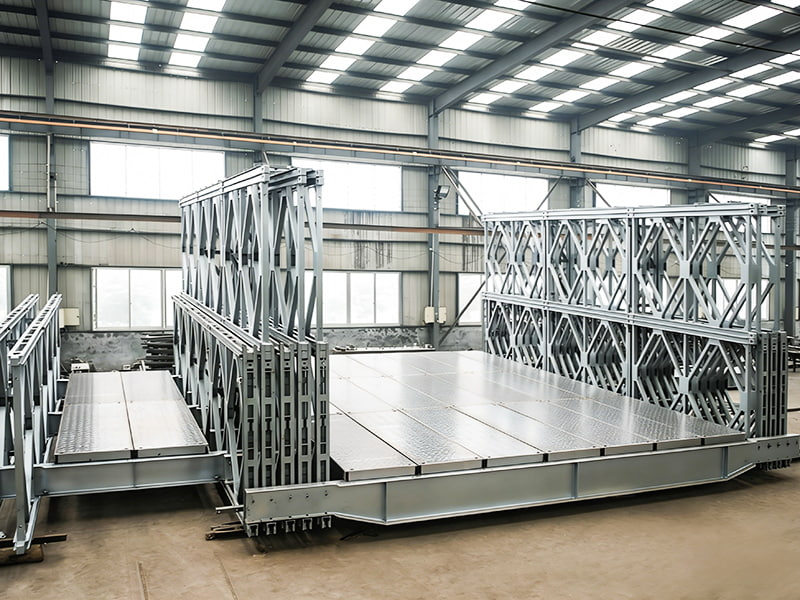
- 19 Product: CB 100 Bailey Bridge Double-Row Single-Layer Custom Galvanized Bailey Bridge
Introduction
Infrastructure projects often require bridge systems that can be delivered quickly, adapted to difficult site conditions, and assembled with a predictable level of cost and quality. Conventional permanent bridges may require long design periods, extensive foundation work, specialized construction equipment, and complicated logistics. In remote areas, emergency-response zones, island communities, coastal regions, and developing transportation networks, these requirements can create serious schedule and budget challenges.
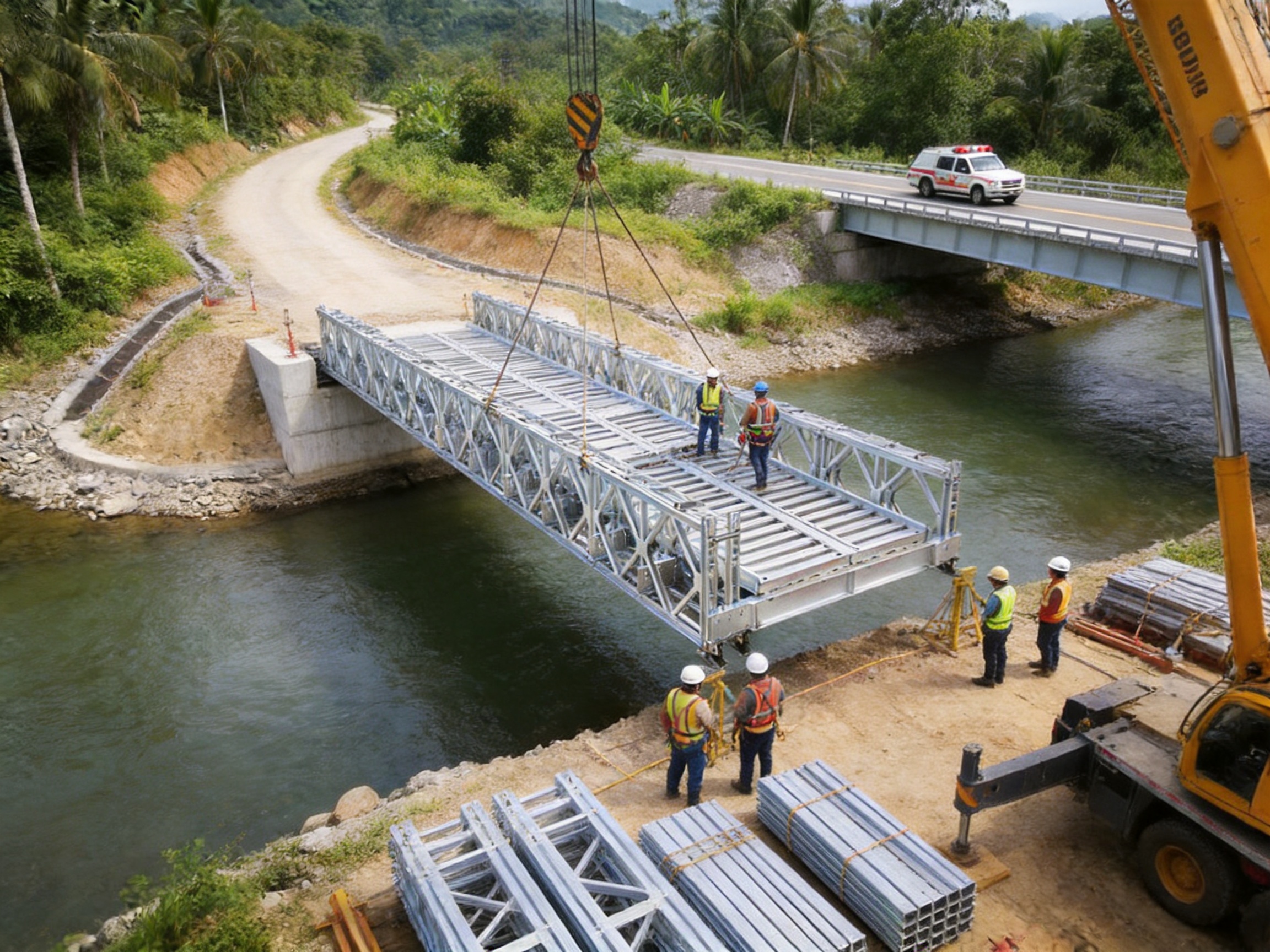
The CB100 Bailey bridge offers a practical alternative. Built from standardized modular steel components, it can be transported in manageable sections, assembled near the project site, and installed with comparatively limited heavy equipment. Its configuration can also be adapted to project-specific requirements, including traffic width, span arrangement, load demand, environmental exposure, and local topography.
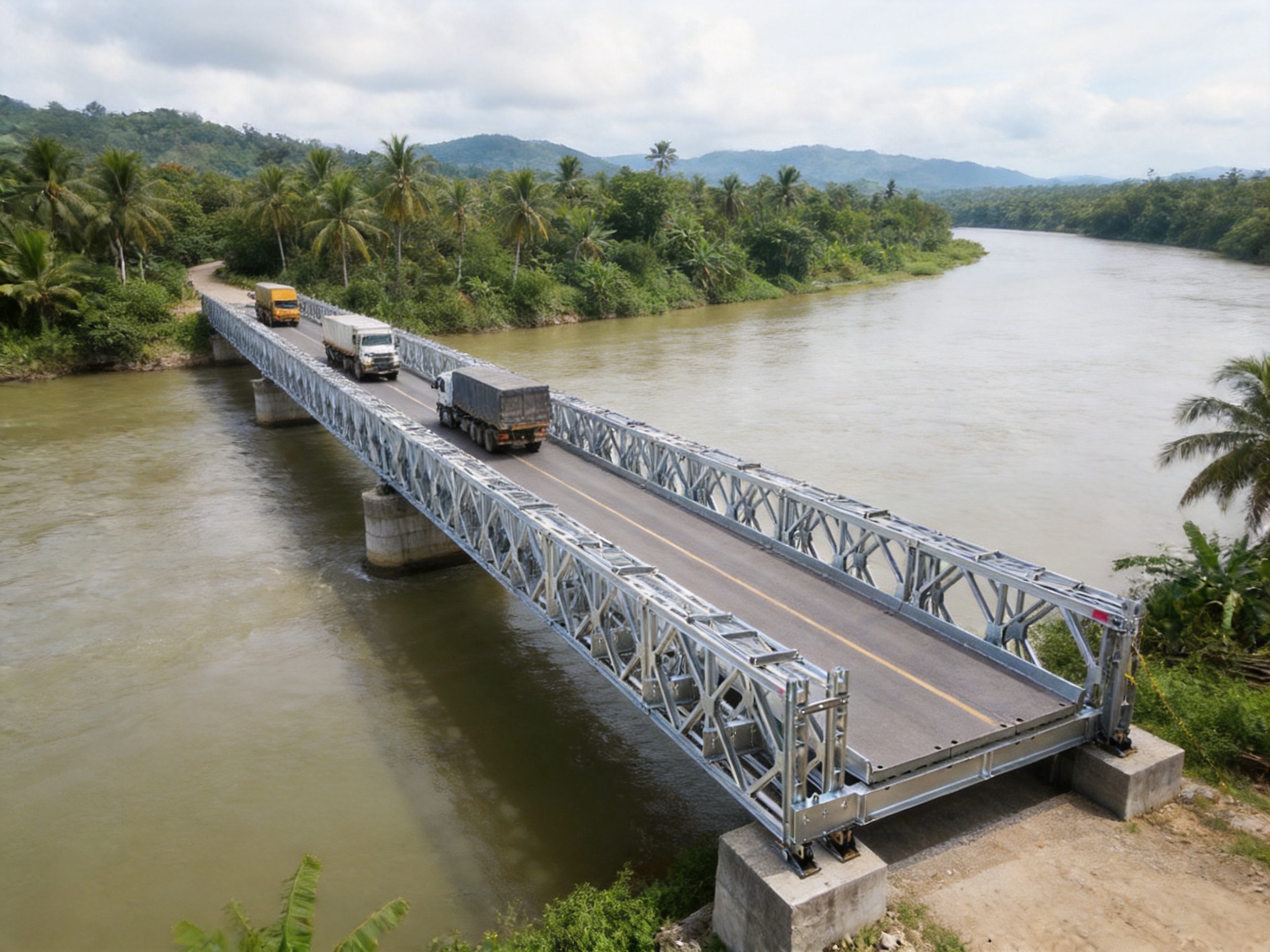
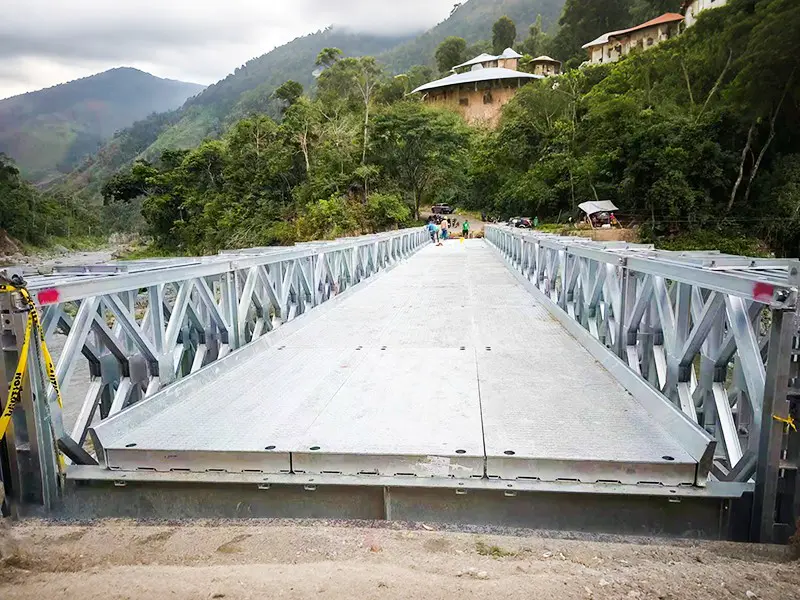
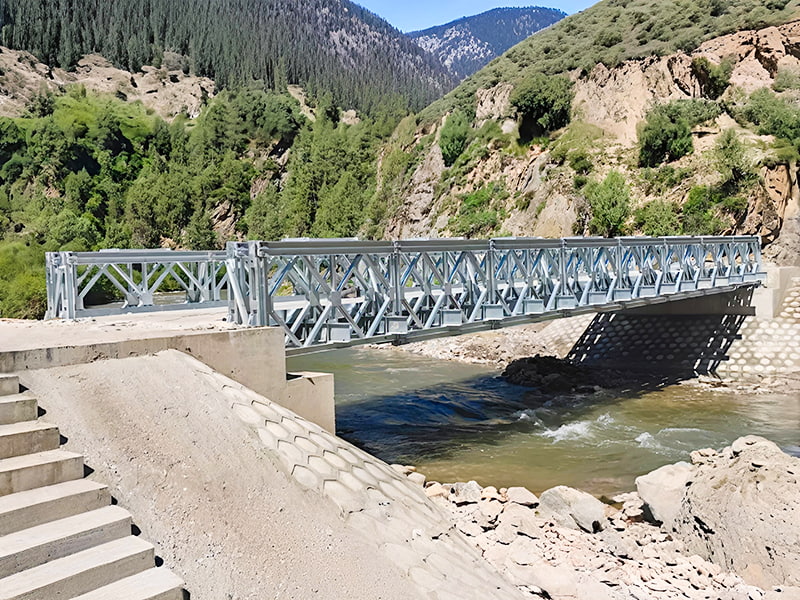
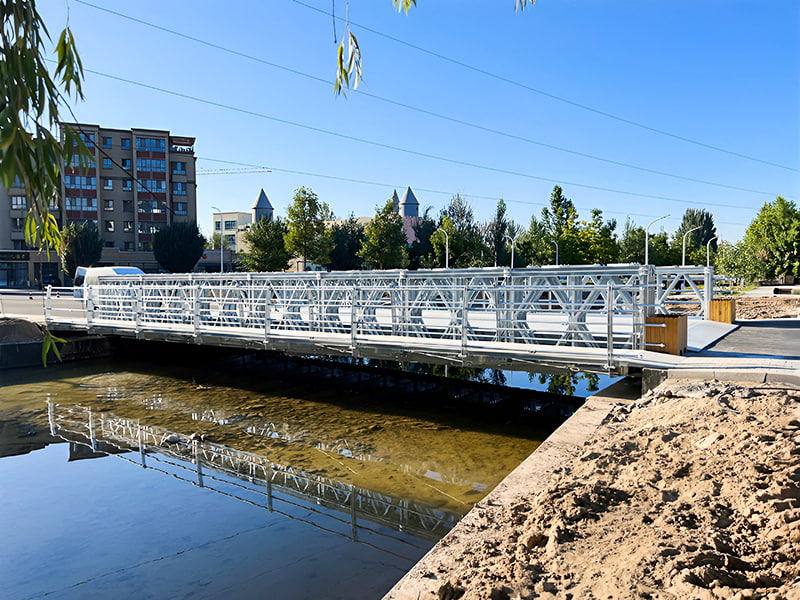
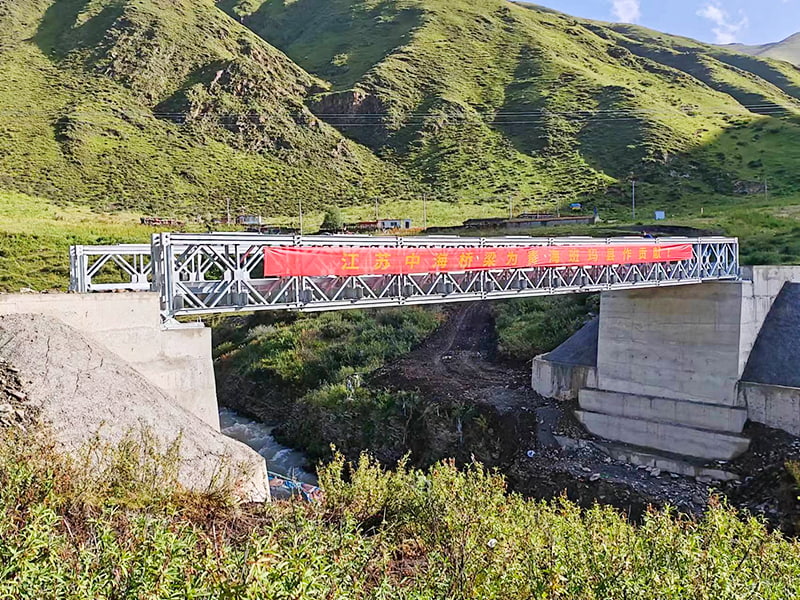
The featured project is a customized CB100 Bailey bridge supplied for a site in the Philippines. It uses a double-row, single-layer configuration and is designed for double-lane service. The bridge was supplied as a complete system of Bailey panels and associated components. Its design was adjusted to suit local hydrological and topographical conditions, while hot-dip galvanization was applied to improve corrosion resistance in a high-temperature, high-salinity marine environment.
This project demonstrates how a modular bridge can combine standardized engineering with customized execution. Instead of treating modularity as a limitation, the bridge uses standardized components as a foundation for flexible design. The result is a bridge system intended to deliver rapid construction, structural reliability, environmental durability, and controlled project cost.
The manufacturing and engineering support behind the bridge are equally important. Jiangsu Zhonghai Bridge Equipment Co., Ltd. integrates design, fabrication, quality management, automated welding, precision steel processing, and project support. This integrated approach enables the supplier to control more stages of production and coordinate the final bridge system more effectively than a fragmented procurement model.
CB 100 Bailey Bridge Double-Row Single-Layer Custom Galvanized Bailey Bridge
Project Overview: A Customized CB100 Modular Bridge
The CB100 Bailey bridge belongs to the family of modular panel bridge systems derived from the widely recognized Bailey bridge concept. Its principal structural elements are prefabricated steel panels and connecting components that can be combined into different bridge arrangements. The system is intended to provide a repeatable and efficient method of creating temporary, semi-permanent, or permanent access infrastructure.
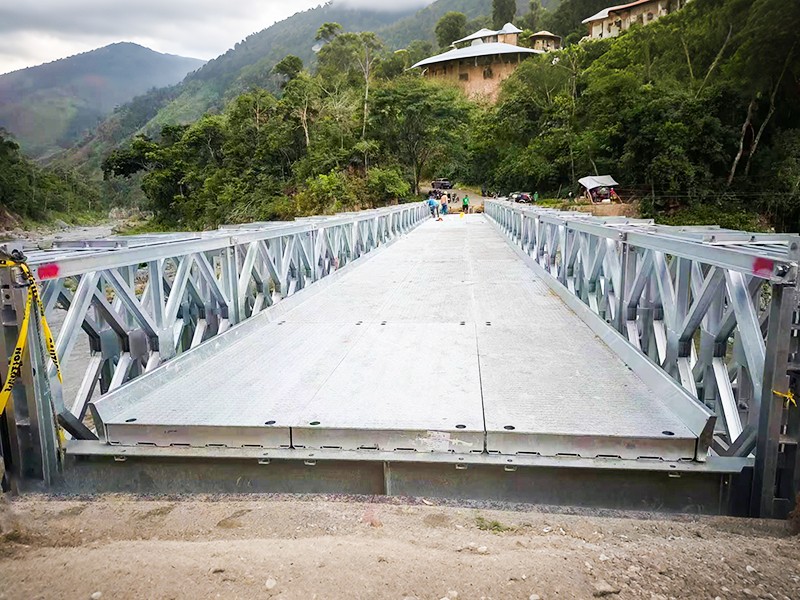
For the Philippine project, the selected arrangement is a double-row, single-layer configuration. In practical terms, the main load-carrying panel assembly uses two rows of Bailey panels positioned transversely, while the bridge remains in a single-layer vertical arrangement. The project is also described as a double-lane bridge, meaning that the deck and supporting arrangement are developed to accommodate two-way vehicle movement or a project-specific double-lane traffic requirement.
Configuration terminology can vary according to regional engineering practice, supplier documentation, and the way a bridge is described in procurement documents. For this reason, final design drawings, load calculations, deck details, approach geometry, and foundation requirements should always be reviewed and approved by the responsible project engineer. The important point is that this bridge was not treated as an off-the-shelf product with no adaptation. Its arrangement was selected and refined according to the client’s functional requirements and site conditions.
The supplied system includes Bailey panels and the associated components needed for erection and structural integration. Depending on the approved design, a modular bridge package may include panel units, transoms, stringers, bracing members, connection pins, bolts, sway braces, deck support components, approach elements, and other accessories. The exact bill of materials is determined by span length, loading requirements, roadway width, support conditions, and the selected erection method.
A major benefit of this system is the relationship between standardized parts and project-specific engineering. Standardized parts simplify manufacturing, inspection, replacement, transport, and future reuse. Project-specific engineering ensures that the bridge is not merely assembled according to a generic pattern, but is instead suited to the actual site and operating conditions.
Key characteristics of the featured bridge
| Item | Project characteristic | Engineering significance |
|---|---|---|
| Bridge type | CB100 Bailey bridge | Uses modular steel panels and repeatable connection principles |
| Structural arrangement | Double-row, single-layer | Provides a reinforced panel configuration for the selected application |
| Traffic function | Double-lane bridge | Supports a broader roadway arrangement than a single-lane installation |
| Project location | Philippines | Requires attention to tropical weather, rainfall, humidity, and marine exposure |
| Surface protection | Hot-dip galvanization | Improves resistance to atmospheric and salt-related corrosion |
| Design approach | Customized to local conditions | Addresses hydrology, topography, access, budget, and client requirements |
| Supply scope | Bailey plates and components | Provides a coordinated modular package for bridge construction |
Why the CB100 System Is Suitable for Challenging Projects
Bridge projects in remote and rapidly developing areas often face several constraints at the same time. Construction materials may need to travel long distances. The site may have limited road access. Local labor and heavy lifting equipment may be restricted. Seasonal flooding can shorten the available construction window. In coastal regions, the atmosphere may accelerate steel corrosion. A suitable bridge system must respond to all of these issues without creating an unnecessarily complex construction process.
The CB100 modular bridge addresses these challenges through prefabrication and repeatable assembly. Instead of manufacturing the complete bridge at the site, the principal structural members are produced in a controlled factory environment. The components can then be packed, transported, inspected upon arrival, and assembled in a planned sequence.
Modular construction also reduces dependence on large-scale site fabrication. Field work is still important, especially for foundations, abutments, deck installation, alignment, and safety control, but the amount of cutting, drilling, fitting, and welding required on site can be reduced. This is particularly valuable where weather conditions are unpredictable or where site access is difficult.
Another advantage is scalability. A bridge assembled from modular panels can be configured for different span requirements by changing the number of panels, adding reinforcement, using different erection arrangements, or modifying the support and deck system. The selected arrangement must be confirmed through engineering calculations, but the modular principle provides greater flexibility than a fixed, one-piece structural design.
Rapid deployment
A Bailey bridge is commonly selected when the project schedule is critical. Factory-fabricated components can be produced while site preparation is underway. Once the foundations and access areas are ready, erection can proceed through a planned sequence. Depending on the span, site conditions, available equipment, and local construction organization, the bridge may be launched, lifted, or assembled in sections.
This schedule advantage is especially valuable for emergency access, flood recovery, rural connectivity, construction detours, industrial access roads, and temporary traffic restoration. A modular bridge does not remove the need for proper engineering and inspection, but it can shorten the period between material delivery and operational use.
Transport efficiency
Large conventional bridge members can be difficult and expensive to transport. Modular Bailey panels are designed as manageable units that can be loaded, unloaded, stacked, and moved using ordinary or commonly available logistics equipment, subject to project-specific weight and dimensional requirements.
Efficient transport is not limited to the initial delivery. If the bridge is later dismantled, relocated, expanded, or stored, its components can be handled individually. This creates a potential lifecycle advantage for owners and contractors that operate across multiple projects or need a reusable emergency bridge inventory.
Adaptation to local geography
Topography directly influences bridge length, approach alignment, elevation, span arrangement, and foundation position. Hydrological conditions affect clearance, water flow, flood levels, scour risk, debris impact, and the location of temporary works. A standardized modular system can be engineered around these conditions without requiring every structural component to be redesigned from the beginning.
For the Philippine project, customization was important because local site conditions include tropical rainfall and, in many areas, strong coastal or near-coastal environmental exposure. The bridge design therefore had to consider more than nominal span and traffic function. It also needed to address corrosion protection, construction access, maintenance expectations, and cost control.
Double-Row, Single-Layer Design and Double-Lane Function
The selected double-row, single-layer CB100 arrangement represents a balance between structural capacity, material use, and construction simplicity. A single-layer panel configuration can reduce the vertical complexity of the main truss assembly compared with deeper or multi-layer arrangements. At the same time, the double-row arrangement provides a wider or more robust transverse support configuration for the selected design.
For a double-lane bridge, the deck width and supporting components must be coordinated carefully. The design must consider vehicle envelopes, lane separation, edge clearances, pedestrian or maintenance provisions where applicable, wheel loads, impact effects, lateral stability, and the behavior of the deck system under repeated traffic. These matters are established through engineering calculations and approved drawings rather than through the panel arrangement alone.
The modular panels provide the primary geometric framework, while transoms, stringers, bracing members, deck components, and connection hardware work together to transfer loads. The quality of each individual component matters, but system performance depends on the correct interaction of all components. Proper pin installation, bolt tightening, alignment, bracing, bearing placement, and deck fit-up are therefore essential.
One competitive advantage of a properly engineered modular system is that it combines a recognizable structural concept with a controlled component inventory. Contractors can work with repeatable connection details rather than developing a completely new assembly method for every bridge. At the same time, engineering customization allows the supplier to adjust the system to the project instead of forcing the client to accept an unsuitable standard arrangement.
Structural coordination
For a double-lane bridge, the design process typically coordinates the following elements:
First, the main panel lines must be arranged so that the bridge has adequate longitudinal strength and transverse stability. Second, transoms and stringers must support the deck system at the required spacing. Third, bracing must control lateral movement and help maintain the intended geometry. Fourth, bearings and supports must distribute reactions into the abutments or foundations. Finally, the approach roads and transition zones must connect safely to the bridge deck.
These elements should be evaluated together. A bridge that has sufficient panel strength but inadequate deck support or poor approach transitions may still perform unsatisfactorily. The value of a full modular bridge package lies in the coordinated supply of the components and the engineering information required to assemble them correctly.
Hot-Dip Galvanization for Tropical and Marine Environments
Corrosion protection is one of the most important features of the featured project. The Philippines includes many locations exposed to intense sunlight, high humidity, heavy rainfall, salt-laden air, and temperature variation. Coastal and island environments can be particularly demanding because airborne chlorides may accelerate the corrosion of unprotected or inadequately protected steel.
Hot-dip galvanization protects steel components by applying a metallurgically bonded zinc coating. During the process, properly prepared steel is immersed in molten zinc. The zinc reacts with the steel surface to create a series of zinc-iron alloy layers, generally covered by an outer layer of zinc. This structure provides both a barrier effect and a degree of sacrificial protection.
The barrier effect separates the underlying steel from moisture and aggressive atmospheric contaminants. If the coating is locally damaged, zinc can provide sacrificial protection to exposed steel near the damaged area, subject to the size and nature of the damage. This is different from a simple paint film, which may lose protection quickly once a scratch reaches the steel substrate.
Benefits of galvanization
Hot-dip galvanization can provide several important benefits for modular bridge components:
Improved atmospheric durability: A galvanized coating helps protect steel from moisture, oxygen, and common atmospheric contaminants. This is valuable in humid tropical climates where repeated wetting and drying can accelerate corrosion.
Resistance to salt exposure: Marine and coastal environments contain chloride particles that can be highly aggressive to steel. Galvanization does not eliminate all corrosion risk, but it provides a strong protective system for exposed structural components when properly specified and maintained.
Reduced maintenance frequency: A durable factory-applied coating can reduce the need for frequent repainting and localized corrosion treatment. This is especially important where bridges are remote and maintenance access is expensive.
Complete coverage of accessible surfaces: The immersion process can protect a broad range of external and internal surfaces, including edges and areas that may be difficult to coat uniformly by manual painting. Component design must still provide suitable drainage and venting for the galvanizing process.
Visual inspection: Galvanized surfaces can be inspected for coating continuity, visible defects, bare areas, excessive deposits, and handling damage. Inspection should follow the applicable project specification and quality plan.
Galvanization should be understood as part of a broader durability strategy. Proper drainage, avoidance of water traps, correct detailing, suitable fasteners, controlled installation, routine inspection, and repair of transport or erection damage all contribute to long-term service performance.
Galvanizing and project lifecycle cost
The lowest initial coating price does not necessarily produce the lowest bridge ownership cost. A coating that requires frequent maintenance can create recurring expenses for traffic control, labor, access equipment, surface preparation, and recoating materials. In contrast, a durable hot-dip galvanized system may improve lifecycle value by extending maintenance intervals and reducing the frequency of major corrosion repairs.
This does not mean that galvanized steel is maintenance-free. Owners should still establish inspection intervals and pay attention to areas where dirt, standing water, debris, or dissimilar metals may create localized problems. However, the protective system is well suited to projects where durability and limited maintenance access are important decision factors.
Engineering Customization for Hydrological and Topographical Conditions
A bridge cannot be evaluated solely by its structural span. The surrounding terrain and water environment determine how the bridge is approached, supported, drained, inspected, and protected. The Philippine project was customized to adapt to local hydrological and topographical conditions, making site-specific engineering a central part of the solution.
Hydrological review may include ordinary water levels, seasonal flood levels, flow velocity, debris movement, bank stability, scour potential, sediment behavior, and the required clearance beneath the bridge. In areas exposed to typhoons or intense rainfall, the design may also need to consider rapidly changing water levels and access limitations during construction.
Topographical review includes the elevation and alignment of both approaches, the width of the crossing, the location of stable ground, the geometry of the banks, and the available working area for assembly. If the bridge is intended for a remote site, logistics planning must also consider the route from the port or main road to the installation location.
Customization may involve selecting the bridge length, panel arrangement, deck width, bearing locations, approach details, corrosion protection system, and erection method. The supplier’s role is to coordinate these factors into a practical package that reflects the client’s operational requirements and budget.
Design-stage cost optimization
Cost control is most effective when it begins during design. Once steel has been fabricated, shipped, and delivered to a difficult site, opportunities for economical changes are limited. Early coordination can help identify the most efficient span arrangement, avoid unnecessary reinforcement, optimize the component list, reduce transport complications, and simplify erection.
For the featured bridge, cost-control optimization was implemented during the design phase while maintaining quality and safety objectives. This approach is different from reducing cost through indiscriminate material substitution or cutting essential scope. Responsible optimization seeks to remove avoidable complexity while preserving the structural and functional requirements of the bridge.
Examples of design-stage optimization may include selecting a suitable number of spans, minimizing unusual component types, standardizing connection details, coordinating the deck system with available materials, and choosing an erection method that matches local equipment. Each proposal must be checked by qualified engineers and accepted by the client before implementation.
Manufacturing Strengths and Production Control
The performance of a modular steel bridge depends heavily on manufacturing consistency. Panels must have accurate dimensions, reliable welds, correctly positioned connection holes, adequate surface preparation, and traceable quality records. Small deviations can accumulate during assembly and affect alignment, pin installation, deck fit, or bracing connections.
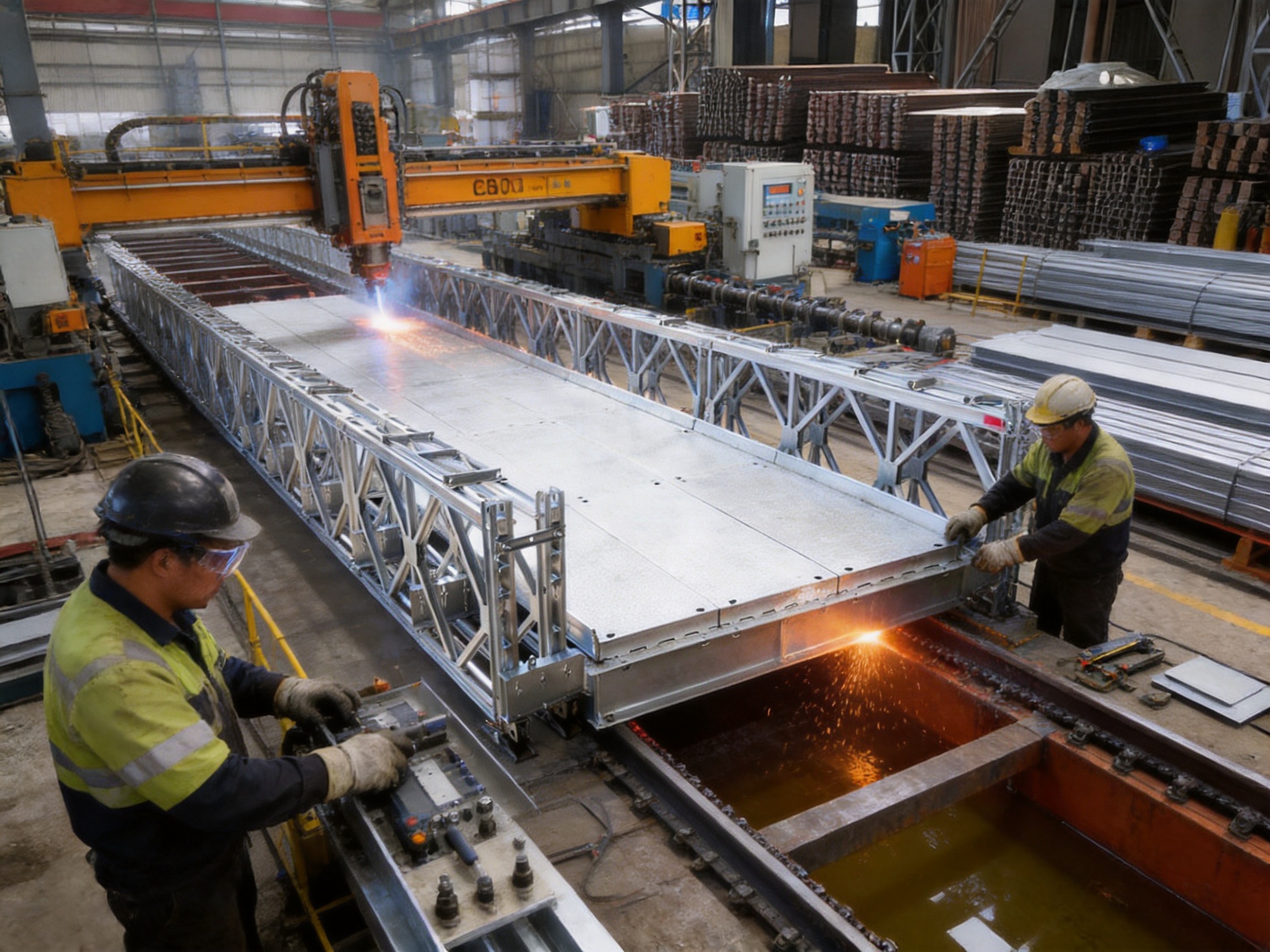
Jiangsu Zhonghai Bridge Equipment Co., Ltd. combines engineering design, precision manufacturing, quality management, automated welding, and steel fabrication within an integrated production approach. This gives the company the ability to coordinate design intent with manufacturing execution instead of treating fabrication as a disconnected activity.
Industrial-scale production also supports repeatability. Standardized workflows can reduce variation between batches and make it easier to inspect, document, and package components. The use of automation in suitable welding and fabrication operations can improve consistency, reduce dependence on irregular manual techniques, and support stable production output.
Engineering and drafting
Manufacturing begins with clear engineering information. Project drawings define component geometry, material requirements, connection positions, welding details, tolerances, surface treatment, identification marks, and packaging requirements. Design review is important because modular components must satisfy both structural calculations and manufacturing practicality.
The engineering team must also consider the sequence of assembly. A component that is theoretically strong but difficult to install can create unnecessary field risk. Connection access, lifting points, transport orientation, drainage during galvanization, and inspection access should be considered before fabrication begins.
Steel preparation and precision fabrication
Steel preparation may include material receiving, identification, cutting, forming, drilling, edge treatment, fit-up, welding, dimensional inspection, and surface preparation. Each stage affects the next. Accurate cutting supports proper fit-up. Correct hole positioning supports pin and bolt installation. Controlled welding reduces distortion. Appropriate surface preparation supports a consistent galvanizing result.
Precision fabrication is particularly important for Bailey panels because the panels must connect with other standardized components. The component is not an isolated steel frame; it is part of an interchangeable system. Dimensional consistency therefore contributes directly to field assembly efficiency and bridge reliability.
Automated welding and weld quality
Automated welding can be used for suitable repetitive welds where the geometry, access, and production volume support mechanization. Automation can improve travel-speed consistency, deposition control, and repeatability. It can also reduce variation caused by fatigue during long production runs.
Automation does not replace engineering judgment or inspection. Weld procedures must be selected according to the material, joint configuration, thickness, and applicable standards. Operators and inspectors remain responsible for setup, monitoring, visual examination, dimensional checks, and any required non-destructive testing.
Galvanizing preparation
Before hot-dip galvanization, steel components require suitable cleaning and preparation. Oil, grease, mill scale, rust, welding residues, and other contaminants can interfere with coating formation. Component design must also address venting and drainage so that cleaning solutions and molten zinc can enter and leave enclosed or partially enclosed areas safely.
After galvanizing, components should be inspected for coating continuity, bare spots, excessive zinc buildup, distortion, blocked holes, and handling damage. Any approved repair should be carried out according to the applicable galvanizing and project requirements. Correct packaging is also important because freshly treated components can be damaged by careless stacking, dragging, or contact with incompatible materials.
Quality Management for Modular Bridge Components
Quality management is not a single final inspection. It is a process that begins with incoming materials and continues through fabrication, surface protection, packaging, dispatch, and technical support. A reliable bridge supplier should be able to connect the final product to records demonstrating how it was manufactured and checked.
For modular bridge production, a practical quality program may include material certificates, heat or batch identification, dimensional inspection records, weld inspection reports, galvanizing records, coating checks, component marking, packing lists, and release documentation. The specific documents depend on the contract, applicable standards, and client requirements.
Inspection should focus on the characteristics that influence assembly and structural performance. These include panel dimensions, hole locations, straightness, weld appearance, connection fit, pin and bolt compatibility, bracing geometry, coating condition, and component identification.
Clear marking is especially valuable on a modular bridge project. Components should be identifiable during receiving, storage, and erection. Accurate packing lists help contractors locate the required parts and reduce the risk of using an incorrect component in a critical location. Organized packaging also improves inventory control when the bridge is dismantled for future reuse.
Standards and technical compliance
The company states that its factory workflows support products complying with ASTM, EN, and national specifications. The applicable standard depends on the project location, contract documents, design basis, and authority requirements. Compliance should therefore be confirmed for each order rather than assumed solely from the general product category.
Engineering review should establish the design loads, material grades, weld requirements, corrosion protection requirements, inspection criteria, allowable tolerances, and documentation package. Where projects involve public roads, military logistics, emergency response, or international development, coordination with the owner, designer, contractor, and approving authority is particularly important.
Advantages Compared with Less Integrated Bridge Supply Options
Clients comparing modular bridge suppliers often evaluate price first, but the lowest quoted component price may not represent the lowest project cost. A bridge package can become expensive when drawings are incomplete, components are inconsistent, galvanizing is poorly coordinated, packaging is inadequate, or technical questions are not answered quickly.
The featured supplier offers several advantages associated with an integrated manufacturing model.
One coordinated source
When engineering, fabrication, surface treatment, and project support are coordinated by one supplier, responsibility is easier to define. The client can communicate project requirements through a more direct channel, and potential conflicts between separate subcontractors can be reduced.
Customization without abandoning standardization
Some suppliers provide only generic bridge kits, while others produce fully customized structures at a higher cost and longer lead time. A CB100 modular system occupies a useful middle position. It uses standardized components for efficiency but allows the arrangement, protection system, and project package to be adapted to site needs.
Improved suitability for harsh climates
The hot-dip galvanized finish is a major advantage for tropical, humid, and marine conditions compared with untreated steel or coating systems selected without regard to exposure. The coating supports longer service intervals and provides a practical durability response for locations where repainting is difficult.
Reduced field fabrication
Factory-fabricated panels and components reduce the need for extensive field welding and cutting. This can improve installation consistency, reduce hot-work risks, and make the construction program less sensitive to weather and site limitations.
Lifecycle flexibility
Modular components can potentially be disassembled, stored, repaired, reconfigured, or transferred to another location. This flexibility can be important for emergency agencies, contractors, military logistics units, mining operations, and infrastructure owners managing several remote sites.
International project experience
The company’s project experience includes coastal engineering in the Maldives, temporary access bridges associated with the Shenzhen–Zhongshan Corridor, structural components for the Hangzhou Expo Center, multi-span Bailey bridges for the Lalin Railway, and flood-response or emergency bridge deployments in multiple regions. Such experience indicates familiarity with different project environments, delivery requirements, and structural applications.
Past project experience does not replace project-specific engineering, but it can help a supplier understand the practical issues that arise during production, export packaging, site delivery, assembly, and operational support.
Construction and Erection Considerations
A modular bridge is designed to simplify construction, but safe erection still requires planning. Before components arrive, the project team should confirm access roads, storage areas, lifting equipment, temporary works, foundation readiness, worker training, traffic control, weather conditions, and emergency procedures.
The erection method may involve assembly behind an abutment and launching across the gap, crane placement of assembled sections, staged panel installation, or another approved procedure. The method depends on span length, terrain, water depth, available equipment, ground capacity, and the need to maintain traffic or waterway access.
During erection, the bridge must be stabilized at every stage. Temporary conditions can create different force patterns from those experienced by the completed bridge. Bracing, launching nose arrangements, temporary supports, lifting points, and connection sequences must follow the approved erection plan.
Components should be inspected when received. Galvanized surfaces should be checked for damage caused during transport. Pins, bolts, braces, and deck elements should be verified against the packing list. Damaged or missing components should be reported before assembly advances to a stage where correction becomes difficult.
Foundation and support coordination
The modular superstructure cannot compensate for inadequate foundations or unstable abutments. Support locations must be designed for the bridge reactions and the local ground conditions. In water crossings, scour protection and bank stabilization may be necessary. The bridge elevation must provide the required clearance and avoid creating unacceptable obstruction to flow.
Bearing surfaces should be level, correctly positioned, and capable of transferring the design reactions. Alignment errors at the supports can introduce unwanted forces into the panels and deck. A carefully prepared foundation and accurate setting-out process are therefore essential to successful modular bridge installation.
Deck and approach transitions
The bridge deck must provide a suitable running surface and transfer traffic loads to the supporting members. Depending on the project, the deck may use steel plates, modular deck units, timber elements, concrete-related components, or another approved system. The selected deck must be compatible with the traffic demand, environment, maintenance plan, and bridge design.
Approach transitions deserve equal attention. Abrupt changes in elevation, inadequate drainage, weak fill, or poor edge protection can create operational problems even when the main span is structurally sound. The road approaches should be compacted, aligned, drained, and connected to the bridge deck according to the approved civil design.
Maintenance and Long-Term Performance
One of the strongest arguments for modular bridge construction is the possibility of efficient inspection and component-level maintenance. Because the bridge is assembled from identifiable parts, inspections can focus on panels, pins, bolts, braces, deck units, bearings, and protective surfaces individually.
Routine inspections should look for coating damage, rust staining, deformation, loose or missing fasteners, damaged pins, cracking, abnormal movement, deck wear, blocked drainage, bearing problems, and changes in the approach embankment. Inspections should be more frequent after flooding, impact events, exceptional traffic, typhoons, or other unusual conditions.
Hot-dip galvanization reduces corrosion risk, but areas subject to abrasion or repeated impact may require attention. Transport and erection equipment can scratch or locally damage the coating. Approved repair procedures should be used where necessary. Cut edges, drilled areas, weld repairs, and damaged surfaces should not be left untreated in a corrosive environment.
Maintenance records should identify the inspection date, location, observed condition, corrective action, responsible person, and follow-up requirement. This information supports lifecycle management and helps the owner determine when a component should be repaired, reinforced, replaced, or removed from service.
Operational control
Owners should display and enforce the approved load, speed, width, and traffic restrictions. A double-lane configuration does not mean that every vehicle combination is automatically permitted. Actual operating limits depend on the design basis, deck system, support conditions, traffic pattern, and approval documents.
Overloaded vehicles, uncontrolled impact, poor drainage, unauthorized modifications, and inadequate maintenance can reduce bridge performance. Clear operating rules are therefore part of the bridge’s safety system.
Environmental and Economic Value
Modular bridges can provide environmental and economic benefits when their complete lifecycle is considered. Factory production can reduce the amount of construction activity required at sensitive sites. Shorter installation periods may reduce disturbance to waterways, traffic routes, agricultural areas, and local communities.
Reusable components can also reduce waste. A bridge that can be dismantled and redeployed may serve several projects over its service life. This is particularly valuable for emergency response organizations and contractors working across regions with changing access requirements.
Galvanization supports resource efficiency by extending the useful life of steel components and reducing the frequency of replacement. The environmental performance of the bridge still depends on transport distance, foundation construction, maintenance practices, and eventual recycling, but durable modular steel can be a responsible option when properly engineered and managed.
Economically, the bridge can create value through faster access, reduced construction disruption, lower site labor requirements, and potential reuse. A cost-effective bridge is not simply one with a low purchase price. It is a system that meets the required performance while reducing avoidable expenditure throughout design, transport, construction, operation, and maintenance.
Applications for the CB100 Bailey Bridge
The featured double-row, single-layer bridge can be considered for a broad range of applications, subject to engineering review and local approval.
Rural road connectivity: The bridge can provide access across rivers, drainage channels, valleys, and areas where conventional construction would take longer to complete.
Emergency and disaster response: Floods, landslides, earthquakes, and storms can damage existing crossings. Modular components can support the rapid restoration of road access.
Construction detours: During the replacement or rehabilitation of an existing bridge, a modular bridge can provide a temporary traffic route when the site and design permit.
Industrial and mining access: Modular bridges can support controlled access to construction areas, resource sites, warehouses, and temporary logistics routes.
Water conservancy projects: A bridge can serve construction traffic and maintenance access around reservoirs, channels, flood-control works, and river improvement projects.
Military and strategic logistics: Transportable bridge components can support route restoration and controlled access where rapid deployment is essential.
Coastal and island infrastructure: Galvanized steel and modular logistics can be advantageous where exposure is severe and delivery routes are limited.
Why Choose a Specialized Modular Bridge Manufacturer
A specialized supplier contributes more than steel components. It provides knowledge of bridge configuration, fabrication tolerances, protection systems, packaging, erection sequence, and technical coordination. This knowledge can reduce the risk of errors that only become visible after materials arrive at the site.
Jiangsu Zhonghai Bridge Equipment Co., Ltd. is positioned as a manufacturer and OEM supplier serving modular steel bridge, Bailey bridge, customized steel component, and structural fabrication requirements. Its production base in Zhenjiang, Jiangsu Province, connects engineering capability with an industrial manufacturing environment and established transportation networks.
The company’s stated capabilities include advanced automation, standardized workflows, automated welding, precision steel fabrication, engineering design, quality management, and on-site support. Together, these capabilities support a complete project process from initial requirements through manufacturing and delivery.
For international buyers, supplier communication is especially important. A successful project requires accurate technical clarification, transparent component lists, export-ready packing, documentation, and timely responses to installation questions. A manufacturer that understands international delivery and diverse standards can help reduce coordination problems between the owner, designer, contractor, and local authorities.
Recommended Procurement Process
Clients considering a CB100 modular bridge should begin by defining the project requirements clearly. Important information includes the required span or spans, roadway width, traffic type, design loading, bridge elevation, site location, water levels, soil conditions, approach alignment, environmental exposure, preferred deck system, installation method, and expected service period.
The supplier can then prepare a preliminary configuration and identify the information needed for final design. The client should review the proposed arrangement with its engineer and approving authority. Any local requirements relating to road safety, seismic conditions, flood clearance, corrosion protection, fire safety, or environmental permitting should be incorporated at this stage.
Before production, the parties should confirm the approved drawings, material specifications, surface treatment, inspection requirements, packaging, delivery terms, spare parts, erection support, and documentation. Changes made after fabrication begins can affect cost and schedule, so design coordination should be completed as early as possible.
Upon delivery, the contractor should inspect all packages, record any transport damage, organize components by erection sequence, and protect galvanized surfaces from unnecessary abrasion. A pre-erection meeting should confirm the method statement, lifting plan, temporary works, safety procedures, weather limitations, and communication responsibilities.
Frequently Asked Questions
What is a CB100 Bailey bridge?
A CB100 Bailey bridge is a modular steel bridge system assembled from prefabricated panels and related components. The system is designed to support efficient transport, repeatable erection, and adaptable bridge configurations. Final capacity, span, roadway width, and application depend on the approved engineering design.
What does double-row, single-layer mean?
It describes the arrangement of the main Bailey panel system. Double-row generally refers to two panel rows used in the transverse structural arrangement, while single-layer refers to a single vertical layer of panels. The exact interpretation should be confirmed through the project drawings and structural calculations.
Is the featured bridge suitable for two-way traffic?
The featured project is described as a double-lane bridge. Its suitability for specific two-way traffic, vehicle types, and loading conditions depends on the approved roadway width, deck system, structural calculations, traffic controls, and local authority requirements.
Why was hot-dip galvanization selected?
Hot-dip galvanization was selected to improve corrosion resistance in a high-temperature, high-humidity, and high-salinity environment. The zinc coating provides barrier and sacrificial protection, helping the bridge withstand atmospheric exposure and potentially reducing maintenance requirements.
Is a galvanized bridge maintenance-free?
No. Galvanization significantly improves corrosion protection but does not eliminate the need for inspection. Owners should check for coating damage, standing water, debris accumulation, loose connections, impact damage, deck wear, and foundation or approach problems.
Can the bridge be customized?
Yes. The modular system can be adapted through the selection of panel arrangement, bridge length, roadway width, deck details, supports, corrosion protection, and erection method. Customization must be based on project data and approved engineering calculations.
What site information is needed for a quotation?
Useful information includes the required crossing length, roadway width, design traffic, bridge elevation, water levels, site photographs, access conditions, soil or foundation information, environmental exposure, preferred delivery location, and installation requirements. More complete information allows a more accurate technical and commercial proposal.
How are the bridge components transported?
The components are transported as separate modular units and packaged according to the project requirements. The final transport method depends on component dimensions, shipment route, port or border requirements, local access, and the selected delivery terms.
Can the bridge be installed without major specialized equipment?
Many modular bridges can be erected with commonly available lifting and construction equipment, but the required equipment depends on the span, site conditions, erection method, and component weights. A qualified engineer should approve the erection plan and lifting arrangements before construction begins.
Can the bridge be relocated after installation?
One advantage of modular construction is that components can potentially be dismantled and reused or reconfigured. Relocation requires inspection, engineering review, suitable storage, replacement of damaged parts, and approval of the new site and configuration.
How does the supplier control quality?
Quality control can include material verification, dimensional inspection, weld inspection, surface preparation checks, galvanizing inspection, component marking, packaging control, and documentation. The exact inspection and certification package should be agreed in the project contract.
Does the manufacturer provide OEM services?
The company is presented as a Bailey bridge manufacturer and OEM supplier. OEM cooperation may include customized configurations, engineered components, private project requirements, and coordinated manufacturing. The scope should be confirmed for each order.
What makes this bridge cost-effective?
Its cost-effectiveness comes from the combination of standardized modular components, factory fabrication, reduced field work, adaptable design, design-stage optimization, transport efficiency, and potential reuse. The final value depends on the project’s span, loading, site conditions, logistics, and maintenance strategy.
Conclusion
The customized CB100 Bailey bridge supplied for the Philippine project illustrates the practical value of modular steel bridge engineering. Its double-row, single-layer configuration and double-lane function are combined with site-specific design to address local hydrological, topographical, logistical, and operational requirements.
Hot-dip galvanization strengthens the bridge’s suitability for tropical and marine exposure by providing durable zinc protection against moisture and salt-related corrosion. This is particularly important where access for maintenance is limited or where the cost of repeated repainting would be high.
The bridge’s competitive value also comes from the manufacturing process behind it. Integrated engineering, precision fabrication, automated welding, standardized workflows, quality control, careful galvanizing preparation, and coordinated delivery help transform a modular concept into a dependable project solution.
Compared with less integrated bridge supply options, the system offers a combination of customization and standardization. It can be adapted to a particular site without abandoning the manufacturing and logistics advantages of repeatable components. It can also support rapid deployment, efficient transport, reduced field fabrication, and possible future relocation or reuse.
For owners, contractors, infrastructure agencies, and international development projects, the most important decision is not simply whether to purchase a bridge kit. It is whether the complete system has been engineered, manufactured, protected, delivered, erected, and maintained as one coordinated solution. When these elements are managed properly, the CB100 Bailey bridge can provide a practical, durable, and economical connection for demanding infrastructure environments.
References
1. Project Product Information: Customized CB100 Bailey Bridge, Double-Row Single-Layer Configuration, Philippine Project.
2. Jiangsu Zhonghai Bridge Equipment Co., Ltd., Company Profile and Manufacturing Capability Statement.
3. Bailey Bridge Modular Construction Principles and Standard Panel Bridge Engineering Practices.
4. Hot-Dip Galvanizing Association, Technical Guidance on Zinc Coatings for Structural Steel.
5. ASTM International, Standards and Practices Relating to Structural Steel, Welding, Coatings, and Inspection.
6. European Committee for Standardization, Structural Steelwork Execution and Corrosion Protection Guidance.
7. International Bridge Engineering Practice, Modular Bridge Erection, Inspection, and Maintenance Principles.
Product: CB 100 Bailey Bridge Double-Row Single-Layer Custom Galvanized Bailey Bridge


We respond quickly to all international requests and provide technical support when needed.
Product Category
Bailey Bridge/Modular Bridge Modular Steel Bridge Pedestrian Bridge Modular Pipe Bridge Truss Bridge Steel StructureContact Us

+86-511-84522866
+86-13921582699

zhwm@zjql.com

Building 1,83#, dantu New Town, Yanjiang Road, Dantu District, Zhenjiang, Jiangsu, China
Copyright © Jiangsu Zhonghai Bridge Equipment Co., Ltd. All
Rights
Reserved
China bailey bridge for sale
bailey bridge supplier from china
