
 English
 русский
 Español
 Português


Xie Wenlan — Modular Bridge Project Sales Specialist
27-Meter Double-Row Single-Layer Reinforced Bailey Bridge for Reliable Road Connectivity
Content
- 1 Overview of the 27-Meter Modular Bridge
- 2 Structural Configuration and Load-Bearing Concept
- 3 Advantages of the Double-Row Single-Layer Reinforced Design
- 4 Galvanization for High-Temperature and High-Salt Environments
- 5 Manufacturing Strengths and Production Capabilities
- 6 From Factory to Construction Site
- 7 Bridge Erection and Construction Support
- 8 Applications for Infrastructure and Emergency Response
- 9 Comparison with Conventional and Lower-Specification Alternatives
- 10 Project-Specific Design Considerations
- 11 Inspection, Maintenance, and Service Life
- 12 Why Manufacturing Partnership Matters
- 13 Recommended Procurement Process
- 14 Frequently Asked Questions
- 14.1 What is the main purpose of this 27-meter bridge?
- 14.2 What does double-row single-layer mean?
- 14.3 Is the bridge suitable for permanent use?
- 14.4 Why is galvanization important in coastal areas?
- 14.5 Can the bridge carry heavy vehicles?
- 14.6 How long does installation take?
- 14.7 Can the bridge be relocated?
- 14.8 What type of foundation is required?
- 14.9 Does the manufacturer provide erection assistance?
- 14.10 What standards can be used for the bridge?
- 14.11 How should the bridge be maintained?
- 14.12 What makes this bridge different from a basic modular bridge?
- 15 Conclusion
- 16 References
- 17 Product: CB 200 Bailey Bridge 27-Meter Double-Row Single-Layer Reinforced Bailey Bridge
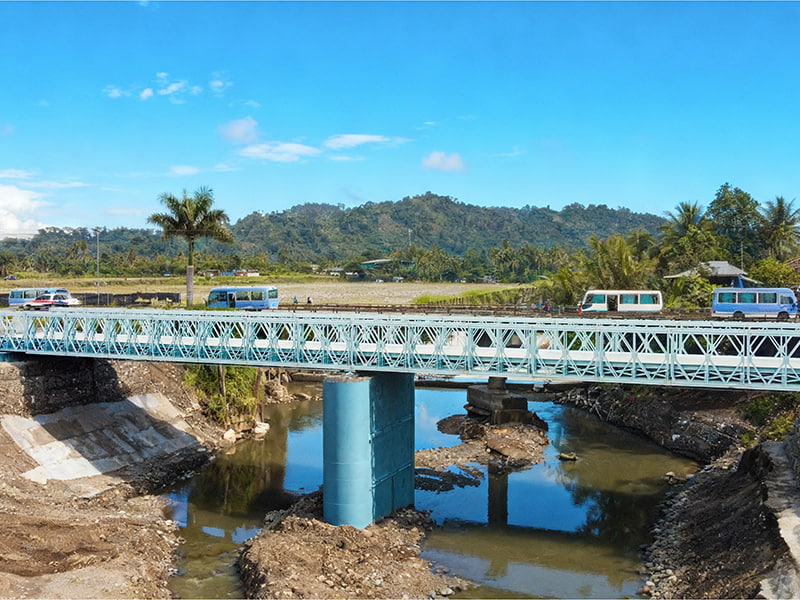
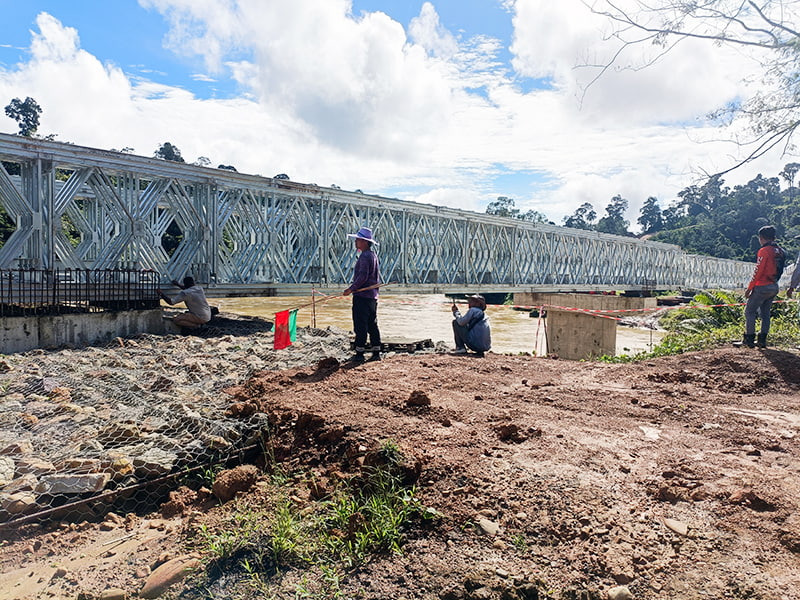
Modular bridges are essential infrastructure solutions when a road, river, construction corridor, industrial site, or emergency route must be connected quickly and safely. Unlike conventional bridges that often require long design periods, extensive permanent foundations, and highly specialized construction equipment, modular steel bridges can be configured, transported, and assembled according to specific site conditions. The 27-meter double-row single-layer reinforced Bailey bridge described in this article represents a practical application of that concept. Deployed in Colombia, it was designed for local road conditions, daily traffic requirements, and a challenging high-temperature, high-salt marine environment.
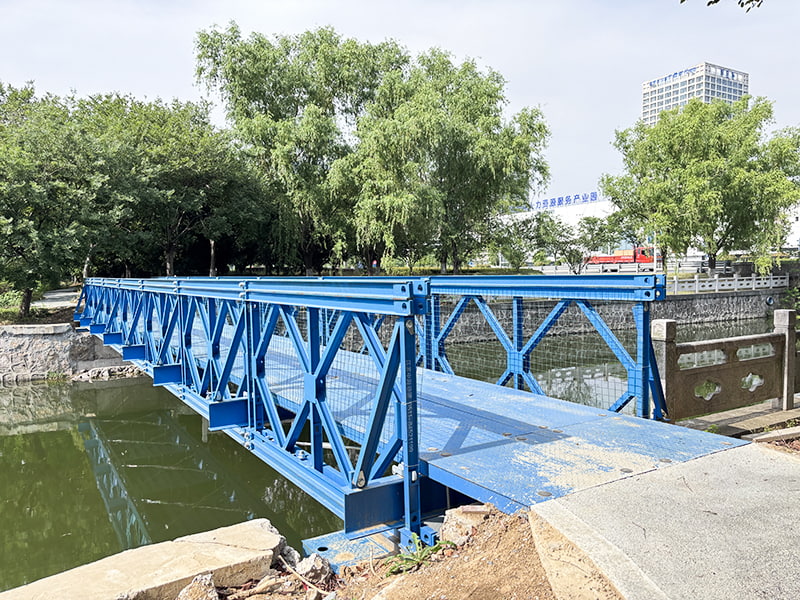
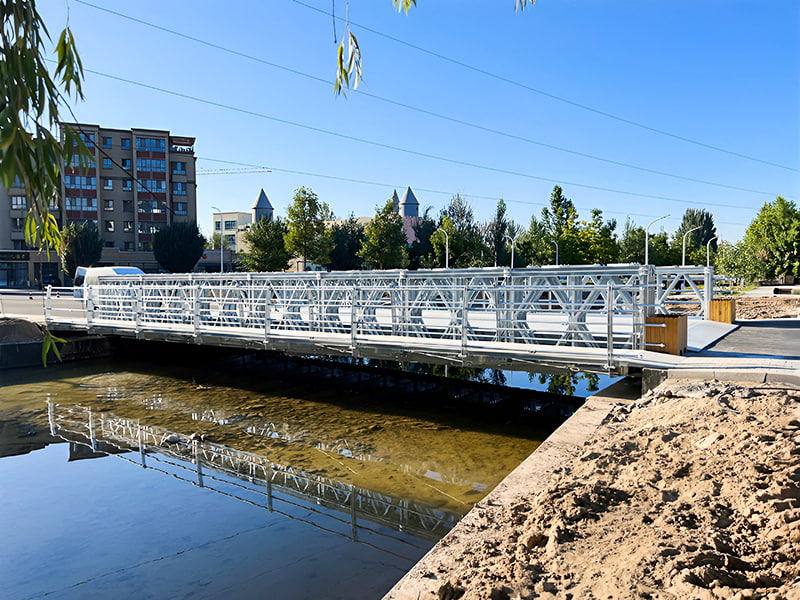
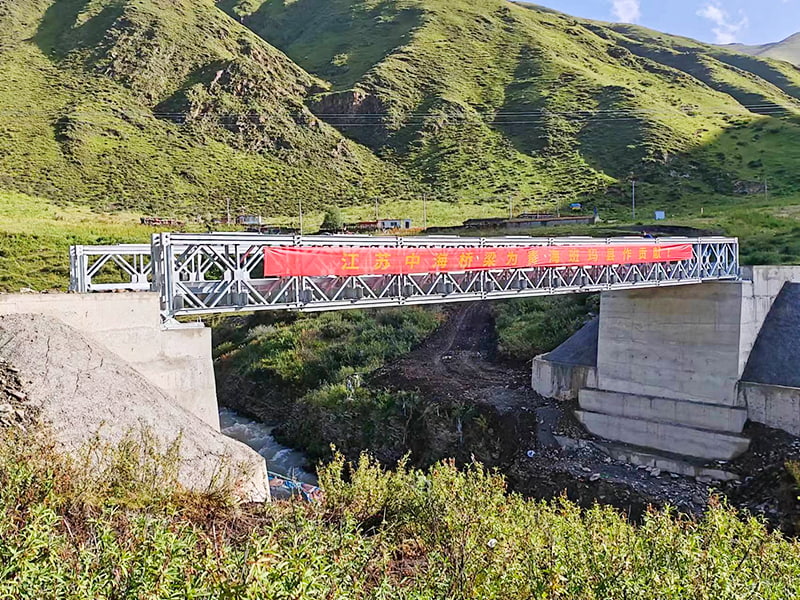
This bridge belongs to the CB 200 Bailey bridge family and uses a reinforced truss arrangement with double-row panels in a single-layer configuration. Its structure is intended to deliver a combination of rapid installation, reliable load-bearing performance, transport efficiency, and long-term corrosion resistance. Galvanized steel components provide additional protection in environments where heat, humidity, salt, and atmospheric exposure may accelerate corrosion. The resulting bridge is suitable for road access, temporary or semi-permanent transportation routes, emergency response, construction logistics, and infrastructure development projects.
Beyond the bridge itself, the project reflects the value of coordinated engineering, standardized production, precision fabrication, and professional technical support. Jiangsu Zhonghai Bridge Equipment Co., Ltd. combines bridge design, manufacturing, quality management, and project support to provide modular steel bridge systems for domestic and international applications. Its capabilities include Bailey bridge systems, customized structural components, automated welding, precision steel fabrication, and bridge erection support equipment.
Overview of the 27-Meter Modular Bridge
The bridge is a 27-meter-long, double-row, single-layer reinforced Bailey bridge intended for road traffic. Its configuration provides a practical balance between structural capacity and construction efficiency. The double-row arrangement increases the amount of primary truss material supporting the span, while reinforcement improves stiffness and load distribution. The single-layer layout helps limit the overall height and reduces assembly complexity compared with taller multi-level truss arrangements.
A Bailey bridge is generally composed of prefabricated steel panels, upper and lower chords, bracing members, transoms, stringers, deck components, end posts, connection hardware, and related accessories. These elements are manufactured in repeatable sizes so that they can be combined into different spans and structural arrangements. This modular principle allows a bridge to be adapted to a project without requiring every major component to be designed and fabricated from the beginning.
For the Colombian deployment, the selected configuration addressed the practical requirements of a local roadway. The 27-meter span provides a direct crossing solution while avoiding the need for an intermediate support in the main opening. The double-lane, single-layer reinforced arrangement offers structural stability for regular traffic and supports load designs such as HS-15, HS-20, HS-25, HL-93, and Track-50, subject to the applicable engineering calculations, site conditions, and project specifications.
The bridge is not simply a collection of steel panels. Its effectiveness depends on the relationship between the truss system, deck, bearings, foundations, approach roads, drainage, traffic controls, and installation sequence. A modular bridge must be selected and configured according to span length, design vehicle, lane arrangement, wind conditions, flood level, foundation capacity, transportation access, and expected service duration. This is why professional engineering support is important when adapting a standard modular system to a specific location.
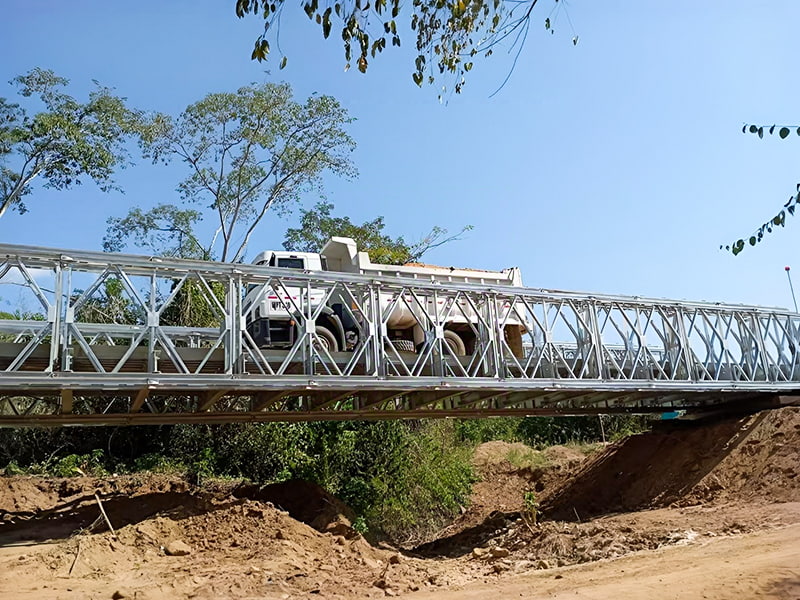
CB 200 Bailey Bridge 27-Meter Double-Row Single-Layer Reinforced Bailey Bridge
Structural Configuration and Load-Bearing Concept
The principal structural feature of this bridge is its double-row single-layer reinforced truss. In a conventional single-row Bailey arrangement, one row of side truss panels is positioned on each side of the roadway. For higher loads or greater stiffness requirements, additional rows can be installed to create a double-row configuration. This increases the effective cross-sectional capacity of the side trusses and improves resistance to bending and deformation.
The single-layer arrangement refers to the vertical configuration of the truss panels. Instead of stacking trusses above one another, the panels form one continuous level along the bridge length. This configuration is often advantageous when the project has restrictions on overall height, when a relatively straightforward erection process is preferred, or when the selected span and loading conditions can be satisfied through increased truss width and reinforcement.
Reinforcement is particularly important for bridges that must accommodate regular road traffic. It can be provided through additional structural members, strengthened connections, reinforced chord components, improved bracing, or a combination of these measures. The purpose is to improve stiffness, control deflection, enhance load distribution, and provide an appropriate margin for the specified design loads. The precise reinforcement arrangement should always be confirmed through project-specific structural calculations.
The bridge deck transfers vehicle loads to the transoms and then into the side trusses. The trusses carry the resulting shear and bending forces toward the supports. Bracing members help maintain the geometry of the bridge and resist lateral movement caused by traffic, wind, construction operations, and other dynamic effects. Bearings and end supports transfer reactions to the foundations, while approach slabs or transition structures help vehicles move smoothly between the roadway and the bridge deck.
For the owner and contractor, the modular structure offers several practical advantages. Components can be inspected individually before assembly. Damaged or worn parts can be identified and replaced without rebuilding the entire bridge. Standardized connections also make it easier to plan inventory, arrange transportation, and prepare erection teams. When a bridge must eventually be relocated, the modular components can often be dismantled and reused in another suitable application after inspection and requalification.
Compatibility with Common Design Load Models
The bridge is described as suitable for load designs including HS-15, HS-20, HS-25, HL-93, and Track-50. These designations represent different loading models used in transportation and infrastructure engineering. They are not interchangeable labels, and the applicable model depends on the project’s governing standards, vehicle types, traffic conditions, and authority requirements.
HS loading models are associated with highway truck and trailer design concepts. HL-93 is a widely used highway loading model that combines prescribed truck or tandem loading with lane loading. Track-50 generally indicates a heavy tracked vehicle loading condition. Before construction, engineers should verify the governing code, lane width, vehicle positioning, impact factors, fatigue requirements, serviceability limits, and load combinations.
The stated suitability means that the bridge system can be engineered and configured for these load categories under appropriate conditions. It does not mean that every configuration automatically meets every loading model. Span length, panel arrangement, reinforcement, deck design, support conditions, material grades, connection details, and foundation behavior all influence the final capacity. A responsible bridge supplier should therefore provide technical calculations and configuration recommendations for the actual project.
Advantages of the Double-Row Single-Layer Reinforced Design
The double-row single-layer reinforced design offers a useful combination of strength, simplicity, and adaptability. Compared with a basic single-row configuration, it provides greater structural redundancy and increased capacity for demanding traffic conditions. Compared with a multi-layer configuration, it can reduce the overall height of the bridge and simplify the assembly sequence.
Improved Structural Stability
Two rows of side panels create a wider and stronger truss system. This helps the bridge resist bending under vehicle loads and provides greater stiffness across the span. The reinforced arrangement also contributes to improved control of vertical deflection. Reduced movement can enhance driving comfort, protect the deck, and reduce stress on connections and support components.
More Effective Load Distribution
In a properly assembled double-row bridge, loads are distributed through multiple truss lines rather than concentrated in a single line of panels. This can reduce the demand on individual structural members and improve the overall behavior of the bridge. Cross members and bracing components help maintain the relationship between the truss rows so that the bridge acts as a coordinated structural system.
Efficient Use of Vertical Clearance
A single-layer arrangement can be beneficial where vertical clearance is limited. It may also be preferred where the bridge must pass beneath utilities, overhead structures, or restricted airspace. The lower profile can simplify transportation and reduce the visual and spatial impact of the completed structure. Clearance requirements must still be checked for vehicles, flood conditions, maintenance access, and local regulations.
Practical Assembly Requirements
Although all Bailey bridge installations require competent supervision, a single-layer configuration can be easier to understand and organize than a taller multi-layer arrangement. Panels are placed along the bridge length and connected with standardized pins, bolts, braces, and related hardware. This can help shorten the learning curve for erection teams and improve consistency during construction.
Adaptability for Different Applications
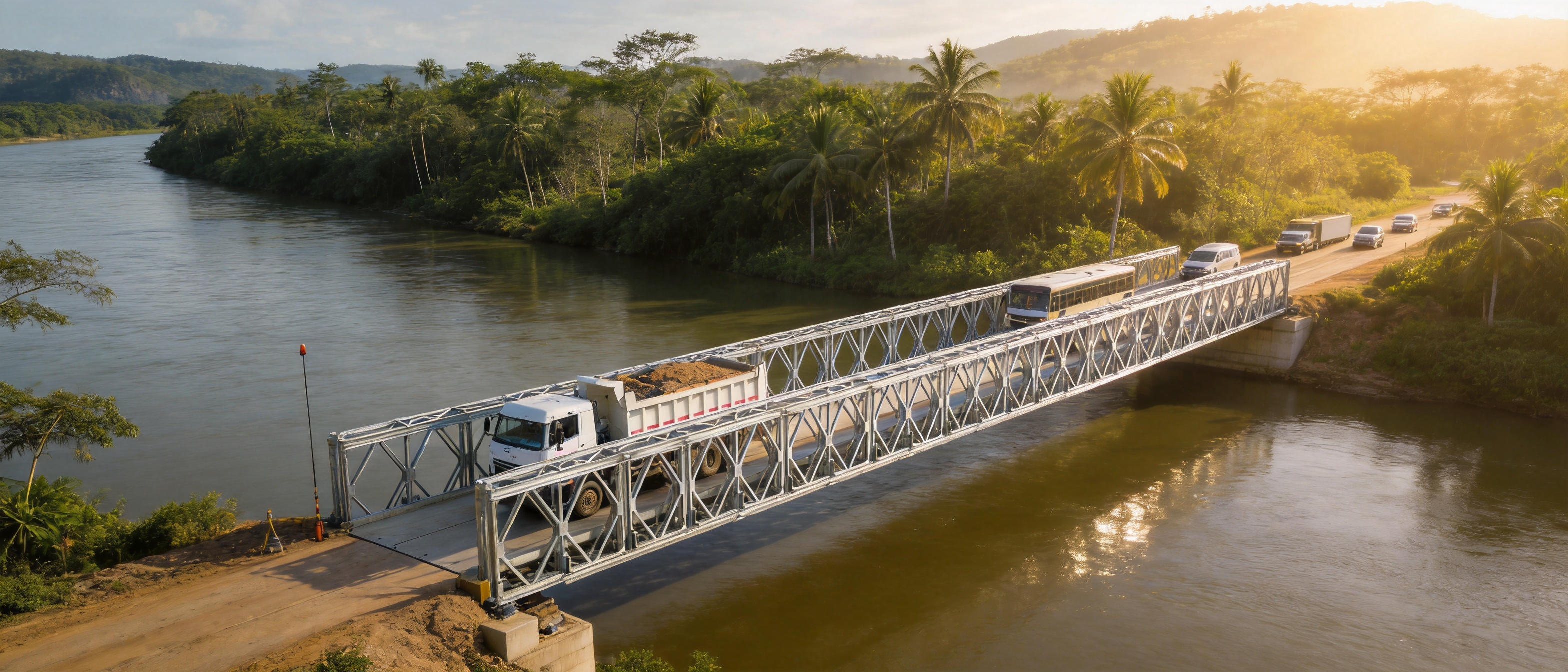
The same general modular principle can serve temporary access roads, permanent rural connections, industrial routes, disaster-response corridors, military logistics, and construction projects. The bridge may be used where a fixed bridge is damaged, where a new permanent bridge is still under construction, or where an access route is required for a limited project duration. Its suitability depends on design verification, site preparation, inspection, and maintenance.
Galvanization for High-Temperature and High-Salt Environments
Environmental exposure is a major factor in bridge service life. In coastal and tropical areas, high humidity and salt-laden air can accelerate corrosion of unprotected steel. High temperatures may increase the rate of chemical reactions and can intensify the effects of moisture cycling. If the bridge is near seawater, salt spray, saline soil, or coastal industrial emissions, corrosion protection must be treated as a core design consideration rather than an optional finish.
The Colombian project uses galvanized steel components to improve corrosion resistance. Galvanization places a protective zinc layer over the steel surface. The zinc acts as a physical barrier and also provides sacrificial protection in areas where the coating is locally damaged. This is valuable for modular bridges because panels and accessories may be exposed to handling, transportation, assembly, rain, condensation, and airborne contaminants throughout their service life.
Galvanization does not eliminate the need for inspection. Cut edges, drilled areas, weld zones, connection interfaces, drainage points, and locations where debris accumulates should be monitored. The bridge should be kept free from standing water, mud, vegetation, and corrosive deposits. Where the coating is damaged, repair procedures should be conducted according to the applicable coating and maintenance specification.
A galvanized bridge can offer an advantage over a bridge relying only on ordinary unprotected paint, especially in environments with strong salt exposure. However, coating selection should be based on the full environmental profile. In particularly aggressive marine or industrial conditions, additional coating systems, sealing measures, drainage improvements, or scheduled touch-up work may be appropriate.
Corrosion protection also depends on manufacturing quality. Poorly prepared surfaces, incomplete coverage, unsealed crevices, and rough weld transitions can reduce coating performance. For that reason, galvanization should be integrated into a controlled production process that includes material preparation, welding inspection, surface treatment, coating verification, and final quality documentation.
Recommended Environmental Maintenance Practices
Routine inspections should examine the visible condition of the galvanized surfaces, especially near the deck, supports, expansion areas, drainage outlets, and roadway edges. Inspectors should look for white corrosion products, red rust, coating damage, trapped soil, loose connection hardware, water accumulation, and deformation.
Cleaning should be performed using methods that do not unnecessarily damage the zinc layer. Salt deposits may be removed with fresh water and suitable non-abrasive procedures. Drainage paths should remain open, and the bridge deck should be maintained so that water does not collect around structural connections. Any repair should be recorded and included in the bridge maintenance history.
Manufacturing Strengths and Production Capabilities
The performance of a modular bridge begins at the factory. A reliable bridge system requires more than steel cutting and assembly. It requires consistent material control, accurate fabrication, qualified welding, dimensional inspection, controlled surface treatment, traceable documentation, and careful packing for transport. Jiangsu Zhonghai Bridge Equipment Co., Ltd. integrates engineering design, precision manufacturing, quality management, and technical support within its production system.
The company operates from Zhenjiang in Jiangsu Province, an important industrial and transportation region in China. Its location supports access to manufacturing resources, transportation networks, engineering labor, and supply-chain partners. The company has developed its business around modular steel bridges, Bailey bridge systems, customized steel components, bridge erection equipment, automated welding, and precision steel fabrication.
Engineering and Configuration Development
Before production begins, the bridge configuration must be matched to the project requirements. Engineers review span length, road width, traffic type, load model, support conditions, environmental exposure, transportation limitations, erection method, and expected service period. The selected panel arrangement and reinforcement scheme are then developed into manufacturing drawings and assembly documentation.
Engineering coordination is particularly important for international projects. Local road standards, vehicle dimensions, climate conditions, foundation practices, construction equipment, and inspection requirements may differ from one country to another. A modular bridge supplier must be able to communicate technical information clearly and adapt standard components to local project conditions.
Precision Steel Fabrication
Precision fabrication helps ensure that modular components fit together during erection. Panel geometry, hole positions, connection surfaces, chord alignment, brace interfaces, and transom supports must be controlled carefully. Even small dimensional errors can create difficulties when multiple components are assembled over a long span.
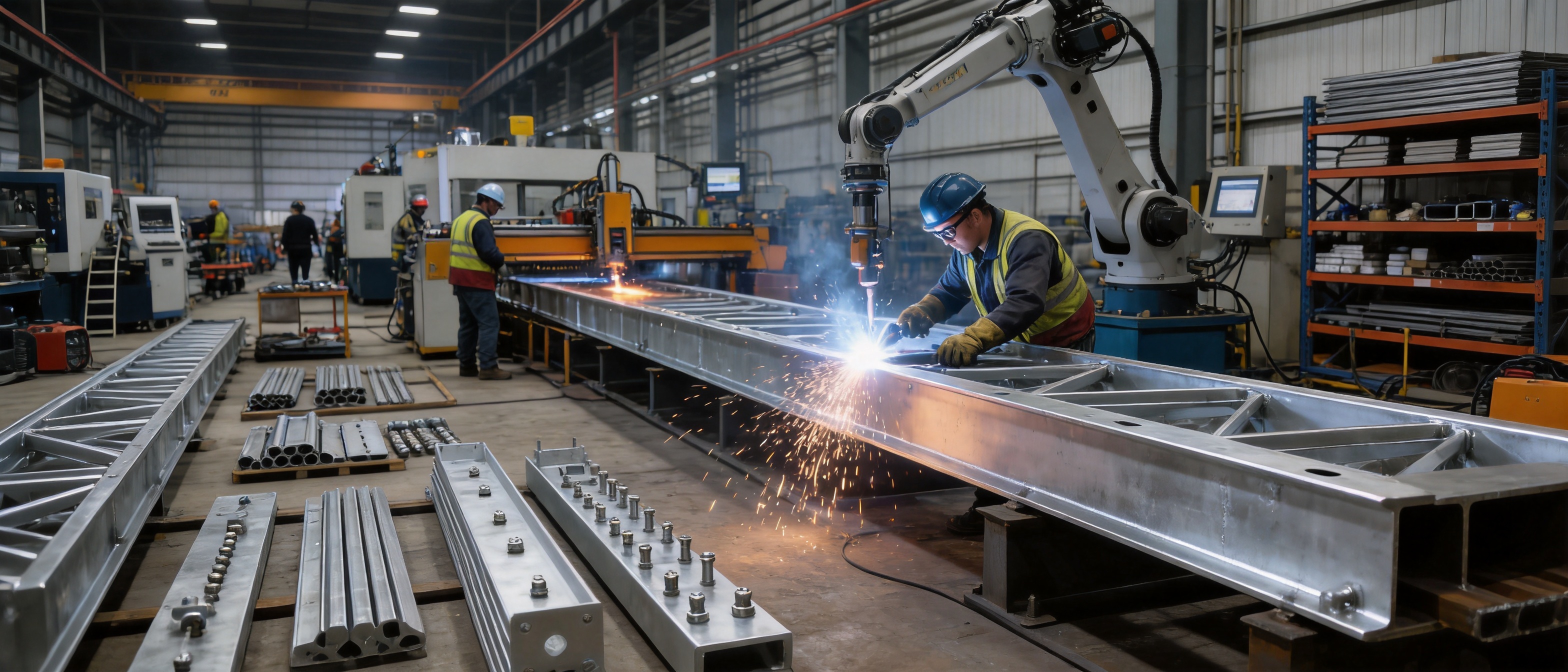
Standardized production methods support repeatability. Raw materials are prepared according to approved drawings and specifications. Cutting and forming operations are controlled to reduce dimensional variation. Components are identified and organized so that they can be traced through fabrication, inspection, treatment, packing, and delivery.
Automated Welding
Automated welding can improve consistency in repeated structural components. When welding parameters, travel speed, heat input, and joint preparation are controlled, the resulting welds can be more uniform than welds produced through inconsistent manual procedures. Automation also improves productivity for high-volume components and supports a stable manufacturing rhythm.
Automated welding does not replace engineering judgment or inspection. Weld procedures must be qualified for the material and joint type. Operators and technicians must be trained, and welds should be inspected according to the applicable quality plan. Visual inspection, dimensional inspection, and additional non-destructive testing may be required depending on the component and project specification.
Quality Management and Inspection
Quality management should cover the complete production chain. Material certificates, dimensions, weld quality, connection hardware, coating condition, markings, and packing should all be checked. A structured inspection process reduces the risk that a defect will remain hidden until the bridge reaches the construction site.
Factory inspection can include incoming material verification, dimensional checks, weld appearance examination, hole alignment checks, trial assembly of selected components, surface preparation inspection, galvanization thickness verification, final packing inspection, and document review. The exact inspection plan should be based on project requirements and applicable standards.
Compliance with Technical Standards
The company states that its manufacturing systems support products designed and produced in accordance with ASTM, EN, and national specifications. The relevant standard depends on the project location and contract requirements. It is important for the purchaser, designer, supplier, and approving authority to agree on the governing standards before production begins.
Standards may address structural design, steel materials, welding, galvanization, fasteners, inspection, loading, road geometry, and construction safety. A bridge that complies with a recognized standard still requires project-specific engineering because the standard provides a framework, while the site determines the actual loads, supports, environmental conditions, and construction constraints.
From Factory to Construction Site
Modular bridge components are manufactured with transportation and assembly in mind. The panels and accessories must be packed securely to prevent damage during handling and shipping. Components should be grouped logically, labeled clearly, and protected from unnecessary exposure to moisture and contamination. Efficient packing can reduce the time required for inventory checks at the site.
Before dispatch, the project team should confirm the component list, erection drawings, connection hardware, special tools, temporary supports, lifting equipment, deck materials, safety equipment, and replacement items. Missing pins, bolts, braces, or small fittings can delay installation even when the major structural panels have arrived.
Transportation planning should consider road restrictions, container or truck dimensions, loading capacity, unloading access, and the sequence in which components will be required. Because modular bridge elements are designed for movement, they can often be delivered to locations where transporting large monolithic bridge sections would be difficult. This is one of the principal advantages of a panel-based system.
At the construction site, the bridge area must be prepared before assembly begins. Foundations, abutments, temporary supports, approach roads, drainage, working platforms, and lifting zones should be checked. The construction team should establish exclusion areas and traffic controls to protect workers and the public during erection.
Bridge Erection and Construction Support
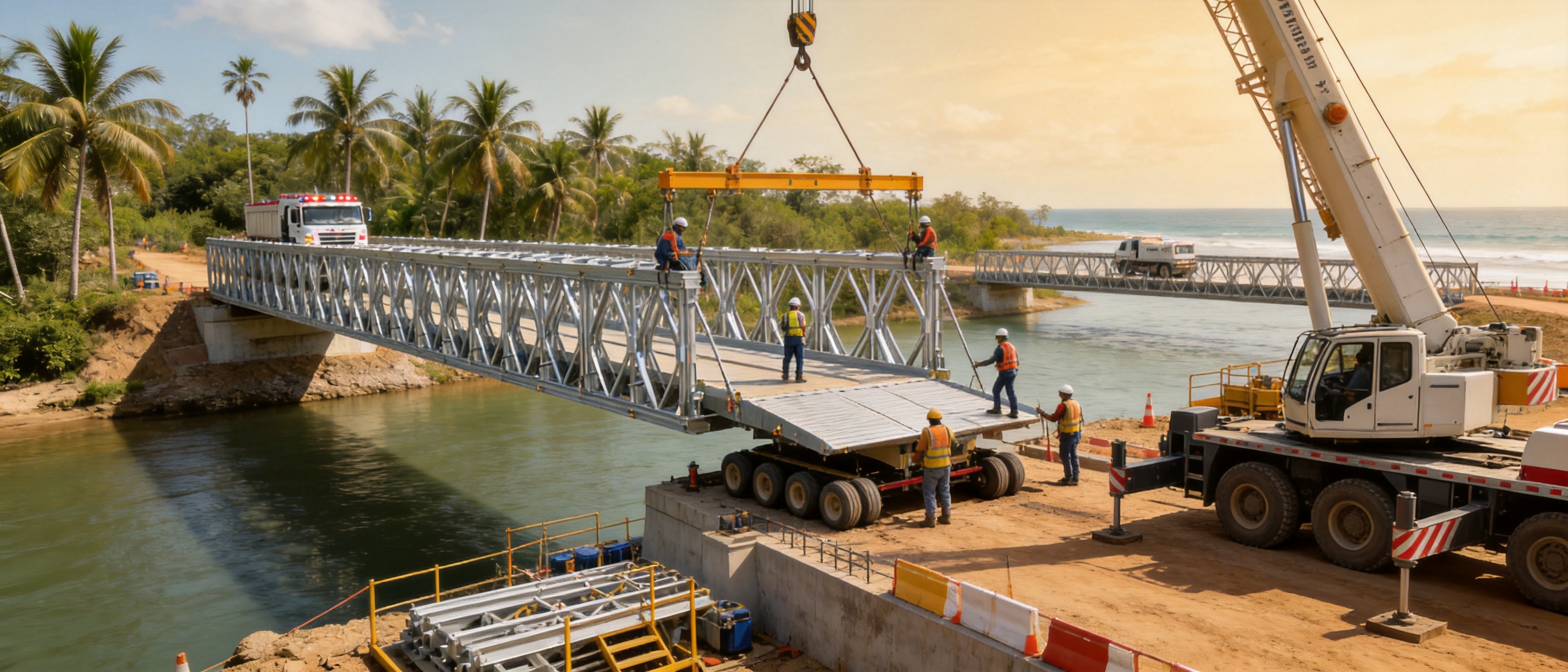
One important advantage of a Bailey bridge is the ability to assemble the main structure from standardized components using a planned erection sequence. Depending on the site and equipment available, the bridge may be assembled on one side and launched across the gap, or it may be lifted and positioned in sections. The preferred method depends on span length, terrain, water conditions, access, available cranes, temporary works, and local safety requirements.
Launching can be useful where crane access is limited or where placing large lifting equipment in the gap is impractical. A temporary launching nose or other erection aid may be used to balance the bridge as it moves toward the opposite support. The assembly sequence must be carefully controlled because the partially completed bridge experiences different forces from those present after final placement.
Crane erection may be suitable where the site has adequate access, ground bearing capacity, and lifting space. In that case, components or preassembled sections can be lifted into position. Crane selection must account for load weight, lifting radius, wind conditions, ground stability, and the required working height. All lifting plans should be prepared and supervised by qualified personnel.
Construction support equipment is an important part of a successful modular bridge project. Temporary rollers, launching beams, erection tools, lifting accessories, alignment equipment, and connection tools can help the team assemble the bridge safely and efficiently. A supplier with experience in bridge erection can provide valuable assistance in selecting and organizing these items.
After the trusses are installed, the deck system, guardrails, approach transitions, drainage elements, signs, and other roadway components are completed. Alignment and level should be verified before opening the bridge to traffic. The completed bridge should undergo inspection and, where required, a load test or approval process established by the responsible authority.
Safety During Assembly
Bridge erection involves working at height, lifting heavy components, handling steel members, and operating near water or traffic. A detailed safety plan should identify fall hazards, suspended loads, pinch points, unstable temporary conditions, electrical risks, weather conditions, and emergency procedures.
Workers should use appropriate personal protective equipment, including helmets, safety footwear, high-visibility clothing, gloves, eye protection, and fall-arrest systems where required. Lifting accessories must be inspected, and no person should stand beneath a suspended load. Work should be suspended when wind, lightning, flooding, or other conditions create unacceptable risk.
Applications for Infrastructure and Emergency Response
The 27-meter bridge configuration can serve many applications where a reliable road crossing is needed without the lengthy construction period associated with a conventional reinforced concrete or welded permanent bridge. Its modular nature makes it especially useful for locations where logistics, time, or future relocation are important considerations.
Rural and Regional Roads
Rural communities often require crossings over rivers, drainage channels, irrigation routes, and difficult terrain. A modular steel bridge can provide a practical connection where local construction resources and heavy equipment are limited. The bridge can be adapted to traffic levels and local road geometry while maintaining a standardized structural system.
Disaster Relief and Flood Recovery
Floods, landslides, earthquakes, and storms can damage existing bridges and isolate communities. Emergency bridge systems must be transported quickly, assembled with available equipment, and placed into service after the site has been stabilized. Modular panels can be stockpiled in advance and deployed when needed, helping authorities restore access for rescue teams, relief supplies, medical services, and local residents.
Construction and Temporary Access
Large infrastructure projects often require temporary roads across waterways, excavations, rail corridors, and construction zones. A modular bridge can support the movement of materials, vehicles, and equipment while permanent works are under construction. After the project is completed, the bridge may be dismantled and reused elsewhere, reducing the need to purchase a completely new structure for each project.
Industrial and Mining Routes
Industrial facilities, mining operations, ports, and energy projects may require access routes across challenging ground or temporary work areas. The bridge can be configured for the expected vehicle loads and installed where a conventional bridge would interfere with future site development. Traffic management and maintenance planning remain essential because industrial vehicles may impose high repeated loads.
Military and Strategic Logistics
Modular bridges are also relevant to military logistics because they can support the rapid establishment of transport routes. Their standardized components, transportability, and flexible erection methods can be useful where infrastructure must be restored or extended quickly. Any military application requires specialized design verification and operational planning appropriate to the vehicles and conditions involved.
Comparison with Conventional and Lower-Specification Alternatives
The selection of a bridge system should be based on total project value rather than purchase price alone. A modular Bailey bridge may offer advantages in schedule, transport, assembly, adaptability, and reuse. These benefits can be significant when the project has urgent access requirements or when permanent construction would involve extensive civil works.
| Evaluation Factor | Modular Bailey Bridge | Conventional Cast-In-Place Bridge | Basic Unreinforced Modular Arrangement |
|---|---|---|---|
| Construction method | Factory-made components assembled at the site | Extensive on-site formwork, reinforcement, and concrete work | Factory-made components with lower structural redundancy |
| Installation schedule | Generally suited to accelerated erection after foundations are ready | Often requires longer curing and construction periods | May be fast, depending on loading and span requirements |
| Adaptability | High, because standardized panels can support different configurations | Lower after construction begins | Moderate, but limited by lower capacity |
| Relocation potential | Components can be dismantled and reused after inspection | Generally not practical | Possible, subject to condition and design verification |
| Corrosion protection | Can include controlled factory galvanization | Depends on concrete quality, reinforcement cover, and exposure | Depends on the selected coating and manufacturing quality |
| Heavy traffic capability | Double-row reinforced configurations can be engineered for demanding loads | Can provide high capacity but usually requires more construction time | May be insufficient for higher traffic loads |
| Site logistics | Components can be transported in manageable sections | Requires concrete supply, formwork, reinforcement, and larger site operations | Manageable but may require capacity upgrades later |
The reinforced double-row system is particularly advantageous compared with a basic single-row bridge when the road must accommodate frequent traffic or heavier vehicles. It can provide additional stiffness and load distribution without requiring a multi-layer superstructure. Compared with a non-galvanized steel bridge, galvanized components offer a stronger initial defense against atmospheric corrosion, especially in coastal environments.
These advantages should not be overstated. A modular bridge still requires suitable foundations, accurate assembly, regular inspection, and proper traffic control. Its performance depends on engineering and construction quality. The most successful projects are those in which the supplier, designer, contractor, and owner coordinate from the beginning.
Project-Specific Design Considerations
Before ordering a 27-meter bridge, the project team should collect accurate site information. This includes the clear crossing distance, required roadway width, bank conditions, flood levels, soil properties, approach gradients, utility locations, environmental exposure, and construction access. A bridge selected without reliable site data may require costly modifications during erection.
Hydraulic conditions are especially important over rivers and flood channels. The bridge deck should be positioned above the required design flood level with appropriate freeboard. Water flow, debris impact, scour, navigation requirements, and temporary construction conditions should be studied. Abutments and foundations must be protected against erosion and undermining.
Traffic requirements should be defined clearly. The project team should identify whether the bridge will carry passenger vehicles, buses, trucks, tracked equipment, construction machinery, or mixed traffic. Vehicle frequency and lane arrangement are also relevant. A bridge that carries occasional emergency traffic may have different serviceability requirements from one carrying continuous industrial loads.
Approach roads should be designed with suitable width, slope, drainage, and pavement transitions. Sudden changes in elevation can cause impact loads and uncomfortable vehicle movement. Guardrails, warning signs, lane markings, speed controls, and pedestrian protection should be included where appropriate.
Foundation design is not included automatically in a standard modular bridge package. Soil investigation and geotechnical evaluation are needed to determine the most appropriate abutment and bearing arrangement. Foundations may be concrete, steel, or another engineered solution, depending on ground conditions and project duration.
Inspection, Maintenance, and Service Life
Regular inspection is essential for maintaining bridge safety. Initial inspection should be completed after erection and before opening to traffic. Follow-up inspections should be scheduled according to traffic intensity, environmental severity, local regulations, and the bridge owner’s maintenance program.
Inspectors should examine truss panels, pins, bolts, bracing, transoms, stringers, deck plates, bearings, expansion areas, guardrails, welds, and supports. Particular attention should be given to areas where water, mud, road salt, or debris may collect. Any loose, cracked, bent, corroded, or missing component should be evaluated promptly.
Connection hardware should be checked for correct installation and signs of movement. Pins and bolts should not be replaced with unapproved alternatives. If a connection has experienced abnormal wear or deformation, the cause should be investigated rather than simply tightening or replacing the visible component.
Deck maintenance is important because damaged or uneven decking can affect vehicle loads and create additional impact. Drainage openings must remain clear, and worn surfacing should be repaired. Where the bridge is exposed to high salt concentrations, cleaning and coating inspections may need to occur more frequently.
Records should be maintained for inspections, repairs, traffic restrictions, unusual events, flood exposure, and component replacement. Good documentation helps the owner identify trends and plan preventive maintenance before minor defects become major problems.
Why Manufacturing Partnership Matters
Purchasing a modular bridge is not simply a transaction for steel components. It is a partnership involving design interpretation, configuration selection, documentation, production control, delivery, erection guidance, and after-sales support. A manufacturer with integrated engineering and production capabilities can reduce communication gaps between the design office and the factory.
Jiangsu Zhonghai Bridge Equipment Co., Ltd. presents itself as a solutions provider for modular bridge and structural steel projects. Its experience includes coastal engineering in the Maldives, temporary access bridges for major transportation infrastructure, structural components for exhibition and public buildings, multi-span Bailey bridges for railway development, and emergency bridge deployments in regions affected by flooding.
This range of applications demonstrates the importance of manufacturing flexibility. A supplier may need to produce standard bridge panels for one project, customized steel components for another, and special erection or construction support equipment for a third. The ability to coordinate these activities under one engineering and quality system can help project owners manage complexity.
International delivery performance is also important. Export projects require careful packaging, shipping documentation, component identification, communication across time zones, and support for local contractors. Clear drawings and organized component schedules can be as valuable as the steel itself because they help the site team build the bridge correctly and efficiently.
Recommended Procurement Process
A structured procurement process helps ensure that the selected bridge is appropriate for the intended use. The owner should begin by defining the span, roadway width, traffic loads, design standards, project duration, environmental conditions, and required delivery date.
The next step is to provide site information, including survey data, geotechnical information, flood levels, access limitations, and foundation concepts. The manufacturer can then recommend a bridge arrangement and identify any special components or reinforcement required.
Technical documents should be reviewed before production. These may include general arrangement drawings, structural calculations, load tables, component lists, material specifications, welding requirements, galvanization requirements, erection instructions, inspection plans, and maintenance recommendations.
Commercial evaluation should consider not only the bridge price but also foundations, transportation, unloading, erection equipment, labor, temporary works, traffic management, inspection, surface maintenance, and future relocation. A bridge with a slightly higher initial price may provide better value if it reduces installation time, improves corrosion resistance, or can be reused.
Factory inspection may be arranged before shipment. The purchaser or an appointed inspection agency can review materials, dimensions, weld quality, coating condition, markings, packing, and documentation. This provides an additional opportunity to resolve issues before components leave the factory.
At the site, the owner should appoint qualified personnel to supervise foundation preparation, component inventory, assembly, alignment, connection installation, deck completion, final inspection, and commissioning. The manufacturer’s technical support can complement local engineering responsibility but does not replace the need for a competent project team.
Frequently Asked Questions
What is the main purpose of this 27-meter bridge?
The bridge is intended to provide a reliable road crossing over a gap of approximately 27 meters. It can support local traffic, temporary access, emergency routes, construction logistics, industrial roads, and other applications when configured according to project-specific engineering requirements.
What does double-row single-layer mean?
Double-row refers to the use of two rows of side truss panels to increase structural capacity and stiffness. Single-layer means that the truss panels are arranged in one vertical level rather than stacked into multiple levels. Reinforcement is added to support the required load and serviceability performance.
Is the bridge suitable for permanent use?
A modular Bailey bridge can be used for temporary, semi-permanent, or permanent applications when it is properly designed, installed, inspected, and maintained. The service duration depends on the environmental exposure, traffic, foundation quality, corrosion protection, inspection program, and applicable approval requirements.
Why is galvanization important in coastal areas?
Coastal environments often contain salt-laden moisture that can accelerate steel corrosion. Galvanization provides a zinc coating that acts as a barrier and offers sacrificial protection where minor damage occurs. Regular cleaning and inspection remain necessary, particularly around connections, drainage areas, and damaged surfaces.
Can the bridge carry heavy vehicles?
The bridge can be engineered for load models such as HS-15, HS-20, HS-25, HL-93, and Track-50, subject to the selected configuration and project calculations. The actual allowable traffic must be confirmed by the responsible engineer based on span, reinforcement, deck, supports, foundations, and governing design standards.
How long does installation take?
Installation time depends on foundation readiness, site access, bridge configuration, transportation, labor, equipment, weather, and the selected erection method. Modular construction can significantly reduce the time required for the superstructure compared with many conventional bridge methods, but site preparation and approvals must still be completed first.
Can the bridge be relocated?
One advantage of modular construction is the potential for dismantling and reuse. Before relocation, all components should be inspected for deformation, fatigue, corrosion, wear, and damage. A qualified engineer must confirm that the components remain suitable for the new span and loading conditions.
What type of foundation is required?
The foundation depends on soil conditions, support reactions, water levels, scour risk, construction duration, and local design requirements. The bridge supplier can provide reaction data and interface requirements, but foundation design should be completed by qualified engineers using site-specific geotechnical information.
Does the manufacturer provide erection assistance?
The company provides bridge erection and construction support equipment and can coordinate technical assistance according to the project arrangement. The exact scope should be confirmed in the contract, including drawings, training, supervision, tools, temporary works, and on-site support.
What standards can be used for the bridge?
The company states that its products can support ASTM, EN, and national specifications. The governing standard should be agreed by the owner, designer, supplier, and approval authority before design and production. Load models and material standards should be applied consistently throughout the project.
How should the bridge be maintained?
Maintenance should include scheduled inspections of trusses, bracing, pins, bolts, deck components, bearings, supports, guardrails, coatings, and drainage. Salt, mud, and debris should be removed, and damaged galvanized areas should be repaired using approved procedures. Inspection and repair records should be retained.
What makes this bridge different from a basic modular bridge?
The principal distinctions are its double-row arrangement, single-layer reinforced configuration, galvanized steel protection, and suitability for higher or more demanding road load models when properly designed. These features can provide greater stability, improved corrosion resistance, and broader application potential than a lower-capacity unreinforced arrangement.
Conclusion
The 27-meter double-row single-layer reinforced Bailey bridge provides a practical response to the need for fast, adaptable, and durable road connectivity. Its modular structure allows factory production, efficient transportation, and organized site assembly. The double-row reinforced truss improves load distribution and structural stiffness, while the single-layer layout helps maintain a relatively simple and compact profile.
Galvanized steel components make the bridge especially relevant to high-temperature, high-humidity, and high-salt environments such as coastal regions. Although galvanization is not a substitute for inspection and maintenance, it provides a strong foundation for corrosion protection when combined with good drainage, cleaning, coating repair, and connection management.
The bridge’s suitability for HS-15, HS-20, HS-25, HL-93, and Track-50 load designs provides flexibility for different transportation requirements, provided that the final configuration is verified through project-specific calculations. Proper foundation design, erection planning, traffic management, and long-term inspection are essential to achieving the intended performance.
Jiangsu Zhonghai Bridge Equipment Co., Ltd. supports this product concept through integrated engineering, precision steel fabrication, automated welding, quality management, galvanization, modular bridge production, and construction support. Its experience across transportation, coastal, railway, emergency, and international infrastructure projects provides a foundation for serving clients that require more than standard components.
For owners and contractors, the main value of this bridge lies in the combination of structural capability, manufacturing consistency, corrosion protection, installation efficiency, and future adaptability. When selected and installed responsibly, it can help restore connections, support development, improve logistics, and provide a dependable crossing solution for challenging infrastructure projects.
References
American Association of State Highway and Transportation Officials. Standard highway bridge design and loading references.
ASTM International. Standards for structural steel, welding quality, fasteners, and protective metallic coatings.
European Committee for Standardization. European structural design and execution standards for steel bridges.
International Organization for Standardization. Quality management and corrosion protection principles for manufactured steel products.
Jiangsu Zhonghai Bridge Equipment Co., Ltd. Product information for the CB 200 27-meter double-row single-layer reinforced Bailey bridge.
Jiangsu Zhonghai Bridge Equipment Co., Ltd. Corporate information concerning modular bridge systems, precision fabrication, automated welding, and bridge construction support.
General bridge engineering practice for modular steel trusses, temporary works, foundation design, erection planning, inspection, and maintenance.
Product: CB 200 Bailey Bridge 27-Meter Double-Row Single-Layer Reinforced Bailey Bridge


We respond quickly to all international requests and provide technical support when needed.
Product Category
Bailey Bridge/Modular Bridge Modular Steel Bridge Pedestrian Bridge Modular Pipe Bridge Truss Bridge Steel StructureContact Us

+86-511-84522866
+86-13921582699

zhwm@zjql.com

Building 1,83#, dantu New Town, Yanjiang Road, Dantu District, Zhenjiang, Jiangsu, China
Copyright © Jiangsu Zhonghai Bridge Equipment Co., Ltd. All
Rights
Reserved
China bailey bridge for sale
bailey bridge supplier from china
