
 English
 русский
 Español
 Português


Tang Yuwei — International Bailey Bridge Sales Manager
Super Bailey Construction Support for High-Speed Rail Bridge Projects
Content
- 1 1. Product Overview and Project Application
- 2 2. Why High-Speed Rail Construction Requires Specialized Support
- 3 3. Main Structural Advantages
- 4 4. Competitive Advantages Over Conventional Support Solutions
- 5 5. Advanced Manufacturing Process
- 6 6. Quality Management and Compliance Orientation
- 7 7. Technical Service and Customized Guidance
- 8 8. Installation and Site Use
- 9 9. Key Product Parameters and Project Considerations
- 10 10. Manufacturing Strengths of the Supplier
- 11 11. International Supply and Project Support
- 12 12. Sustainability, Reuse, and Lifecycle Value
- 13 13. Risk Control and Safe Operation
- 14 14. Recommended Procurement Process
- 15 15. Frequently Asked Questions
- 15.1 What is the Super Bailey Construction Support used for?
- 15.2 Why is the system suitable for high-speed rail projects?
- 15.3 What are the main benefits of modular construction?
- 15.4 Can the support system be customized?
- 15.5 What type of corrosion protection is used?
- 15.6 Does the supplier provide technical guidance?
- 15.7 Can the components be reused?
- 15.8 What standards can be considered during production?
- 15.9 What information should a buyer provide for a quotation?
- 15.10 Is the support system suitable for only one project?
- 16 16. Conclusion
- 17 References
- 18 Product: High-Speed Rail Project Dedicated Super Bailey Construction Support
High-speed rail construction requires temporary and permanent support systems that combine exceptional strength, precise engineering, rapid installation, and dependable performance under demanding site conditions. Among the most effective solutions for complex bridge construction is the Super Bailey Construction Support system developed for the Shenjiang High-speed Rail Project. Designed for large-span and heavy-load applications, this modular steel support system provides a stable working foundation during critical bridge construction phases while allowing project teams to manage challenging site conditions with greater efficiency and confidence.
The system is manufactured by Jiangsu Zhonghai Bridge Equipment Co., Ltd., a specialist in modular steel bridges, Bailey bridge systems, customized structural components, and construction support equipment. Its engineering approach integrates structural design, material processing, precision fabrication, protective coating, quality management, and technical guidance. This integrated capability enables the company to deliver a support solution that is not merely a collection of steel components, but a coordinated structural system adapted to a specific infrastructure project.
For high-speed rail construction, where alignment accuracy, load control, construction safety, and schedule performance are closely connected, a support structure must provide more than basic load-bearing capacity. It must remain stable throughout changing construction stages, tolerate outdoor exposure, facilitate efficient assembly, and support safe operations around major transportation infrastructure. The Super Bailey Construction Support addresses these requirements through a robust modular structure, carefully engineered connections, corrosion-resistant finishing, and project-oriented technical services.
The product demonstrates how modular bridge technology can be adapted beyond temporary traffic bridges. The same principles of standardized components, high-strength steel, repeatable fabrication, and flexible assembly can be applied to bridge construction supports, temporary works, access structures, erection platforms, and other demanding engineering applications. This adaptability gives contractors and infrastructure owners a practical alternative to conventional support arrangements that may require longer fabrication times, more extensive site welding, or less flexible transportation and installation procedures.
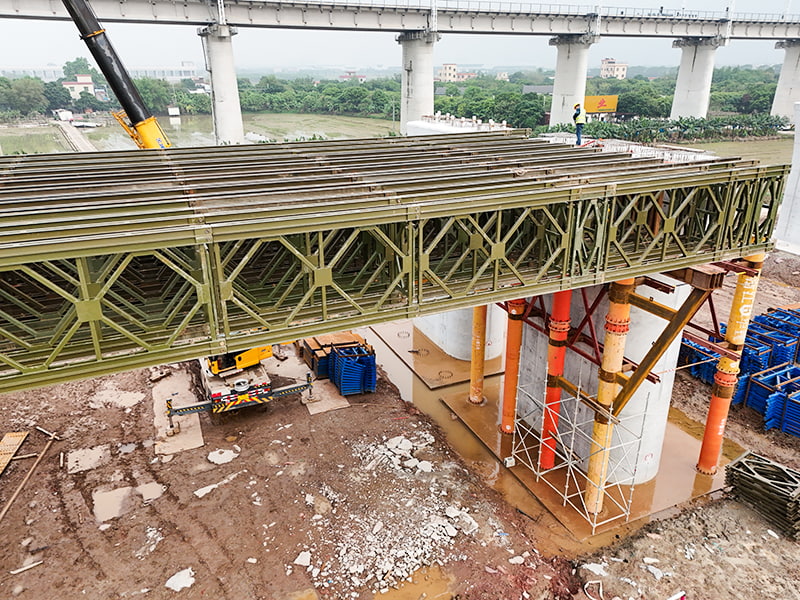
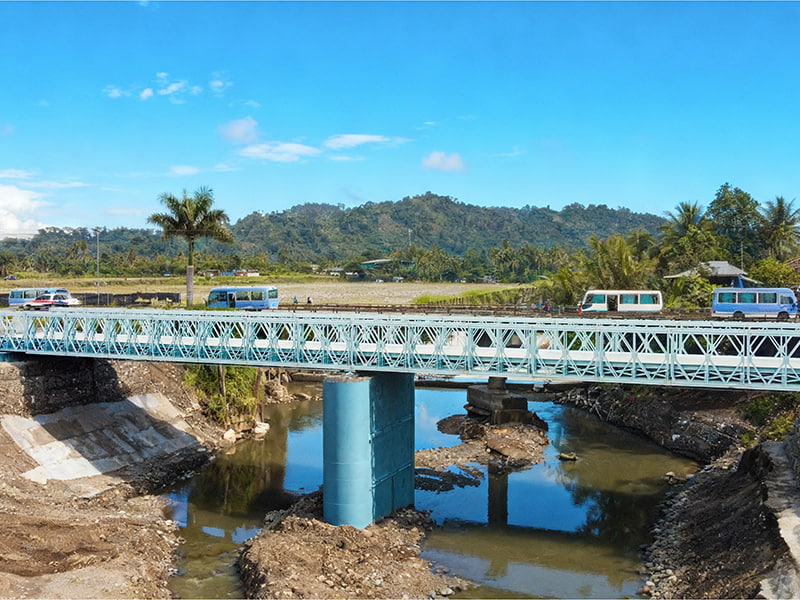
High-Speed Rail Project Dedicated Super Bailey Construction Support
1. Product Overview and Project Application
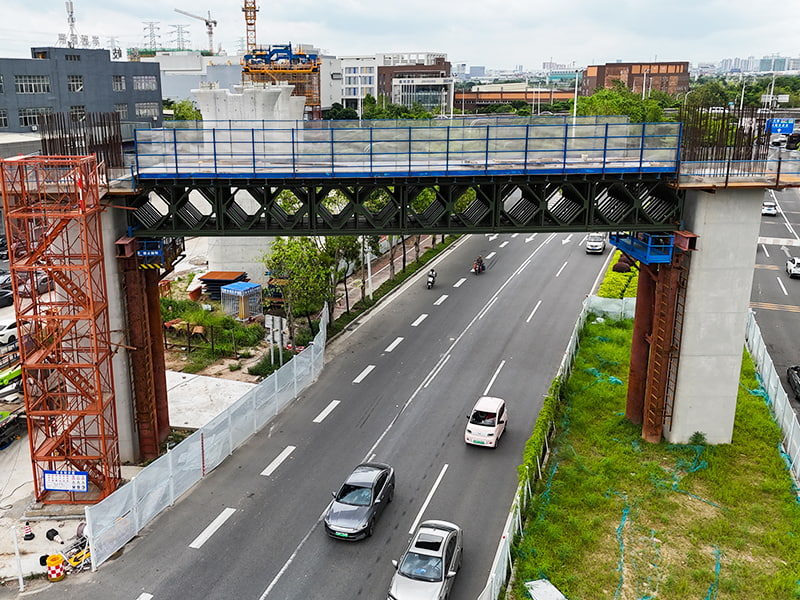
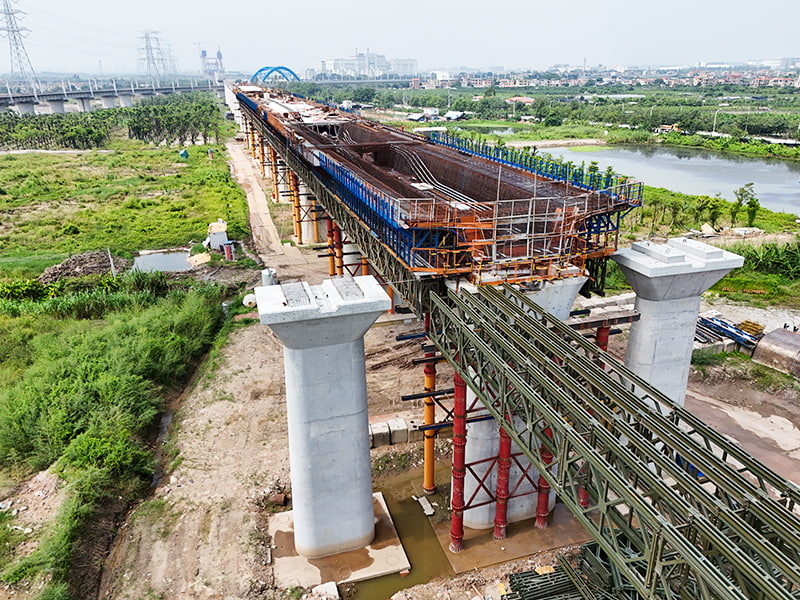
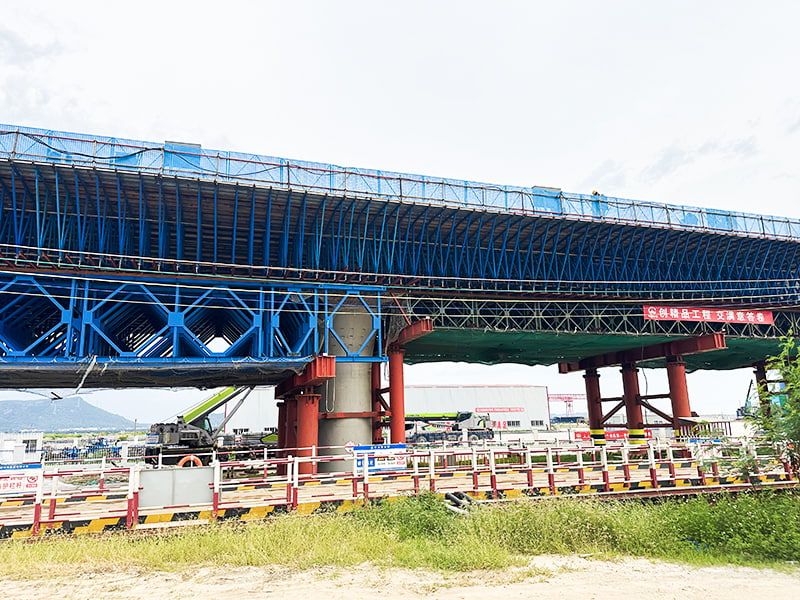
The Super Bailey Construction Support was developed for use in the Shenjiang High-speed Rail Project, where dependable support was required for large-span and heavy-load construction operations. Its primary function is to carry and distribute construction loads safely while maintaining structural stability during bridge erection and related works. Depending on the project configuration, support systems of this type may be incorporated into temporary falsework, erection support, access arrangements, working platforms, or other construction-stage structures.
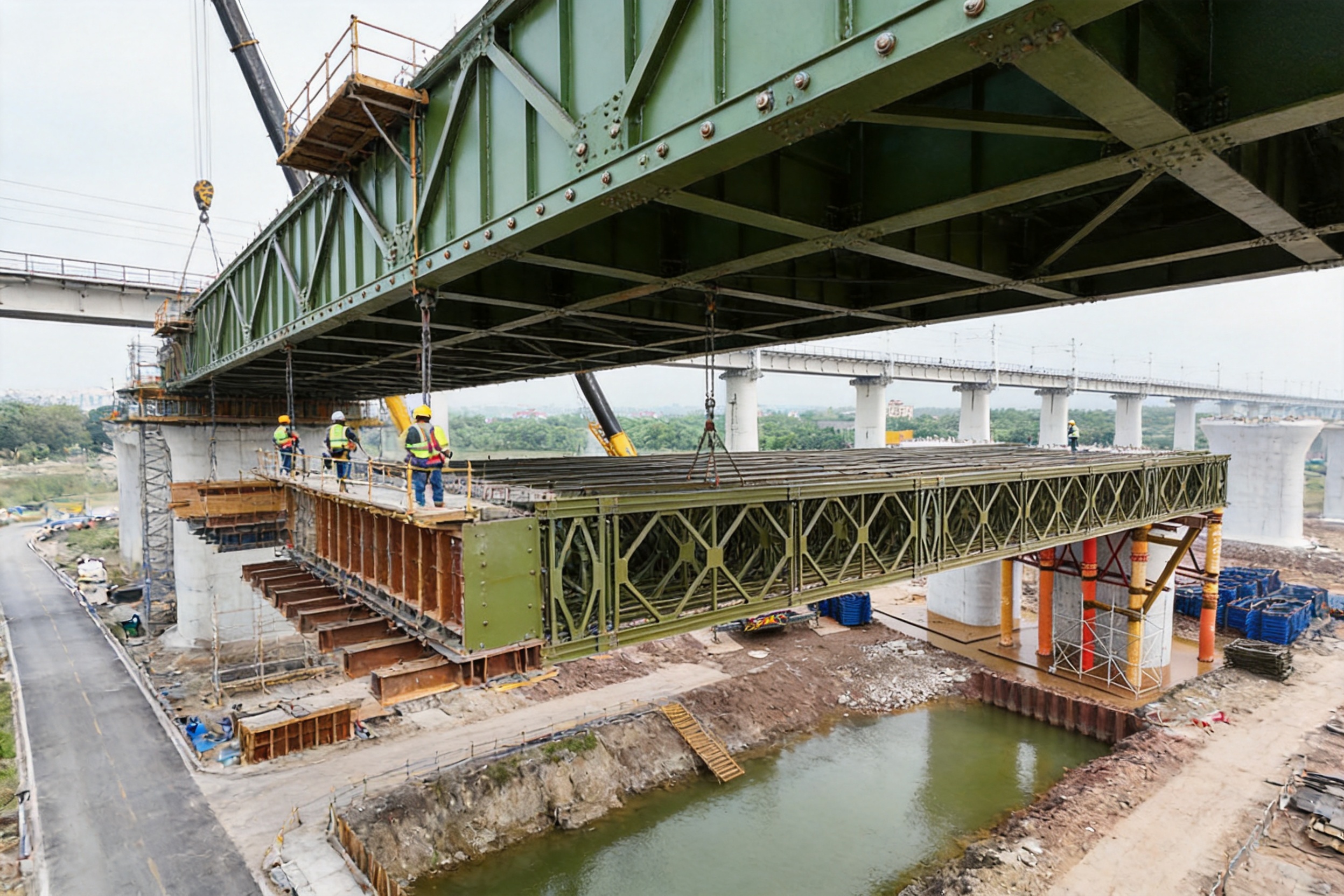
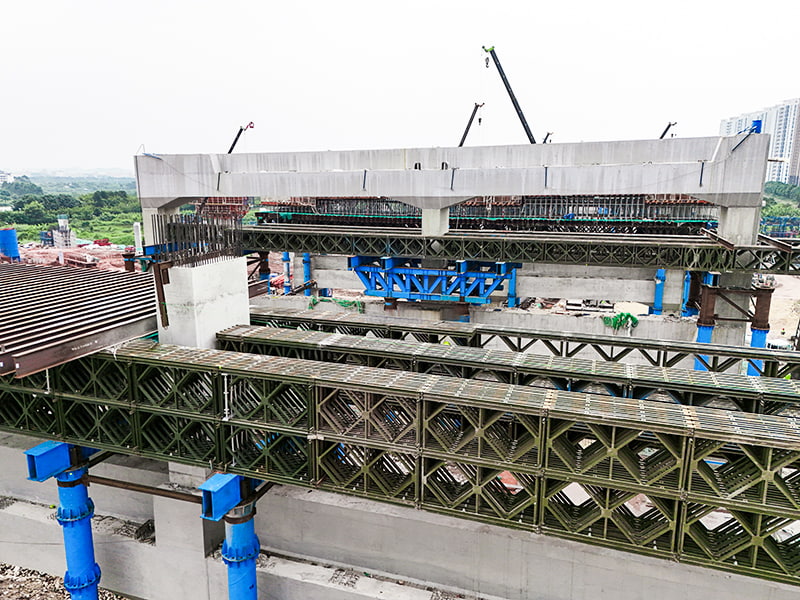
The system is based on a modular steel configuration. Modular construction allows individual panels, beams, bracing members, connection assemblies, and supporting components to be manufactured under controlled factory conditions and then transported to the project site. Once delivered, the components can be assembled according to an approved engineering arrangement. This method reduces the need for extensive on-site cutting and welding, improves dimensional consistency, and helps construction teams organize installation in a logical sequence.
For a high-speed rail project, construction support must operate within a highly controlled environment. Rail infrastructure commonly involves long viaducts, elevated structures, river crossings, road crossings, densely developed areas, and restricted work zones. The support system may need to accommodate limited access, demanding lifting arrangements, narrow construction windows, and strict coordination with other contractors. A modular system can offer an important advantage because its components are easier to transport, stage, inspect, and assemble than large, monolithic temporary structures.
The Super Bailey Construction Support is also suitable for projects where construction conditions may change during implementation. A modular arrangement can be adjusted through changes in span configuration, support spacing, bracing layout, or component combination, subject to engineering verification. This flexibility is valuable when the actual site environment differs from initial assumptions or when multiple work sections require related but not identical support arrangements.
The product is coated with green anti-corrosion paint. This protective finish provides resistance against rust and weather exposure, helping the steel structure maintain its performance in outdoor construction environments. The coating is particularly relevant to long-duration projects in which the support remains exposed to rain, humidity, temperature changes, dust, and construction pollutants. In addition to its protective function, the consistent coating system supports easier visual inspection by making surface damage, abrasion, or localized corrosion more visible during routine maintenance.
2. Why High-Speed Rail Construction Requires Specialized Support
High-speed rail bridges are constructed to demanding standards because the finished infrastructure must support high-speed train operation, long service periods, strict geometric tolerances, and continuous public use. Although a temporary construction support system does not carry trains in service, it directly influences the quality and safety of the construction process. Excessive deflection, uneven settlement, unstable connections, or inadequate load distribution can affect the geometry of bridge components and create safety risks for personnel and equipment.
A specialized support system must therefore be designed around the construction sequence rather than only the final bridge geometry. Loads may change as reinforcement, formwork, precast elements, wet concrete, equipment, and construction personnel are introduced or removed. Wind loads and temporary eccentric loads can also vary throughout the work. A reliable support system must provide adequate capacity at each relevant stage and should be compatible with the project’s lifting, pouring, curing, launching, and dismantling procedures.
Construction sites for high-speed rail corridors may also be located over roads, waterways, existing railways, industrial areas, or environmentally sensitive zones. In such cases, the support system must limit disruption to surrounding operations and allow the contractor to maintain a controlled work area. The modular nature of the Super Bailey Construction Support can help contractors plan installation around site restrictions and reduce the amount of uncontrolled fabrication performed near active infrastructure.
Another important consideration is construction schedule. High-speed rail projects are usually managed through coordinated milestones involving civil works, bridge erection, track construction, electrical systems, signaling, and station development. Delays in temporary support installation can affect several downstream activities. A factory-fabricated modular system can support more predictable procurement and site assembly than a solution that depends primarily on field fabrication. Standardized members can be produced in advance, inspected before shipment, and organized for sequential installation.
Safety is equally important. A support system should provide clear load paths, stable connections, accessible inspection points, and a configuration that can be understood by the site team. When the structure is manufactured according to repeatable procedures, workers can become familiar with the component types and assembly methods. This familiarity can reduce avoidable installation errors and improve communication between engineering, lifting, inspection, and construction teams.
3. Main Structural Advantages
Large-Span Capability
The Super Bailey Construction Support is designed for large-span applications. This characteristic is important when intermediate supports are difficult to install because of waterways, roads, existing structures, soft ground, or restricted work zones. A large-span arrangement can reduce the number of temporary foundations or support towers required, allowing the contractor to maintain more open space beneath the bridge construction area.
Large-span capability also improves project planning. Fewer intermediate obstructions can simplify the movement of construction equipment and materials. Where the site is located above an operating road or a sensitive area, reducing the number of support points may help minimize interference with existing activities. The final arrangement must always be checked through project-specific structural calculations, but the modular system provides a strong basis for developing such configurations.
Heavy-Load Performance
High-speed rail bridge construction often involves substantial temporary loads. These can include formwork, reinforcement cages, concrete, lifting equipment, construction platforms, temporary beams, and personnel. The support structure must transfer these loads through its panels, chords, bracing, connections, bearings, and foundations without excessive deformation or instability.
The Super Bailey Construction Support uses a robust overall structural arrangement intended for heavy-load conditions. Its strength comes not only from individual steel members, but also from the way the members work together as a connected system. Properly arranged transverse bracing, longitudinal members, diagonal components, and connection assemblies help maintain the intended geometry and resist lateral movement. This system-based approach is a major advantage over improvised support structures assembled from unrelated steel sections.
Modular Assembly
Modular assembly allows the support structure to be delivered as a series of manageable components. This simplifies transportation and gives the contractor flexibility in staging materials near the work area. Components can be checked, sorted, and assembled in a controlled sequence, which is especially useful where site access is limited or lifting capacity must be carefully managed.
Modularity also contributes to reuse. After completion of one construction stage, components may be dismantled, inspected, and reconfigured for another span or project, subject to condition assessment and engineering approval. Reusable modular steel can reduce waste and support more economical temporary works planning over the life of a construction fleet.
Reliable Connection Performance
Connections are fundamental to the reliability of any modular steel structure. A support system may contain many repeated joints, and the performance of the complete structure depends on their proper fit, installation, and inspection. Factory-controlled fabrication helps maintain consistent hole positions, member dimensions, plate geometry, and connection interfaces.
Standardized connection details also assist site workers. When members are designed to fit through repeatable connection arrangements, the assembly process becomes easier to organize and verify. Bolted or otherwise mechanically connected systems can reduce the dependence on extensive field welding, which is beneficial in wet, windy, elevated, or restricted construction environments. The precise connection method should follow the approved design and project specifications.
Weather and Corrosion Resistance
Outdoor construction support may remain exposed for months or longer. Rainfall, humidity, condensation, airborne salts, ultraviolet radiation, and temperature changes can gradually affect unprotected steel. Corrosion can reduce material thickness, weaken connections, complicate inspection, and increase maintenance requirements.
The green anti-corrosion coating applied to the Super Bailey Construction Support provides an additional protective barrier between the steel surface and the surrounding environment. The coating is intended to improve rust resistance and weather durability, helping the support remain suitable for complex outdoor construction conditions. The coating does not eliminate the need for inspection, cleaning, or repair, but it can significantly slow the onset of corrosion when properly applied and maintained.
4. Competitive Advantages Over Conventional Support Solutions
Temporary support systems are available in many forms, including cast-in-place concrete supports, fabricated structural steel towers, proprietary shoring systems, timber arrangements, and custom welded frames. Each method has appropriate applications, but the Super Bailey Construction Support offers a combination of modularity, load capacity, field flexibility, and repeatable manufacturing that can be especially valuable for major bridge projects.
Compared with Fully Site-Fabricated Steel
Fully site-fabricated steel frames depend heavily on field measurement, cutting, drilling, fit-up, and welding. This approach can be useful for unusual conditions, but it may create greater variability in quality and schedule. Weather, worker availability, equipment limitations, and changing site conditions can influence the final result.
A factory-produced modular support system moves much of the critical manufacturing work into a controlled environment. Automated or semi-automated processes can improve repeatability, while factory inspection can identify dimensional or surface issues before shipment. Reduced field fabrication also means less hot work, fewer temporary workstations, and less dependence on site welding quality.
Compared with Fixed Conventional Falsework
Conventional falsework may be designed for one specific position and then become difficult to adapt. If the span, elevation, or construction sequence changes, substantial redesign or reconstruction may be necessary. Modular Bailey-type support can provide greater configuration flexibility because standardized members can be combined into different arrangements, subject to engineering checks.
This adaptability is valuable for rail corridors containing many similar bridge sections. A contractor may use a related family of components across different locations while adjusting the arrangement for span length, load, or access requirements. The result can be a more consistent construction method and a more efficient support equipment inventory.
Compared with Heavy Monolithic Structures
Large monolithic support frames can have high capacity, but they may be expensive and difficult to transport. Their size can require special vehicles, larger cranes, and extensive temporary access roads. Modular components are generally easier to package and move, making them more practical for projects that extend over long distances or include difficult access points.
Transport efficiency is particularly important in infrastructure projects with multiple work fronts. Components can be delivered in batches, relocated between sections, and stored in a more organized manner. This can reduce idle time and help contractors coordinate support installation with the overall bridge construction program.
Compared with Low-Durability Temporary Materials
Some temporary support solutions rely on untreated or lightly protected materials that are vulnerable to rapid deterioration in outdoor environments. The corrosion-resistant coating of the Super Bailey Construction Support offers a more durable alternative for projects exposed to rain, humidity, and changing weather. Better durability can support repeated use, reduce repair frequency, and improve confidence during long construction periods.
5. Advanced Manufacturing Process
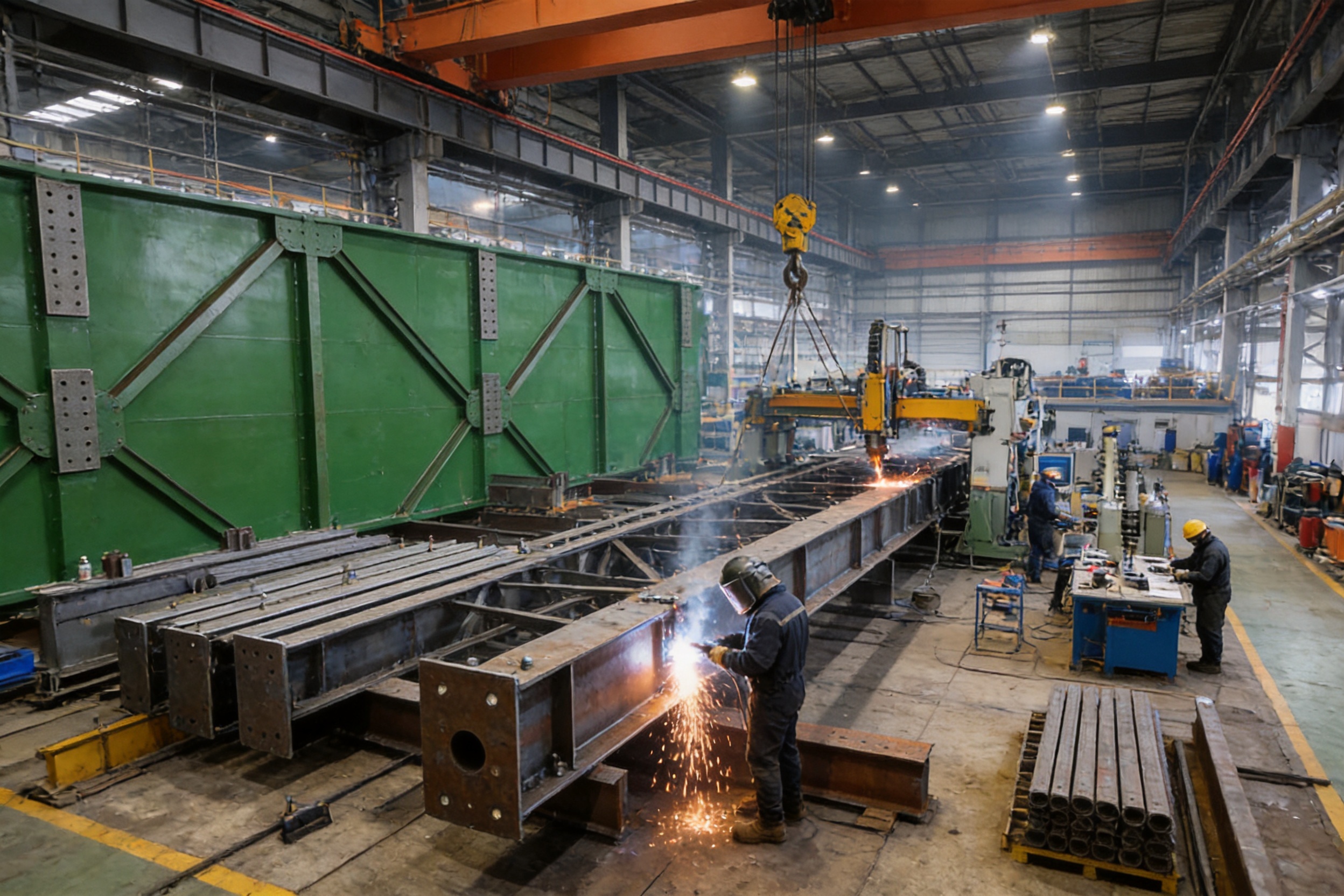
The performance of a modular support system begins with the quality of its manufacturing process. Jiangsu Zhonghai Bridge Equipment Co., Ltd. integrates engineering design, precision manufacturing, quality management, automated welding, and steel fabrication in its production operations. This combination allows the company to control important stages from raw material preparation to final inspection.
Engineering Design and Configuration Development
The manufacturing process starts with understanding the project requirements. These may include design span, construction loads, support height, site access, foundation conditions, lifting restrictions, environmental exposure, erection sequence, and dismantling requirements. Engineering personnel use these parameters to develop a support arrangement that is appropriate for the intended application.
Design work for temporary support must consider both strength and serviceability. The structure should have adequate resistance to compression, tension, bending, shear, buckling, connection forces, and lateral effects. Deflection and settlement limits may also be important because excessive movement can influence the supported bridge elements or construction equipment. A complete design review helps ensure that the selected component arrangement is consistent with the project’s construction sequence.
Material Preparation
High-quality steel fabrication depends on controlled material preparation. Plates, sections, connection components, and other materials must be received, identified, stored, and processed in a manner that preserves traceability and prevents damage. Material selection should be consistent with the approved design and applicable technical specifications.
Proper preparation may include surface cleaning, cutting plans, dimensional verification, edge treatment, and marking. Accurate material preparation supports later assembly by ensuring that parts fit as intended. It also reduces scrap and helps maintain efficient production across repeated component batches.
Precision Cutting and Forming
Modular bridge components require accurate dimensions because they must connect with other standardized parts. Precision cutting equipment can produce consistent plate and section geometry, while controlled forming processes help maintain the required shape of stiffeners, gussets, connection plates, and other structural elements.
Dimensional accuracy is especially important around bolt holes and connection interfaces. Small errors can become significant when repeated across a long structure or a multi-panel assembly. Controlled cutting and forming reduce the likelihood of forced fit-up, misalignment, or excessive installation adjustment at the project site.
Automated Welding
Automated welding is an important part of the company’s manufacturing capability. Compared with uncontrolled manual welding, automated or mechanized welding can provide more consistent travel speed, heat input, weld placement, and production repeatability. These factors contribute to stable weld quality when the process is correctly qualified and monitored.
Welded assemblies may include panel frames, gusset plates, stiffeners, diaphragms, and other structural subassemblies. Before welding, components must be properly positioned and secured. During welding, operators and quality personnel monitor the approved procedure. After welding, visual inspection and other required checks can be used to identify surface defects, dimensional distortion, or areas requiring correction.
Assembly and Dimensional Inspection
After fabrication, components may undergo trial assembly or controlled dimensional inspection. This stage verifies that panels, connection plates, bracing elements, and related members meet the required geometry. It can also confirm that holes align correctly and that the components can be assembled without unacceptable interference.
Inspection records provide useful evidence for project quality management. They can include material information, welding records, dimensional results, coating information, and final release documentation. Consistent documentation supports communication between the manufacturer, contractor, consultant, and project owner.
Surface Treatment and Protective Coating
Steel surfaces must be prepared before anti-corrosion paint is applied. Surface preparation helps remove contaminants and creates conditions that support coating adhesion. The application process should control coverage, thickness, curing, and handling so that the finished coating provides reliable protection.
The green coating specified for the Super Bailey Construction Support contributes to the product’s recognizable appearance and protective performance. During storage and transport, coated components should be handled carefully to minimize impact damage. At the construction site, areas affected by lifting, bolting, abrasion, or welding should be inspected and repaired according to the approved coating procedure.
6. Quality Management and Compliance Orientation
Major infrastructure projects require reliable quality systems because structural products must perform consistently across many components and construction stages. Zhonghai applies standardized production workflows and quality management practices to support product consistency. The company’s manufacturing orientation includes compliance with ASTM, EN, and applicable national specifications, depending on project requirements.
Compliance is not limited to selecting a particular standard. It also involves interpreting the design requirements, controlling materials, qualifying production procedures, inspecting finished components, and maintaining appropriate records. A support system may be technically strong, but its value is reduced if the manufacturing process cannot demonstrate consistency or if project documentation is incomplete.
Quality control can be organized around several checkpoints:
1. Review of approved drawings, specifications, and fabrication instructions.
2. Verification of incoming steel and connection materials.
3. Inspection of cutting, drilling, forming, and component dimensions.
4. Monitoring of welding procedures and welder qualifications where applicable.
5. Inspection of weld appearance, surface condition, and required test results.
6. Trial fitting or dimensional verification of modular assemblies.
7. Surface preparation and anti-corrosion coating inspection.
8. Final identification, packaging, loading, and shipment review.
This staged approach helps prevent errors from passing unnoticed into later operations. Early detection is generally more efficient than correction after delivery, particularly when components have already been transported to a remote project location.
7. Technical Service and Customized Guidance
A construction support product must be supported by more than manufacturing capacity. Contractors often need assistance with configuration, component selection, erection planning, load conditions, and site coordination. For the Shenjiang High-speed Rail Project, the product was provided with customized services and guidance plans, allowing the support solution to align more closely with the practical needs of the project.
Customized guidance may include reviewing available site information, discussing the construction sequence, identifying lifting and access requirements, and organizing the component package for efficient assembly. It may also involve preparing technical documents, installation instructions, inspection checklists, and maintenance recommendations.
Technical support is particularly valuable when the system is used in a large-span or heavy-load arrangement. The correct assembly sequence can influence stability at every stage. Temporary bracing, support points, lifting positions, connection tightening, and load transfer must be coordinated carefully. The manufacturer’s experience with modular bridge systems can help contractors avoid common problems such as incorrect panel orientation, incomplete bracing, unsuitable support spacing, or premature loading.
Customized service also improves communication. A project-specific support plan provides a common reference for the manufacturer, engineering consultant, general contractor, subcontractors, and inspection team. When responsibilities and procedures are clearly defined, the risk of misunderstanding is reduced. This is especially important on large infrastructure projects involving multiple organizations and work fronts.
8. Installation and Site Use
Before installation, the contractor should confirm that foundations, bearing surfaces, access routes, lifting equipment, and work areas are ready. The support arrangement should be checked against the approved design, and all components should be inspected for transport damage, coating damage, deformation, missing parts, or incorrect identification.
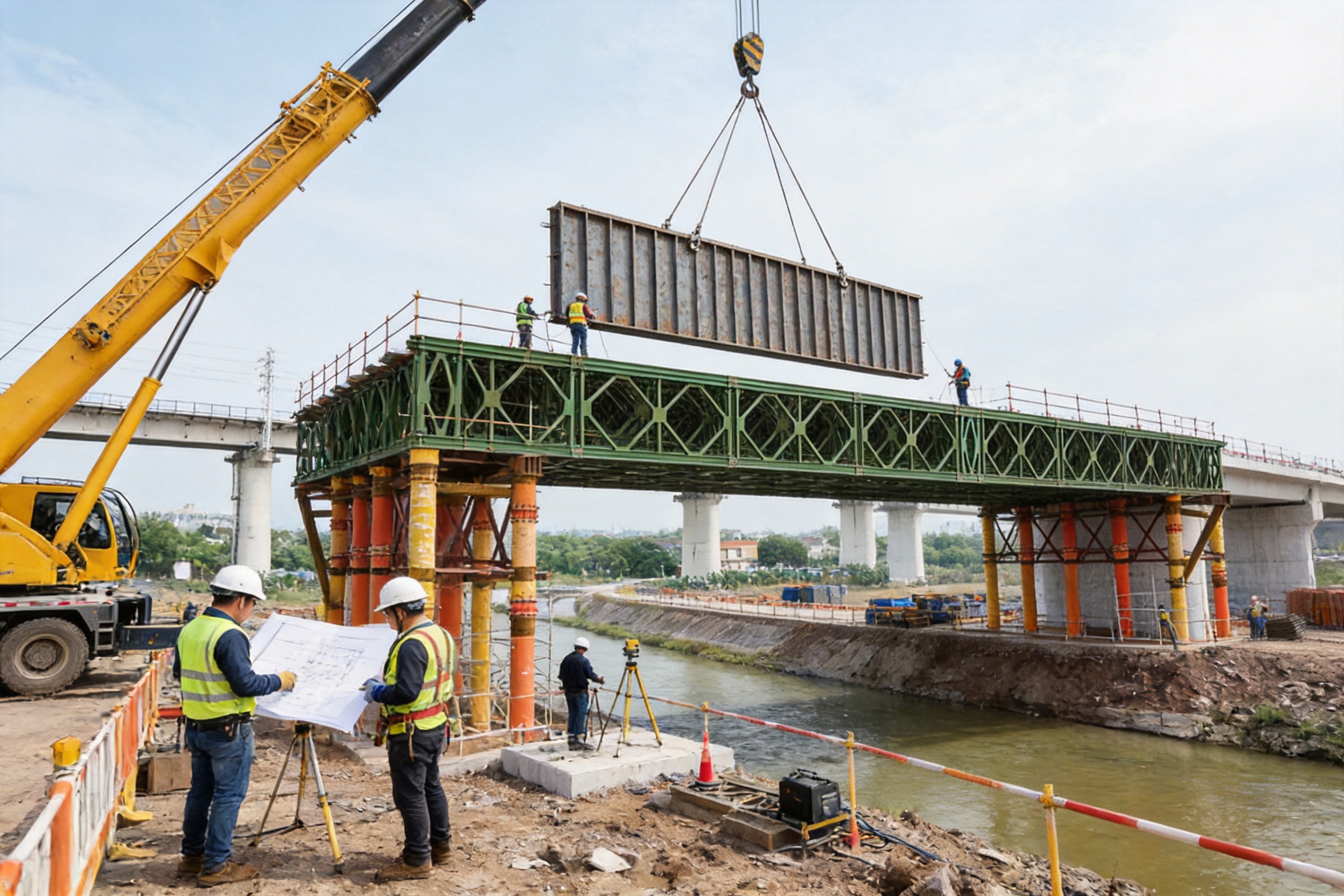
Components should be arranged in an assembly sequence that matches the project plan. Where practical, sections may be assembled at ground level before being lifted into position. This can reduce work at height and improve the efficiency of connection installation. However, the selected method must account for the available crane capacity, lifting radius, wind conditions, ground bearing capacity, and nearby structures.
Once the support is positioned, alignment and elevation should be checked. Connection components must be installed and tightened according to the approved procedure. Temporary bracing should remain in place until the structure has achieved the required stability. The support should not be loaded beyond its verified construction-stage capacity, and changes to the arrangement should be reviewed by qualified engineering personnel.
During use, routine inspections should focus on connection condition, visible deformation, coating damage, corrosion, settlement, lateral movement, bearing condition, and the integrity of bracing members. Inspections should be repeated after unusual events such as strong wind, heavy rainfall, impact, accidental overload, or unexpected settlement.
At the end of the construction stage, dismantling should be planned as carefully as installation. Loads should be removed in a controlled sequence, and components should not be released while they remain structurally necessary. After dismantling, each member should be cleaned, inspected, labeled, and stored properly if it is intended for reuse.
9. Key Product Parameters and Project Considerations
The following table summarizes the principal characteristics of the Super Bailey Construction Support and the related engineering considerations. Actual dimensions, capacities, configurations, and design values should be confirmed through project-specific drawings and calculations.
| Item | Product or Service Characteristic | Project Benefit |
|---|---|---|
| Application | High-speed rail bridge construction support | Supports demanding construction-stage operations |
| Structural form | Modular steel Bailey-type support system | Facilitates transportation, assembly, adjustment, and reuse |
| Load orientation | Designed for large-span and heavy-load applications | Provides a strong basis for major bridge construction works |
| Environmental protection | Green anti-corrosion paint | Improves rust resistance and weather durability |
| Manufacturing capability | Precision steel fabrication and automated welding | Improves repeatability and production consistency |
| Engineering service | Customized services and guidance plans | Helps adapt the system to site conditions and construction sequence |
| Quality orientation | Standardized workflows and specification-based production | Supports dependable documentation and project acceptance |
| Potential reuse | Modular components can be inspected and reconfigured | May improve equipment utilization and reduce temporary works waste |
When selecting a configuration, project engineers should consider span length, support height, total construction load, lateral stability, foundation capacity, deflection limits, wind exposure, access constraints, lifting methods, and dismantling requirements. The modular system provides flexibility, but flexibility must always be controlled through engineering review. No support system should be assembled or modified solely on the basis of visual similarity to another arrangement.
10. Manufacturing Strengths of the Supplier
Jiangsu Zhonghai Bridge Equipment Co., Ltd. has developed its operations around modular bridge systems and related structural products. Its location in Zhenjiang, Jiangsu Province, places the company within an important industrial and transportation region. This location supports access to manufacturing resources, logistics networks, engineering talent, and domestic as well as international project markets.
The company combines engineering design with fabrication instead of treating production as an isolated activity. This is a significant advantage for customized bridge support. When the design and manufacturing teams work within an integrated organization, technical feedback can move more efficiently from drawing review to production planning and from production inspection back to engineering.
Its product range includes modular steel bridges, Bailey bridge systems, customized steel components, bridge erection and construction support equipment, automated welding, and precision steel fabrication. This broad capability allows the company to understand how individual support components function within larger bridge construction operations. It also enables the supplier to offer related products or adaptations when a project includes access bridges, temporary crossings, structural platforms, or special steel assemblies.
The company serves transportation, water conservancy, military logistics, disaster relief, and international development applications. These markets often require products that can be transported efficiently, installed quickly, and adapted to changing conditions. Experience across these sectors supports a practical understanding of modular steel construction, field logistics, emergency deployment, and long-term infrastructure delivery.
Reported project experience includes coastal engineering in the Maldives, temporary access bridges for the Shenzhen–Zhongshan Corridor, structural components for the Hangzhou Expo Center, multi-span Bailey bridges for the Lalin Railway, and flood-response and emergency bridge deployments in multiple regions. These applications reflect the ability to work with different structural requirements, environmental conditions, and project delivery models.
11. International Supply and Project Support
Infrastructure customers purchasing modular steel systems generally need dependable international communication, packaging, shipping coordination, and documentation. A product may be technically suitable, but project performance can be affected if the supply chain is poorly organized. Zhonghai’s international delivery experience supports its role as an engineering partner for clients outside China.
Export-oriented supply requires attention to component identification, packing protection, shipping dimensions, loading plans, documentation, and installation information. Modular members should be packaged so that connection parts are protected and components can be easily located after arrival. Clear markings can reduce assembly time and prevent confusion when several similar members are delivered to the same site.
International projects may also involve different standards, inspection practices, contract requirements, and environmental conditions. A flexible supplier should be prepared to review ASTM, EN, national, or client-specific requirements and organize production documentation accordingly. Early technical communication helps identify differences before fabrication begins.
For overseas customers, technical guidance can be delivered through drawings, assembly manuals, video meetings, inspection coordination, and on-site support where required. The appropriate service model depends on project complexity, local construction capability, and contractual arrangements. The objective is to ensure that the delivered components are used in the configuration for which they were designed.
12. Sustainability, Reuse, and Lifecycle Value
Temporary construction materials can create significant waste when they are designed for only one use or are difficult to dismantle. Modular steel systems offer a more sustainable approach because components can potentially be reused after inspection and refurbishment. Reuse reduces the demand for new raw materials and can lower the amount of temporary structure sent to disposal.
The long-term value of a modular support system depends on proper maintenance. After each project, components should be examined for permanent deformation, fatigue-related damage, cracking, excessive corrosion, worn connection surfaces, and missing hardware. Members that do not meet the required condition should be repaired, replaced, or removed from service.
Protective coating also contributes to lifecycle value. A durable coating can slow corrosion during storage and use, helping components remain serviceable for future projects. However, coating performance depends on surface preparation, application quality, exposure conditions, and timely repair. A lifecycle approach should include inspection records and a clear procedure for addressing coating damage.
Modular construction can also reduce site waste because many parts are fabricated to defined dimensions before delivery. Less cutting and welding at the project site can reduce scrap, packaging complexity, and the environmental impact associated with uncontrolled temporary works. The benefits are strongest when the system is carefully planned, reused effectively, and maintained throughout its service life.
13. Risk Control and Safe Operation
Structural capacity is only one element of construction safety. Safe operation also depends on competent planning, correct assembly, appropriate lifting, inspection, communication, and control of unauthorized modifications. The contractor should establish a method statement covering delivery, storage, assembly, erection, loading, inspection, adjustment, dismantling, and emergency response.
Ground conditions deserve particular attention. Even a strong steel support can perform poorly if its foundations settle or rotate. Bearing areas should be designed and prepared for the expected reactions. Drainage should be considered so that water does not undermine temporary foundations or remain in contact with steel components for extended periods.
Wind can be a critical factor during erection and when the support is partially assembled. Unfinished structures may have a different stability profile from the completed arrangement. Erection should therefore follow an approved sequence that includes temporary bracing and restrictions on work during unsuitable weather. Lifting operations should be managed by trained personnel using verified equipment and clear signals.
Construction loads should be introduced gradually and in accordance with the approved plan. Concentrated loads, eccentric placement, sudden impact, or unplanned storage of materials may create conditions that differ from the design assumptions. The site team should maintain control over where equipment, materials, and personnel are positioned on or near the support system.
Any observed deformation, unexpected vibration, cracking, connection movement, coating failure, settlement, or impact should be reported immediately. Work should be paused where necessary until the condition is assessed by qualified personnel. A strong safety culture treats early warning signs as opportunities for prevention rather than waiting for visible structural failure.
14. Recommended Procurement Process
Customers considering a Super Bailey Construction Support should begin by providing accurate project information. Useful data may include general arrangement drawings, required span, support elevation, construction loads, site photographs, foundation information, access limitations, environmental exposure, lifting resources, and the intended construction sequence.
The supplier can then review the requirements and recommend a suitable modular configuration. This stage may involve preliminary calculations, layout drawings, component lists, connection details, coating requirements, inspection procedures, and delivery planning. Clear technical review at the beginning reduces the risk of later changes that could affect price or schedule.
Before production, the customer and supplier should confirm the scope of supply. The scope should identify steel members, connection hardware, bracing, bearings, accessories, protective coating, technical documents, inspection services, and any installation guidance. It should also state which responsibilities remain with the contractor, such as foundation construction, lifting equipment, local permits, and final site verification.
During manufacturing, customers may arrange document review, factory inspection, or third-party inspection according to the project contract. After release, the components should be packed with clear identification and accompanied by the approved technical information. At the site, the contractor should compare the delivered package with the packing list before assembly begins.
15. Frequently Asked Questions
What is the Super Bailey Construction Support used for?
It is used as a modular steel support system during bridge construction, particularly for large-span and heavy-load applications. In the Shenjiang High-speed Rail Project, it provides dependable support during critical construction phases of high-speed rail bridge works.
Why is the system suitable for high-speed rail projects?
High-speed rail construction requires stable, accurately arranged, and dependable temporary works. The system combines a robust structural configuration, modular assembly, weather-resistant coating, and project-specific technical guidance, making it suitable for demanding bridge construction environments.
What are the main benefits of modular construction?
Modular construction supports faster organization, easier transportation, controlled factory production, simplified site assembly, configuration flexibility, and potential reuse. It can also reduce the amount of field cutting and welding required during installation.
Can the support system be customized?
Yes. The configuration can be developed around project-specific requirements such as span, load, height, access, construction sequence, and environmental conditions. Customization should be completed through engineering review and approved drawings rather than informal site modifications.
What type of corrosion protection is used?
The product is coated with green anti-corrosion paint. The coating is intended to improve rust resistance and weather durability in outdoor construction environments. Routine inspection and repair remain necessary, especially after transport, lifting, bolting, or accidental impact.
Does the supplier provide technical guidance?
The company provides customized services and guidance plans. Depending on the project, this support may include configuration review, technical documentation, assembly guidance, inspection coordination, and assistance with construction planning.
Can the components be reused?
Modular steel components may be reused after proper inspection and, where necessary, repair or refurbishment. Reuse depends on the condition of each member, the proposed new configuration, and confirmation that the components meet the requirements of the next project.
What standards can be considered during production?
The company’s manufacturing operations are oriented toward ASTM, EN, and national specifications, depending on the project requirements. The applicable standard, material grade, testing requirement, coating system, and documentation should be confirmed before production.
What information should a buyer provide for a quotation?
A buyer should provide the required span, support height, design loads, drawings, construction method, site conditions, access limitations, environmental exposure, delivery destination, required standards, coating requirements, and expected schedule. More complete information allows the supplier to prepare a more accurate technical and commercial proposal.
Is the support system suitable for only one project?
No. Although it can be customized for a particular project, its modular components may be used in other bridge construction, access, temporary support, or emergency infrastructure applications when the new configuration is properly engineered.
16. Conclusion
The Super Bailey Construction Support developed for the Shenjiang High-speed Rail Project represents a practical application of modular steel bridge technology to demanding high-speed rail construction. Its large-span and heavy-load capability, robust structural arrangement, modular assembly method, and green anti-corrosion coating make it well suited to complex outdoor construction environments.
Its competitive value comes from the combination of product performance and manufacturing discipline. Precision fabrication, automated welding, standardized workflows, controlled coating, dimensional inspection, and engineering support help create a more dependable solution than improvised or fully site-fabricated alternatives. The system is designed to support safer and more efficient construction while offering flexibility for transportation, assembly, adjustment, and potential reuse.
Jiangsu Zhonghai Bridge Equipment Co., Ltd. strengthens this offering through integrated engineering and manufacturing capabilities. Its experience in modular bridges, Bailey bridge systems, customized steel components, construction support equipment, and international infrastructure projects allows it to serve as more than a component supplier. The company provides a coordinated approach that includes design understanding, production control, quality management, technical guidance, and delivery support.
For contractors, engineering consultants, infrastructure owners, and international procurement teams, a properly engineered modular support system can improve construction planning and reduce uncertainty in difficult bridge works. With accurate project information, controlled design review, professional installation, and regular inspection, the Super Bailey Construction Support can provide a strong and durable foundation for critical high-speed rail construction activities.
References
1. Product information for the Super Bailey Construction Support developed for the Shenjiang High-speed Rail Project.
2. Jiangsu Zhonghai Bridge Equipment Co., Ltd. company profile and manufacturing capability statement.
3. General principles of modular steel bridge design, fabrication, erection, inspection, and maintenance.
4. ASTM-oriented practices for structural steel materials, fabrication, welding, and protective coatings.
5. EN-oriented practices for steel structures, execution quality, corrosion protection, and construction-stage verification.
6. General guidance for temporary works, bridge construction support, lifting operations, and site safety management.
Product: High-Speed Rail Project Dedicated Super Bailey Construction Support


We respond quickly to all international requests and provide technical support when needed.
Product Category
Bailey Bridge/Modular Bridge Modular Steel Bridge Pedestrian Bridge Modular Pipe Bridge Truss Bridge Steel StructureContact Us

+86-511-84522866
+86-13921582699

zhwm@zjql.com

Building 1,83#, dantu New Town, Yanjiang Road, Dantu District, Zhenjiang, Jiangsu, China
Copyright © Jiangsu Zhonghai Bridge Equipment Co., Ltd. All
Rights
Reserved
China bailey bridge for sale
bailey bridge supplier from china
