
 English
 русский
 Español
 Português


Tang Yuwei — International Bailey Bridge Sales Manager
Large-Span Construction Platforms for Bridge Projects
Content
- 1 Understanding Large-Span Bridge Construction Platforms
- 2 Principal Applications
- 3 Key Product Advantages
- 4 Advantages Compared with Conventional Temporary Works
- 5 Advanced Manufacturing Capabilities
- 6 Design Features for Project-Specific Requirements
- 7 Installation and Project Implementation
- 8 Benefits for Contractors and Infrastructure Owners
- 9 Why Manufacturer Capability Matters
- 10 Procurement Considerations
- 11 Safety and Responsible Use
- 12 Environmental and Sustainability Considerations
- 13 Recommended Project Workflow
- 14 Q&A
- 14.1 What is a large-span construction platform for bridges?
- 14.2 Where are these platforms commonly used?
- 14.3 Can the platform be customized?
- 14.4 How does it compare with ordinary scaffolding?
- 14.5 Can the components be reused?
- 14.6 What information is required for a quotation?
- 14.7 Does the platform replace a complete safety plan?
- 14.8 What manufacturing processes support product quality?
- 14.9 Can the platform be used for maintenance while a bridge remains open?
- 14.10 Why work with an experienced bridge-equipment manufacturer?
- 15 Conclusion
- 16 References
- 17 Product: Large Span Construction Platforms for Bridges
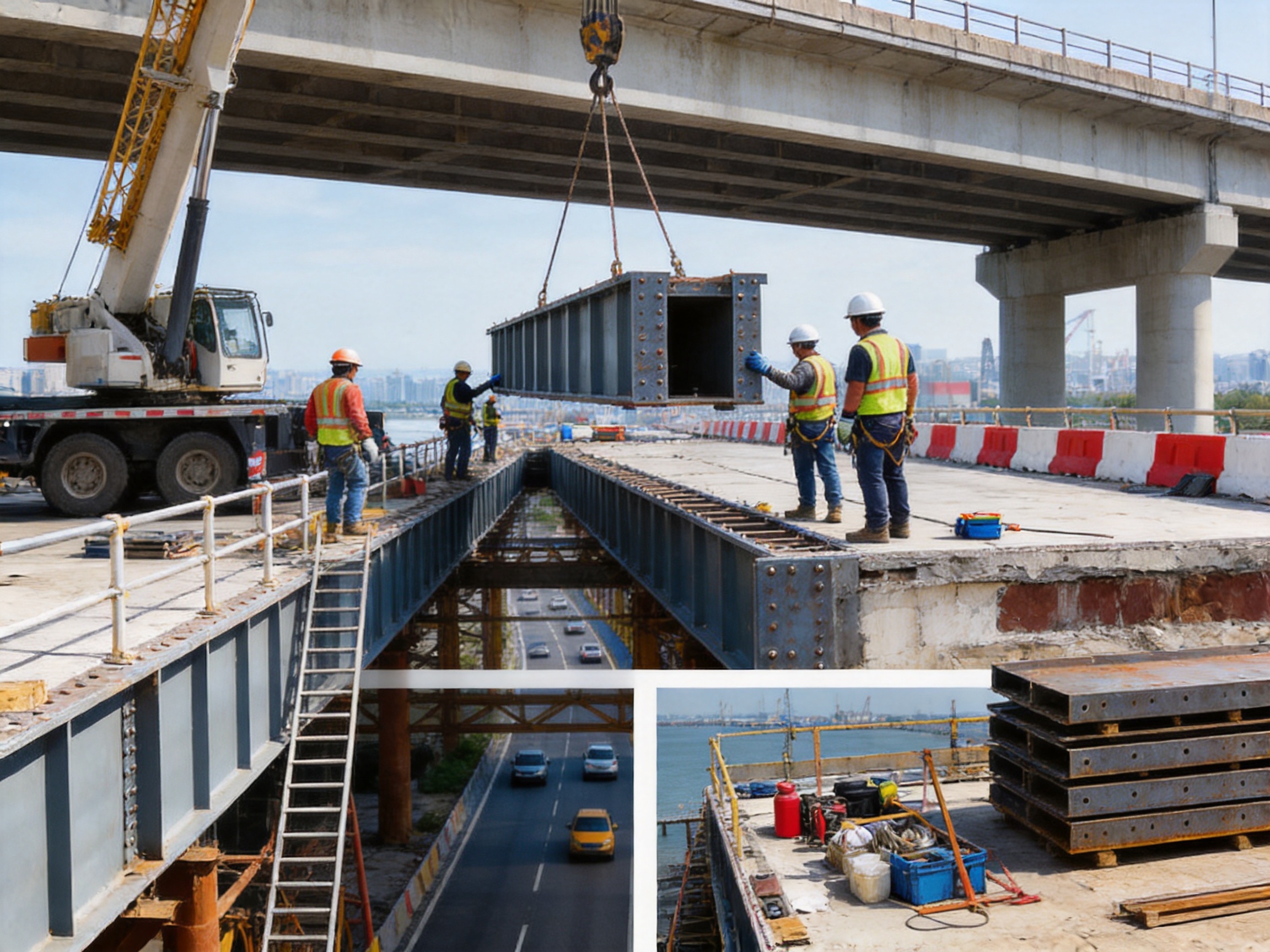
Bridge construction in mountainous, coastal, river-crossing, and urban environments often requires more than a permanent structural system. Before the final bridge deck, pier cap, or superstructure is completed, construction teams need a safe and stable place for workers, lifting equipment, materials, tools, temporary machinery, and inspection activities. A large-span construction platform for bridges provides this essential working surface while adapting to difficult terrain, changing project stages, and demanding load conditions.
Unlike ordinary scaffolding or improvised working decks, a modular bridge construction platform is engineered as a temporary support structure. It can be configured for high bridge piers, maintenance operations, reinforcement work, renovation projects, and other applications where conventional ground-based access is impractical. Its modular arrangement allows the platform to be assembled, adjusted, expanded, relocated, or dismantled as project requirements change.
Jiangsu Zhonghai Bridge Equipment Co., Ltd. designs and manufactures modular steel bridge systems, Bailey bridge components, customized structural steel products, bridge erection equipment, and construction support systems. Its large-span construction platforms are developed for contractors, infrastructure owners, engineering companies, emergency-response organizations, and international project partners seeking reliable temporary access and working solutions.
The product combines modular design, high-strength steel fabrication, standardized manufacturing, and project-oriented engineering support. As a result, it offers a practical alternative to fixed temporary works, conventional scaffolding, and site-built support structures that may require extensive labor, long preparation periods, or difficult transportation arrangements.
Understanding Large-Span Bridge Construction Platforms
A bridge construction platform is a temporary structural assembly installed to create a safe, usable, and sufficiently strong working area above ground level, across a gap, beside a pier, or beneath a bridge deck. Depending on the project, the platform may support workers, tools, formwork, inspection equipment, welding activities, reinforcement materials, maintenance machinery, or limited lifting operations.
Large-span platforms are especially valuable where the distance between available supports is substantial or where placing temporary supports directly on the ground is difficult. Mountain valleys, deep ravines, wide waterways, active roads, railway corridors, and environmentally sensitive areas can make conventional access arrangements inefficient or impossible. A modular steel platform helps bridge contractors work within these constraints while maintaining a controlled and organized construction environment.
The platform may be arranged as a deck, suspended working level, cantilevered work surface, pier-top assembly, temporary access platform, or integrated support structure. The final configuration depends on the span, working height, imposed loads, available support points, wind conditions, construction sequence, and applicable design standards.
Because bridge projects rarely have identical site conditions, the platform is not treated as a one-size-fits-all product. Its modular components can be combined in different layouts, with the overall arrangement determined through engineering assessment. This adaptability is one of the primary reasons modular platforms are widely used in temporary bridge construction and maintenance.
Principal Applications
High-Pier Construction in Mountainous Areas
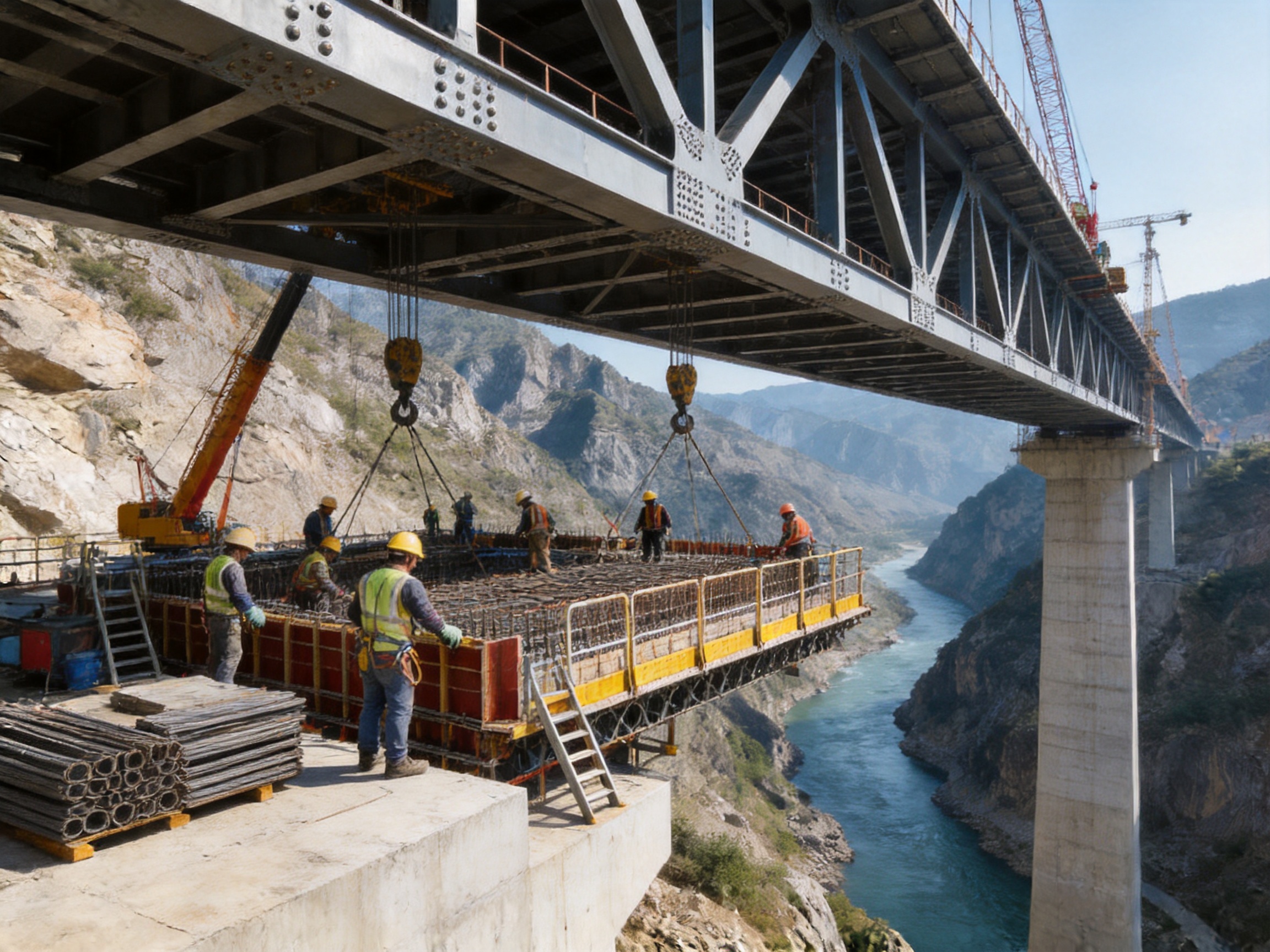
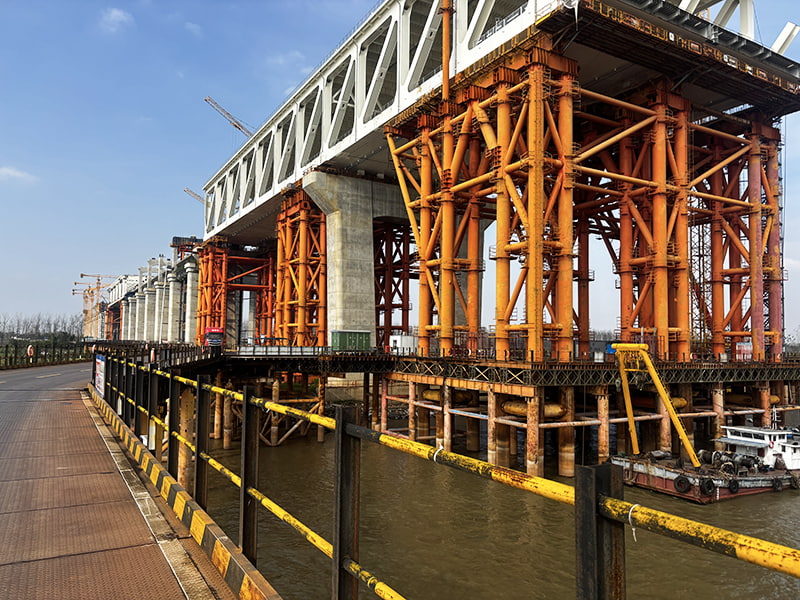
Mountainous bridge projects frequently involve tall piers, steep slopes, unstable access roads, and limited staging areas. Delivering equipment to the base of a pier may be difficult, while constructing a conventional access tower can require significant excavation and temporary foundations. A modular construction platform can be installed closer to the active work zone, giving personnel a stable surface for reinforcement, formwork, inspection, concrete-related activities, and equipment positioning.
For high-pier projects, the platform can be developed around the pier geometry or connected to a temporary support arrangement. Its working levels may be adjusted as the pier rises. This reduces the need to repeatedly build entirely new access systems and can help maintain a predictable construction sequence.
The modular approach is also beneficial when weather, terrain, or transportation conditions limit the amount of equipment that can be brought to the site at one time. Components can be delivered in manageable sections, assembled progressively, and inspected before use.
Bridge Deck and Superstructure Work
During girder installation, deck construction, expansion-joint work, protective coating, cable-related operations, and underside inspection, crews may need a platform below or beside the bridge structure. A large-span platform can provide a continuous or segmented work surface, depending on the bridge geometry and required access area.
Its use may reduce dependence on floating barges, mobile elevated work platforms, or extensive ground-based scaffolding. In areas with deep water, heavy traffic, restricted navigation, or uneven terrain, a structural platform can create a more stable and organized working environment.
Bridge Maintenance and Reinforcement
Existing bridges often require repair while remaining in service. Concrete deterioration, corrosion, damaged bearings, fatigue-related defects, drainage problems, and protective coating failure can all require access to areas beneath or alongside the bridge. A temporary platform allows maintenance personnel to reach these locations while supporting tools, inspection devices, repair materials, and controlled work activities.
For reinforcement projects, the platform can be installed in stages so that repair work proceeds without requiring a complete closure of the bridge. Project engineers may coordinate the platform layout with traffic management, navigation requirements, railway safety zones, or environmental restrictions.
The platform is also suitable for rehabilitation work involving strengthening plates, steel repairs, concrete jacketing, crack treatment, bearing replacement, structural monitoring, and localized reconstruction. Its modular components allow the work surface to be concentrated around the repair zone rather than covering unnecessary areas.
Renovation and Structural Modification
Bridge renovation often includes the replacement of structural elements, widening of the deck, installation of new utilities, modification of parapets, or upgrading of drainage and safety systems. These operations can create temporary access requirements that do not exist in the original bridge design.
A configurable platform helps contractors establish temporary work areas without permanently modifying the bridge. When the renovation stage is complete, the system can be dismantled and reused on another part of the project or transported to a different site.
Emergency Response and Temporary Access
Floods, earthquakes, landslides, collisions, and extreme weather can damage bridges or remove access routes. Emergency teams need temporary structures that can be mobilized quickly and adapted to uncertain conditions. Modular steel systems are valuable in these situations because they can be transported in standardized units and assembled with commonly available construction equipment.
A construction platform may be used to support emergency inspection, temporary repair, debris removal, equipment access, or the installation of a replacement bridge structure. Its role can be especially important when the original bridge remains partially usable but damaged areas require immediate stabilization and investigation.
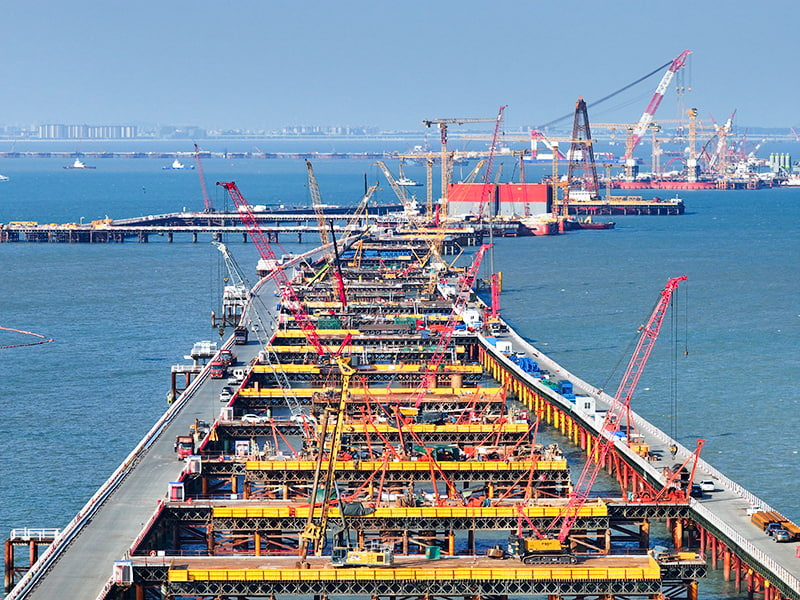
Large Span Construction Platforms for Bridges
Key Product Advantages
Modular Configuration
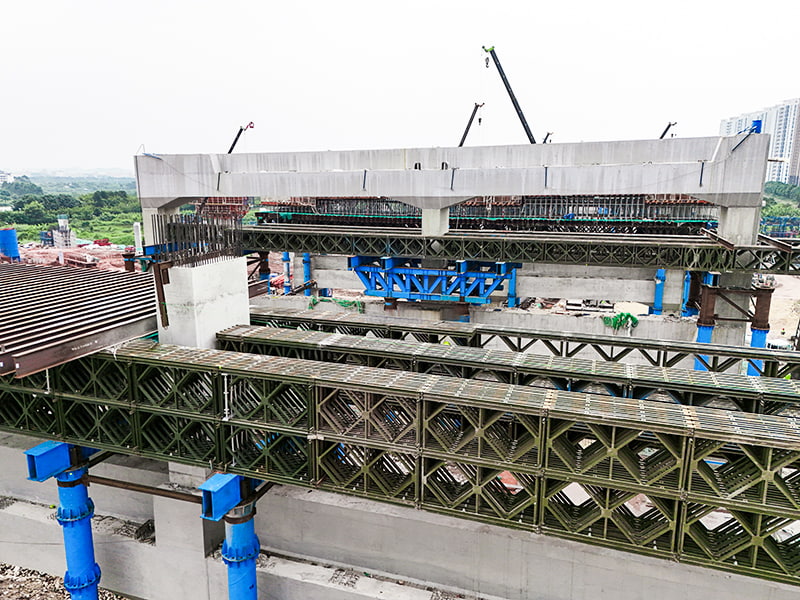
The platform is based on a modular structural concept. Rather than manufacturing every temporary work surface as a unique, indivisible assembly, the system uses repeatable components that can be connected into different arrangements. This supports multiple span lengths, working widths, elevations, and access patterns, subject to project-specific engineering verification.
Modular configuration offers several practical advantages. It can shorten design-to-installation time, simplify transportation, reduce the number of specialized components, and make replacement or expansion easier. If a project develops a new access requirement, the platform may be adjusted by adding, removing, or rearranging compatible modules instead of starting from the beginning.
Standardized modules also help contractors develop familiar installation procedures. Workers can be trained on recurring connection details, inspection points, and handling methods. This consistency can reduce installation errors and support better site management.
Adaptability to Complex Terrain
Traditional temporary works often perform best on level ground with convenient access for cranes, trucks, and lifting equipment. Bridge construction rarely provides such ideal conditions. A modular platform can be engineered for irregular terrain, elevated work zones, narrow construction corridors, and restricted support locations.
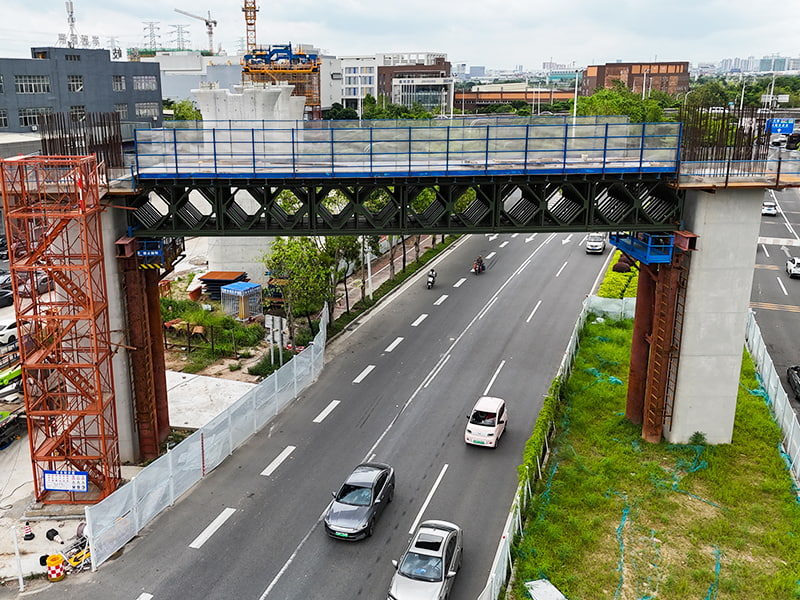
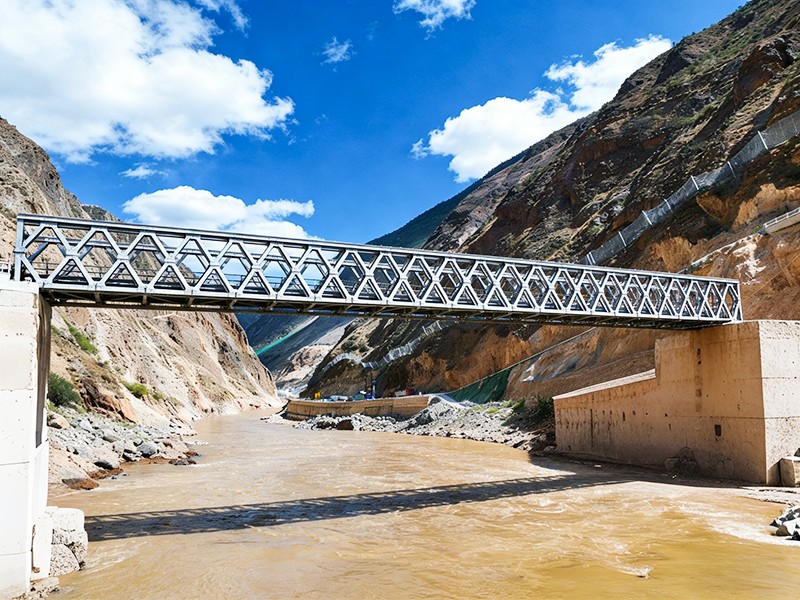
In mountainous regions, the structure may be arranged around steep slopes or high piers. At water crossings, it may be supported from selected points while maintaining clearance for navigation or flow. In urban environments, it may be designed to fit within limited space above roads, railways, or existing structures.
This flexibility does not mean that the platform can be installed without engineering review. Instead, it means that the structural system provides a broader range of possible configurations than fixed, standardized access equipment.
Efficient Assembly and Disassembly
Temporary bridge works must often be installed within a narrow project window. Delays in platform construction can affect formwork, reinforcement, concrete placement, girder erection, or maintenance schedules. Modular components are intended to support organized assembly using planned lifting, bolting, alignment, and inspection procedures.
Once the active work is complete, the same components can be disassembled in a controlled sequence. Reusability is particularly important for contractors managing multiple bridge projects. A platform that can be redeployed may provide better long-term value than a structure designed for one location only.
Efficient disassembly also helps reduce site congestion. After removal, components can be sorted, inspected, repaired if necessary, and prepared for the next project. This supports a more sustainable temporary-works strategy by extending the service life of structural materials.
Stable Working Conditions
A properly engineered platform provides a defined work surface and a controlled place for personnel and equipment. This is preferable to relying on scattered ladders, narrow temporary brackets, suspended individual work baskets, or improvised timber arrangements.
Stable working conditions can improve productivity because workers spend less time repositioning access equipment and moving materials through unsuitable routes. A planned platform can also support better housekeeping, clearer separation of work areas, and more systematic inspection.
The platform layout may include designated access points, guardrail arrangements, toe protection, material staging zones, and openings for tools or lifting operations. These details should be established during engineering and installation planning rather than added informally after construction begins.
Compatibility with Bridge Construction Equipment
Bridge construction platforms can be coordinated with modular bridge systems, temporary supports, erection equipment, steel components, formwork, inspection tools, and maintenance machinery. This compatibility is useful when a project requires several temporary structures to work together.
For example, a platform may provide access around a pier while a separate modular bridge system maintains temporary traffic or equipment access across a gap. In another project, the platform may be integrated into a larger erection sequence involving temporary bearings, lifting points, support frames, or staged steel installation.
Because the manufacturer also produces modular steel bridge systems and engineered structural components, it can evaluate the relationship between the platform and other temporary or permanent works. This integrated perspective helps reduce coordination problems between different suppliers.
Reusability and Lifecycle Value
Temporary does not have to mean disposable. High-quality modular steel components can be reused when they are properly designed, fabricated, inspected, stored, and maintained. Reuse reduces material waste and can lower the effective cost of ownership over several projects.
Reusable components are also valuable for organizations that maintain emergency-response inventories. A standardized stock of platform modules can be mobilized when a bridge requires urgent inspection or temporary access. After deployment, the parts can be returned to inventory and prepared for future use.
Lifecycle value depends on more than the initial purchase price. Transportation requirements, installation labor, project duration, inspection procedures, adaptability, maintenance, and redeployment potential all influence the overall economic result. A modular solution can be competitive when these factors are considered together.
Advantages Compared with Conventional Temporary Works
Conventional scaffolding remains useful for many bridge projects, particularly where the height is limited, the ground is accessible, and the required work area is relatively small. However, standard scaffolding may become less efficient when the span is large, the working height is substantial, or ground supports cannot be placed conveniently.
A modular steel construction platform is designed to address these more demanding conditions. It can provide a stronger structural arrangement for larger working areas and can be adapted around existing bridge geometry. It may also reduce the number of supports that obstruct roads, waterways, slopes, or construction access routes.
Compared with improvised site-built platforms, an engineered modular system offers more consistent component quality and more predictable connection details. Site-built solutions can vary significantly according to local materials, labor skills, and weather exposure. Standardized manufactured components provide a clearer basis for inspection and documentation.
Compared with fully customized temporary structures, modular platforms can reduce lead times and simplify future reuse. A completely unique design may be appropriate for an unusual bridge, but it often requires new fabrication, new drawings, and new installation procedures for every project. Modular systems preserve customization while retaining a higher degree of standardization.
Compared with mobile elevated work equipment, a fixed temporary platform can provide a larger continuous workspace and can remain available for extended operations. Mobile equipment may be highly effective for short-duration tasks, but it can be limited by terrain, reach, working radius, weather, traffic, or the amount of equipment and materials it can support.
| Evaluation Factor | Modular Steel Construction Platform | Conventional Scaffolding | Improvised Site-Built Platform | Mobile Elevated Equipment |
|---|---|---|---|---|
| Large-span adaptability | Well suited to engineered modular arrangements | May require extensive supplementary support | Highly dependent on site workmanship | Limited by reach and equipment capacity |
| Reuse potential | High when components are inspected and maintained | Moderate, depending on system type | Often limited | Equipment-dependent |
| Terrain flexibility | Can be configured for difficult access conditions | Requires suitable support and bracing | Variable and difficult to standardize | Requires access and stable operating ground |
| Continuous workspace | Can provide broad, connected work areas | Possible but may require many components | Variable | Usually limited to the platform envelope |
| Manufacturing consistency | Factory-controlled steel fabrication | Depends on system supplier and site assembly | Variable | Factory-controlled equipment production |
| Project customization | High through modular arrangement and engineering | Moderate | High but less standardized | Limited by equipment geometry |
| Typical suitability | Bridge construction, maintenance, reinforcement, and difficult-access work | General access and smaller work zones | Short-term or low-complexity tasks with careful controls | Localized and mobile operations |
The comparison is not intended to suggest that one access method replaces every other method. The most appropriate solution depends on the span, height, load, duration, access conditions, safety requirements, and construction sequence. In many projects, a modular platform works alongside scaffolding, cranes, lifting equipment, and mobile access systems.
Advanced Manufacturing Capabilities
Engineering-Led Product Development
The performance of a temporary bridge platform begins with engineering. The manufacturer evaluates the intended use, span arrangement, working loads, support conditions, environmental exposure, connection requirements, transport limitations, and installation sequence. This process allows the product to be configured for the actual construction environment rather than selected solely from a generic catalog.
Engineering review may include structural analysis, connection assessment, member sizing, stability evaluation, deflection considerations, lifting-point review, and verification of installation stages. Temporary structures can experience different load conditions during assembly, partial completion, and dismantling, so each stage should be considered in the project design.
Jiangsu Zhonghai Bridge Equipment Co., Ltd. combines engineering design with precision manufacturing and on-site support. This integrated capability allows design decisions to be connected directly with fabrication methods, inspection requirements, and installation practicality.
High-Strength Steel Fabrication
Bridge construction platforms require structural members that can withstand repeated handling, environmental exposure, working loads, and assembly cycles. High-strength steel can provide a favorable balance between capacity, weight, and transport efficiency when selected and processed appropriately.
Steel grade, thickness, weldability, corrosion protection, connection design, and fabrication tolerances must be considered together. The goal is not simply to use stronger material, but to produce a reliable structural system in which the material, geometry, welds, bolts, stiffeners, and connection interfaces work as intended.
Standardized steel components also simplify inventory management. Contractors can identify modules by type, inspect them before use, and replace damaged parts without discarding an entire platform assembly.
Automated Welding
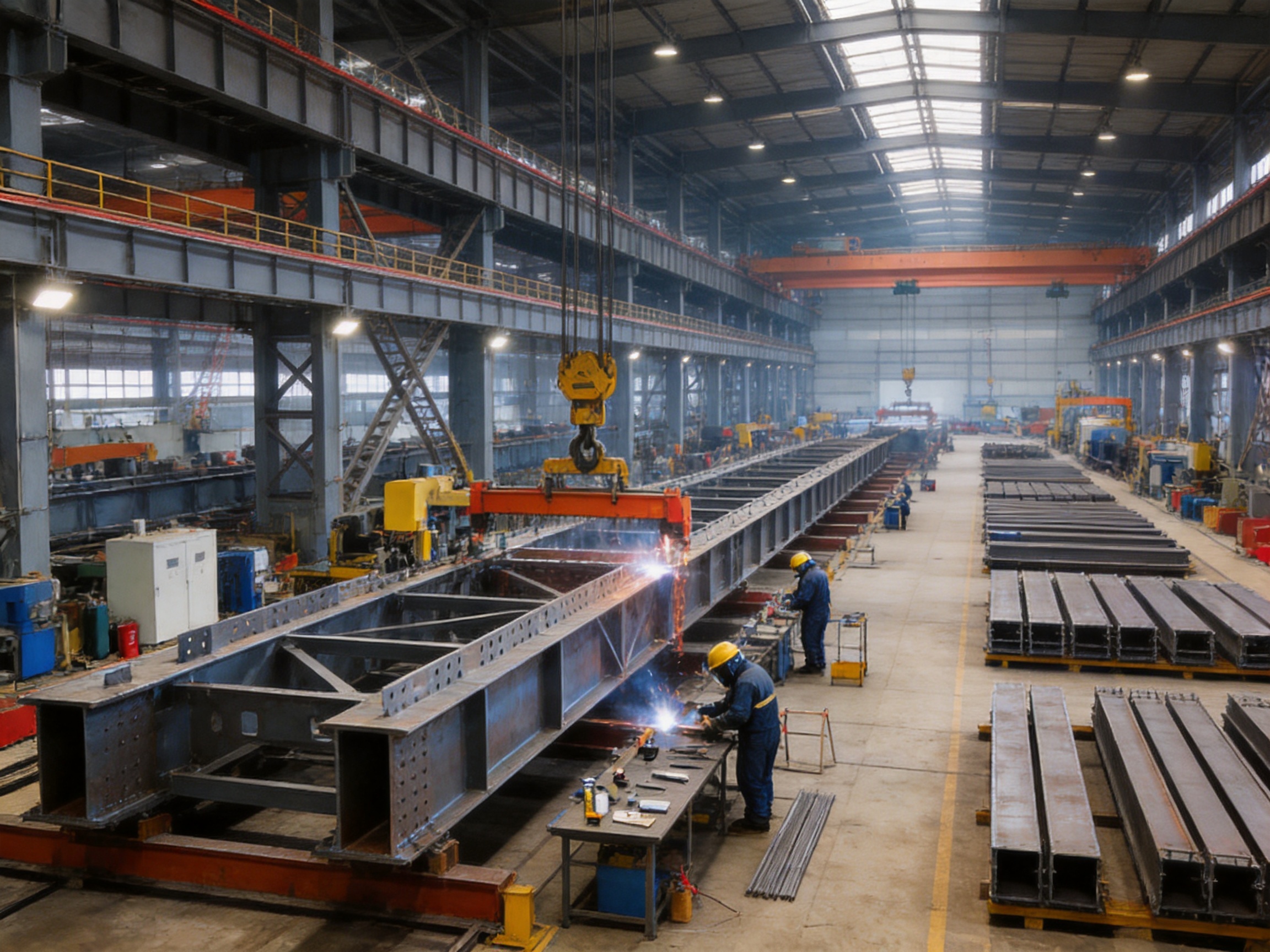
Welding quality is a critical part of modular steel bridge equipment. Automated welding processes can improve repeatability, control heat input, maintain consistent weld geometry, and reduce variation between production batches. Automation is particularly useful for repeated components and long weld seams produced under controlled factory conditions.
Automated welding does not eliminate the need for qualified personnel or inspection. Instead, it supports a controlled process in which welding parameters, joint preparation, material handling, and post-weld inspection can be documented and managed systematically.
Factory welding also provides advantages over extensive field fabrication. Indoor production reduces exposure to rain, wind, temperature changes, site dust, and restricted working positions. It allows components to be welded in more favorable orientations and inspected before shipment.
Precision Steel Processing
Accurate cutting, drilling, forming, and machining help ensure that modular parts fit together during installation. Poor dimensional control can lead to alignment problems, excessive adjustment, connection stress, or delays at the construction site. Precision processing reduces the need for uncontrolled field modification.
Modern fabrication workflows may use computerized cutting, standardized jigs, drilling templates, dimensional checks, and production records. These procedures help maintain repeatability across large quantities of components and support the interchangeability that modular systems require.
Precision fabrication is particularly important for connection plates, pin holes, bolt patterns, bearing surfaces, stiffeners, and interfaces between primary and secondary members. These details affect both structural behavior and installation efficiency.
Standardized Production Workflows
A factory-based production system provides a repeatable route from material receipt to finished product. Typical stages may include material verification, cutting, forming, drilling, fit-up, welding, surface preparation, dimensional inspection, coating, marking, packing, and final release.
Standardized workflows allow production teams to identify quality checkpoints at each stage. They also improve traceability, scheduling, and coordination between engineering and manufacturing. For international projects, consistent documentation can assist with customer review, customs preparation, site receiving, and quality records.
Jiangsu Zhonghai Bridge Equipment Co., Ltd. uses industrial-scale manufacturing capacity and standardized workflows to produce modular bridge systems and supporting steel structures. Its product range includes modular steel bridges, Bailey bridge systems, customized steel components, bridge erection and construction support equipment, automated welding, and precision steel fabrication.
Quality Management and Applicable Standards
Bridge projects may be governed by national codes, owner specifications, international standards, or a combination of these requirements. The manufacturer states that its production capabilities support products designed to comply with ASTM, EN, and relevant national specifications, subject to the specific project design and contractual requirements.
Compliance is not a substitute for project engineering. The final design must identify the governing standards, design loads, material requirements, fabrication tolerances, welding procedures, inspection levels, corrosion protection system, and acceptance criteria. A professional manufacturer should work with the customer to clarify these requirements before production begins.
Quality management can include material certificates, welding procedure controls, welder qualifications, dimensional inspection, visual examination, non-destructive testing where required, coating checks, assembly verification, and shipment documentation. These records provide evidence that the platform has been manufactured according to the approved design and specified procedures.
Design Features for Project-Specific Requirements
Span and Working Width
The required span is determined by the distance between available supports or by the area that must remain unobstructed below the platform. Working width depends on the number of personnel, tools, materials, formwork, inspection systems, or equipment that must be accommodated.
A wider platform may improve productivity but can also increase dead load, wind exposure, and required structural capacity. The correct width should therefore be established from the work method rather than selected only for convenience.
Load and Stability Assessment
Temporary platforms must be evaluated for all relevant loads. These may include the self-weight of the platform, personnel, tools, stored materials, temporary equipment, wind, impact, lifting effects, construction-stage loads, and accidental actions defined by the project requirements.
Stability should be considered in both the completed and partially assembled conditions. Support settlement, uneven loading, lateral movement, vibration, and local connection effects may influence platform performance. Where the platform is installed near a bridge, the design team should also consider interaction with the existing structure and any restrictions on attachment or imposed loads.
The platform should not be overloaded with materials that were not included in the approved design. Clear loading rules and site supervision are essential, especially when several trades use the same work surface.
Connection Systems
Modular components depend on reliable connections. Bolted, pinned, or mechanically connected details can support rapid assembly and disassembly while reducing the need for extensive field welding. Connection design must account for shear, tension, bending, bearing, fatigue where relevant, installation tolerances, and repeated use.
Connection components should be protected against loss, damage, incorrect installation, and unauthorized substitution. Marking and component identification can help crews follow the erection drawings and verify that the correct parts are used in each location.
Access and Worker Protection
A work platform is only effective when personnel can reach it safely. Access ladders, stair units, walkways, gates, guardrails, toe boards, and controlled openings may be incorporated into the temporary works plan. The precise arrangement depends on the height, location, work method, local regulations, and emergency procedures.
Surface treatment and drainage should also be considered. A platform exposed to rain, mud, ice, concrete residue, or coating materials can become slippery or difficult to maintain. Appropriate surface details, housekeeping procedures, lighting, and inspection routines contribute to safer use.
Environmental Exposure
Outdoor bridge platforms may face rain, sunlight, high humidity, salt spray, temperature variation, strong wind, and chemically aggressive conditions. The corrosion protection system should reflect the expected exposure and project duration.
Surface preparation, primer selection, intermediate coatings, topcoats, galvanizing, drainage, and storage conditions can all affect service life. Components intended for repeated reuse require a maintenance plan that includes coating repair, bolt inspection, deformation checks, and replacement of damaged parts.
Installation and Project Implementation
Successful platform deployment begins before the components arrive on site. The contractor should confirm delivery routes, unloading zones, storage areas, lifting equipment, support conditions, access restrictions, weather limitations, and the sequence of bridge operations that will use the platform.
Foundation or support preparation is particularly important. The platform may be supported by existing structural elements, temporary frames, piers, towers, brackets, ground supports, or other engineered arrangements. Each support condition must be checked for strength, alignment, settlement, and compatibility with the platform design.
During assembly, components should be identified and installed according to approved drawings and method statements. Temporary bracing may be required before the complete structural system becomes stable. Lifting operations should be planned around load paths, crane capacity, rigging arrangements, wind limits, exclusion zones, and communication procedures.
After assembly, the platform should be inspected before use. Inspection may verify member condition, connection tightness, alignment, support contact, bracing, access systems, guardrails, working surfaces, and signage. Any deviation from the approved arrangement should be reviewed by a competent engineer before the platform is placed into service.
During use, routine inspections should be performed at intervals appropriate to the project conditions. Additional checks may be needed after severe weather, impact, accidental overloading, significant modification, or extended periods of non-use. Inspection records help maintain control of the temporary works throughout the construction period.
Dismantling should follow a planned reverse sequence. Loads and stored materials must be removed before structural components are released. Workers should remain protected during the removal of guardrails, access systems, bracing, and primary members. Components should then be sorted, inspected, cleaned, and stored for future deployment.
Benefits for Contractors and Infrastructure Owners
Reduced Site Preparation
Where ground conditions are difficult, a modular platform can reduce the need for extensive excavation, leveling, or temporary road construction. This may be especially beneficial in steep terrain, environmentally sensitive zones, or locations where construction access must be minimized.
Improved Construction Sequencing
A stable work surface can allow several activities to proceed in a more coordinated sequence. Surveying, reinforcement installation, inspection, repair, formwork, welding, coating, and material handling may be organized around the platform rather than performed from separate access systems.
Lower Disruption
When installed correctly, the platform may reduce the need for repeated movement of equipment beneath the bridge. It can also help keep work areas away from live traffic, navigation channels, or sensitive ground zones. The specific reduction in disruption depends on project planning and regulatory approval.
Scalable Investment
Contractors can invest in a modular inventory that supports different project sizes. Additional components may be purchased or rented when a larger configuration is required, while existing modules remain useful for smaller jobs, maintenance tasks, or emergency deployment.
Single-Source Coordination
Working with a manufacturer that provides engineering, modular bridge systems, construction support equipment, and fabricated steel components can simplify technical communication. The client may coordinate design questions, fabrication details, quality documentation, and installation support through one experienced engineering partner.
Why Manufacturer Capability Matters
The quality of a temporary bridge platform depends on more than the appearance of its finished steel members. Design interpretation, material control, welding consistency, dimensional accuracy, coating quality, packaging, and technical support all influence field performance.
A manufacturer with both bridge-system experience and steel-fabrication capability can better understand the practical demands of bridge construction. This includes load transfer, erection sequence, connection access, transport limitations, field tolerances, and interaction with other temporary or permanent structures.
Jiangsu Zhonghai Bridge Equipment Co., Ltd. is based in Zhenjiang, Jiangsu Province, an important industrial and transportation center in China. The company integrates engineering design, precision manufacturing, quality management, and on-site support for clients in transportation, water conservancy, military logistics, disaster relief, and international development.
Its experience includes modular bridge systems and structural components for projects in China and abroad. Reported applications include coastal engineering in the Maldives, temporary access bridges for the Shenzhen–Zhongshan Corridor, structural components for the Hangzhou Expo Center, multi-span Bailey bridges for the Lalin Railway, and flood-response and emergency bridge deployments in multiple regions.
This project background is relevant to construction platforms because temporary access systems must operate within real construction environments. Experience with bridges, emergency deployment, and engineered steel structures helps the manufacturer understand the need for fast response, reliable components, clear documentation, and practical installation methods.
For international customers, manufacturing capacity is also important. A supplier must be able to manage production schedules, export packing, component identification, technical documents, quality records, and communication across different time zones and project teams. These capabilities can reduce uncertainty during procurement and delivery.
Procurement Considerations
Before ordering a large-span construction platform, the purchaser should provide project information that allows the system to be engineered correctly. Important details include the required span, working elevation, platform dimensions, support locations, working loads, equipment loads, wind conditions, access requirements, bridge geometry, construction duration, environmental exposure, and applicable standards.
The customer should also clarify whether the platform will be installed below a deck, around a pier, across a gap, beside a bridge, or as part of a larger temporary support system. Drawings, survey data, photographs, geotechnical information, and bridge structural records can help the manufacturer develop a suitable proposal.
Questions about delivery should be addressed early. Modular components are easier to transport than many fully assembled structures, but shipping dimensions, container limitations, road access, unloading equipment, and local handling capabilities still affect the final plan.
The purchase scope should identify whether it includes engineering calculations, shop drawings, connection details, access systems, guardrails, corrosion protection, spare components, installation supervision, training, inspection support, and after-sales service. A clear scope reduces misunderstandings between the supplier, contractor, designer, and owner.
Customers should also establish the responsibilities of each party. The manufacturer may provide the product design and fabrication documents, while the local engineer remains responsible for confirming site conditions, foundation adequacy, regulatory compliance, and final approval for use. Clear responsibility is especially important for temporary works with complex support conditions.
Safety and Responsible Use
A modular platform is a structural product, not an unrestricted substitute for a complete temporary-works design. It must be selected, configured, installed, and used according to approved engineering documentation. The platform should be operated only within its defined load, span, support, environmental, and access limits.
Workers should receive appropriate training in platform access, loading restrictions, fall protection, emergency procedures, inspection reporting, and prohibited modifications. Materials should not be stacked in ways that create concentrated loads or obstruct escape routes. Unapproved drilling, cutting, welding, removal of bracing, or relocation of connections should be prohibited.
Weather conditions require special attention. High winds can affect exposed platforms, lifted modules, temporary guardrails, stored materials, and partially assembled structures. Severe rain, flooding, ice, or lightning may also require work suspension and additional inspection.
Bridge construction sites frequently contain moving cranes, vehicles, lifting operations, electrical systems, traffic, water, and other hazards. The platform should be integrated into the site safety plan rather than treated as an isolated product. Safe separation, communication, lighting, signage, and access control should be coordinated with all other site activities.
Environmental and Sustainability Considerations
Modular steel platforms support more sustainable construction when their components are designed for repeated use. Reusability can reduce the need to fabricate a new temporary structure for every project. Efficient transportation and component standardization may also reduce packaging, handling, and material waste.
Steel is a recyclable material, and damaged components can often be repaired, reprocessed, or recycled according to applicable procedures. Extending component life through inspection and protective coating maintenance can further improve resource efficiency.
In environmentally sensitive areas, a temporary platform may reduce the need for extensive ground disturbance. Fewer temporary roads, excavations, and support points can help limit impacts on slopes, vegetation, waterways, and local habitats. These benefits must be evaluated through the project’s environmental assessment and regulatory process.
Responsible manufacturing also includes efficient production planning, material utilization, controlled welding, coating management, and appropriate waste handling. Factory-based manufacturing provides better opportunities to control these activities than uncontrolled field fabrication.
Recommended Project Workflow
The first stage is to define the operational purpose. The project team should identify whether the platform is intended for pier construction, deck work, inspection, reinforcement, renovation, equipment support, or emergency access. This determines the working dimensions, load requirements, access arrangement, and expected duration.
The second stage is site assessment. Engineers should review terrain, water levels, traffic, navigation, bridge geometry, support points, geotechnical conditions, weather, and access routes. Any restrictions on attaching temporary structures to the existing bridge should be identified at this stage.
The third stage is conceptual configuration. The manufacturer and project engineers select suitable modules, support arrangements, connection types, access systems, bracing, and protective measures. Preliminary drawings can then be reviewed by the contractor and owner.
The fourth stage is detailed design and approval. Structural calculations, fabrication drawings, material specifications, welding requirements, coating requirements, installation procedures, inspection plans, and lifting plans should be completed before production or site assembly.
The fifth stage is controlled manufacturing. Materials are processed, assembled, welded, inspected, coated, marked, and packed according to the approved documents. Quality records should be compiled for customer review and project handover.
The sixth stage is delivery and installation. The contractor prepares the site, receives and checks the components, establishes lifting and assembly controls, and installs the platform in the specified sequence. Manufacturer support may be provided when the project requires specialized technical guidance.
The final stages are commissioning, use, inspection, dismantling, and redeployment. A platform should remain under controlled management until all work is complete and it has been safely removed or transferred to its next approved configuration.
Q&A
What is a large-span construction platform for bridges?
It is a temporary modular steel structure that creates a stable working surface for bridge construction, maintenance, reinforcement, inspection, repair, or renovation. It is designed to span between selected supports or provide access around elevated bridge elements.
Where are these platforms commonly used?
They are commonly used at high bridge piers, beneath bridge decks, across difficult terrain, over waterways, beside active roads, and in locations where conventional ground-supported scaffolding is impractical. They are also useful for emergency bridge inspection and temporary repair operations.
Can the platform be customized?
Yes. The modular arrangement can be adapted to the required span, width, elevation, support points, access conditions, working loads, and bridge geometry. Customization should be completed through project-specific engineering rather than informal site modification.
How does it compare with ordinary scaffolding?
A modular steel platform is generally more suitable for larger work areas, greater spans, difficult terrain, and applications requiring a more substantial structural arrangement. Ordinary scaffolding may remain more economical for small, low-height, ground-accessible work zones.
Can the components be reused?
Yes. Reuse is one of the main benefits of modular construction. Components should be inspected after dismantling, repaired when necessary, protected against corrosion, and stored properly before they are used on another project.
What information is required for a quotation?
Useful information includes the required span, platform width, working height, support arrangement, design loads, bridge drawings, site photographs, environmental conditions, installation method, project schedule, applicable standards, and delivery location.
Does the platform replace a complete safety plan?
No. The platform is one part of the temporary-works system. The project team must prepare engineering documents, installation procedures, inspection plans, fall-protection measures, lifting controls, loading rules, emergency procedures, and all other safety documentation required by the project and local regulations.
What manufacturing processes support product quality?
Important processes include material verification, precision cutting, drilling, forming, controlled fit-up, automated or qualified welding, dimensional inspection, surface preparation, protective coating, component marking, packing, and final quality review.
Can the platform be used for maintenance while a bridge remains open?
In some cases, it can support maintenance under controlled traffic-management conditions. The feasibility depends on the platform location, bridge structure, imposed loads, clearance, access arrangements, local regulations, and the approved temporary-works design. A traffic or navigation plan may be required.
Why work with an experienced bridge-equipment manufacturer?
An experienced manufacturer can connect structural design, fabrication, quality management, transportation, installation, and project support. This integrated approach can help reduce coordination risks and provide a more practical solution for complex bridge environments.
Conclusion
Large-span construction platforms provide bridge contractors with a flexible way to create temporary working areas where conventional access methods are limited by height, terrain, water, traffic, span, or existing infrastructure. Their modular construction supports rapid assembly, configuration changes, reuse, and integration with other bridge construction systems.
The principal advantages include adaptable geometry, stable working conditions, reduced dependence on ground access, efficient transport, repeatable installation, and lifecycle value through redeployment. These benefits are strengthened when the platform is produced by a manufacturer with engineering expertise, precision steel fabrication, automated welding, standardized production workflows, and established quality-management procedures.
Jiangsu Zhonghai Bridge Equipment Co., Ltd. combines these capabilities with experience in modular steel bridges, Bailey bridge systems, engineered structural components, erection equipment, and emergency-response applications. Its integrated approach enables customers to obtain a temporary bridge platform designed around actual project conditions rather than a generic access product.
For contractors and infrastructure owners, the best platform is one that balances structural performance, installation efficiency, worker access, transport practicality, regulatory requirements, and long-term reuse. With accurate site information, professional engineering, controlled manufacturing, and disciplined installation, a modular construction platform can help bridge projects proceed more safely, efficiently, and reliably.
References
1. American Institute of Steel Construction, Specification for Structural Steel Buildings.
2. American Society of Civil Engineers, Minimum Design Loads and Associated Criteria for Buildings and Other Structures.
3. European Committee for Standardization, Eurocode 3: Design of Steel Structures.
4. European Committee for Standardization, Temporary Works Equipment and Structural Steelwork Guidance.
5. International Organization for Standardization, Quality Management Systems Requirements.
6. International Organization for Standardization, Welding Quality Requirements for Fusion-Welded Metallic Materials.
7. Occupational safety guidance for construction access, temporary works, fall protection, lifting operations, and work at height.
8. Project-specific bridge design drawings, temporary-works calculations, method statements, inspection plans, and manufacturer technical documentation.
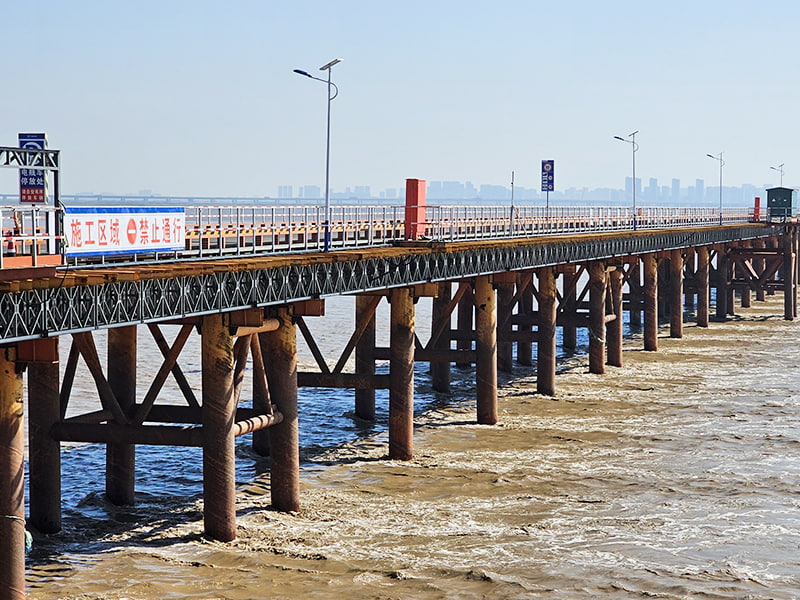
Product: Large Span Construction Platforms for Bridges


We respond quickly to all international requests and provide technical support when needed.
Product Category
Bailey Bridge/Modular Bridge Modular Steel Bridge Pedestrian Bridge Modular Pipe Bridge Truss Bridge Steel StructureContact Us

+86-511-84522866
+86-13921582699

zhwm@zjql.com

Building 1,83#, dantu New Town, Yanjiang Road, Dantu District, Zhenjiang, Jiangsu, China
Copyright © Jiangsu Zhonghai Bridge Equipment Co., Ltd. All
Rights
Reserved
China bailey bridge for sale
bailey bridge supplier from china
