
 English
 русский
 Español
 Português


Tang Yuwei — International Bailey Bridge Sales Manager
Large-Span Galvanized Steel Approach Bridges for Reliable Land-to-Bridge Access
Content
- 1 Why the Approach Structure Matters
- 2 Product Overview
- 3 Advanced Galvanized Anti-Corrosion Protection
- 4 Structural Performance and Load Capacity
- 5 Modular Design for Faster Project Delivery
- 6 Precision Manufacturing and Production Control
- 7 Advantages Over Competing Approach Bridge Solutions
- 8 Applications Across Infrastructure Sectors
- 9 Company Manufacturing Strengths and Project Experience
- 10 Installation and Project Planning Considerations
- 11 Maintenance and Lifecycle Value
- 12 Selection Guide for Buyers and Engineering Teams
- 13 Q&A: Large-Span Galvanized Steel Approach Bridges
- 13.1 What is a steel approach bridge?
- 13.2 Why is galvanization important for an approach bridge?
- 13.3 Can the bridge be used in coastal areas?
- 13.4 What load standards can be considered?
- 13.5 Is the approach bridge suitable for heavy construction equipment?
- 13.6 What makes modular construction useful?
- 13.7 Can the bridge be customized?
- 13.8 Does a galvanized bridge require maintenance?
- 13.9 How long does installation take?
- 13.10 Can the bridge be used for emergency response?
- 13.11 What information should be supplied for a quotation?
- 13.12 What manufacturing capabilities support this product?
- 14 Conclusion
- 15 References
- 16 Product: Large Span Galvanized Steel Approach Bridge
Approach bridges are essential structural connections between a main bridge and the adjoining land. Although they are sometimes viewed as secondary components, their performance directly affects the safety, efficiency, and service life of the entire transportation system. A properly engineered approach bridge must transfer traffic smoothly, accommodate different ground and water conditions, withstand changing environmental loads, and remain stable during daily operation, construction activity, emergency response, and temporary access projects.
The Large Span Galvanized Steel Approach Bridge is designed to meet these requirements through a combination of modular steel construction, advanced corrosion protection, engineered load capacity, and standardized manufacturing. It creates a dependable transition between a bridge deck and the land while supporting efficient water-land traffic integration. Its structure is suitable for infrastructure projects that require rapid deployment, reliable performance, and long-term resistance to demanding outdoor environments.
Manufactured by Jiangsu Zhonghai Bridge Equipment Co., Ltd., the bridge reflects the company’s experience in modular steel bridge systems, Bailey bridge equipment, structural steel fabrication, automated welding, and project support. The product is intended for transportation infrastructure, water conservancy, construction access, emergency repair, military logistics, disaster relief, and other applications where a strong and adaptable approach structure is required.
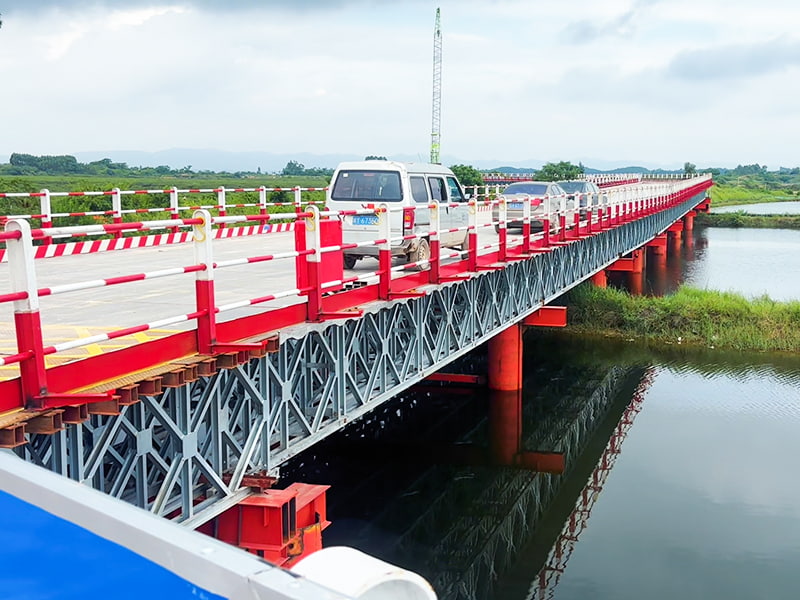
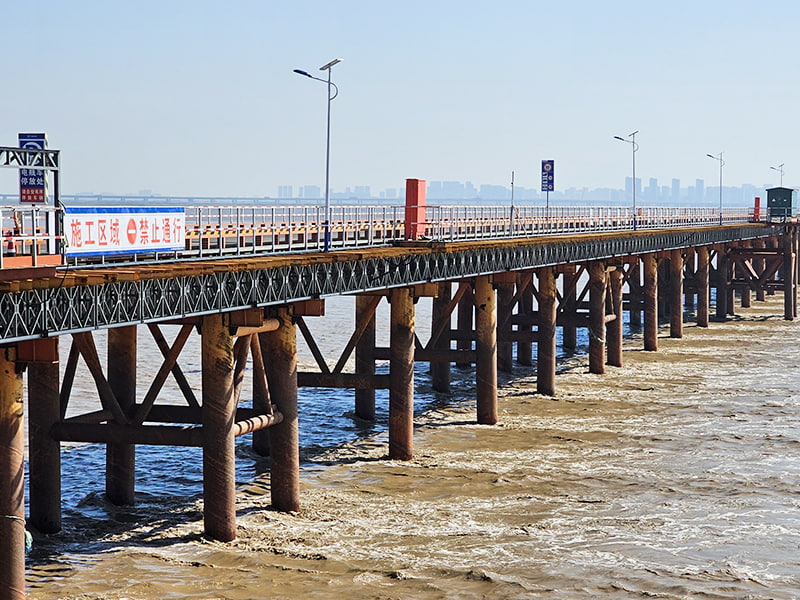
Large Span Galvanized Steel Approach Bridge
Why the Approach Structure Matters
A bridge does not operate as an isolated span. It must connect safely with roads, embankments, temporary work platforms, service areas, riverbanks, or other supporting surfaces. The approach section provides this transition. It manages changes in elevation, distributes vehicle loads, connects the primary bridge deck to the land, and helps prevent abrupt changes that could affect vehicles, pedestrians, equipment, or construction machinery.
If an approach structure is poorly selected or inadequately designed, several problems may occur. Uneven settlement can create a step between the road and bridge deck. Excessive vibration may reduce driving comfort and increase fatigue in structural components. Insufficient load capacity can limit the use of heavy vehicles or construction equipment. Unprotected steel may corrode rapidly in humid, coastal, industrial, or high-temperature environments. Difficult installation can also delay an infrastructure project and increase labor costs.
The Large-Span Galvanized Steel Approach Bridge addresses these issues with a structural system intended for dependable connection, repeated use, and demanding site conditions. Its modular configuration supports practical transportation and assembly, while its galvanized finish provides a durable protective layer. The result is an approach bridge that can be integrated into larger bridge systems without requiring unnecessarily complex site operations.
Product Overview
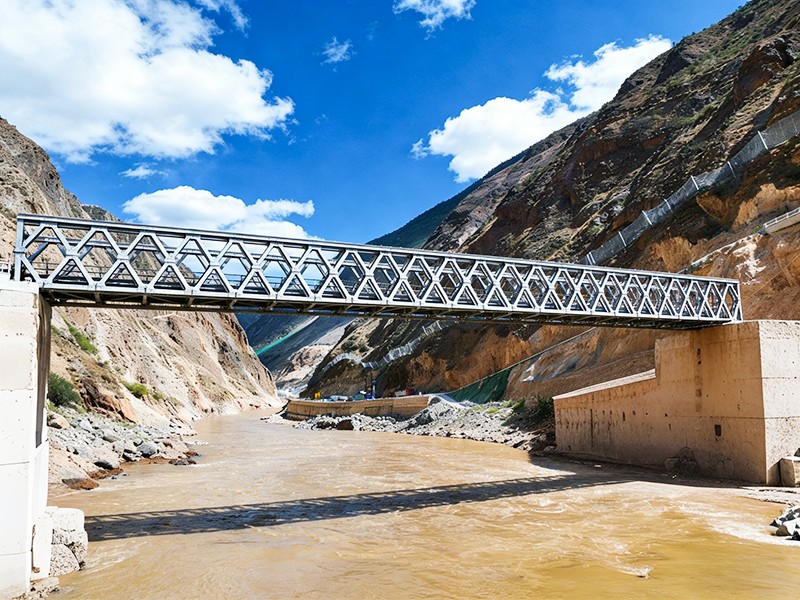
The Large-Span Galvanized Steel Approach Bridge is a steel approach structure developed for connection between a principal bridge and the adjacent land area. It can be incorporated into permanent, temporary, or emergency infrastructure projects according to the requirements of the site. Its modular steel components can be engineered for different spans, widths, support conditions, traffic requirements, and installation arrangements.
The bridge is designed to provide a stable transition for traffic moving from land onto a bridge and from a bridge back to land. This function is particularly important where the main structure crosses rivers, channels, flood zones, construction corridors, coastal areas, or other locations in which normal road access is interrupted.
Its main product characteristics include galvanized anti-corrosion protection, engineered load-bearing performance, modular construction, large-span adaptability, and compatibility with a variety of infrastructure applications. The bridge can support daily transportation, heavy construction operations, temporary access, emergency repairs, and other projects requiring a reliable connection over uneven or challenging terrain.
| Product Attribute | Performance or Function | Project Benefit |
|---|---|---|
| Galvanized steel structure | Provides a protective zinc coating against corrosion and weather exposure | Longer service life and reduced maintenance requirements |
| Modular construction | Uses standardized components that can be assembled and configured efficiently | Faster installation, easier logistics, and flexible project planning |
| Large-span capability | Supports approach configurations for broad crossings and demanding site layouts | Improved adaptability where conventional access solutions are unsuitable |
| Engineered load standards | Can be designed for HS-15, HS-20, HS-25, HL-93, Track-50, and applicable project criteria | Reliable performance for vehicles, equipment, and rail-related applications |
| Steel fabrication precision | Controlled cutting, welding, assembly, and inspection processes | Better dimensional consistency and dependable field installation |
| Application flexibility | Suitable for transportation, construction, emergency, water conservancy, and logistics projects | One structural concept can serve multiple infrastructure requirements |
Advanced Galvanized Anti-Corrosion Protection
Corrosion is one of the most important long-term risks for outdoor steel structures. Approach bridges are often exposed to rain, humidity, standing water, road salts, marine spray, industrial pollutants, temperature changes, and repeated wet-dry cycles. These conditions can gradually attack unprotected steel, especially at connection points, edges, weld areas, and locations where water or debris may accumulate.
The Large-Span Galvanized Steel Approach Bridge uses galvanized anti-corrosion technology to improve resistance to rust and environmental deterioration. Galvanization creates a protective zinc coating over the steel surface. This coating acts as a physical barrier between the steel and the surrounding environment. In addition, zinc provides sacrificial protection in areas where the coating may be locally damaged, helping protect the exposed steel beneath the surface.
This protection is valuable in coastal and high-humidity regions. Salt mist can accelerate corrosion on ordinary painted steel if the coating is not carefully maintained. Galvanized steel offers a durable protective approach that is particularly suitable for bridge projects exposed to marine air, intense rainfall, floodwater, or frequent changes in temperature.
The galvanized finish also reduces the frequency of routine surface maintenance. While all bridge structures require inspection and appropriate care, a corrosion-resistant surface can reduce the need for frequent repainting and localized rust treatment. This can lower lifecycle costs and reduce interruptions to traffic or construction operations.
Compared with conventional unprotected steel, galvanized steel provides a more robust first line of defense. Compared with systems that rely only on surface paint, galvanization offers an integrated coating that is less dependent on the continuous integrity of an external paint layer. Project-specific paint systems may still be used when required by the environment, appearance, or engineering specification, but the galvanized base provides an additional level of protection.
Suitability for Complex Outdoor Conditions
The bridge is intended for use in environments where weather and exposure conditions may vary significantly. It can be considered for high-humidity regions, coastal infrastructure, river crossings, flood-prone areas, industrial zones, and projects subject to substantial temperature fluctuation.
In cold climates, repeated freezing and thawing can create additional stress on bridge surfaces, connections, and adjacent ground. In hot regions, high solar exposure and thermal expansion can affect materials and joints. In coastal locations, airborne salt and moisture can accelerate deterioration. A galvanized structural system helps address these environmental challenges by reducing the vulnerability of exposed steel surfaces.
Corrosion protection is not a substitute for proper drainage, inspection, structural detailing, or maintenance. However, it is an important part of an integrated durability strategy. The bridge’s protective treatment works together with controlled fabrication, appropriate detailing, and project-specific engineering to support dependable service over time.
Structural Performance and Load Capacity
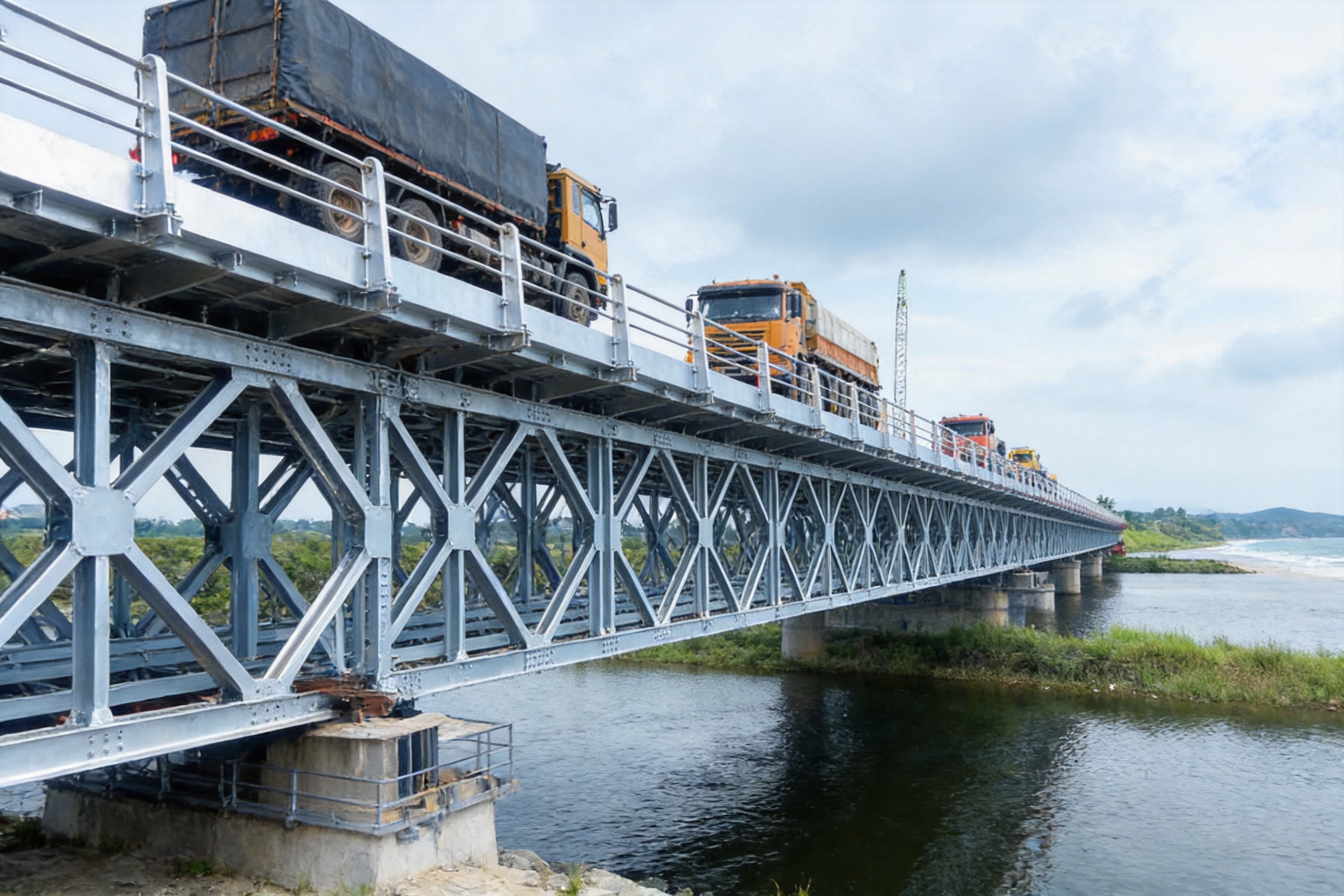
An approach bridge must safely carry the loads imposed by vehicles, construction equipment, pedestrians, environmental forces, and its own structural weight. Load requirements may differ widely from one project to another. A temporary construction access bridge may need to support heavy cranes or earthmoving equipment. A public road approach may be designed for frequent truck traffic. A railway-related approach may require a different load model and fatigue evaluation.
The product can be engineered with reference to multiple international load standards, including HS-15, HS-20, HS-25, HL-93, and Track-50. These designations represent different loading requirements used in highway, transportation, and rail-related applications. The appropriate standard, load combination, span arrangement, and safety factor must be confirmed by the project engineer according to local regulations and the intended use.
Supporting several recognized load criteria gives the bridge a wide application range. It allows the manufacturer and engineering team to adapt the structural arrangement to the actual traffic demand instead of offering a single fixed configuration for every project. This flexibility is especially useful for international customers whose design codes and transportation requirements may vary.
Load-bearing performance depends on more than the nominal design load. Span length, deck width, support spacing, connection design, material grade, bracing arrangement, fatigue requirements, dynamic effects, wind loads, seismic conditions, and foundation behavior may all influence the final structure. For this reason, the bridge should be selected and configured through a technical review rather than treated as a one-size-fits-all product.
Stable Transfer of Loads
The approach bridge transfers traffic and structural forces between the bridge deck and the supporting ground or substructure. A well-designed transition helps distribute loads gradually and reduces local impact at the connection between road and bridge. This is important for vehicle safety, driving comfort, and the protection of the adjoining pavement and embankment.
In construction and emergency applications, the bridge may also transfer the concentrated loads of machinery, materials, lifting equipment, or service vehicles. Modular steel members and engineered connection details can be arranged to provide the required stiffness and load path. The final design must consider both static loads and the dynamic effects produced by moving vehicles.
Large-Span Adaptability
The large-span concept is valuable where a project requires a broader clear opening, a longer approach, or fewer intermediate supports. Reducing the number of supports can simplify work in waterways, flood channels, construction zones, or areas with restricted access. It may also reduce interference with water flow, traffic movement, or ongoing construction operations.
Large-span design must be supported by careful analysis. Longer spans can increase bending moments, deflection sensitivity, wind exposure, and erection requirements. The value of the product lies in its ability to combine span adaptability with modular steel fabrication, allowing the structure to be configured according to engineering calculations and site conditions.
Modular Design for Faster Project Delivery
Modular construction is one of the major advantages of the approach bridge. Instead of fabricating an entirely unique structure at the project site, the system uses engineered steel components that can be manufactured, inspected, transported, and assembled through a controlled process.
Standardized modular parts can simplify procurement and logistics. Components can be prepared in advance, packed according to an erection sequence, and delivered to a prepared site. This reduces the amount of complex fabrication required in the field and allows project teams to concentrate on foundations, support preparation, alignment, bolting, decking, and final inspection.
Modularity is particularly useful when access to the site is limited. Remote areas, flood zones, disaster locations, military logistics corridors, and temporary construction sites may not have the equipment or facilities needed for extensive field fabrication. Components that are designed for transport and practical assembly can improve installation efficiency and reduce dependence on specialized site resources.
Modular steel construction also supports future adaptation. Depending on the design, components may be reused, extended, rearranged, or integrated with other bridge sections. This can be valuable for temporary works, staged construction, changing traffic demands, or emergency response operations.
Benefits Compared with Conventional Site-Built Approaches
Traditional site-built concrete or steel approaches can require substantial formwork, curing time, heavy labor, and prolonged closure of roads or waterways. They may also be difficult to modify once construction has begun. A modular steel approach bridge can reduce these limitations by shifting more work into a controlled manufacturing environment.
Factory production generally provides better access to lifting equipment, welding stations, inspection tools, material handling systems, and quality documentation. Field assembly can then be organized around pre-engineered members instead of raw materials and extensive temporary works.
This approach can reduce project risk, although actual savings depend on site preparation, transportation distance, foundation conditions, available lifting equipment, local labor, and the selected configuration. The main advantage is not simply speed; it is the combination of predictable manufacturing, organized logistics, and efficient installation.
Precision Manufacturing and Production Control
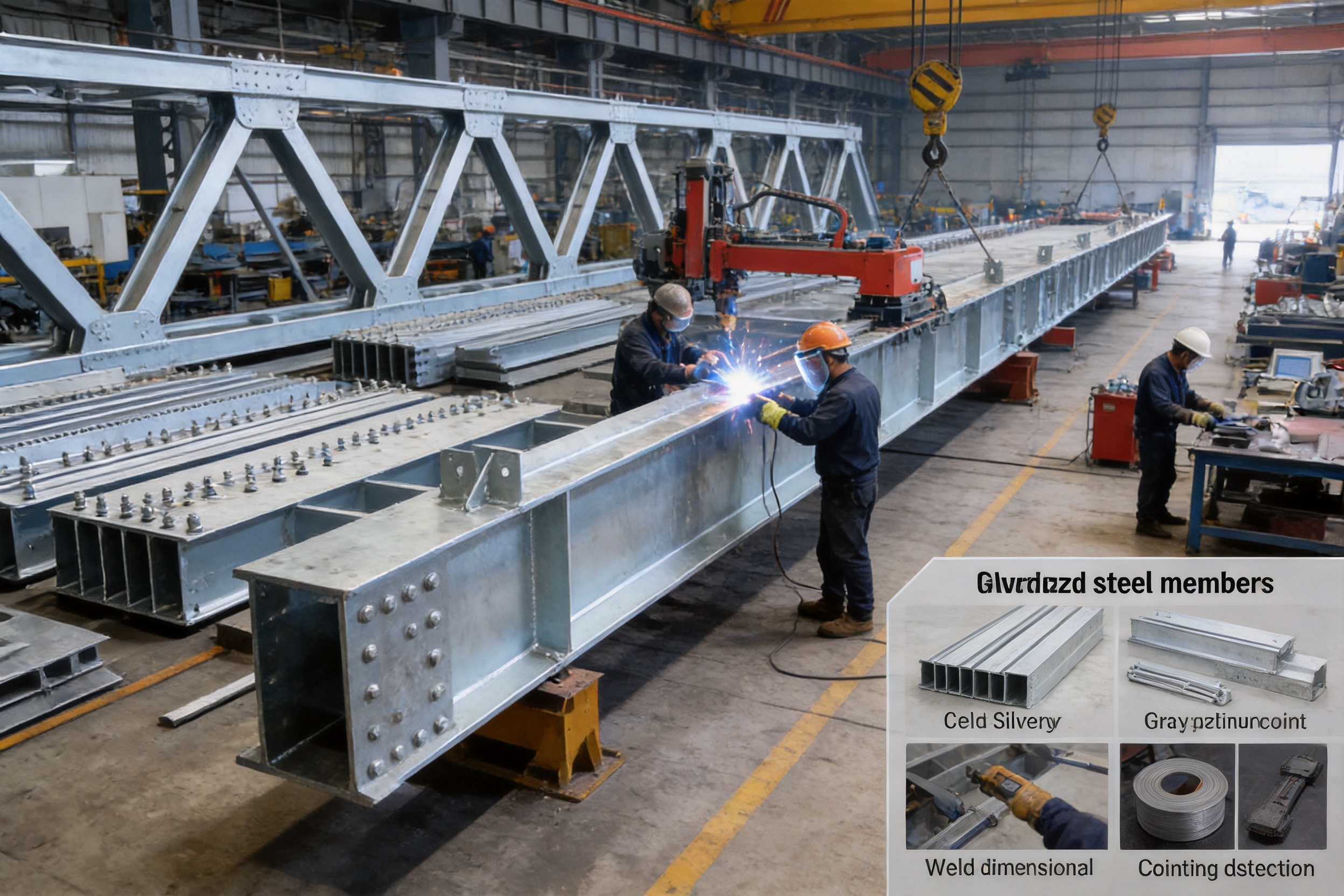
The performance of a modular bridge begins with the quality of its steel components. Dimensional errors, inconsistent welds, inaccurate holes, inadequate surface preparation, or improper assembly can create difficulties during installation and affect long-term structural behavior. For this reason, the manufacturing process must be organized around precision, repeatability, and documented inspection.
Jiangsu Zhonghai Bridge Equipment Co., Ltd. integrates engineering design, precision manufacturing, quality management, and project support. Its production capabilities include automated welding, precision steel fabrication, standardized workflows, and the manufacture of high-strength modular bridge systems. These capabilities help create a controlled connection between design requirements and finished components.
Engineering Review and Material Preparation
Manufacturing begins with an understanding of the project requirements. These may include span length, roadway width, design load, support arrangement, environmental exposure, connection type, transport limitations, erection sequence, and applicable standards. Engineering personnel can use this information to determine the suitable structural configuration and material specifications.
Steel plates, sections, fasteners, and other materials should be verified according to the project requirements before fabrication. Material identification and controlled storage help prevent mix-ups and protect components from unnecessary damage or contamination. Proper preparation contributes to the consistency of cutting, welding, drilling, and surface treatment.
Automated and Controlled Welding
Welding is a fundamental process in the fabrication of steel bridge components. Automated or semi-automated welding can improve consistency in weld geometry, travel speed, heat input, and production repeatability. It also helps reduce variation between components manufactured to the same design.
Automated welding does not eliminate the need for skilled supervision. Welding procedures must be selected according to material type, thickness, joint design, and applicable quality requirements. Operators and inspectors remain important in setup, monitoring, visual examination, non-destructive testing, and corrective action.
Controlled welding is especially important for modular components because the parts must fit together accurately during field assembly. Consistent weld quality supports structural reliability and helps maintain the intended geometry of the finished bridge.
Cutting, Drilling, and Dimensional Accuracy
Precision cutting and drilling ensure that plates, stiffeners, connection members, and other components match the approved drawings. Accurate holes are particularly important for bolted modular systems. Misalignment can slow erection, require field modification, or introduce unintended stress into the connection.
Factory-controlled fabrication allows components to be measured before shipment. Dimensional checks can confirm member length, hole position, plate thickness, weld size, squareness, and overall assembly fit. These checks support smoother construction and help identify problems before the materials reach the site.
Surface Treatment and Galvanization
Surface preparation is a critical stage in corrosion protection. Steel surfaces must be cleaned and prepared appropriately so that the galvanized coating can form a reliable bond. Edges, weld zones, connection details, and drainage features require particular attention because they may influence coating quality and long-term durability.
After galvanization, components can be inspected for coating continuity, coverage, visual defects, and dimensional effects. The coating process must be coordinated with fabrication details so that venting, drainage, lifting, and handling requirements are properly addressed. This coordination is one reason why corrosion protection should be considered during design rather than added as an afterthought.
Quality Management
A structured quality management system can include drawing review, incoming material inspection, process control, welding inspection, dimensional verification, coating inspection, assembly checks, and final documentation. The exact inspection plan depends on the project specification and applicable standards.
Quality documentation gives customers and project managers greater confidence in the delivered structure. It can include material certificates, inspection records, welding documentation, coating reports, dimensional checklists, packing lists, and installation guidance. Clear records also support future maintenance and traceability.
Advantages Over Competing Approach Bridge Solutions
Customers comparing approach bridge suppliers often evaluate more than the initial purchase price. They consider corrosion resistance, structural adaptability, fabrication quality, delivery reliability, installation time, maintenance requirements, technical support, and the manufacturer’s ability to respond to different project conditions.
The Large-Span Galvanized Steel Approach Bridge offers several competitive advantages in these areas.
1. Durability in Difficult Environments
Many steel approach bridges depend primarily on conventional paint systems. Paint can perform effectively when correctly specified and maintained, but it may require periodic renewal, especially in areas exposed to salt, moisture, abrasion, and heavy weathering. The galvanized coating used for this product provides a more durable protective foundation and helps reduce the risk of rapid surface corrosion.
2. Broader Load-Standard Compatibility
Some suppliers offer approach structures designed for only one national loading system or a narrow range of applications. This product can be engineered with reference to HS-15, HS-20, HS-25, HL-93, and Track-50 requirements. The ability to work with several recognized load models supports international infrastructure projects and reduces the need to begin with an entirely new structural concept for every market.
3. Modular and Reconfigurable Construction
A fixed, project-specific bridge can be difficult to transport, modify, or reuse. Modular steel construction offers greater flexibility. Components can be produced in repeatable sizes, transported to locations with limited access, and assembled in stages. Depending on the project design, the system may support future extension, relocation, or integration with other modular bridge sections.
4. Factory-Controlled Production
Field fabrication exposes a project to weather interruptions, variable workmanship, limited equipment, and restricted inspection conditions. Factory production provides a more controlled environment for cutting, welding, measurement, assembly, and surface treatment. This can improve consistency and reduce installation uncertainty.
5. Integrated Engineering and Fabrication
A supplier that combines design support with manufacturing can identify practical issues earlier. Structural configuration, connection details, galvanization, transport, and erection can be considered as parts of one process. This integrated approach is often more effective than dividing the project among unrelated design, fabrication, and support providers.
6. Application Versatility
The bridge can serve transportation, construction, water conservancy, emergency repair, military logistics, disaster relief, and international development projects. This versatility makes it appropriate for customers who need a structural system capable of supporting different project phases or operating conditions.
Applications Across Infrastructure Sectors
Transportation Infrastructure
Approach bridges can connect road networks to permanent bridge decks, temporary diversions, elevated crossings, and river or channel structures. They can support passenger vehicles, commercial trucks, maintenance vehicles, and other traffic according to the selected design load.
In road construction, a modular approach may help maintain access while a permanent bridge is being built or repaired. It can also provide a temporary transition where an existing road has been damaged by flooding, landslides, settlement, or other events.
Construction Access
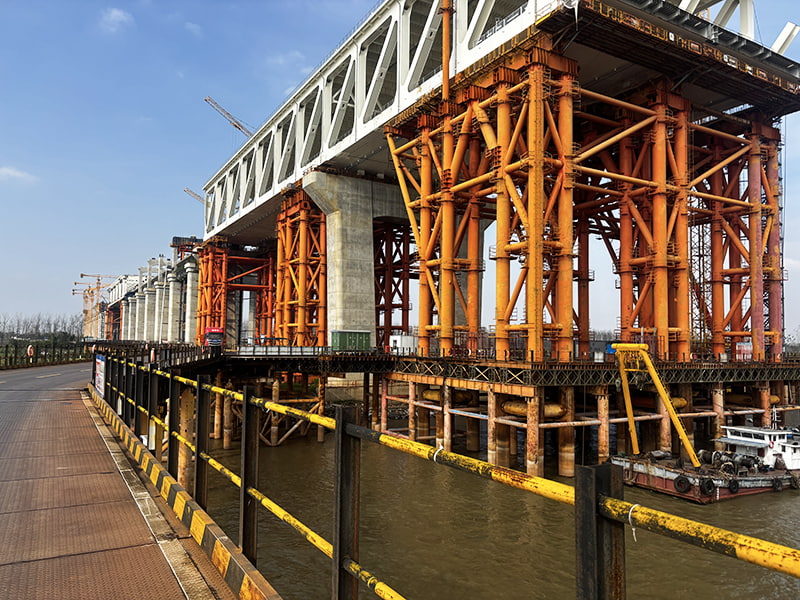
Large construction projects often require temporary routes for cranes, concrete trucks, excavators, steel deliveries, and service vehicles. Where normal roads cannot reach the work zone, a modular steel approach bridge can create a controlled access route. Its load capacity and width can be configured according to the equipment and traffic expected on the site.
The bridge can also support staged construction. For example, an approach may be installed before the main bridge is complete, allowing materials and equipment to reach the opposite side of a river or difficult terrain. This can improve the overall sequence of operations and reduce dependence on water transport or lengthy detours.
Water Conservancy and Flood Control
Water conservancy projects often involve channels, reservoirs, floodways, pumping stations, embankments, and areas where water levels change. A galvanized steel approach bridge can provide access across or alongside these facilities while resisting moisture-related deterioration.
In flood-response projects, rapid access is essential. Modular components can be transported and installed to reconnect communities, deliver supplies, restore services, or support repair work. The final arrangement must account for water flow, scour, foundation stability, debris impact, and changing water levels.
Emergency Repair and Disaster Relief
Natural disasters can damage roads and bridges suddenly. Floods, typhoons, earthquakes, landslides, and other emergencies may isolate communities and prevent essential vehicles from reaching affected areas. A modular steel approach bridge can form part of a rapid-response solution where speed, transportability, and dependable load capacity are required.
Emergency projects may not provide ideal working conditions. The site may have limited power, restricted access, unstable ground, and changing weather. A system based on prepared factory components can help reduce the amount of specialized fabrication required at the disaster location.
Military and Logistics Operations
Military logistics and strategic transport operations may require temporary or semi-permanent access routes across waterways, damaged infrastructure, or difficult terrain. The approach bridge can be evaluated for vehicle loads, deployment constraints, security requirements, and rapid assembly conditions.
For such applications, modularity can support storage, transportation, and redeployment. The bridge can be included in a broader engineering equipment system for temporary access, field logistics, and infrastructure restoration.
Industrial and International Development Projects
Industrial facilities, energy projects, mining operations, ports, and remote development programs may need access bridges before permanent infrastructure is available. A galvanized modular approach can provide a durable connection for workers, materials, and construction equipment.
International development projects often involve challenging logistics and varied standards. A supplier experienced in global delivery can help coordinate manufacturing, packing, documentation, and technical communication for overseas customers.
Company Manufacturing Strengths and Project Experience
Jiangsu Zhonghai Bridge Equipment Co., Ltd. is based in Zhenjiang, Jiangsu Province, an important industrial and transportation center in China. Its location supports access to manufacturing resources, transportation networks, engineering talent, and supply-chain services.
The company specializes in modular steel bridges, Bailey bridge systems, customized steel components, bridge erection and construction support equipment, automated welding, and precision steel fabrication. By combining these capabilities, the company can serve customers seeking more than a basic steel structure. It can participate in product selection, engineering coordination, production, quality control, delivery preparation, and field support.
Its factory uses standardized workflows and industrial-scale manufacturing practices to produce high-strength modular bridge systems. Standardization can improve repeatability while still allowing project-specific changes in span, width, loading, support, connection, and finishing requirements.
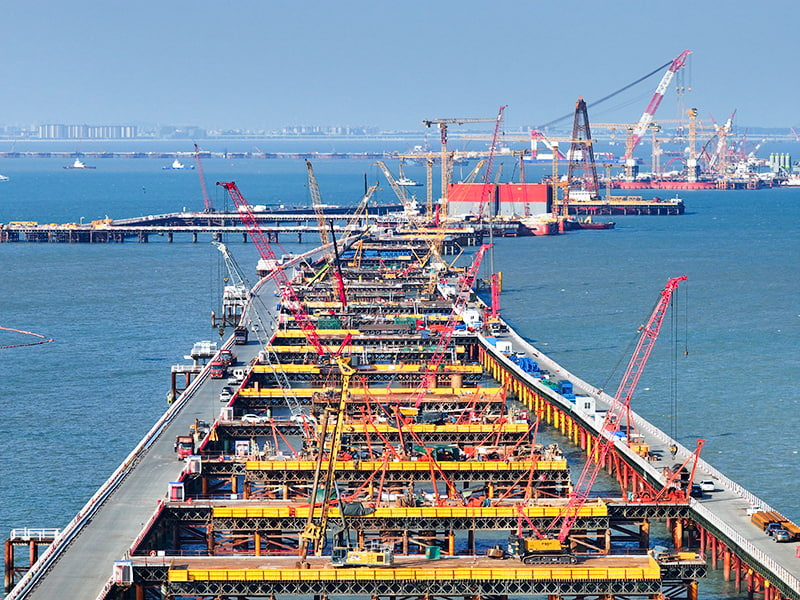
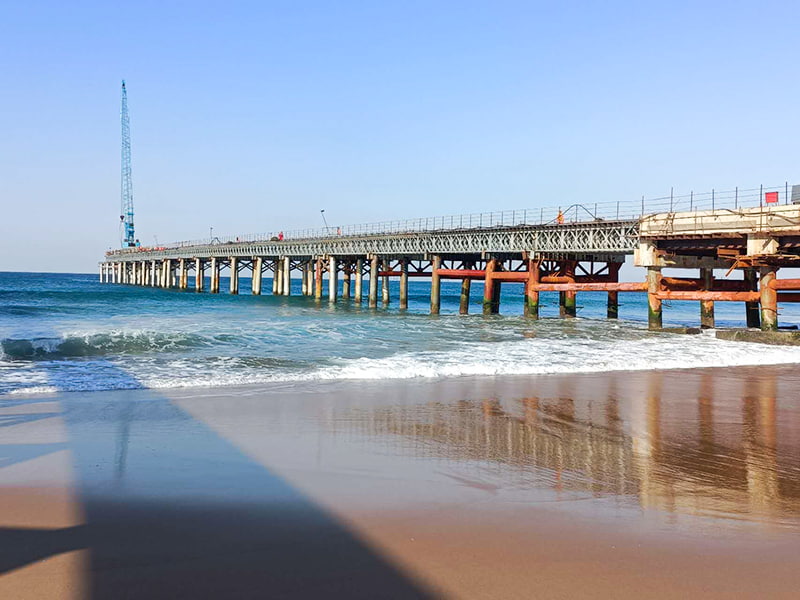
The company reports experience supporting projects in China and overseas. Examples include coastal engineering in the Maldives, temporary access bridges for the Shenzhen–Zhongshan Corridor, structural components for the Hangzhou Expo Center, multi-span Bailey bridges for the Lalin Railway, and flood-response and emergency bridge deployments in multiple regions.
These project categories demonstrate the range of conditions in which modular bridge systems may be used. Coastal work highlights the importance of corrosion resistance. Major transportation corridors require careful coordination and dependable fabrication. Railway-related applications demand attention to load performance and alignment. Emergency deployments require logistical flexibility and fast response.
Integrated Support for International Customers
International customers often need assistance with technical specifications, drawings, packing, delivery schedules, installation procedures, and local project coordination. A manufacturer with experience in international delivery can help reduce communication gaps and clarify the information required before production begins.
Technical coordination may include confirmation of design loads, applicable standards, site dimensions, foundation conditions, traffic requirements, environmental exposure, installation equipment, and inspection procedures. Clear early communication helps prevent changes after fabrication has started.
The company’s stated focus is to help clients build safer, faster, and more efficient connections worldwide. For an approach bridge supplier, this means combining product quality with practical engineering support and reliable delivery performance.
Installation and Project Planning Considerations
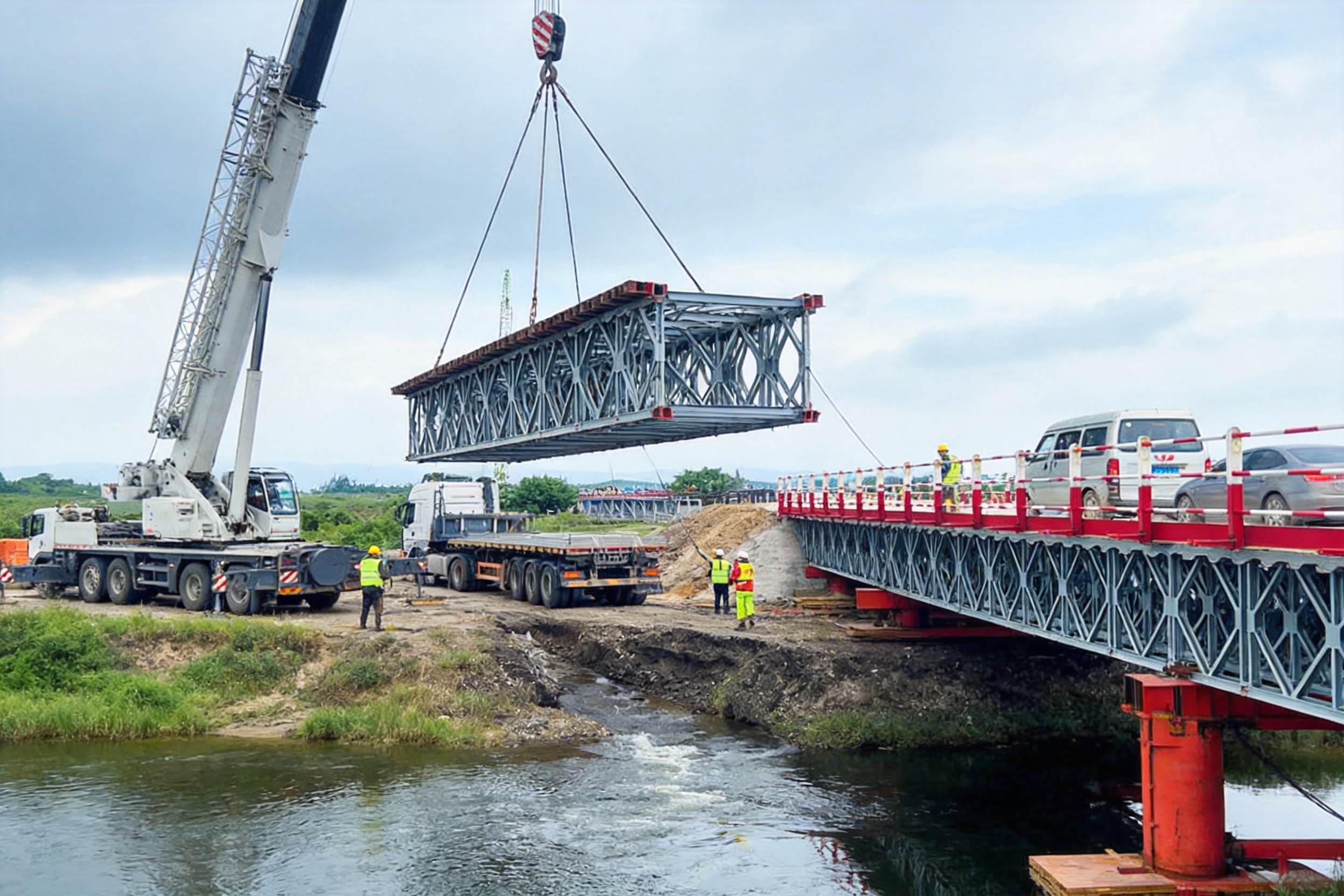
Successful installation begins before the components arrive. The project team should review geotechnical conditions, support locations, access routes, lifting capacity, traffic control, water levels, drainage, utilities, and environmental restrictions. A detailed erection plan should define the sequence for unloading, staging, assembly, lifting, alignment, bolting, decking, inspection, and opening to traffic.
Foundation and support preparation are particularly important. The bridge’s structural performance depends on stable and correctly positioned supports. Settlement, scour, uneven bearing, or poor alignment can affect the approach even when the steel components themselves are properly fabricated.
Transport planning should consider component dimensions, weight, road restrictions, customs documentation, packaging, and unloading equipment. Modular components should be organized according to the erection sequence whenever possible. This reduces unnecessary handling and helps the site team identify each member efficiently.
During assembly, workers should follow approved drawings and installation instructions. Bolts, pins, bracing members, deck panels, and connection components must be installed in the correct locations. Temporary supports and erection equipment should be checked before loading begins.
After installation, the completed approach bridge should be inspected for alignment, connection security, coating damage, deck condition, drainage, safety barriers, and transition quality. Any damage caused during transport or erection should be repaired according to the approved procedure before the bridge is placed into service.
Maintenance and Lifecycle Value
Galvanization reduces corrosion risk, but regular inspection remains necessary. A maintenance program should consider traffic intensity, environmental exposure, water flow, debris accumulation, connection condition, deck wear, drainage, and any changes in the supporting ground.
Inspectors should pay attention to areas where water may collect, where road materials may abrade the surface, and where components are exposed to impact. Bolted and pinned connections should be checked for movement, damage, or loss of security. The approach transition should also be examined for settlement, unevenness, and changes in elevation.
When damage occurs, prompt action can prevent a small issue from developing into a major repair. Localized coating damage, for example, may be treated according to the approved corrosion protection procedure. Worn deck elements can be replaced where the modular design permits. Drainage problems should be corrected to prevent prolonged exposure to standing water.
The lifecycle value of the bridge comes from the interaction of durability, modularity, load adaptability, and maintenance efficiency. A product with a higher initial cost may offer better long-term value if it reduces corrosion repairs, shortens installation time, supports reuse, and minimizes operational disruption.
Selection Guide for Buyers and Engineering Teams
Before ordering a Large-Span Galvanized Steel Approach Bridge, customers should prepare a clear project information package. This allows the manufacturer to evaluate the appropriate structural arrangement and provide a more accurate technical and commercial proposal.
Key Technical Information
The required information normally includes the total span, clear width, deck type, design traffic, maximum vehicle weight, expected frequency of use, support elevation, foundation conditions, site access, environmental exposure, and desired service duration.
Customers should also identify whether the bridge is permanent, temporary, relocatable, or intended for emergency deployment. The project’s applicable design code and load standard should be stated clearly. If the bridge will carry rail traffic, specialized track loading, alignment, vibration, and fatigue requirements must be reviewed.
Environmental Information
Important environmental factors include humidity, salt mist, rainfall, floodwater, temperature range, wind, seismic conditions, industrial pollutants, and the possibility of debris impact. These factors influence corrosion protection, structural analysis, drainage, foundation design, and inspection planning.
Installation Information
The customer should describe available cranes, lifting equipment, temporary supports, local labor, transportation restrictions, and the intended erection method. This information helps ensure that the bridge components are practical for the actual site rather than only suitable in theory.
Documentation and Compliance
International projects may require material certificates, welding records, coating reports, structural calculations, inspection plans, packing lists, installation drawings, and operation or maintenance instructions. These requirements should be confirmed before production so that the documentation can be prepared as part of the manufacturing process.
Q&A: Large-Span Galvanized Steel Approach Bridges
What is a steel approach bridge?
A steel approach bridge is a structural connection between a main bridge and the adjoining land, road, embankment, or work area. It provides a smooth and stable transition for vehicles, equipment, pedestrians, or other traffic. It may be permanent, temporary, or used as part of an emergency access system.
Why is galvanization important for an approach bridge?
Galvanization provides a zinc coating that protects steel from moisture and atmospheric corrosion. It is especially useful in humid, coastal, salty, rainy, or industrial environments. The coating can extend service life and reduce the frequency of corrosion-related maintenance compared with unprotected steel.
Can the bridge be used in coastal areas?
It can be considered for coastal applications because its galvanized surface provides enhanced resistance to salt mist and humid air. The final corrosion protection system should be selected according to the specific exposure category, project requirements, drainage conditions, and maintenance plan.
What load standards can be considered?
The product can be engineered with reference to HS-15, HS-20, HS-25, HL-93, and Track-50 load requirements. The appropriate standard depends on the intended use, traffic type, country, governing design code, and project engineer’s calculations.
Is the approach bridge suitable for heavy construction equipment?
It may be suitable for construction vehicles and equipment when the structure is specifically designed for their weight, axle configuration, dynamic effects, and operating frequency. Customers should provide detailed equipment information before the structural configuration is finalized.
What makes modular construction useful?
Modular construction allows components to be manufactured under controlled factory conditions, transported efficiently, and assembled at the project site. It can reduce field fabrication, support faster installation, simplify logistics, and allow the structure to be adapted or reused for different project phases.
Can the bridge be customized?
Yes. Span, width, load capacity, support arrangement, deck configuration, corrosion protection, connection details, and installation requirements can be evaluated according to the project. Customization should be confirmed through engineering review before production.
Does a galvanized bridge require maintenance?
Yes. Galvanization reduces corrosion risk but does not eliminate the need for inspection. The bridge should be checked for coating damage, connection condition, deck wear, drainage issues, settlement, impact, and changes in the supporting structure.
How long does installation take?
Installation time depends on span, site access, foundation readiness, weather, available lifting equipment, traffic control, and the selected erection method. Modular construction can shorten field work compared with fully site-built alternatives, but a project-specific erection schedule is required.
Can the bridge be used for emergency response?
Yes. Its modular design, transportability, and adaptable load capacity make it suitable for temporary access, flood response, disaster recovery, and emergency repair projects. Site conditions and structural requirements must still be assessed before deployment.
What information should be supplied for a quotation?
Customers should provide the desired span, clear width, design load, traffic type, site location, environmental conditions, support elevations, foundation information, intended service period, delivery requirements, and preferred installation method. Drawings, photographs, survey data, or equipment specifications can also improve quotation accuracy.
What manufacturing capabilities support this product?
The manufacturer integrates engineering design, precision steel fabrication, automated welding, standardized production workflows, quality management, galvanized surface treatment, bridge equipment manufacturing, and project support. These capabilities help connect the design concept with a practical, inspectable, and installable finished structure.
Conclusion
The Large-Span Galvanized Steel Approach Bridge provides a durable and adaptable solution for connecting main bridge structures with land-based transportation networks. Its galvanized steel construction offers improved resistance to rust, humidity, salt mist, weather exposure, and temperature variation. Its modular design supports practical transport, organized assembly, and flexible use across permanent, temporary, construction, and emergency projects.
The bridge can be engineered for multiple international load requirements, including HS-15, HS-20, HS-25, HL-93, and Track-50. This supports a wide range of applications, from daily road traffic and heavy construction operations to railway-related infrastructure, water conservancy, military logistics, and disaster relief.
Its competitive value is strengthened by factory-controlled manufacturing, automated welding, precision fabrication, quality management, and integrated technical support. These capabilities help improve dimensional accuracy, connection reliability, coating performance, installation efficiency, and long-term lifecycle value.
For customers seeking a strong, corrosion-resistant, and configurable approach bridge, the product provides a practical foundation for safer and more efficient infrastructure development. Final design selection should always be based on project-specific engineering, local codes, site conditions, load requirements, and installation planning.
References
American Association of State Highway and Transportation Officials. AASHTO LRFD Bridge Design Specifications.
American Institute of Steel Construction. Specification for Structural Steel Buildings.
ASTM International. Standard Specifications and Test Methods for Structural Steel and Zinc Coating Performance.
European Committee for Standardization. Eurocode 3: Design of Steel Structures.
International Organization for Standardization. Quality Management Systems: Requirements.
International Organization for Standardization. Corrosion Protection of Steel Structures by Protective Paint Systems and Metallic Coatings.
International Federation for Structural Concrete. Guidance on Durability and Service-Life Design for Infrastructure.
United States Department of Transportation, Federal Highway Administration. Bridge Inspection and Maintenance Guidance.
Project-specific structural drawings, load calculations, material certificates, coating records, and installation manuals should be consulted for final design, procurement, and construction decisions.
Product: Large Span Galvanized Steel Approach Bridge


We respond quickly to all international requests and provide technical support when needed.
Product Category
Bailey Bridge/Modular Bridge Modular Steel Bridge Pedestrian Bridge Modular Pipe Bridge Truss Bridge Steel StructureContact Us

+86-511-84522866
+86-13921582699

zhwm@zjql.com

Building 1,83#, dantu New Town, Yanjiang Road, Dantu District, Zhenjiang, Jiangsu, China
Copyright © Jiangsu Zhonghai Bridge Equipment Co., Ltd. All
Rights
Reserved
China bailey bridge for sale
bailey bridge supplier from china
