
 English
 русский
 Español
 Português


Tang Yuwei — International Bailey Bridge Sales Manager
High-Speed Rail Project Dedicated Super Bailey Construction Support for Large-Span, Heavy-Load Applications
Content
- 1 1. The Role of Temporary Construction Support in High-Speed Rail Projects
- 2 2. Product Overview
- 3 3. Structural Advantages of the Super Bailey Construction Support
- 4 4. Advantages Over Conventional and Less Standardized Alternatives
- 5 5. Green Anti-Corrosion Protection and Outdoor Durability
- 6 6. Customized Engineering and Technical Guidance
- 7 7. Manufacturing Strengths and Production Capabilities
- 8 8. Application in the Shenjiang High-Speed Rail Project
- 9 9. Installation, Inspection, and Site Management Considerations
- 10 10. Reusability and Lifecycle Value
- 11 11. Why Manufacturer Capability Matters
- 12 12. Technical and Commercial Benefits for Project Owners and Contractors
- 13 13. Frequently Asked Questions
- 13.1 What is a Super Bailey Construction Support system?
- 13.2 What type of project is this product intended for?
- 13.3 What are the main advantages of the product?
- 13.4 How does the product differ from ordinary scaffolding?
- 13.5 Is the support system suitable for all load levels and spans?
- 13.6 What is the purpose of the green anti-corrosion coating?
- 13.7 Can the system be customized?
- 13.8 Does the manufacturer provide technical guidance?
- 13.9 Can the components be reused after the project is completed?
- 13.10 What standards can be considered during procurement?
- 13.11 What should be checked before installation?
- 13.12 Why is technical service important for a modular support system?
- 14 14. Conclusion
- 15 References
- 16 Product: High-Speed Rail Project Dedicated Super Bailey Construction Support
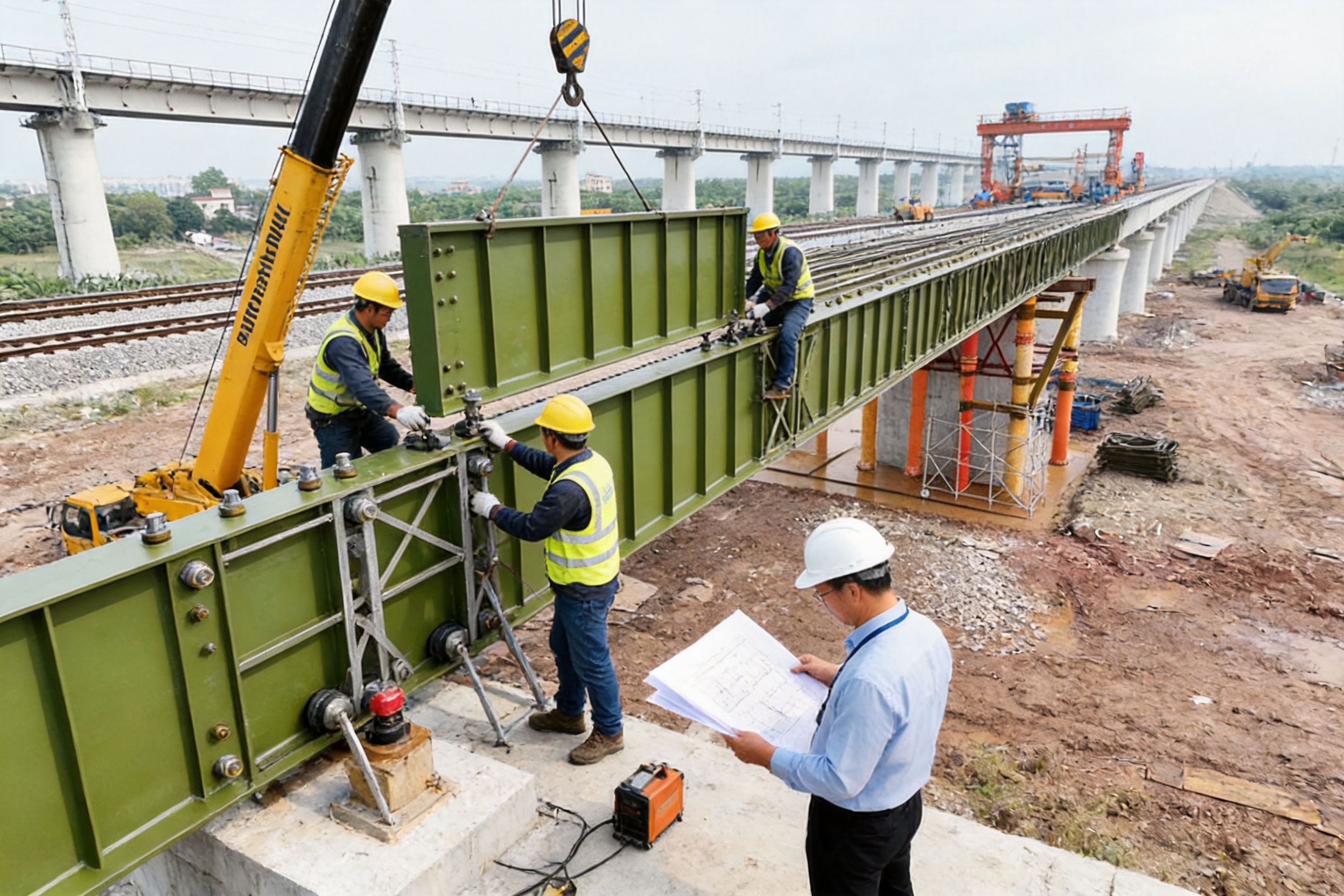
High-speed rail construction requires temporary support systems that combine structural strength, dimensional accuracy, installation efficiency, environmental durability, and dependable engineering service. During the construction of large bridge structures, the support arrangement must safely carry temporary loads, maintain alignment, accommodate changing site conditions, and remain stable throughout critical construction stages. A conventional temporary steel frame may be unsuitable when the project involves long spans, high construction loads, restricted access, complex weather conditions, or demanding railway construction schedules.
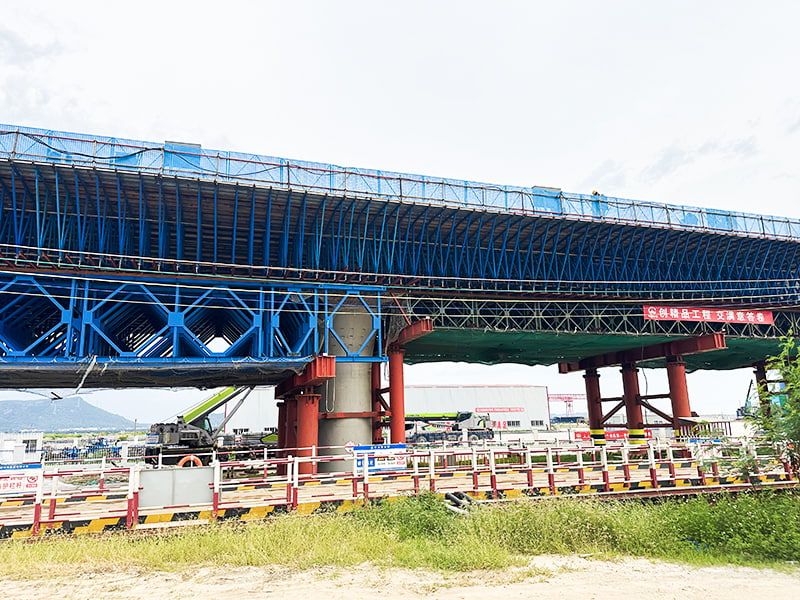
The Super Bailey Construction Support developed for the Shenjiang High-Speed Rail Project is designed specifically for these demanding requirements. Based on the modular principles of Bailey bridge engineering, the system uses standardized, high-strength steel components that can be assembled into a robust temporary support structure. It is intended for large-span and heavy-load applications, offering a practical solution for bridge construction activities that require reliable temporary support without the cost, inflexibility, and long installation time associated with many permanent-style support systems.
For the Shenjiang High-Speed Rail Project, the system was supplied with customized services and technical guidance plans. Its green anti-corrosion coating provides protection against rust and weather exposure, helping the support structure remain reliable in complex outdoor construction environments. More importantly, the product is supported by an integrated manufacturing and engineering process that covers design, fabrication, quality control, delivery, erection guidance, and project-specific technical coordination.
This article examines the product’s structural concept, application value, manufacturing strengths, corrosion protection, customization capability, installation advantages, and suitability for high-speed rail bridge construction. It also explains why a professionally engineered modular support system can offer important advantages over less standardized temporary structures.
1. The Role of Temporary Construction Support in High-Speed Rail Projects
High-speed railway bridge construction is governed by strict requirements for safety, geometry, construction sequence, and schedule control. The temporary support system used during bridge erection or structural assembly is not merely an auxiliary arrangement. It is an important part of the construction method and can directly affect the stability, alignment, efficiency, and safety of the entire operation.
During construction, support structures may be required to carry bridge segments, formwork, reinforcement assemblies, lifting equipment, construction platforms, temporary access arrangements, or loads generated during concrete placement and structural adjustment. These loads can vary significantly according to the construction stage. A support system that is adequate for one stage may need to be strengthened, reconfigured, or extended for another stage.
High-speed railway projects also frequently cross rivers, roads, industrial areas, floodplains, and densely developed urban zones. These environments can limit the use of ground-based scaffolding or make it difficult to transport long, heavy, non-modular components. A modular Bailey-type support system can respond to these conditions because its components are manufactured in manageable sections and assembled at or near the construction site.
The system must also remain stable under outdoor exposure. Rainfall, humidity, temperature variations, dust, construction debris, and repeated wet-dry cycles can accelerate corrosion on unprotected steel. If corrosion affects connection areas, bracing members, or load-bearing components, the support system may experience reduced service life and increased maintenance requirements. For this reason, protective coating and proper surface treatment are essential characteristics of a professional construction support product.
The dedicated Super Bailey Construction Support for the Shenjiang High-Speed Rail Project addresses these needs through a combination of modular structural design, heavy-load capacity, large-span adaptability, corrosion protection, and project-specific technical support.
2. Product Overview
The Super Bailey Construction Support belongs to the family of modular steel bridge and construction support systems. Its design is based on prefabricated steel panels, connecting members, bracing components, and support accessories that can be combined into different structural configurations. This approach allows the same basic system to serve a wide range of temporary support requirements while still permitting project-specific engineering adjustments.
Unlike a basic access bridge intended mainly for light vehicle or pedestrian traffic, this product is designed for demanding construction support applications. Its purpose is to provide a stable load-transfer path between the temporary construction loads and the supporting foundation or ground arrangement. The system can be configured for large spans and heavy temporary loads, subject to project-specific engineering calculations and site conditions.
The product supplied for the high-speed rail project features green anti-corrosion paint. This coating gives the structure a consistent protective surface and contributes to improved resistance against rust and weather exposure. The green finish also provides a clear visual identity on the construction site, helping personnel distinguish the support system from other temporary equipment and making surface damage or coating defects easier to identify during inspections.
The support system is not limited to the physical steel components. The product offering includes customized services and guidance plans. These services can cover configuration recommendations, component selection, transport coordination, assembly guidance, construction sequence advice, and technical communication with the project team. This integrated approach is important because a modular system delivers the best results when the structure, installation method, site conditions, and construction schedule are considered together.
| Product aspect | Application value |
|---|---|
| Modular steel configuration | Allows efficient transport, staged delivery, flexible assembly, and adaptation to different support arrangements. |
| Large-span capability | Supports construction conditions where ordinary short-span scaffolding is insufficient or inefficient. |
| Heavy-load design orientation | Provides a robust load-bearing solution for demanding bridge construction stages. |
| Green anti-corrosion coating | Improves resistance to rust, moisture, and outdoor weather exposure when properly maintained. |
| Customized engineering service | Helps align the support configuration with project loads, span requirements, site conditions, and construction sequence. |
| Technical guidance plans | Supports safer and more organized assembly, erection, inspection, and use. |
| Standardized manufacturing | Promotes consistent dimensions, repeatable quality, and interchangeability of modular components. |
3. Structural Advantages of the Super Bailey Construction Support
3.1 Robust Overall Structure
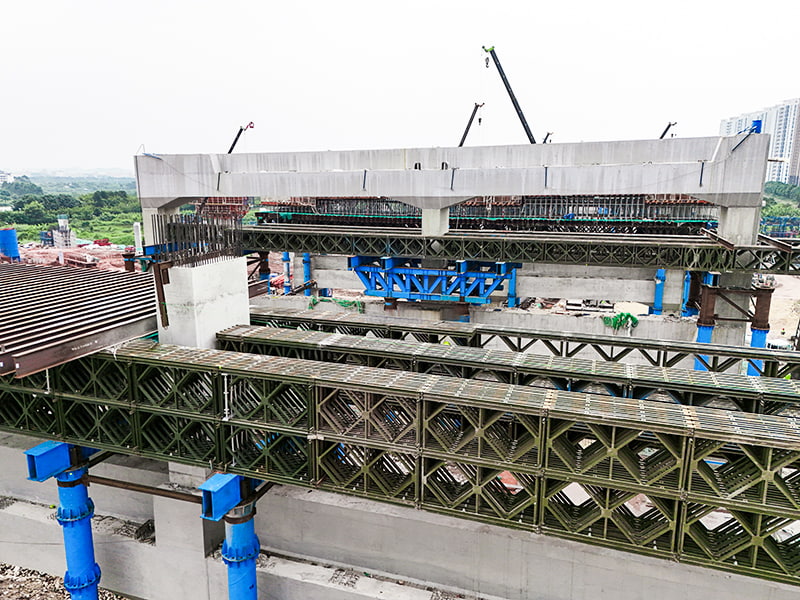
The principal advantage of the Super Bailey Construction Support is its robust overall structural arrangement. Bailey-type systems use interconnected panels and bracing members to form a truss-like load-bearing configuration. When properly assembled, the individual components work together as a unified structure, distributing loads through the upper and lower chords, vertical members, diagonal members, transoms, and connection points.
This structural logic is particularly suitable for temporary bridge construction support. A truss arrangement can achieve a favorable balance between strength and self-weight, allowing the system to span over obstacles or open areas without requiring a large number of intermediate supports. The reduction of intermediate obstructions can be valuable when construction takes place above roads, waterways, railway corridors, or active work zones.
For heavy-load construction applications, the reliability of connections is as important as the strength of the individual steel members. Modular components must fit together accurately, and connection hardware must be properly installed and inspected. The product’s standardized manufacturing approach helps maintain consistency between components, while engineering guidance helps the project team follow the intended assembly arrangement.
3.2 Suitability for Large Spans
Large-span construction conditions often create difficulties for ordinary temporary support solutions. A conventional scaffold may require many columns, bracing towers, and foundation points. Such an arrangement can obstruct traffic, interfere with river flow, reduce working space, and increase the time needed for installation and removal.
A modular truss support can reduce the need for dense intermediate support points. The exact span arrangement must be determined through engineering analysis, but the system concept is well suited to projects where a clear working area is required beneath or around the support. This makes it useful for bridge construction zones with restricted access, complicated terrain, or sensitive surrounding infrastructure.
Large-span capability also improves construction planning. When a support system can be arranged over a longer distance, contractors may be able to coordinate lifting, formwork, segment placement, and material movement more efficiently. The support does not eliminate the need for careful design, but it provides a flexible structural platform for a wide range of construction methods.
3.3 Heavy-Load Support Performance
Bridge construction loads are often more complex than the final service load of a completed structure. Temporary support may need to carry concentrated loads from lifting operations, uneven loading caused by construction sequencing, impact or dynamic effects associated with equipment movement, and temporary materials stored during a particular work stage.
The Super Bailey Construction Support is designed for large-span, heavy-load applications and provides a strong structural basis for these conditions. Its load-bearing performance depends on the selected configuration, span, support spacing, foundation condition, connection arrangement, and construction sequence. For this reason, the system should be applied according to project-specific calculations rather than through an assumed universal capacity.
When properly engineered, a heavy-load modular support system offers a more controlled solution than improvised steel frames or non-standard site-fabricated assemblies. Standardized members and defined connection arrangements make it easier to review the intended load path, identify critical components, and establish inspection procedures before the system is put into service.
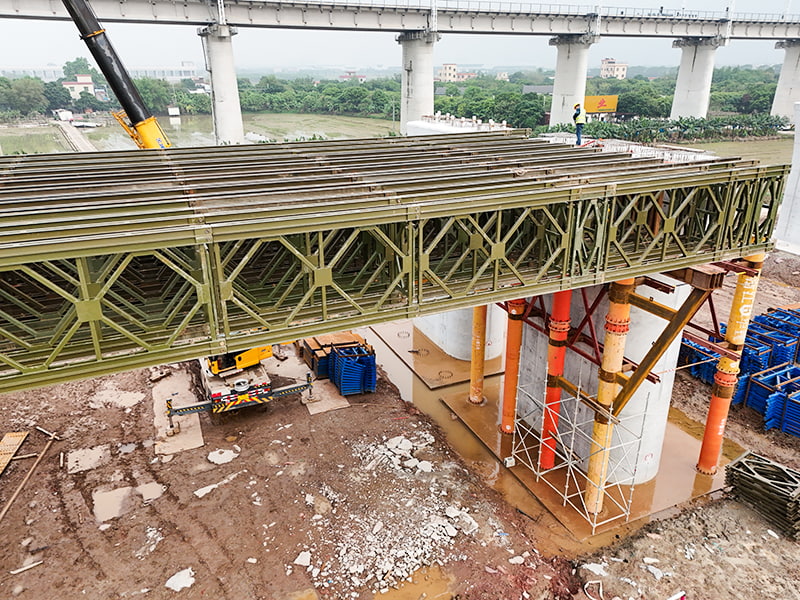
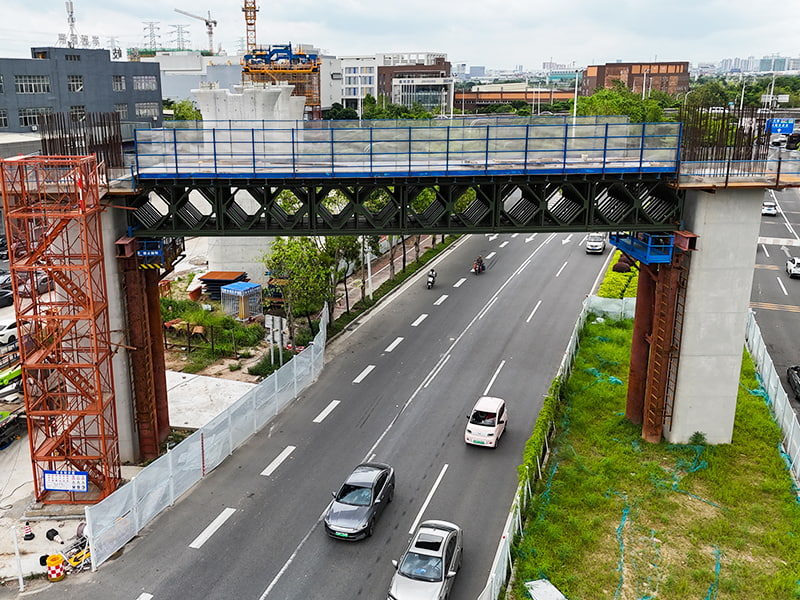
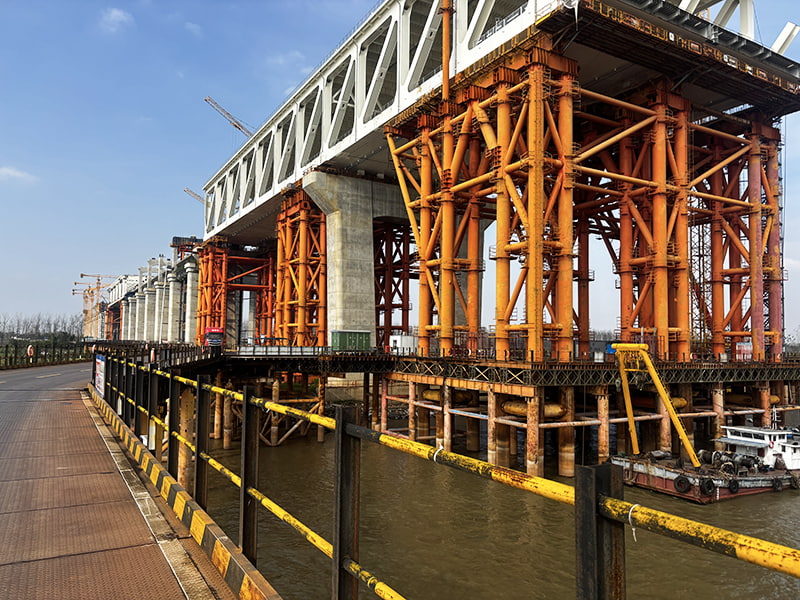
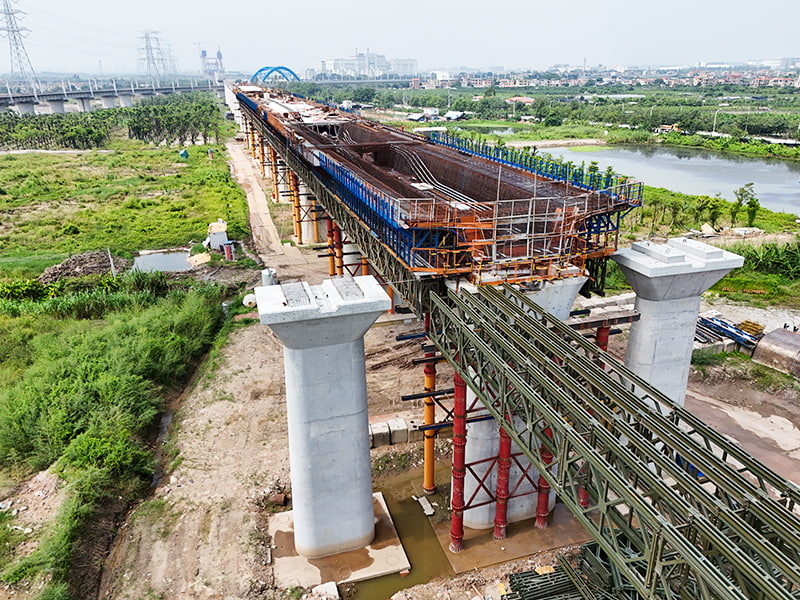
High-Speed Rail Project Dedicated Super Bailey Construction Support
4. Advantages Over Conventional and Less Standardized Alternatives
Temporary construction support systems are available in many forms, including conventional scaffolding, welded site-built frames, proprietary shoring towers, and permanent-style steel structures. Each option can be suitable in particular circumstances. However, the Super Bailey Construction Support offers several advantages when a project requires a combination of span, load capacity, modularity, rapid deployment, and outdoor durability.
4.1 Compared with Conventional Scaffolding
Conventional scaffolding is effective for many low- and medium-load access applications, but it may become inefficient when a bridge construction project requires long clear spans or substantial vertical loads. Dense scaffolding arrangements can consume a large amount of material and labor, and they may require numerous foundation points or ground preparation measures.
A modular Bailey-type support system provides a more truss-oriented load-bearing solution. It can be assembled into a stronger continuous arrangement with fewer intermediate obstructions in suitable applications. This may improve access below the structure and simplify coordination with roads, waterways, or other construction operations.
Another distinction is the level of standardization. Professional modular bridge components are manufactured for repeated assembly, whereas ordinary scaffolding arrangements may depend heavily on site-specific adjustment and manual fitting. Standardized components can make the support arrangement easier to inspect, document, modify, and dismantle.
4.2 Compared with Improvised Site-Fabricated Frames
Site-fabricated frames can appear economical because they use locally available steel materials. However, the apparent cost advantage may be reduced by inconsistent dimensions, variable welding quality, uncertain material traceability, and limited engineering documentation. Improvised structures may also be difficult to reproduce or modify when the construction sequence changes.
The Super Bailey Construction Support is produced through a controlled manufacturing process. Components are fabricated according to defined drawings and standardized workflows, then inspected before delivery. This helps reduce dimensional variation and creates a more reliable basis for assembly and structural verification.
Factory production also separates key manufacturing activities from the congested and variable conditions of a construction site. Automated or controlled welding, standardized cutting, organized assembly, and systematic quality management can achieve a level of consistency that is difficult to maintain when every member is manufactured outdoors under schedule pressure.
4.3 Compared with Heavy Permanent-Style Temporary Structures
Some projects use temporary structures that resemble permanent bridges in their weight, fabrication complexity, and installation requirements. These systems may provide high strength, but they can involve extensive transport, heavy lifting equipment, long production cycles, and difficult removal procedures.
A modular Bailey support system seeks to provide the required temporary structural performance with a more flexible installation concept. Its components can be transported in manageable units, assembled in stages, and dismantled after use. This can reduce the logistical burden and improve the possibility of reuse on future projects.
The modular approach also supports project changes. If the required support length, width, or bracing arrangement changes during planning, standardized components may be rearranged more easily than a one-piece custom frame. Any modification must still be reviewed by qualified engineers, but the underlying modularity provides a valuable starting point.
4.4 Compared with Uncoated or Poorly Protected Steel
Outdoor construction sites expose steel structures to moisture, rain, mud, airborne pollutants, and repeated handling. Uncoated steel can develop surface rust quickly, particularly at cut edges, connection areas, weld zones, and locations where water accumulates. Corrosion increases inspection and maintenance needs and may shorten the useful life of reusable components.
The green anti-corrosion coating on this product provides a protective barrier between the steel substrate and the surrounding environment. Although coating performance depends on surface preparation, coating quality, storage, installation, and maintenance, factory-applied protection is generally more consistent than uncontrolled on-site painting. The coating also helps extend the structure’s service life in demanding outdoor construction conditions.
5. Green Anti-Corrosion Protection and Outdoor Durability
Corrosion protection is an important part of the product’s performance because construction support systems are frequently used outdoors and may remain exposed for extended periods. High-speed rail projects can involve seasonal weather changes, high humidity, rainfall, and temporary storage in open areas. A protective coating therefore contributes not only to appearance but also to long-term usability and maintenance efficiency.
The green anti-corrosion paint applied to the Super Bailey Construction Support forms a protective layer over the steel components. Its main function is to reduce direct contact between the steel and moisture or corrosive agents. When the coating remains intact, it can slow the development of rust and help preserve the condition of the structural members and connection surfaces.
Weather durability is especially important for support structures that are installed before the main construction work begins and remain in place through multiple construction stages. The system may experience rain, sunlight, temperature changes, dust, and contact with construction materials. A durable coating helps the structure withstand these conditions while reducing the frequency of corrective treatment.
Proper coating management remains essential. Components should be transported and stored in a manner that minimizes impact damage. During assembly, workers should avoid unnecessary dragging or striking of coated members. Areas affected by lifting, welding, cutting, or mechanical damage should be inspected and repaired with compatible protective materials. Drainage should also be considered so that water does not remain trapped around connections or horizontal surfaces.
Routine inspection can identify coating scratches, peeling, blistering, exposed steel, and early rust formation. Early maintenance is generally more efficient than waiting until corrosion becomes extensive. The combination of factory coating, appropriate handling, and regular inspection can improve the support system’s durability and preserve its potential for reuse.
6. Customized Engineering and Technical Guidance
A major strength of the product offering is the combination of standardized components and customized service. Standardization provides manufacturing efficiency and component consistency, while customization allows the system to respond to the specific requirements of a high-speed rail construction project.
Project conditions may vary according to required span, support elevation, available foundation points, construction loads, access restrictions, lifting capacity, site geometry, and erection sequence. A practical support solution must consider these factors together. Simply selecting a product from a catalog without reviewing the project conditions may lead to an unsuitable arrangement.
Customized technical guidance can assist the project team in determining the appropriate modular configuration. The guidance process may include reviewing project drawings, confirming the intended use, identifying critical load cases, recommending component combinations, coordinating delivery sequences, and explaining assembly procedures. It can also support communication between the manufacturer, contractor, structural engineer, and site management team.
Construction support equipment is most effective when it is integrated into the overall construction method statement. The support system should be considered alongside lifting plans, temporary access, working platforms, formwork, safety barriers, inspection checkpoints, and removal procedures. The manufacturer’s guidance can help the contractor understand how the modular components are intended to work together and how to avoid common assembly errors.
Customized service also has value when the site changes during construction. High-speed rail projects may encounter changes in access conditions, material delivery schedules, foundation preparation, or construction sequence. A modular support system can often be adjusted more readily than a rigid, one-purpose structure, provided that any changes are reviewed and approved through the project’s engineering control process.
7. Manufacturing Strengths and Production Capabilities
The performance of a modular steel support system begins with its manufacturing process. Structural reliability depends on more than the nominal strength of the steel. It also depends on material quality, cutting accuracy, hole positioning, welding consistency, dimensional control, coating preparation, and final inspection.
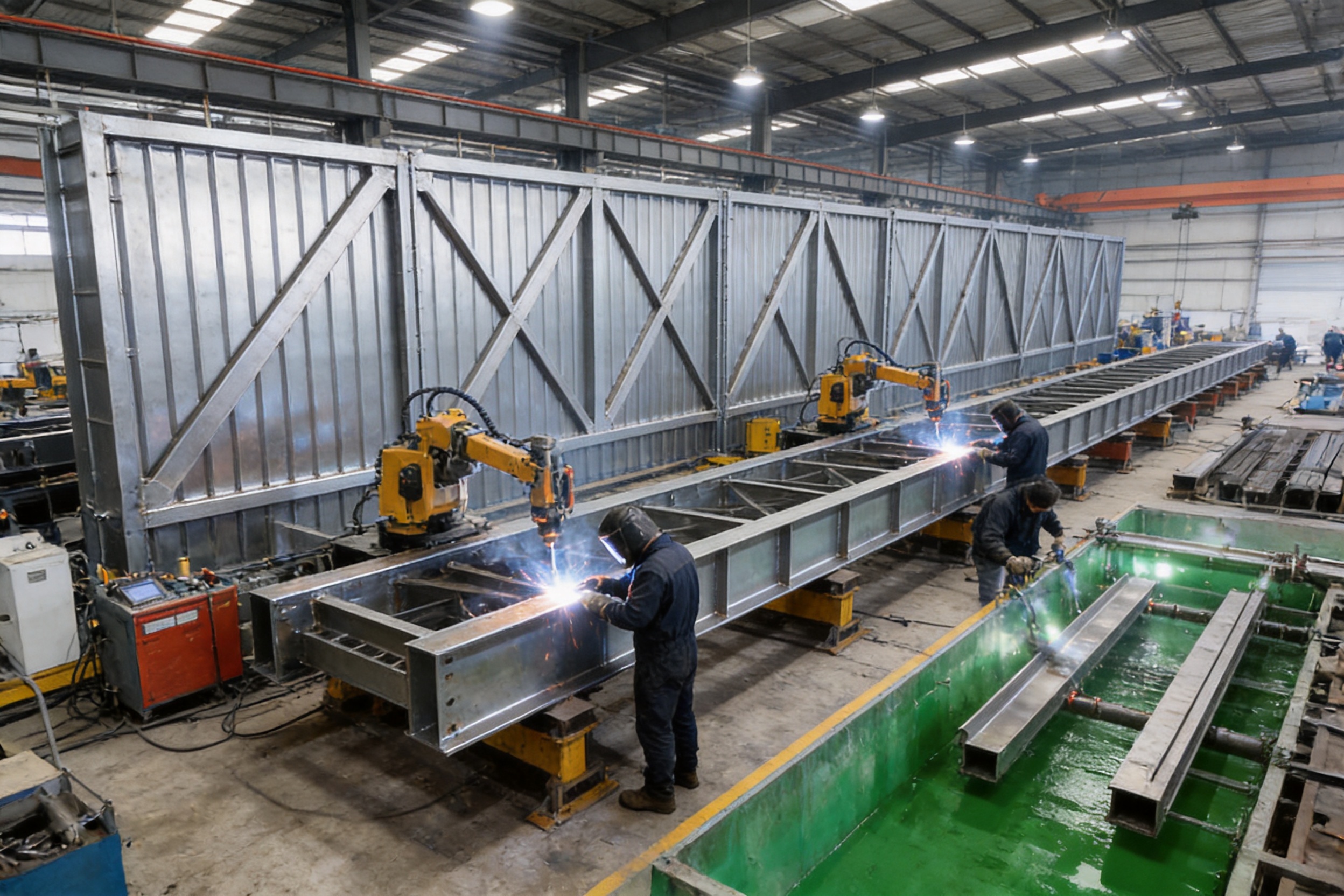
Jiangsu Zhonghai Bridge Equipment Co., Ltd. integrates engineering design, precision manufacturing, quality management, and technical support within its production model. The company’s factory uses advanced automation and standardized workflows to manufacture high-strength modular bridge systems and engineered structural components. This integrated arrangement helps connect design intent with production execution.
7.1 Engineering Design Integration
Engineering design integration allows the manufacturing team to consider structural function, component geometry, assembly sequence, transport requirements, and site installation from the beginning of the project. A design that looks efficient on paper may be difficult to fabricate or transport if these issues are not considered together.
For a modular support product, design integration helps establish consistent component dimensions and connection details. It also supports the preparation of project-specific arrangements for span, width, bracing, support points, and construction access. The objective is to provide a system that can be manufactured accurately and assembled efficiently in the field.
7.2 Precision Steel Fabrication
Precision fabrication is important because modular components must fit together during assembly. Inaccurate cutting, drilling, forming, or welding can create installation difficulties, increase adjustment work, and affect the intended structural geometry. Consistent fabrication helps reduce these risks.
The company’s manufacturing capabilities include automated welding and precision steel fabrication. Automated or controlled welding processes can improve repeatability by maintaining more consistent parameters, travel speed, and weld placement than uncontrolled manual production alone. Skilled personnel remain essential for setup, inspection, repair, and quality verification, but automation helps establish a stable production baseline.
Precision fabrication also supports interchangeability. When components are produced according to standardized dimensions and verified processes, replacement parts and additional modules can be integrated more easily. This is particularly valuable for bridge contractors and infrastructure organizations that operate multiple projects or maintain reusable equipment inventories.
7.3 Standardized Workflows
Standardized workflows help organize material receiving, cutting, forming, welding, assembly, surface preparation, coating, inspection, packaging, and dispatch. A consistent sequence reduces the risk that an important operation will be omitted or performed out of order.
Standardization also supports traceability and quality documentation. Production records can be linked to work orders, drawings, inspection points, and delivery batches. This makes it easier to identify the condition of components before shipment and to resolve technical questions during installation.
7.4 Quality Management
Quality management for structural steel products should cover the entire manufacturing process rather than focusing only on final appearance. Incoming materials, welds, dimensions, connection holes, coating condition, marking, and packaging all influence field performance.
A systematic quality approach helps ensure that components meet the intended engineering requirements and that defects are identified before delivery. It also supports consistent production across different orders and project types. The company states that its products are manufactured to comply with ASTM, EN, and national specifications, allowing project teams to evaluate the product within relevant technical and procurement frameworks.
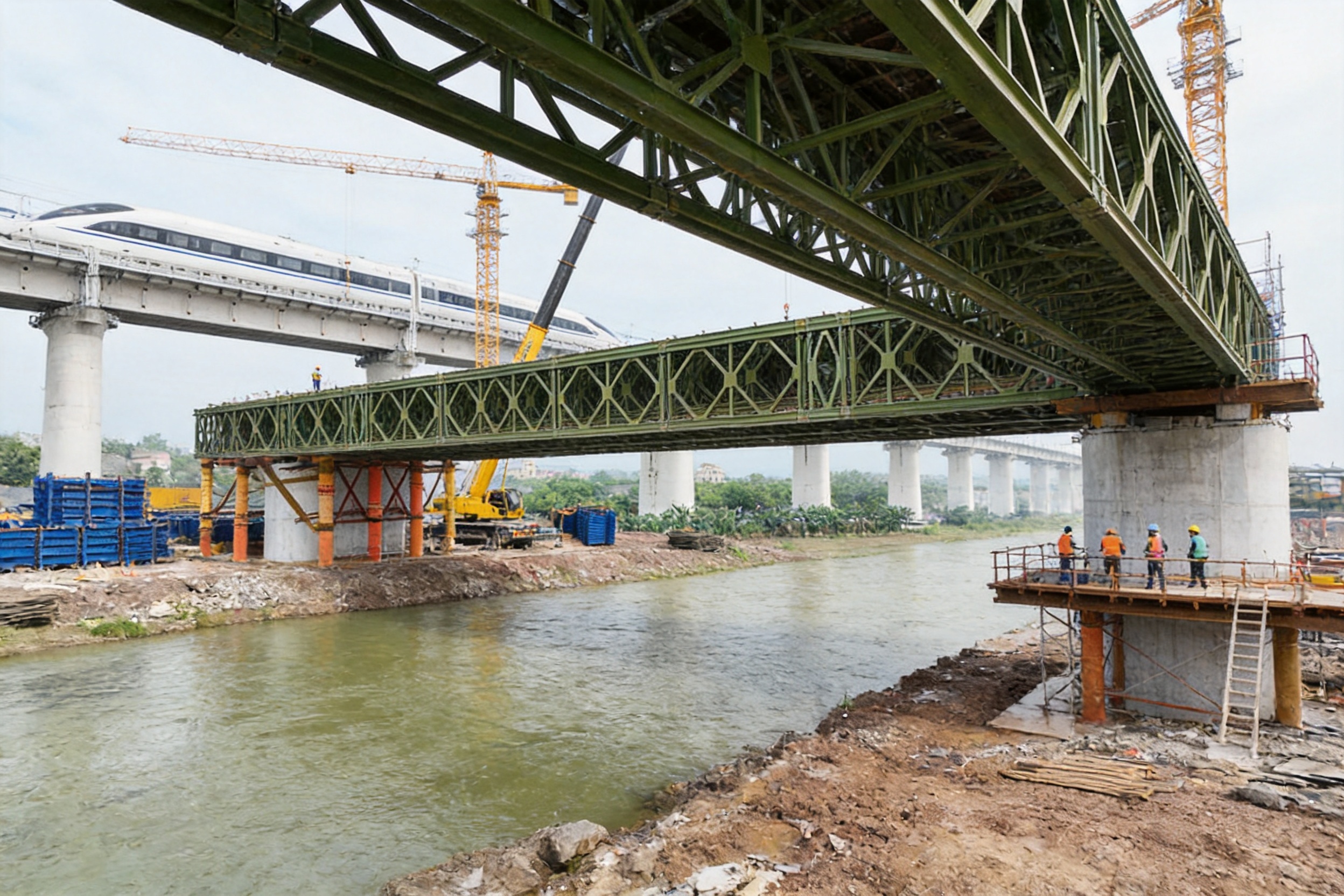
8. Application in the Shenjiang High-Speed Rail Project
The Shenjiang High-Speed Rail Project requires dependable construction support for critical bridge construction activities. The dedicated Super Bailey Construction Support was supplied to meet the project’s specialized requirements, with customized services and technical guidance plans forming part of the overall delivery.
The product’s large-span and heavy-load orientation makes it suitable for construction stages in which ordinary light-duty temporary arrangements may not provide sufficient structural confidence. Its robust configuration supports the controlled transfer of temporary loads and helps create a stable working platform for bridge construction operations.
The green anti-corrosion finish is also appropriate for a major outdoor infrastructure project. High-speed rail construction can extend over a substantial period, and temporary support structures may remain exposed while different work packages are completed. Weather-resistant protection helps the support system remain serviceable throughout the planned construction period and contributes to longer-term reuse after removal.
Project-specific guidance is particularly valuable in high-speed rail construction because bridge geometry and construction sequencing must be carefully coordinated. The support arrangement may need to work alongside lifting equipment, formwork systems, reinforcement operations, concrete placement, temporary access, and inspection procedures. Customized guidance helps ensure that the modular support is not treated as an isolated product but as part of the complete construction method.
The product therefore contributes to the project in several ways. It provides a strong temporary structural platform, supports large-span construction requirements, improves resistance to outdoor exposure, and gives the project team access to technical coordination from an experienced modular bridge manufacturer.
9. Installation, Inspection, and Site Management Considerations
Although modular Bailey systems are designed for efficient assembly, safe installation requires disciplined planning. Before erection begins, the project team should confirm the support location, foundation or bearing condition, access route, lifting equipment, component inventory, working sequence, and inspection responsibilities.
The foundation or supporting surface must be capable of carrying the reactions generated by the temporary structure. Settlement, uneven bearing, erosion, or inadequate preparation can affect the alignment and stability of the entire support arrangement. The support design should therefore address not only the steel superstructure but also the ground or foundation conditions beneath it.
Components should be checked when they arrive at the site. Personnel should verify that the delivered members correspond to the approved arrangement and that there is no significant deformation, missing connection hardware, coating damage, or transport-related defect. Damaged components should be isolated and assessed before use.
During assembly, members should be installed in the intended sequence, with temporary bracing provided where necessary. Connections should be fully installed and secured according to the approved method. Workers should not remove bracing or connection elements simply to make access easier unless the change has been reviewed by the responsible engineer.
After erection, the support should be inspected for alignment, connection completion, bearing condition, bracing continuity, coating damage, and signs of deformation. A documented inspection before loading can provide an important control point. Additional inspections may be required after severe weather, accidental impact, unusual loading, or changes to the construction sequence.
Removal should be planned as carefully as installation. The temporary structure may still carry residual loads or interact with the partially completed bridge. Loads should be released in a controlled manner, and dismantled components should be handled to prevent damage that could reduce their suitability for future use.
10. Reusability and Lifecycle Value
One of the fundamental advantages of modular bridge equipment is its potential for reuse. A permanent structure is designed for one final location, while a modular temporary support system can be dismantled, transported, inspected, and reconfigured for another project. This can improve the lifecycle value of the equipment and reduce waste associated with one-time site-built structures.
Reusability depends on proper handling and maintenance. Components should be inspected after dismantling, cleaned of concrete residue and accumulated dirt, and stored in a dry and organized environment. Connection hardware should be checked for wear or damage, while members should be examined for bending, cracking, corrosion, and coating deterioration.
The standardized nature of Bailey components supports inventory management. Contractors can record the type, quantity, condition, and location of each member. This makes it easier to plan future configurations and identify whether additional components are required for a new project.
The green anti-corrosion coating contributes to lifecycle value by helping protect the steel during initial use and subsequent storage. However, coating is not a substitute for maintenance. Damage caused by assembly, lifting, transport, or impact should be repaired promptly, and components with serious structural deformation should not be returned to service without professional assessment.
11. Why Manufacturer Capability Matters
Selecting a temporary support system is also a decision about the manufacturer behind the product. A structurally capable design may not deliver its full value if production quality, technical documentation, delivery coordination, or installation support is inadequate.
Jiangsu Zhonghai Bridge Equipment Co., Ltd. is positioned as an engineering manufacturer rather than only a steel trading company. Its activities cover modular steel bridges, Bailey bridge systems, customized steel components, bridge erection and construction support equipment, automated welding, and precision steel fabrication.
This range of capabilities allows the company to address both standard and project-specific requirements. A client may need a complete modular support arrangement, replacement components, customized steel members, or technical coordination for a complex installation. Access to multiple related capabilities can simplify procurement and reduce the number of separate suppliers involved in a project.
The company’s location in Zhenjiang, Jiangsu Province, provides access to an important industrial and transportation region. Its factory-based production model supports organized manufacturing, while its experience with domestic and international infrastructure projects contributes to an understanding of different logistics, technical, and site coordination requirements.
The company reports that its products have supported projects involving coastal engineering, temporary access bridges, exhibition center structural components, railway bridge applications, flood-response deployments, and emergency bridge installations. This range of applications demonstrates the flexibility of modular steel systems and the importance of adapting the product to different operating environments.
12. Technical and Commercial Benefits for Project Owners and Contractors
For project owners, a reliable temporary support system can help reduce construction risk and support schedule control. A system that is manufactured consistently and supplied with technical guidance may reduce uncertainty during procurement and site installation. The ability to reuse modular components can also contribute to longer-term asset value.
For contractors, modularity can simplify transportation and staging. Components can be delivered in batches according to the erection schedule rather than requiring one large shipment of a fully assembled structure. This may be useful when the construction site has limited storage space or when access routes cannot accommodate oversized loads.
For engineering teams, standardized components create a clearer basis for analysis and documentation. The structure can be represented as a defined system rather than an improvised collection of steel sections. This supports review of load paths, connections, bracing, support reactions, and construction stages.
For site managers, the product’s modular nature can assist with organization and inventory control. Components can be marked, grouped, inspected, and assembled according to a planned sequence. Technical guidance helps ensure that the planned arrangement is understood by supervisors and installation crews.
For infrastructure developers operating in different regions, the manufacturer’s ability to work with ASTM, EN, and national specifications can facilitate technical communication. The applicable standard, material grade, fabrication requirement, coating system, inspection method, and documentation package should always be confirmed for each project, but broad standards experience can help create a more efficient procurement process.
13. Frequently Asked Questions
What is a Super Bailey Construction Support system?
A Super Bailey Construction Support system is a modular steel truss-based support arrangement designed for demanding temporary construction applications. It uses prefabricated steel components that can be assembled into configurations suitable for large spans and heavy temporary loads, subject to project-specific engineering verification.
What type of project is this product intended for?
The product is intended for bridge construction and other infrastructure projects that require reliable temporary support. The featured application is the Shenjiang High-Speed Rail Project, where the system is used as dedicated construction support for critical bridge construction stages.
What are the main advantages of the product?
The main advantages include a robust overall structure, large-span capability, heavy-load application suitability, modular assembly, green anti-corrosion protection, customized technical service, and manufacturing through standardized and controlled production processes.
How does the product differ from ordinary scaffolding?
Ordinary scaffolding is often arranged as a dense network of vertical and horizontal members. A Bailey-type support uses a truss-oriented modular structure that may provide longer clear spans and a more concentrated load-bearing arrangement. The appropriate choice depends on the project requirements, but the Super Bailey system is especially suited to large-span and heavy-load conditions.
Is the support system suitable for all load levels and spans?
No temporary support system should be assumed to have a universal capacity. The required span, load, configuration, support condition, construction sequence, and environmental factors must be reviewed through project-specific engineering calculations. The product is designed for large-span and heavy-load applications, but the final arrangement must be confirmed for each project.
What is the purpose of the green anti-corrosion coating?
The green coating protects the steel surface from direct exposure to moisture and corrosive conditions. It helps improve rust resistance and weather durability, which is important for outdoor construction support. Coating condition should still be inspected and maintained throughout transport, erection, use, and storage.
Can the system be customized?
Yes. The system can be configured according to project requirements such as span, support arrangement, construction loads, site access, and erection sequence. Customization should be carried out through technical coordination and engineering review to ensure that the final arrangement remains safe and practical.
Does the manufacturer provide technical guidance?
The product is supplied with customized services and guidance plans. These may include configuration recommendations, assembly guidance, project coordination, and technical support related to the intended construction application.
Can the components be reused after the project is completed?
Modular Bailey components are designed with reuse in mind. Reuse depends on the condition of each component after dismantling. Members should be inspected for deformation, cracking, corrosion, coating damage, and connection wear before being approved for another application.
What standards can be considered during procurement?
The manufacturer states that its factory produces modular bridge systems according to ASTM, EN, and national specifications. The applicable standards, material requirements, inspection procedures, and documentation should be confirmed according to the project location, contract documents, and engineering requirements.
What should be checked before installation?
The project team should check the approved drawings, foundation condition, component inventory, connection hardware, access route, lifting equipment, erection sequence, temporary bracing, safety procedures, and inspection responsibilities. Damaged or missing components should be resolved before loading the support system.
Why is technical service important for a modular support system?
Modular components must be assembled in the correct arrangement and used within their approved engineering conditions. Technical service helps connect the product configuration with the project’s actual loads, geometry, foundation conditions, construction sequence, and site limitations. This reduces the risk of treating a complex temporary structure as a simple collection of steel parts.
14. Conclusion
The High-Speed Rail Project Dedicated Super Bailey Construction Support is a specialized modular steel solution for demanding bridge construction applications. Its design responds to the need for strong, adaptable, and durable temporary support in large-span and heavy-load conditions. The product’s robust structural arrangement provides a reliable basis for critical construction stages, while its modular form supports efficient transportation, assembly, modification, dismantling, and potential reuse.
The green anti-corrosion coating improves resistance to rust and outdoor weather exposure, helping the system remain serviceable in complex construction environments. Its value is strengthened by customized technical services and guidance plans, which help align the support arrangement with the project’s structural, logistical, and construction requirements.
Another important advantage is the manufacturing capability behind the product. Jiangsu Zhonghai Bridge Equipment Co., Ltd. combines engineering design, precision steel fabrication, automated welding, standardized workflows, quality management, and technical support. This integrated approach provides a stronger foundation for consistent component quality and dependable project delivery than an improvised site-fabricated solution.
For high-speed rail construction, where safety, schedule, geometry, and environmental durability are closely connected, the right temporary support system can make a significant contribution to project performance. By combining modular flexibility with heavy-load structural capability and professional manufacturing support, the Super Bailey Construction Support offers a practical solution for modern bridge construction and other infrastructure projects requiring safe, efficient, and reusable steel support equipment.
References
1. ASTM International. Structural Steel and Steel Bridge Construction Standards.
2. European Committee for Standardization. Eurocode Principles for the Design of Steel Structures and Temporary Works.
3. International Organization for Standardization. Quality Management Principles for Manufacturing and Engineering Projects.
4. Railway bridge construction practice manuals covering temporary works, erection planning, load transfer, and construction-stage safety.
5. Modular bridge engineering references covering Bailey bridge systems, truss behavior, connection design, assembly methods, and component reuse.
6. Construction steel protection and corrosion-control guidelines for outdoor temporary structures.
7. Project-specific technical documentation for the Shenjiang High-Speed Rail Project Dedicated Super Bailey Construction Support.
Product: High-Speed Rail Project Dedicated Super Bailey Construction Support


We respond quickly to all international requests and provide technical support when needed.
Product Category
Bailey Bridge/Modular Bridge Modular Steel Bridge Pedestrian Bridge Modular Pipe Bridge Truss Bridge Steel StructureContact Us

+86-511-84522866
+86-13921582699

zhwm@zjql.com

Building 1,83#, dantu New Town, Yanjiang Road, Dantu District, Zhenjiang, Jiangsu, China
Copyright © Jiangsu Zhonghai Bridge Equipment Co., Ltd. All
Rights
Reserved
China bailey bridge for sale
bailey bridge supplier from china
