
 English
 русский
 Español
 Português


Tang Yuwei — International Bailey Bridge Sales Manager
Customized Large-Span Bailey Construction Support for Heavy-Duty Projects
Content
- 1 Understanding Bailey Construction Support Systems
- 2 Project-Specific Configuration for Large-Span Applications
- 3 Load-Bearing Capability and Engineering Suitability
- 4 Structural Stability in Heavy Construction Conditions
- 5 Advantages Over Conventional Custom-Fabricated Support Frames
- 6 Product: Customized Large Span Super Bailey Construction Support
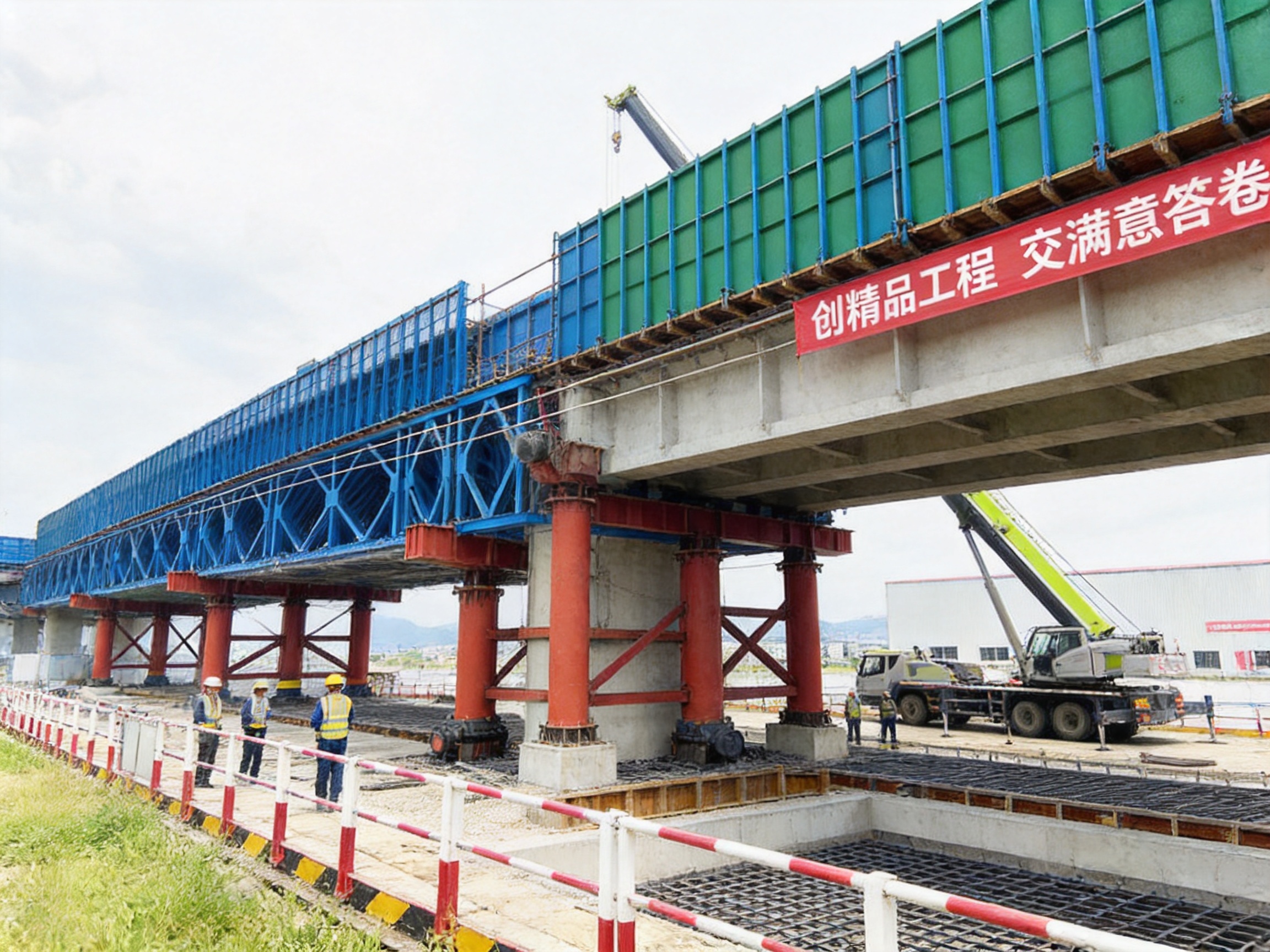
Large-span construction projects require temporary and permanent support systems that can carry substantial loads, remain stable under changing site conditions, and be assembled quickly without compromising safety. Conventional steel frames may require extensive fabrication, complicated lifting procedures, and long preparation periods. A modular Bailey construction support system provides a more adaptable alternative by combining standardized structural components with project-specific engineering and fabrication.
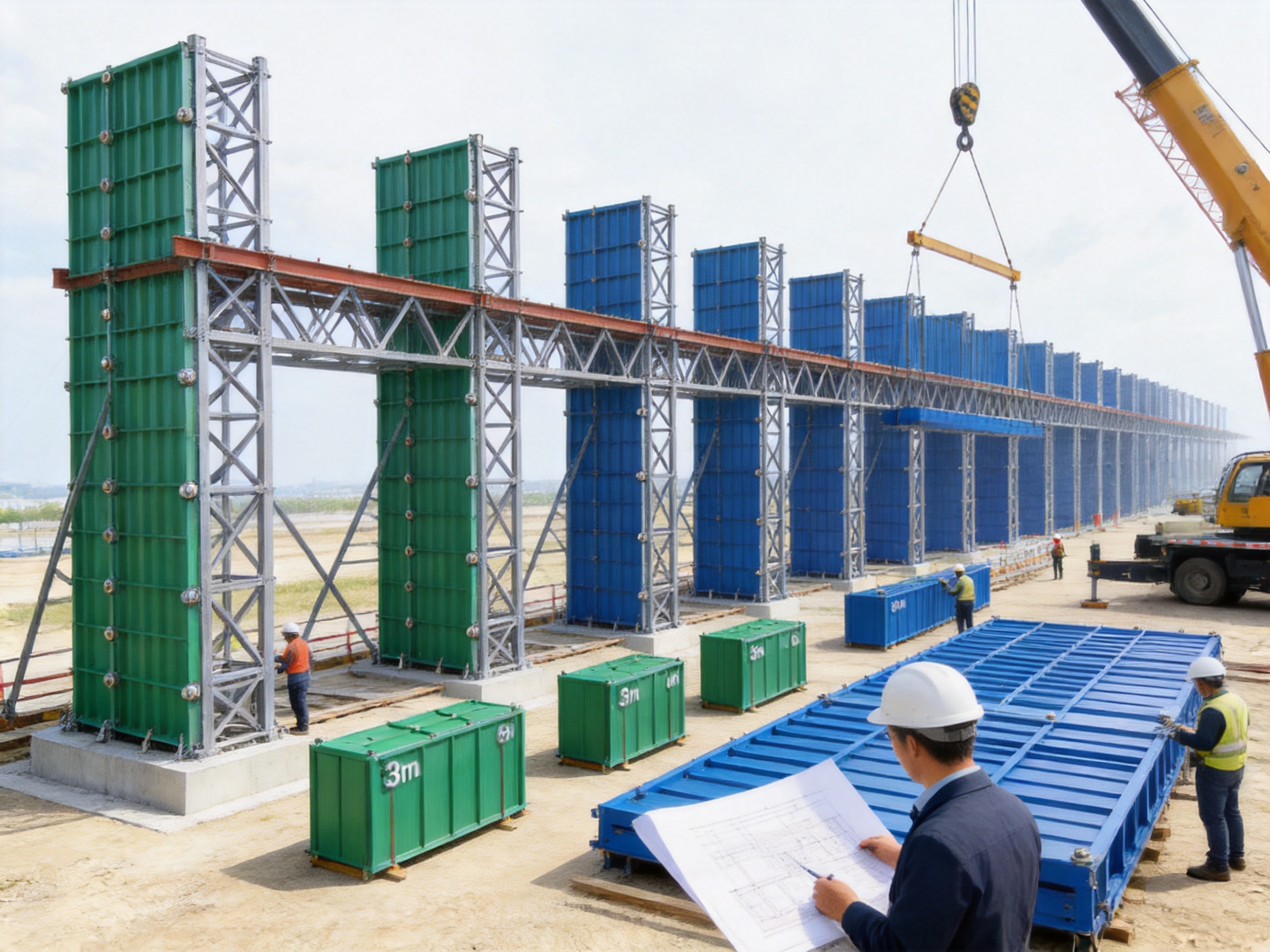
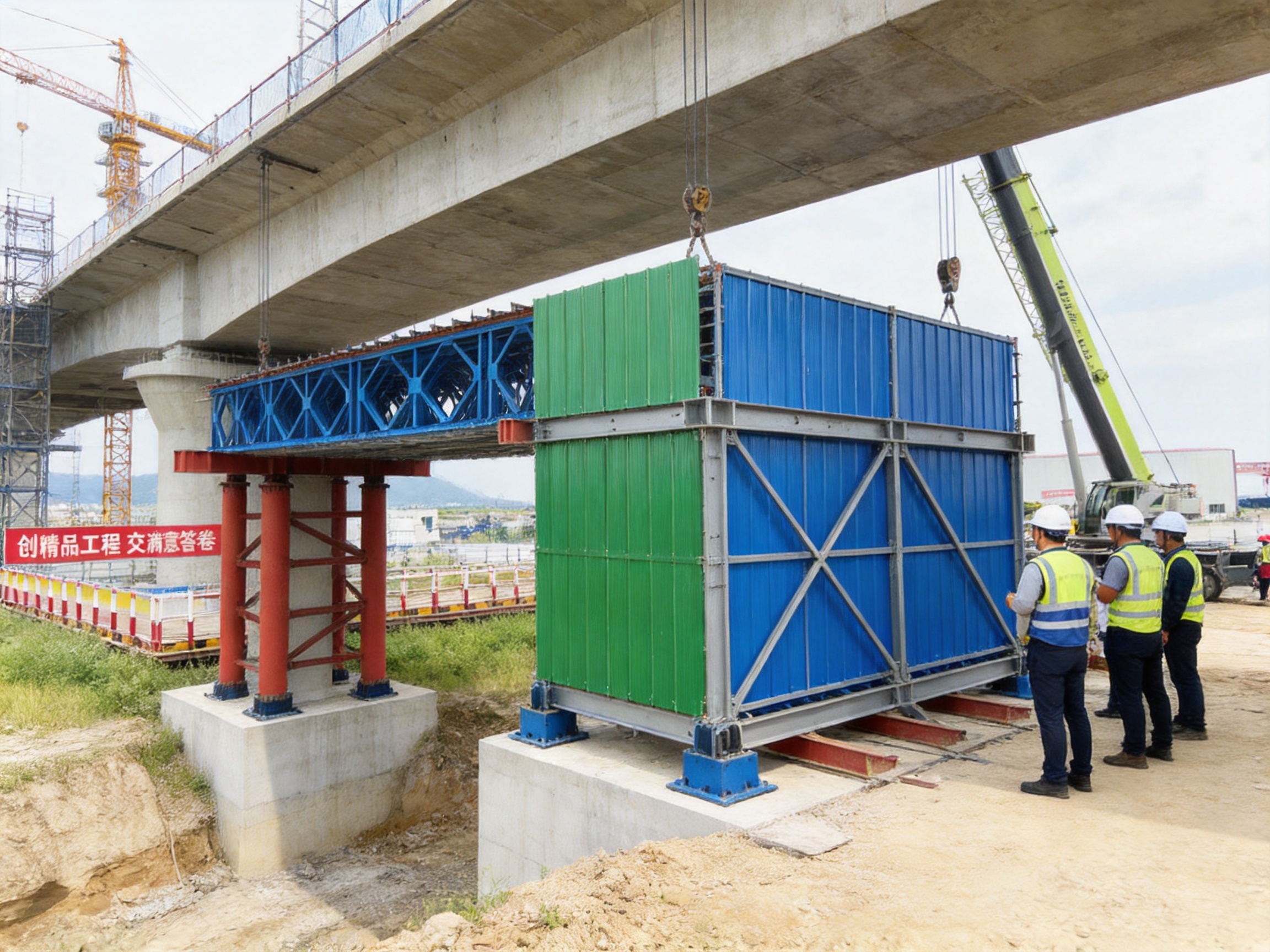
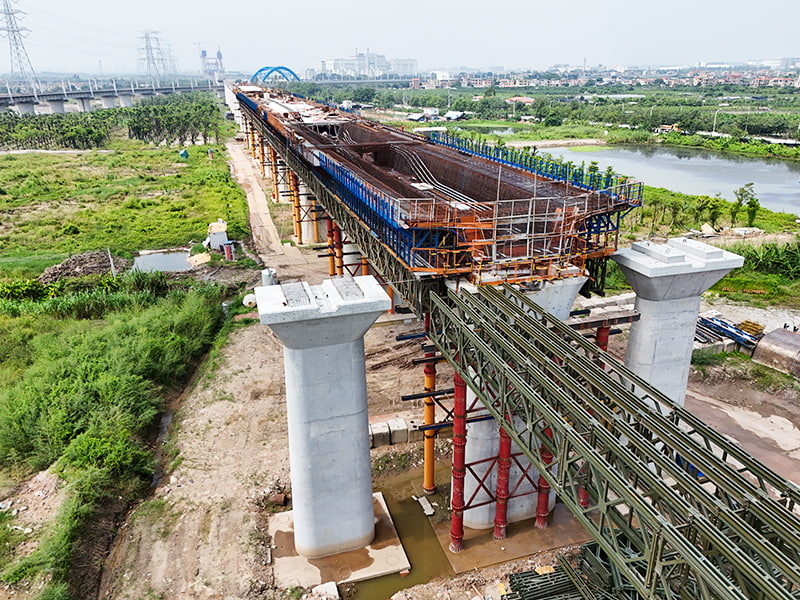
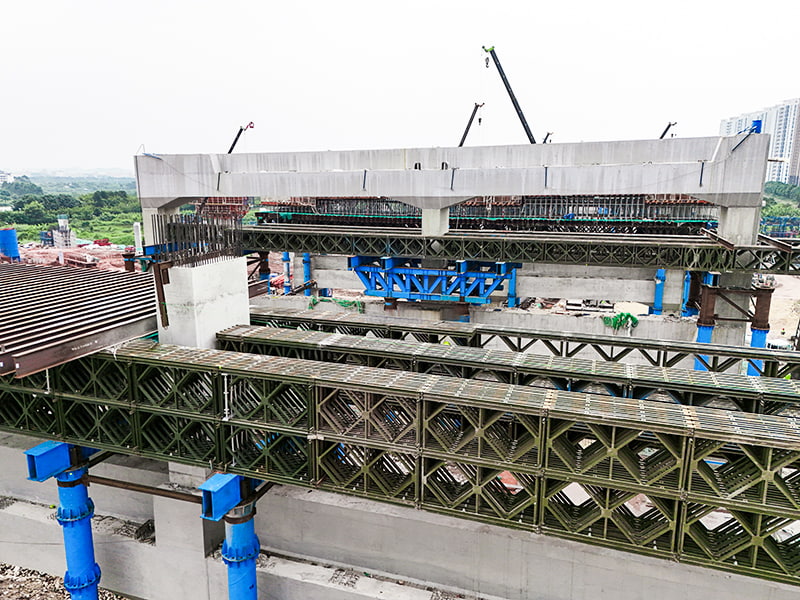
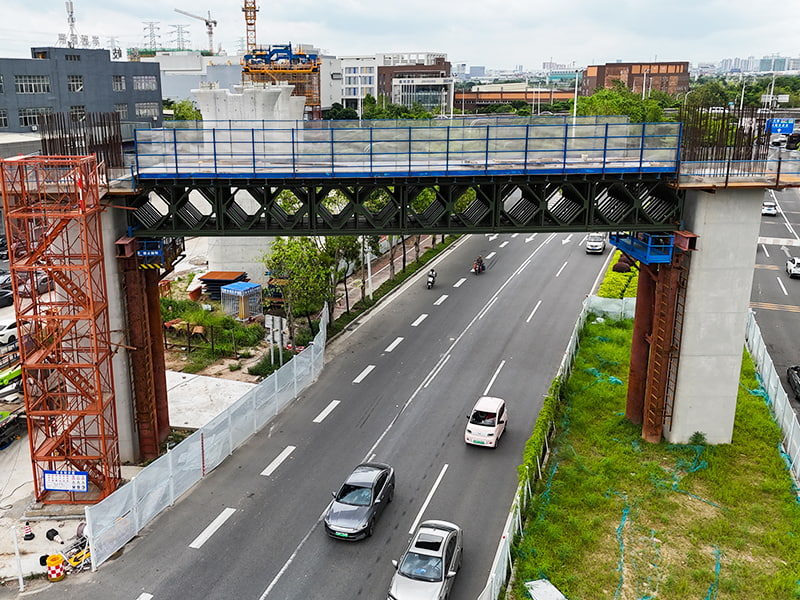
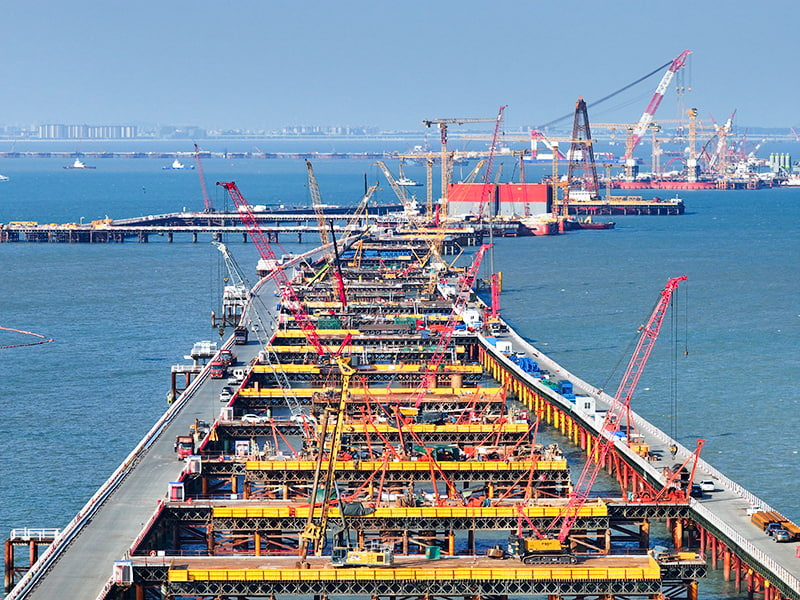
The customized large-span Bailey construction support system supplied for the Zhangzhou Dongshan Project was developed for demanding heavy-load construction conditions. It uses specially manufactured Bailey panels in two configurations: 3 m × 1 m green-painted panels and 3 m × 6 m blue-painted panels. These components are arranged to create a strong, stable, and adaptable support structure for large-span applications.
In addition to its structural capacity, the system incorporates an exclusive anti-corrosion coating. The green and blue color distinction helps construction teams identify components and manage installation activities, while the protective coating improves resistance to rust, moisture, and challenging outdoor conditions. This combination of modular design, visual management, and durable surface protection creates a professional support solution for complex infrastructure projects.
The system is suitable for load-bearing scenarios associated with HS-15, HS-20, HS-25, HL-93, and Track-50 requirements, subject to project-specific engineering verification and design calculations. These loading references indicate its suitability for a broad range of highway, heavy transport, railway, and construction support applications.
Understanding Bailey Construction Support Systems
A Bailey construction support system is a modular steel structure formed from prefabricated panels, connectors, bracing members, support components, and other engineered accessories. Unlike a fully custom steel frame fabricated entirely at the project site, a modular system uses repeatable parts that can be transported, inspected, assembled, adjusted, and reused.
The original principle behind Bailey systems was to make bridge and temporary support construction faster by using standardized steel panels that could be connected without extensive field welding. Modern Bailey systems preserve this basic advantage while incorporating improved steel fabrication, automated welding, protective coatings, engineering analysis, and project-specific configuration.
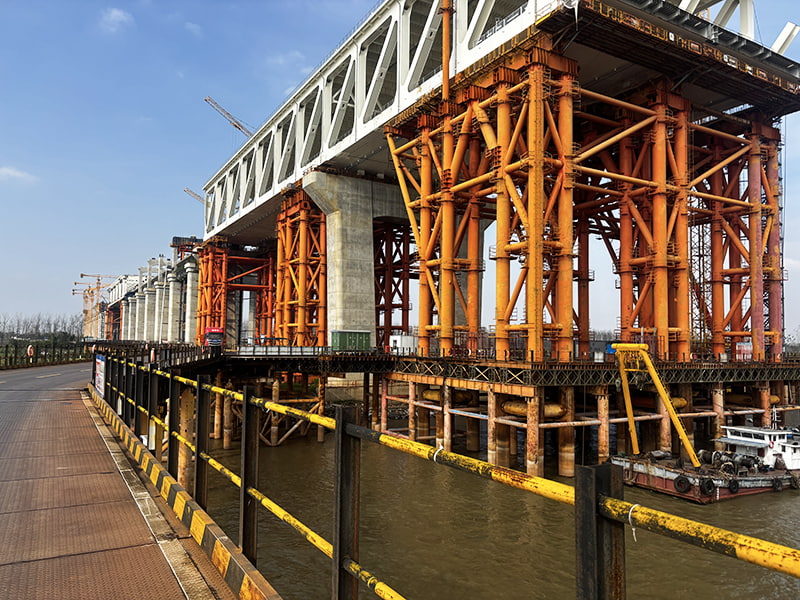
In construction support applications, modular panels can be assembled into towers, trestles, temporary piers, falsework, launching supports, access structures, and large-span supporting frames. The final arrangement depends on the required span, vertical load, lateral stability, foundation conditions, erection sequence, clearance restrictions, and environmental exposure.
The Zhangzhou Dongshan system demonstrates how a modular concept can be customized for a specific project. The system is not limited to a single standard bridge arrangement. Its panels and supporting members can be configured to address heavy construction loads and long-span requirements while maintaining the logistical advantages of prefabricated steel equipment.
Project-Specific Configuration for Large-Span Applications
Large-span construction support requires more than simply increasing the number of standard panels. As the span becomes longer and the load increases, engineers must consider deflection, buckling, connection behavior, lateral stability, load distribution, erection sequence, and the effect of temporary construction stages. A suitable system must therefore combine modular components with project-specific design control.
The customized support system for the Zhangzhou Dongshan Project includes two distinctive panel formats. The 3 m × 1 m green-painted panels provide a compact modular element that can be used in organized assemblies, bracing arrangements, or support frames. The 3 m × 6 m blue-painted panels provide a larger structural module for applications requiring expanded coverage, efficient load transfer, or the formation of a substantial support arrangement.
Using clearly differentiated panel colors can improve site organization. Construction teams can identify the intended use of components more quickly, reduce the risk of mixing similar parts, and follow assembly drawings with greater confidence. Color coding is particularly useful when a project involves many panels, multiple support lines, different erection stages, or several work crews.
Color identification does not replace dimensional checks, component inspection, or engineering control. Instead, it adds a practical visual management layer to the project. When combined with component marking, inspection records, assembly drawings, and installation procedures, the color system can support more efficient and orderly construction operations.
For a large-span support structure, panel geometry must work together with longitudinal and transverse bracing. Proper bracing helps prevent excessive sway, controls out-of-plane movement, and supports the transfer of horizontal forces. Depending on the design, the system may also incorporate adjustable supports, bearing arrangements, cross beams, longitudinal beams, base plates, jacking devices, and anchoring components.
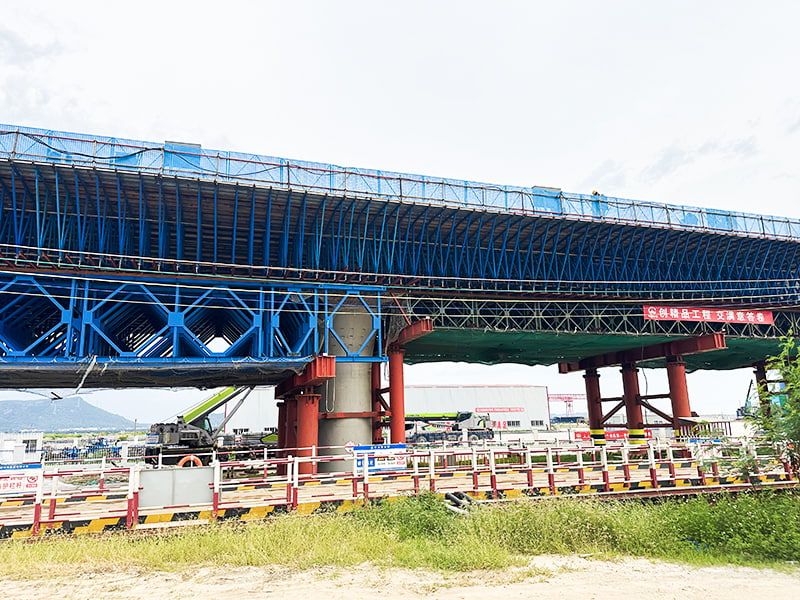
Customized Large Span Super Bailey Construction Support
Load-Bearing Capability and Engineering Suitability
The system is designed for heavy-duty construction support and is suitable for load-bearing scenarios associated with HS-15, HS-20, HS-25, HL-93, and Track-50 classifications. These references cover different levels and types of loading used in bridge and transportation engineering. The exact allowable capacity of any installed structure depends on the selected configuration, material properties, connection condition, support spacing, foundation capacity, load eccentricity, wind effects, and other design parameters.
HS-15, HS-20, and HS-25 references are commonly associated with highway loading classifications of different intensities. HL-93 is widely used as a highway bridge design loading model, while Track-50 represents a railway-related heavy loading condition. Including these loading scenarios in the product description indicates that the system can be engineered for diverse infrastructure environments rather than being limited to light temporary access work.
A responsible support design must distinguish between the capacity of an individual panel and the capacity of a complete support structure. A panel may have a strong nominal resistance, but the overall arrangement can be governed by connections, bracing, bearings, foundations, local buckling, global stability, or construction-stage effects. For this reason, final design verification should be completed by qualified engineers based on the actual project conditions.
The modular system offers several engineering advantages. First, repeated components make the structural arrangement easier to analyze and document. Second, standardized connection locations simplify the preparation of erection drawings. Third, the same basic inventory can be adapted to different spans and load conditions. Fourth, prefabricated components allow quality checks to be performed before delivery to the jobsite.
Large-span support structures also benefit from predictable component dimensions. When panel sizes, connection points, and bracing locations are controlled, engineers can develop clear assembly sequences and identify critical load paths. This improves communication between the design office, manufacturing facility, logistics team, site supervisors, and installation crews.
Structural Stability in Heavy Construction Conditions
Stability is one of the most important performance requirements for a large-span temporary support system. The structure must resist vertical construction loads while also controlling lateral movement, torsion, vibration, accidental impact, wind, and uneven settlement. A support system that has sufficient vertical strength but inadequate lateral stability may still experience unacceptable deformation or unsafe behavior.
The Bailey construction support approach addresses stability through interconnected panels and bracing members. Repeated panel lines can create a stable structural frame, while transverse bracing helps maintain the spacing between longitudinal members. Diagonal bracing can limit racking and improve resistance to horizontal forces. The exact arrangement should be determined through engineering analysis and site requirements.
Support conditions are equally important. The load transmitted through the structure must be distributed into foundations or bearing surfaces that can safely resist compression, sliding, overturning, and settlement. Where the ground is variable, temporary foundations may require concrete pads, steel grillage, timber mats, or other engineered measures. The support structure and its foundation system should be treated as one integrated design.
During erection, the system may pass through temporary states that are less stable than the completed arrangement. A professional installation plan should therefore define lifting points, temporary bracing, erection stages, access paths, exclusion zones, and inspection checkpoints. The modular nature of the system can shorten the installation process, but it does not eliminate the need for controlled sequencing.
For long-span applications, deflection management is also critical. Excessive deflection may affect alignment, clearance, construction tolerances, and the performance of supported formwork or structural elements. Engineers may use additional panel lines, deeper truss arrangements, closer support spacing, temporary camber, or other measures to control movement.
Advantages Over Conventional Custom-Fabricated Support Frames
A conventional
Product: Customized Large Span Super Bailey Construction Support


We respond quickly to all international requests and provide technical support when needed.
Product Category
Bailey Bridge/Modular Bridge Modular Steel Bridge Pedestrian Bridge Modular Pipe Bridge Truss Bridge Steel StructureContact Us

+86-511-84522866
+86-13921582699

zhwm@zjql.com

Building 1,83#, dantu New Town, Yanjiang Road, Dantu District, Zhenjiang, Jiangsu, China
Copyright © Jiangsu Zhonghai Bridge Equipment Co., Ltd. All
Rights
Reserved
China bailey bridge for sale
bailey bridge supplier from china
