
 English
 русский
 Español
 Português


Luo Shiqing — Product After-Sales Service Supervisor
Large-Span Galvanized Steel Approach Bridges for Reliable Land-to-Water Access
Content
- 1 1. The Function of an Approach Bridge in Modern Infrastructure
- 2 2. Core Product Features
- 3 3. Advantages Compared with Conventional Approach Solutions
- 4 4. Advanced Manufacturing Process
- 5 5. Company Manufacturing Strengths
- 6 6. Applications of the Galvanized Steel Approach Bridge
- 7 7. Design and Installation Considerations
- 8 8. Lifecycle Performance and Maintenance
- 9 9. Performance Comparison with Alternative Bridge Types
- 10 10. Customization and Engineering Support
- 11 11. Why Choose a Professional Modular Bridge Manufacturer?
- 12 12. Frequently Asked Questions
- 12.1 12.1 What is a galvanized steel approach bridge?
- 12.2 12.2 What is the main purpose of an approach bridge?
- 12.3 12.3 Can the bridge be used in coastal areas?
- 12.4 12.4 Can the bridge be used for emergency access?
- 12.5 12.5 What load standards can be considered?
- 12.6 12.6 Is the bridge reusable?
- 12.7 12.7 How does galvanizing reduce maintenance?
- 12.8 12.8 Can the bridge be customized?
- 12.9 12.9 What information is needed for a quotation?
- 12.10 12.10 Does the manufacturer provide installation support?
- 13 13. Procurement Checklist
- 14 14. Conclusion
- 15 References
- 16 Product: Large Span Galvanized Steel Approach Bridge
Approach bridges are essential structural links between a main bridge and the surrounding road network, embankment, work platform, or shoreline. Although they are often shorter and less visually prominent than the main bridge, their performance directly affects the safety, efficiency, and continuity of the entire transportation system. A well-designed approach bridge must accommodate changing ground conditions, repeated traffic, construction activity, water exposure, and potentially demanding environmental conditions. It must also be practical to transport, assemble, inspect, maintain, and adapt to different project requirements.
The Large Span Galvanized Steel Approach Bridge is engineered to address these requirements through a combination of modular steel construction, high-strength structural design, galvanized corrosion protection, and flexible deployment. It creates a secure transition from land to a primary bridge structure while supporting daily traffic, construction logistics, temporary access, emergency response, and infrastructure development. Its modular format allows the bridge to be configured for different spans, widths, loading conditions, and site constraints, making it suitable for both planned and urgent projects.
Manufactured by Jiangsu Zhonghai Bridge Equipment Co., Ltd., the approach bridge forms part of a broader product range that includes Bailey bridge systems, modular steel bridges, pedestrian bridges, modular pipe bridges, truss bridges, and engineered steel structures. The company combines engineering design, precision fabrication, automated welding, quality management, and project support to deliver structural solutions for transportation, water conservancy, military logistics, disaster relief, and international infrastructure projects.
This article explains the structure, performance, manufacturing advantages, applications, and selection considerations of galvanized steel approach bridges. It also examines why a professionally engineered modular system can offer advantages over conventional temporary access structures and less adaptable bridge solutions.
1. The Function of an Approach Bridge in Modern Infrastructure
An approach bridge provides the transition between a main bridge and the land-based transportation network. This connection may appear simple, but it must accommodate differences in elevation, alignment, soil conditions, traffic patterns, and structural behavior. The approach section must transfer vehicle and pedestrian loads safely while maintaining a smooth and stable route across the interface between land and water or between separate sections of a construction site.
In a water-crossing project, the approach bridge may connect a roadway on an embankment to a bridge deck above a river, canal, lake, tidal zone, or coastal area. In a construction project, it may connect a temporary work platform to the main site. During emergency operations, it may restore access where roads, culverts, or existing bridge approaches have been damaged by flooding, landslides, earthquakes, or other disasters.
Approach bridges must often perform under conditions that are more variable than those found on a standard permanent roadway. The supporting ground may settle unevenly. Water levels may rise and fall. Salt mist or high humidity may accelerate corrosion. Heavy vehicles may travel over the structure repeatedly. Construction equipment may create concentrated or abnormal loads. A suitable approach bridge therefore needs not only adequate strength but also adaptability and resistance to environmental deterioration.
The galvanized steel approach bridge addresses these challenges through a modular structural system. Instead of relying on a single cast-in-place configuration, it uses standardized and engineered steel components that can be manufactured under controlled conditions, transported efficiently, and assembled at the project site. This approach reduces dependence on extensive on-site fabrication and allows the bridge arrangement to be adjusted to project-specific requirements.
2. Core Product Features
2.1 Galvanized Steel Construction
The defining feature of this approach bridge is its galvanized steel protection system. Galvanization applies a protective zinc coating to the steel surface. The coating provides a barrier between the steel and the surrounding atmosphere while also offering sacrificial protection when the surface is exposed to minor damage. This is particularly valuable for bridge structures installed outdoors, where moisture, oxygen, condensation, salt mist, and temperature changes can accelerate corrosion.
Compared with untreated painted steel, a properly galvanized surface can provide a more durable and consistent corrosion-resistant layer in many demanding environments. The coating is applied as part of a controlled treatment process rather than relying exclusively on field-applied paint. This helps protect difficult-to-reach surfaces and reduces the risk of inconsistent coverage caused by weather, dust, humidity, or limited access at the installation site.
Galvanized protection is especially useful for approach bridges located in coastal regions, areas with high rainfall, industrial environments, flood-prone zones, and locations with significant daily or seasonal temperature fluctuations. By reducing corrosion-related deterioration, the system can maintain structural reliability for longer periods and help reduce the frequency of maintenance interventions.
2.2 Modular Structural Arrangement
The bridge uses a modular design that allows its main components to be produced as standardized structural units and assembled according to the required span and layout. Modular design offers practical advantages during transportation, storage, erection, replacement, and future reconfiguration.
For a project requiring a longer crossing, modular units can be combined into a larger structural arrangement. For a shorter access route, the same general system can be configured with fewer modules. This flexibility allows the bridge to respond to different site dimensions without requiring an entirely new structural concept for every project.
Modular components are also valuable when access to the project site is limited. Individual parts can be transported by road, container, or other suitable methods and then assembled near the installation point. This can be more practical than transporting a complete large bridge section, particularly in remote areas, narrow construction corridors, or locations where heavy lifting capacity is restricted.
2.3 Large-Span Capability
The large-span configuration is intended for projects where the approach route must cross a substantial gap, unstable ground, drainage channel, water edge, or work zone. A longer span can reduce the number of intermediate supports required in certain applications, which may simplify construction and reduce interference with waterways, traffic lanes, or active work areas.
Reducing the number of temporary supports can also be beneficial where foundation construction is difficult. Rivers, soft soils, floodplains, and environmentally sensitive zones may make the installation of multiple piers or temporary foundations expensive or impractical. A suitable large-span modular system can provide a more efficient route across such areas, subject to project-specific structural analysis and foundation design.
Large-span performance depends on the complete structural arrangement, including the bridge width, load model, support conditions, connection details, deck system, lateral bracing, and site geometry. The bridge should therefore be engineered for the actual project rather than selected solely by nominal span length.
2.4 Load Adaptability
The approach bridge is designed to comply with multiple international load standards and load models, including HS-15, HS-20, HS-25, HL-93, and Track-50. These design references represent different categories of road or rail-related loading requirements. Their inclusion demonstrates that the system can be considered for diverse transportation and engineering applications.
HS-15, HS-20, and HS-25 load models are commonly associated with highway bridge design classifications, while HL-93 is widely used in modern highway bridge engineering. Track-50 represents a heavier track or rail-oriented load requirement. The actual applicability of any load model must be confirmed through project calculations, local regulations, and the final structural configuration.
Designing around recognized load standards provides an important advantage over generic access platforms that may lack a clearly defined load basis. A bridge intended for vehicle traffic must be evaluated for wheel loads, axle spacing, dynamic effects, braking forces, lateral forces, fatigue, wind, impact risks, and other relevant conditions. A professional design process allows these factors to be addressed systematically.
2.5 Suitability for Outdoor and Difficult Environments
Outdoor bridges are exposed to weather throughout their service life. Rain, humidity, condensation, ultraviolet radiation, airborne pollutants, salt spray, freeze-thaw cycles, and temperature changes can gradually affect steel, coatings, deck surfaces, joints, and connections. The galvanized finish helps address one of the most important durability risks: atmospheric corrosion of steel components.
The approach bridge is particularly suitable for locations where environmental exposure is a major design consideration. Examples include coastal engineering projects, river crossings, flood-response routes, temporary construction access, and transportation corridors exposed to changing weather conditions. Its protection system does not eliminate the need for inspection, drainage management, and proper maintenance, but it can improve resistance to common corrosion mechanisms.
In demanding locations, the complete protection strategy may include coating specifications, drainage details, sealing provisions, maintenance access, and appropriate treatment of cut edges or connection areas. Project engineers should determine whether additional systems are required based on local exposure classifications and the expected service period.
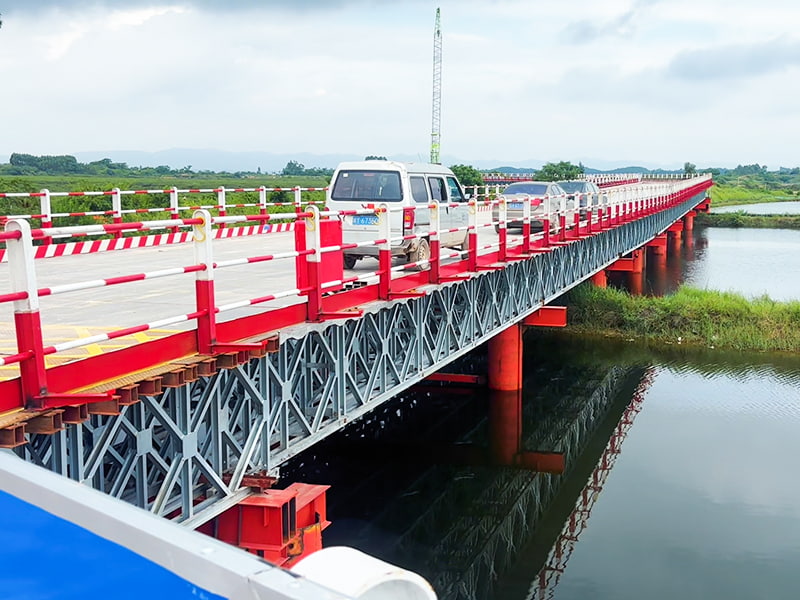
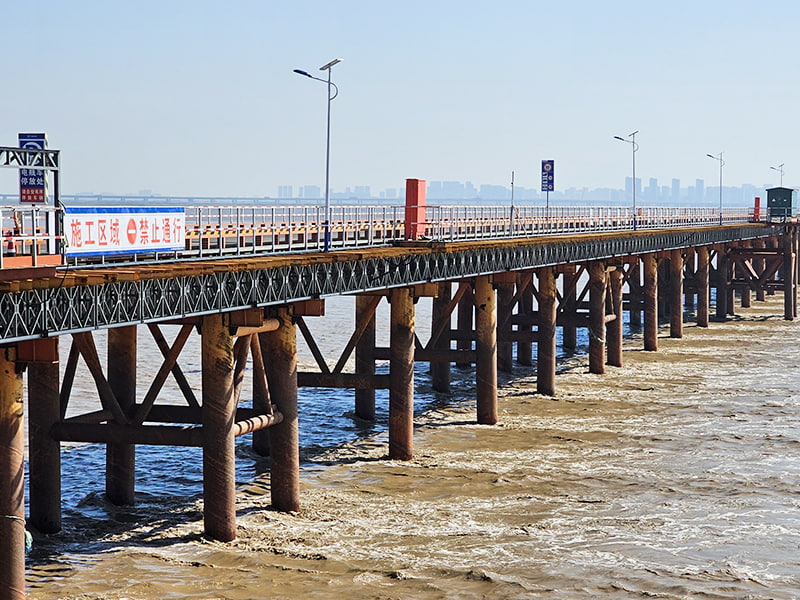
Large Span Galvanized Steel Approach Bridge
3. Advantages Compared with Conventional Approach Solutions
3.1 Faster Deployment than Fully Cast-in-Place Construction
Traditional cast-in-place approach structures may require extensive formwork, reinforcement installation, concrete curing, site preparation, and favorable weather conditions. These activities can increase the duration of a project and create logistical challenges, especially where the route must be opened quickly or where construction takes place over water.
A modular steel approach bridge can reduce the amount of work performed directly at the site. Its components are fabricated and prepared in a controlled manufacturing environment before being delivered to the project. Once the foundations, supports, or bearing locations are ready, the bridge can be assembled and installed using an organized erection sequence.
Faster deployment is especially important for emergency access, temporary construction roads, detour routes, and projects with strict traffic-management schedules. Shortening the installation period can reduce disruption to surrounding communities, water traffic, industrial operations, and other construction activities.
3.2 Greater Flexibility than Fixed-Geometry Structures
A conventional permanent approach may be designed for one exact location and may be difficult to modify if site conditions change. Modular steel construction offers a higher degree of flexibility. The arrangement can be adapted to different lengths, widths, support conditions, and project phases, provided the revised configuration is verified by engineering analysis.
This adaptability is valuable for contractors and infrastructure owners managing multiple projects. Components may be reused, extended, shortened, or combined with other modular systems. In temporary applications, the bridge can be dismantled and transported to another site after the original work is complete.
The ability to reuse structural components can improve asset utilization and reduce waste. It may also lower the total lifecycle cost when compared with a structure that has only one possible application.
3.3 Improved Corrosion Resistance
Unprotected steel is vulnerable to rust when exposed to moisture and oxygen. In coastal or humid environments, chloride contamination can accelerate corrosion and increase the frequency of repainting or steel repair. Galvanized steel provides a more durable protective approach for many outdoor applications.
The zinc layer protects the underlying steel through both barrier action and sacrificial behavior. If a small area is scratched, the surrounding zinc can offer localized protection to the exposed steel. This does not mean that severe mechanical damage can be ignored, but it does provide an additional level of resilience compared with an unprotected surface.
Lower corrosion risk can reduce inspection findings, coating repairs, component replacement, and operational interruptions. It can also improve confidence in the bridge when it is used in environments where maintenance access is difficult or where repair work would require traffic closure.
3.4 More Predictable Factory Quality
On-site steel fabrication can be affected by weather, restricted workspace, inconsistent equipment, limited inspection access, and variable labor conditions. Factory manufacturing allows structural components to be produced in a controlled environment using repeatable procedures and dedicated equipment.
Jiangsu Zhonghai Bridge Equipment Co., Ltd. integrates engineering design, precision steel fabrication, automated welding, and quality management within its manufacturing process. This integrated model supports consistent dimensions, controlled weld quality, traceable production, and more efficient inspection before shipment.
Factory-based production also makes it easier to use standardized jigs, fixtures, cutting systems, welding equipment, and dimensional-control procedures. These methods help reduce variation between components and support smoother assembly at the destination site.
3.5 Stronger Support for International Projects
Infrastructure projects often involve international standards, different transportation regulations, unfamiliar site conditions, and complex delivery schedules. A manufacturer with experience in global engineering support can contribute more than fabricated steel alone. It can assist with technical clarification, component organization, documentation, packaging, loading plans, erection guidance, and coordination with local contractors.
The company’s stated experience includes projects in coastal engineering, railway construction, emergency bridge deployment, major transportation corridors, and large public facilities. This background supports the development of practical solutions for clients who require reliable products and structured communication throughout the project lifecycle.
4. Advanced Manufacturing Process
4.1 Engineering Design and Project Review
The manufacturing process begins with a technical review of the project requirements. Important inputs include the required span, bridge width, design load, traffic type, environmental exposure, support arrangement, clearance requirements, transportation restrictions, erection method, and expected service period.
Engineers review the site conditions and determine how the modular bridge will interact with the main bridge, embankment, foundations, bearings, abutments, or temporary supports. They also consider construction staging and whether the bridge must remain operational while adjacent work continues.
Digital design tools can be used to develop structural models, verify member capacities, review connection forces, and check the overall geometry. Design coordination is important because even a strong bridge can face installation problems if the component dimensions, lifting points, deck levels, or connection positions do not match the site.
4.2 Material Selection and Preparation
Structural steel must be selected according to the required strength, weldability, toughness, coating compatibility, and environmental exposure. Incoming materials should be checked against the relevant specifications and project documentation before fabrication begins.
Steel preparation may include surface cleaning, plate or section cutting, edge preparation, drilling, profiling, and dimensional marking. Computer-controlled cutting equipment can improve accuracy and reduce material waste. Correct preparation is particularly important for connection components, where small dimensional errors can affect assembly and load transfer.
Material identification and traceability help ensure that the correct steel grade and component are used in the correct location. This is an important part of quality management for bridge projects, where structural reliability depends on the performance of every primary member and connection.
4.3 Precision Fabrication
During fabrication, plates, sections, diaphragms, bracing members, deck elements, connection assemblies, and other structural parts are formed and fitted according to approved drawings. The use of standardized production procedures helps maintain consistency across repeated modular units.
Dimensional control is performed throughout the process rather than only at the end. Checks may include member length, hole position, alignment, squareness, camber, connection geometry, and assembly fit. Early correction is more efficient than discovering an issue after surface treatment or delivery.
Precision fabrication is especially important for modular bridges because the components must fit together at the construction site with limited adjustment. Accurate parts support faster erection and reduce the likelihood of field modifications that could affect the coating system or structural integrity.
4.4 Automated and Controlled Welding
Welding is a critical manufacturing activity because welded joints transfer forces between plates, sections, stiffeners, and connection assemblies. Jiangsu Zhonghai Bridge Equipment Co., Ltd. uses automated welding and standardized welding workflows to improve repeatability and production efficiency.
Automated welding can provide consistent travel speed, heat input, deposition, and weld geometry when properly configured. It is particularly useful for repetitive welds on standardized components. Manual welding remains important for complex areas and finishing operations, but it should be performed by qualified personnel using approved procedures.
Welding quality management may include procedure qualification, welder qualification, preheating where required, interpass temperature control, visual inspection, dimensional inspection, and non-destructive testing according to project specifications. These controls help identify surface defects, incomplete fusion, porosity, cracking, or other conditions that could affect performance.
4.5 Galvanizing and Surface Protection
After fabrication and inspection, steel components can undergo galvanizing preparation. This usually involves cleaning and surface treatment so that the zinc coating can bond effectively to the steel. Fabrication details must also allow proper drainage and venting during the treatment process.
The galvanizing process creates a protective zinc coating over exposed steel surfaces. Coating thickness, appearance, adhesion, and coverage should be assessed according to the applicable specification. Areas such as connection interfaces, edges, holes, and welded zones require careful attention because they can influence both coating quality and future durability.
After galvanizing, components should be handled, stacked, and packaged in ways that minimize abrasion, impact, and trapped moisture. Proper storage and transportation practices are important because even a durable coating can be damaged by careless handling.
4.6 Final Inspection and Shipment Preparation
Before shipment, the manufacturer reviews the completed components against engineering drawings, bills of materials, quality records, coating requirements, and packaging plans. Components are organized so that the installation team can identify and access them efficiently at the site.
Shipment preparation may include labeling, bundling, protective packing, loading calculations, lifting-point identification, and the preparation of assembly documentation. Modular bridge projects benefit greatly from organized packing because missing or difficult-to-identify components can delay erection and increase site costs.
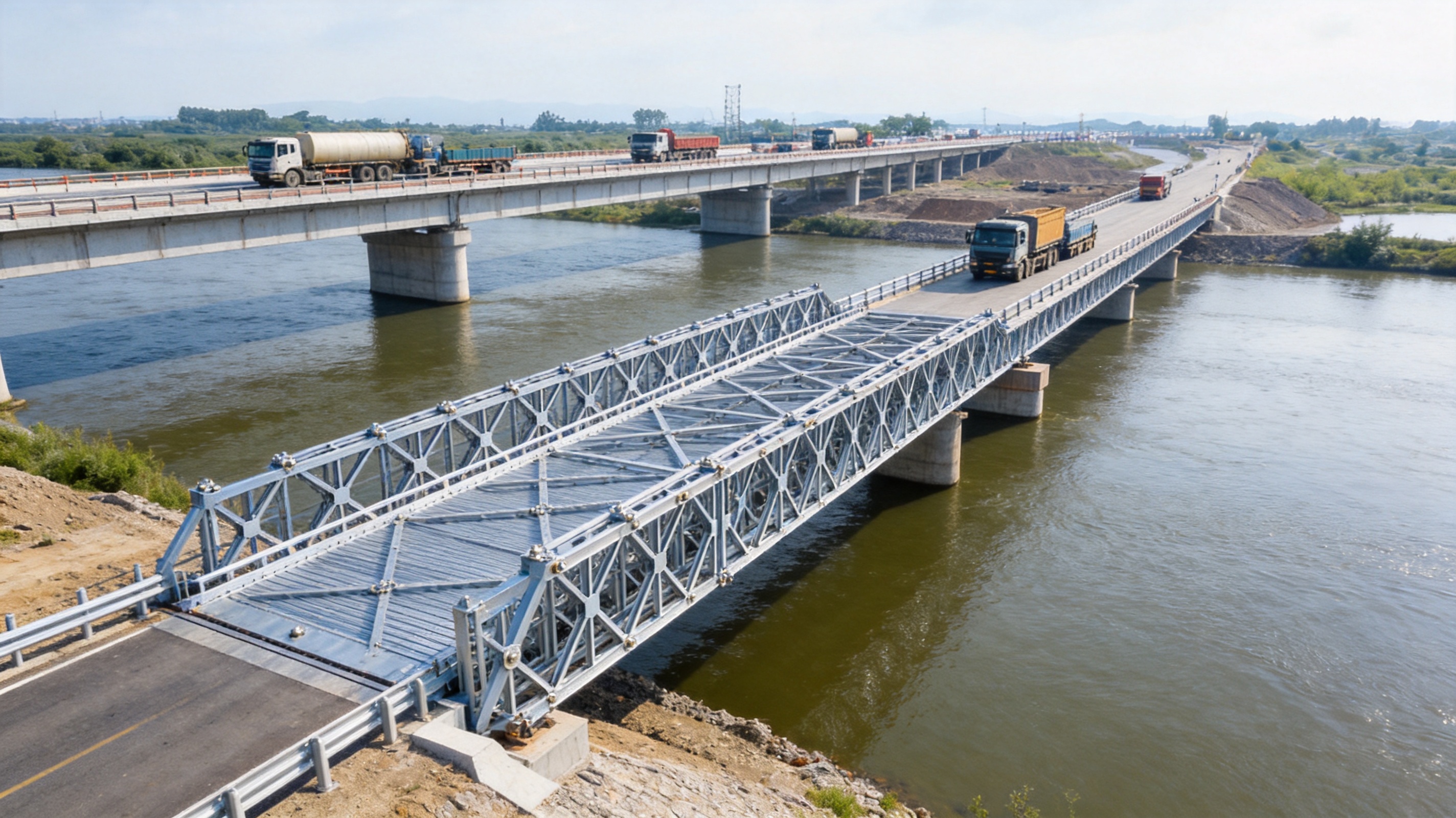
5. Company Manufacturing Strengths
Jiangsu Zhonghai Bridge Equipment Co., Ltd. is based in Zhenjiang, Jiangsu Province, an important industrial and transportation region in China. Its location supports access to manufacturing resources, transportation networks, engineering talent, and domestic and international logistics channels.
The company specializes in modular steel bridges, Bailey bridge systems, customized steel components, bridge erection and construction support equipment, automated welding, and precision steel fabrication. This product and service range allows it to approach bridge projects as integrated engineering assignments rather than isolated component orders.
One of the company’s strengths is the combination of design and production capabilities. When engineering teams understand manufacturing limitations, they can develop components that are easier to fabricate, inspect, transport, and assemble. When production teams are involved in technical coordination, they can identify potential problems before fabrication begins.
Another strength is the use of standardized workflows. Standardization supports repeatability, reduces unnecessary variation, improves production planning, and allows components to be manufactured efficiently for different project configurations. At the same time, modular bridge systems can be customized in terms of arrangement, loading, dimensions, and accessories where required.
The company also emphasizes compliance with ASTM, EN, and national specifications. The specific standard applied to a project should be agreed upon during design and procurement, but the ability to work with recognized international specifications is valuable for overseas infrastructure clients, engineering consultants, government agencies, and contractors.
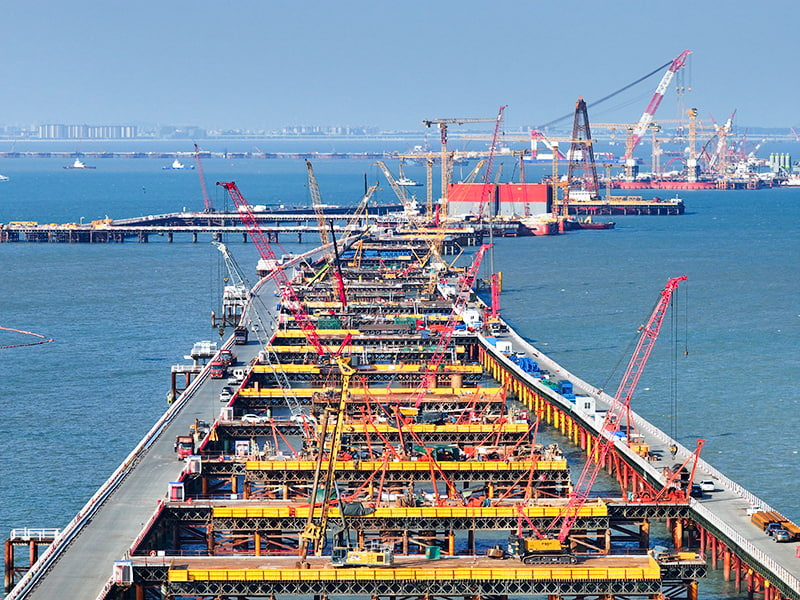
Its project experience includes coastal engineering in the Maldives, temporary access bridges associated with the Shenzhen–Zhongshan Corridor, structural components for the Hangzhou Expo Center, multi-span Bailey bridges for the Lalin Railway, and emergency bridge deployments in flood-response situations. These applications demonstrate experience across permanent, temporary, transportation, coastal, railway, and emergency environments.
6. Applications of the Galvanized Steel Approach Bridge
6.1 Main Bridge Approaches
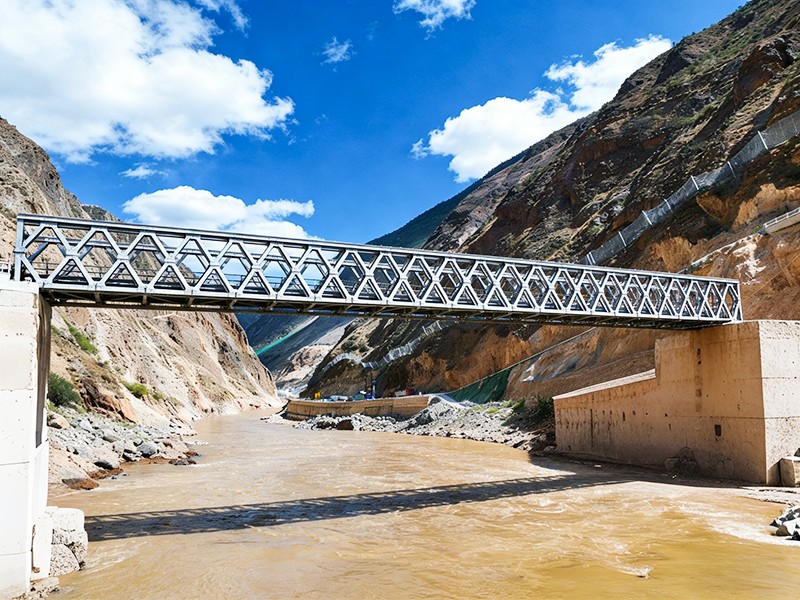
The primary application is the connection between a main bridge and the land-based road or embankment. The approach bridge can help maintain roadway continuity where the main structure crosses a river, channel, wetland, or other obstacle.
Its modular arrangement can be adapted to the project geometry and may be used as a permanent, semi-permanent, or temporary structure depending on the design, materials, foundation system, and owner requirements. The final application should always be confirmed through engineering review and local approval procedures.
6.2 Construction Access
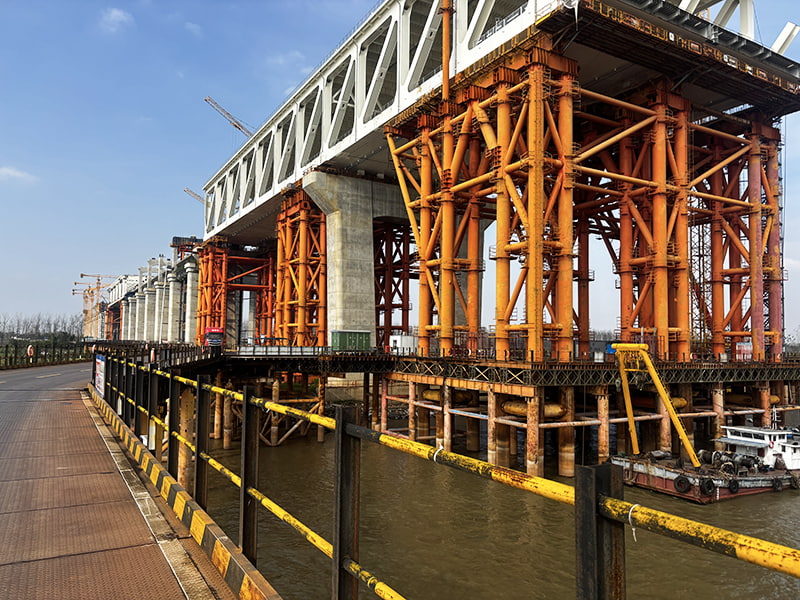
Large infrastructure projects often need temporary routes for cranes, trucks, excavators, concrete vehicles, steel deliveries, and other construction equipment. A modular steel approach bridge can provide a stable crossing over drainage channels, excavation zones, uneven ground, and active work areas.
Because it can be assembled and dismantled, the bridge is suitable for projects where access requirements change between construction phases. It may support material delivery during foundation work, serve as a temporary route during main bridge construction, and later be relocated or removed when permanent access is available.
6.3 Emergency and Disaster Response
Floods, storms, landslides, earthquakes, and infrastructure failures can isolate communities and interrupt the transport of food, medical supplies, fuel, rescue equipment, and construction materials. A modular approach bridge can be deployed as part of an emergency access strategy when rapid restoration is essential.
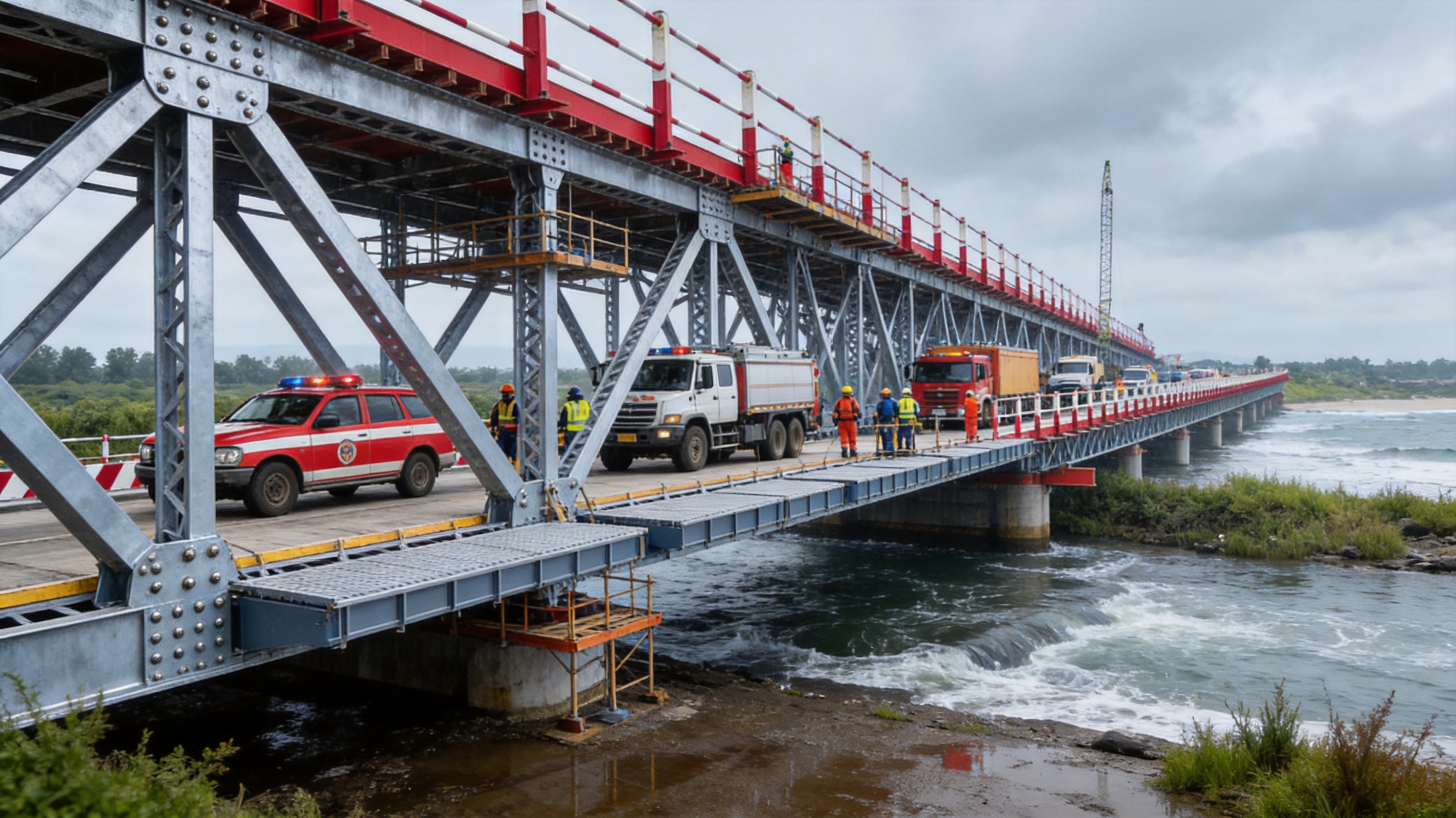
Its prefabricated components and standardized assembly approach can help reduce the time required to establish a crossing. Galvanized protection is also useful when the bridge must operate in wet or exposed conditions. Emergency projects still require professional site assessment, load control, safe erection, and inspection before traffic is permitted.
6.4 Coastal and Water-Conservancy Projects
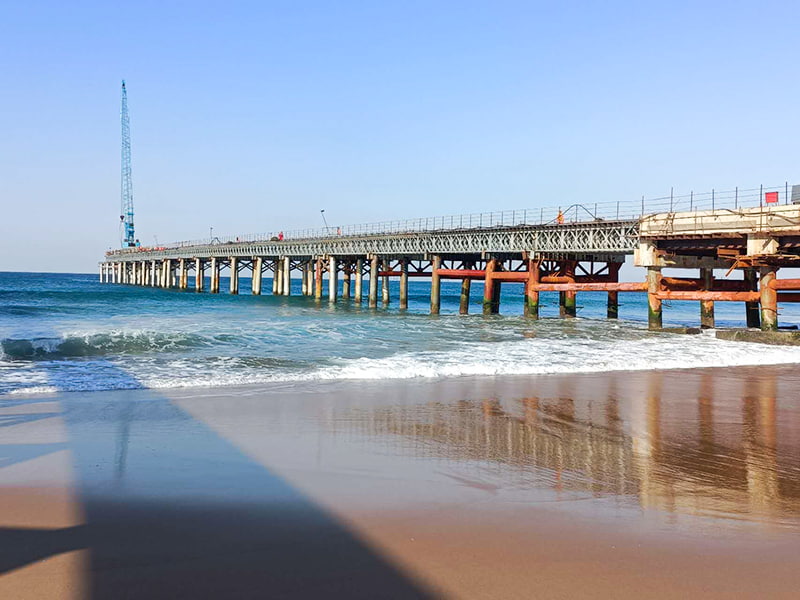
Coastal engineering and water-conservancy projects often involve high humidity, salt mist, fluctuating water levels, soft ground, and restricted access. The corrosion-resistant steel approach bridge can provide a reliable connection between land-based facilities, work platforms, embankments, and structures over or beside water.
The modular system may be used for construction access, maintenance routes, temporary crossings, and permanent transportation links. Drainage, foundation stability, tidal action, wave conditions, and environmental regulations must be considered during project design.
6.5 Railway and Heavy-Logistics Support
Infrastructure projects associated with railways and heavy logistics may require stronger access routes than standard pedestrian or light-vehicle bridges. The approach bridge can be considered for applications involving heavy equipment, construction traffic, and material transport when the structural configuration is designed for the applicable load model.
The Track-50 reference included among the potential load standards indicates that the system may be evaluated for demanding track-related or heavy-load conditions. The actual use of the bridge for railway traffic or rail construction support requires detailed design, track interface coordination, and approval by the responsible railway authority.
7. Design and Installation Considerations
7.1 Site Investigation
A successful approach bridge begins with an accurate understanding of the site. Engineers should review soil conditions, groundwater, flood levels, water flow, bank stability, road alignment, existing utilities, construction access, and environmental constraints.
Uneven settlement at the approach interface can create discomfort, impact loads, drainage problems, and additional stress in the bridge. The support and foundation arrangement should therefore be designed to accommodate expected ground movement and to maintain the required deck elevation.
7.2 Span and Support Arrangement
The required span should be determined from the crossing geometry, support locations, clearance requirements, construction sequence, and environmental restrictions. A longer span may reduce the number of supports, but it can also increase member forces, lifting requirements, and transportation considerations.
Intermediate supports may be used where they provide an economical and stable solution. However, in waterways or active construction zones, minimizing supports may be desirable. The optimum arrangement is the result of structural analysis and site planning rather than span length alone.
7.3 Deck and Traffic Requirements
The deck must be selected according to vehicle type, traffic frequency, wheel loads, speed, surface conditions, drainage, and maintenance requirements. A bridge used by construction trucks may require different deck features from one used for regular public traffic or emergency vehicles.
Traffic safety features may include guardrails, curbs, anti-skid surfaces, edge protection, lighting provisions, warning signs, and controlled entry points. Pedestrian and vehicle movements should be separated where possible, especially on busy construction sites or emergency routes.
7.4 Erection Method
Modular bridges can be assembled using methods such as crane lifting, incremental launching, temporary support erection, or other site-specific procedures. The selected method depends on the available equipment, access conditions, overhead clearance, waterway restrictions, and project schedule.
Erection planning should consider temporary stresses, lifting points, wind conditions, component stability, connection sequence, and exclusion zones. The bridge may be safe in its completed condition but vulnerable during partial assembly, so temporary bracing and staged inspection are essential.
7.5 Connection Inspection
Bolted and welded connections must be inspected before the bridge is opened to traffic. Bolts should be checked for the correct grade, placement, tightening, and locking arrangements. Welded areas should be reviewed according to the approved inspection plan.
Connection inspection is particularly important in modular structures because the bridge’s performance depends on the correct interaction of many individual components. A missing bolt, incorrectly positioned bracing member, or damaged connection plate can affect load distribution and structural stability.
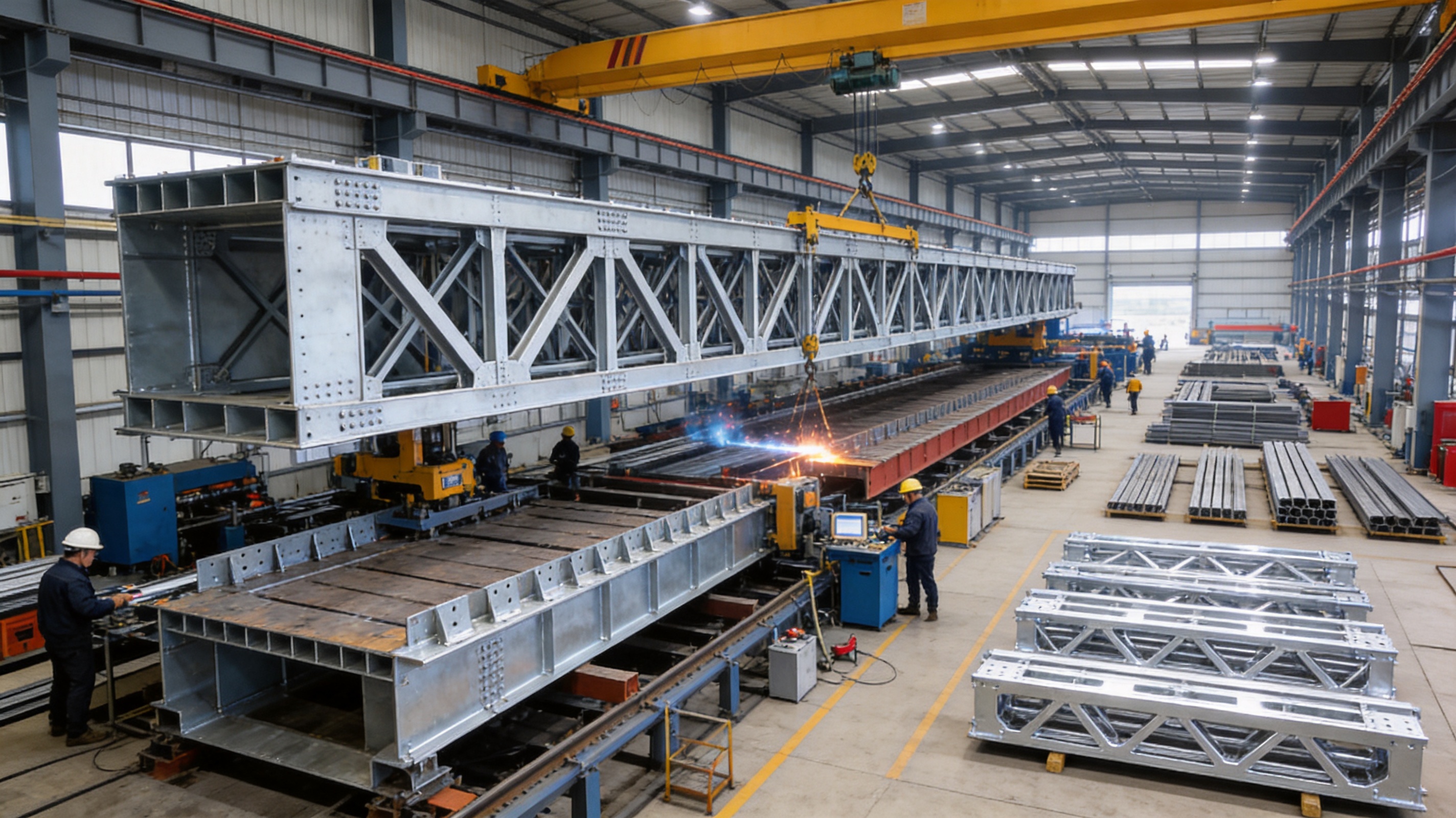
8. Lifecycle Performance and Maintenance
Galvanizing helps reduce corrosion-related maintenance, but it does not remove the need for regular inspection. Owners should establish a maintenance program based on the bridge’s location, traffic intensity, exposure conditions, design life, and operational importance.
Routine inspections may include checks for coating damage, deformation, loose fasteners, damaged deck elements, blocked drainage, unusual vibration, settlement, impact damage, and changes in support conditions. Areas that collect water, mud, leaves, or debris should receive special attention because trapped moisture can contribute to localized corrosion.
After severe weather, flooding, collision, or abnormal loading, the bridge should be inspected before normal traffic resumes. Emergency and temporary bridges can experience unexpected forces from floating debris, high water, construction equipment, or unauthorized overloading.
Maintenance records should document inspection dates, findings, repairs, coating condition, component replacements, traffic restrictions, and unusual events. A clear record helps owners identify recurring problems and plan preventive work before a minor issue becomes a major structural or operational concern.
When properly designed, manufactured, installed, and maintained, a galvanized modular steel approach bridge can offer strong lifecycle value. Its value comes not only from initial structural capacity but also from its adaptability, reusability, repairability, transport efficiency, and resistance to outdoor exposure.
9. Performance Comparison with Alternative Bridge Types
| Evaluation Factor | Galvanized Modular Steel Approach Bridge | Untreated Temporary Steel Structure | Cast-in-Place Concrete Approach | Lightweight Access Platform |
|---|---|---|---|---|
| Deployment flexibility | High; modular units can be configured and relocated | Moderate; often requires additional field treatment | Low; usually designed for one fixed location | High, but generally limited to lighter loads |
| Corrosion resistance | High when galvanizing and detailing are properly specified | Low to moderate, depending on paint and maintenance | Good overall, but reinforcement and cracking require control | Varies by material and coating system |
| Construction speed | Fast after foundations and supports are prepared | Moderate, with more field preparation possible | Slow because of formwork, curing, and site operations | Very fast for short and light-duty applications |
| Heavy-load capability | Can be engineered for HS, HL-93, Track-50, and other requirements | Depends heavily on design and condition | High when properly designed | Usually limited to pedestrian or light vehicles |
| Reuse potential | High; components may be dismantled and redeployed | Moderate, depending on damage and corrosion | Low; generally not reusable after removal | Moderate for small access routes |
| Site fabrication requirement | Relatively low due to factory production | Moderate to high | High | Low |
| Suitability for difficult access locations | Good when components can be transported individually | Moderate | Potentially difficult because of equipment and material demands | Good for limited loads and short distances |
The comparison shows why galvanized modular steel is attractive for projects that require a balance of strength, speed, durability, and flexibility. Concrete may provide excellent permanence in a suitable setting, but it usually involves a longer construction cycle and less opportunity for relocation. Lightweight platforms may be easy to install but are not intended for heavy traffic or large-span applications. Untreated temporary steel can be economical initially, but its durability depends more heavily on painting and maintenance.
10. Customization and Engineering Support
Although the product is based on a modular system, every project should be reviewed individually. Customization may involve span length, deck width, bridge alignment, load capacity, railing arrangements, approach transitions, support details, surface treatment, access stairs, pedestrian walkways, or integration with an existing bridge.
Engineering support should address both the structural system and the installation plan. The bridge supplier should receive accurate information about site conditions, traffic requirements, expected loads, construction equipment, environmental exposure, delivery restrictions, and local regulations.
For international projects, documentation may include general arrangement drawings, component schedules, material certificates, welding records, coating records, inspection reports, packing lists, erection manuals, and maintenance recommendations. Clear documentation improves communication between the manufacturer, consultant, contractor, and owner.
OEM manufacturing is also valuable for clients that need bridge components under their own project specifications or procurement programs. A capable OEM supplier can manufacture standardized systems, adapt designs to local requirements, and support private-label or project-specific delivery while maintaining production controls.
11. Why Choose a Professional Modular Bridge Manufacturer?
A bridge is a safety-critical structure. Selecting a supplier based only on the lowest initial price can create risks related to material quality, engineering accuracy, coating durability, connection compatibility, documentation, and after-sales support. A professional manufacturer adds value throughout the complete process.
First, the manufacturer should be able to understand the engineering purpose of the bridge rather than simply produce isolated steel parts. It should review loads, geometry, supports, erection methods, and environmental conditions before confirming the product configuration.
Second, the manufacturer should have adequate production capacity and quality systems. Industrial-scale manufacturing, precision cutting, automated welding, controlled assembly, and systematic inspection reduce the chance of inconsistent or incomplete fabrication.
Third, the manufacturer should be familiar with recognized national and international specifications. This capability helps clients coordinate bridge requirements with consultants, government agencies, contractors, and inspection authorities.
Fourth, the supplier should support logistics and erection. Modular bridge projects are highly dependent on correct packing, component identification, delivery sequence, and installation instructions. A technically sound bridge can still experience avoidable delays if these details are poorly managed.
Jiangsu Zhonghai Bridge Equipment Co., Ltd. positions itself as an engineering solutions provider with capabilities in design, manufacturing, quality management, bridge construction support, and international delivery. Its product range and project background allow it to serve customers seeking Bailey bridge systems, modular steel structures, and customized access solutions.
12. Frequently Asked Questions
12.1 What is a galvanized steel approach bridge?
A galvanized steel approach bridge is a modular steel structure used to connect a main bridge with land, an embankment, a work platform, or another transportation route. Its steel components receive a zinc-based protective coating to improve resistance to rust and outdoor exposure.
12.2 What is the main purpose of an approach bridge?
The main purpose is to create a safe and stable transition between the main bridge and the surrounding road or site infrastructure. It supports the movement of vehicles, construction equipment, pedestrians, or emergency supplies, depending on the project design.
12.3 Can the bridge be used in coastal areas?
Yes, the galvanized approach bridge is suitable for consideration in coastal and high-humidity environments because galvanizing improves resistance to atmospheric corrosion and salt mist. The final corrosion protection system should be selected according to the site exposure classification and project service-life requirements.
12.4 Can the bridge be used for emergency access?
Yes. Its modular structure and prefabricated components make it suitable for emergency access, flood response, disaster recovery, and temporary detour routes. Site inspection, foundation verification, load assessment, and safe erection remain necessary before opening the bridge to traffic.
12.5 What load standards can be considered?
The product design can be evaluated against load models including HS-15, HS-20, HS-25, HL-93, and Track-50. The correct load model depends on the intended traffic, local codes, bridge geometry, and project specifications. Engineers should confirm the final design basis for each order.
12.6 Is the bridge reusable?
Modular steel components can generally be dismantled and reused when they remain within acceptable structural and coating conditions. Reuse requires inspection, assessment of any damage or deformation, and verification that the new arrangement satisfies the requirements of the next project.
12.7 How does galvanizing reduce maintenance?
Galvanizing protects steel from moisture and oxygen and provides sacrificial protection in certain localized damage conditions. This can reduce the frequency of corrosion-related repairs and repainting. Regular inspection is still required, particularly at joints, drainage areas, impact zones, and locations where debris or water may accumulate.
12.8 Can the bridge be customized?
Yes. Modular systems can be adapted in terms of span, width, deck arrangement, loading, support configuration, railings, access components, and project-specific connection details. Customization should be completed through engineering review and approved drawings.
12.9 What information is needed for a quotation?
Useful information includes the required span, roadway or walkway width, design load, traffic type, site location, environmental conditions, support arrangement, clearance requirements, expected service period, delivery destination, and preferred erection method. Site drawings, photographs, and geotechnical information are also helpful.
12.10 Does the manufacturer provide installation support?
The manufacturer can provide technical coordination, component information, erection documentation, and construction support according to the project arrangement. The exact level of on-site assistance should be agreed upon during contracting and project planning.
13. Procurement Checklist
Before ordering a galvanized steel approach bridge, the project owner or contractor should confirm the design load, operating conditions, bridge dimensions, foundation requirements, construction sequence, and approval procedures. A complete procurement checklist helps prevent delays and ensures that the supplied structure matches the intended use.
The first item is the traffic classification. The bridge should be identified as a pedestrian, light-vehicle, highway, construction, emergency, railway-support, or heavy-logistics structure. The selected load model must correspond to the actual traffic and any exceptional vehicles that may use the route.
The second item is the environmental exposure. Coastal salt mist, high humidity, industrial pollution, standing water, freeze-thaw cycles, and abrasive dust can influence the required coating and maintenance program. The supplier should receive accurate environmental information.
The third item is the site interface. The approach bridge must connect correctly with the main bridge deck, road surface, embankment, abutment, or temporary platform. Elevation, alignment, bearing positions, expansion movement, drainage, and edge protection should be coordinated before fabrication.
The fourth item is the logistics plan. Component sizes, transportation routes, unloading equipment, storage areas, lifting capacity, and delivery sequence should be reviewed. Modular construction is most effective when the site is prepared before the bridge components arrive.
The fifth item is documentation and inspection. The procurement package should identify required drawings, material certificates, welding records, galvanizing records, inspection reports, packing lists, installation instructions, and maintenance information.
14. Conclusion
The Large Span Galvanized Steel Approach Bridge provides a strong and adaptable solution for connecting main bridges with land-based routes, construction areas, embankments, and emergency access points. Its modular steel design supports flexible configuration, efficient transportation, rapid assembly, and possible reuse. Its galvanized surface treatment improves resistance to rust and weathering, making it suitable for humid, coastal, flood-prone, and otherwise demanding outdoor environments.
The bridge can be evaluated for a broad range of load requirements, including HS-15, HS-20, HS-25, HL-93, and Track-50, subject to project-specific engineering. This load adaptability allows it to serve transportation, construction, railway-support, emergency-response, and water-conservancy applications.
Its advantages are strengthened by the manufacturing capabilities of Jiangsu Zhonghai Bridge Equipment Co., Ltd. The company combines engineering design, precision fabrication, automated welding, galvanized protection, quality management, and international project support. Its experience with modular bridge systems and engineered steel structures enables it to provide both standardized products and customized OEM solutions.
For owners and contractors seeking a durable, efficient, and flexible bridge connection, a galvanized modular approach bridge offers a practical alternative to less durable temporary steel, slow cast-in-place construction, or lightweight platforms with limited load capacity. With correct design, professional manufacturing, controlled erection, and regular inspection, it can help create safer and more efficient connections for infrastructure projects worldwide.
References
American Association of State Highway and Transportation Officials. LRFD Bridge Design Specifications.
American Society for Testing and Materials. Standard Specifications for Structural Steel and Protective Coatings.
European Committee for Standardization. Eurocode 3: Design of Steel Structures.
International Organization for Standardization. Hot Dip Galvanizing and Corrosion Protection Guidance.
American Institute of Steel Construction. Specification for Structural Steel Buildings.
International Federation for Structural Concrete. Guidance on Bridge Durability and Maintenance.
Manufacturer-provided technical information for modular steel bridges, galvanized approach bridges, Bailey bridge systems, and engineered structural components.
Product: Large Span Galvanized Steel Approach Bridge

We respond quickly to all international requests and provide technical support when needed.
Product Category
Bailey Bridge/Modular Bridge Modular Steel Bridge Pedestrian Bridge Modular Pipe Bridge Truss Bridge Steel StructureContact Us

+86-511-84522866
+86-13921582699

zhwm@zjql.com

Building 1,83#, dantu New Town, Yanjiang Road, Dantu District, Zhenjiang, Jiangsu, China
Copyright © Jiangsu Zhonghai Bridge Equipment Co., Ltd. All
Rights
Reserved
China bailey bridge for sale
bailey bridge supplier from china
