
 English
 русский
 Español
 Português


Luo Shiqing — Product After-Sales Service Supervisor
Galvanized Customized Bailey Bridges for Reliable Infrastructure in Challenging Environments
Content
- 1 Introduction
- 2 What Is a Customized Bailey Bridge?
- 3 Project-Specific Design for Nicaragua
- 4 Core Structural Components
- 5 Advantages of Hot-Dip Galvanizing
- 6 Controlled Material Selection and Production
- 7 Advanced Welding and Fabrication Capabilities
- 8 Factory Pre-Assembly and Trial Fitting
- 9 Why Pre-Assembly Improves On-Site Construction
- 10 Competitive Advantages Over Conventional Bridge Solutions
- 11 Comparison of Bridge Solution Characteristics
- 12 Manufacturing Strengths of the Supplier
- 13 Quality Management from Design to Shipment
- 14 Installation Considerations
- 15 Lifecycle Performance and Maintenance
- 16 Applications Beyond the Nicaragua Project
- 17 How Customers Can Select the Right Configuration
- 18 Q&A
- 18.1 What is the main advantage of a customized galvanized Bailey bridge?
- 18.2 Why was the Nicaragua bridge pre-assembled at the factory?
- 18.3 Does factory pre-assembly replace on-site inspection?
- 18.4 How does hot-dip galvanizing protect the bridge?
- 18.5 Can a Bailey bridge be used as a permanent bridge?
- 18.6 Can the bridge width and load capacity be customized?
- 18.7 What kinds of projects can use this bridge system?
- 18.8 What does the manufacturer provide besides the main panels?
- 18.9 How can customers reduce installation problems?
- 18.10 What makes an experienced modular bridge supplier valuable?
- 19 Conclusion
- 20 References
- 21 Product: Galvanized Customized Bailey Bridge
Introduction
Infrastructure projects often require bridge systems that can be delivered quickly, adapted to local conditions, and assembled with dependable results. In regions where permanent concrete construction may require long lead times, extensive site preparation, or difficult transportation arrangements, modular steel bridges provide an efficient alternative. A customized galvanized Bailey bridge combines standardized structural components with project-specific engineering, allowing contractors and public agencies to obtain a bridge solution that is practical, durable, and suitable for demanding construction environments.
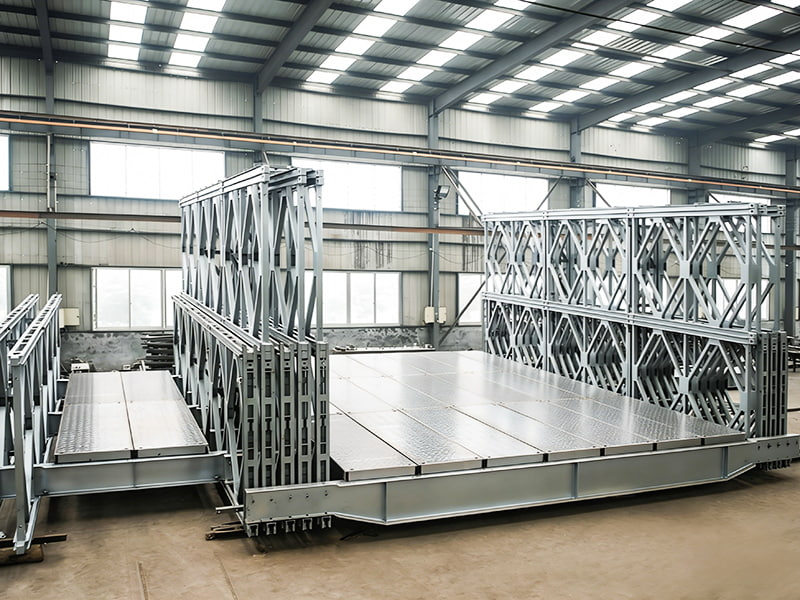
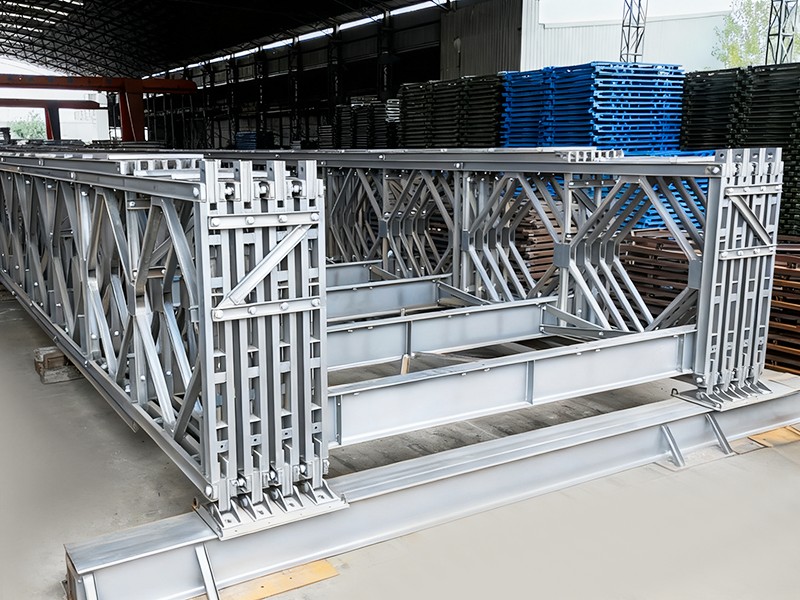
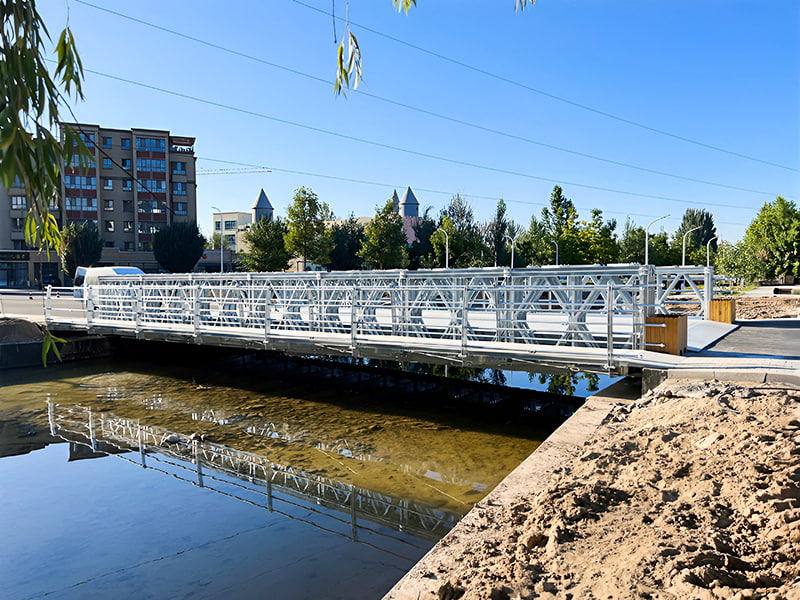
The galvanized customized Bailey bridge produced for a Nicaragua project demonstrates how a modular bridge system can be adapted to local geographical conditions, traffic requirements, and construction needs. The bridge has completed full factory production and pre-assembly before shipment. This process is important because it allows the manufacturer to verify component compatibility, inspect structural connections, identify potential issues, and reduce the amount of work required at the project site.
Unlike a basic temporary bridge assembled directly from unverified components, a professionally engineered modular bridge benefits from standardized production, controlled fabrication, factory inspection, surface protection, and trial assembly. These features contribute to faster installation, better construction predictability, and improved long-term performance. The hot-dip galvanized surface further enhances resistance to corrosion, making the bridge more appropriate for humid, rainy, coastal, and tropical environments.
Jiangsu Zhonghai Bridge Equipment Co., Ltd. specializes in modular steel bridges, Bailey bridge systems, structural steel components, and related engineering support. Its manufacturing approach combines design coordination, material control, precision fabrication, automated welding, quality management, and factory pre-assembly. This integrated process enables the company to provide not only bridge components but also a complete and coordinated structural solution for international infrastructure, emergency response, transportation, water conservancy, and construction access projects.
Galvanized Customized Bailey Bridge
What Is a Customized Bailey Bridge?
A Bailey bridge is a modular steel bridge system constructed from prefabricated panels, longitudinal beams, transoms, decks, bracing members, connections, and supporting components. Its defining characteristic is the use of standardized modules that can be transported individually and assembled on-site using bolted connections and established erection procedures. Because the system is modular, bridge length, width, load capacity, and configuration can be adjusted according to project requirements.
A customized Bailey bridge retains the advantages of the standard modular system while incorporating engineering modifications for a specific project. Customization may involve the number of bridge panels, roadway width, pedestrian walkway arrangement, design loading, span configuration, approach structure, support conditions, deck type, corrosion protection, and connection details. It may also include adaptations for local transportation restrictions, river crossings, flood conditions, construction equipment, and anticipated vehicle or pedestrian traffic.
For the Nicaragua project, customization was based on the intended local application and the geographic and traffic conditions of the project area. The core Bailey panels and associated connections, fixations, and supporting components were manufactured as a coordinated system. This approach is valuable because a bridge is not simply a collection of individual steel parts. Every panel, bolt, connection, brace, and deck element must work together to transfer loads safely through the structure and into the foundations or supports.
Standardization and customization are not contradictory. Standardized components make manufacturing, inspection, replacement, and transportation more efficient. Custom engineering ensures that those standardized components are arranged and adapted to meet the actual needs of a project. The result is a bridge that can be produced efficiently without sacrificing the flexibility required for different site conditions.
Project-Specific Design for Nicaragua
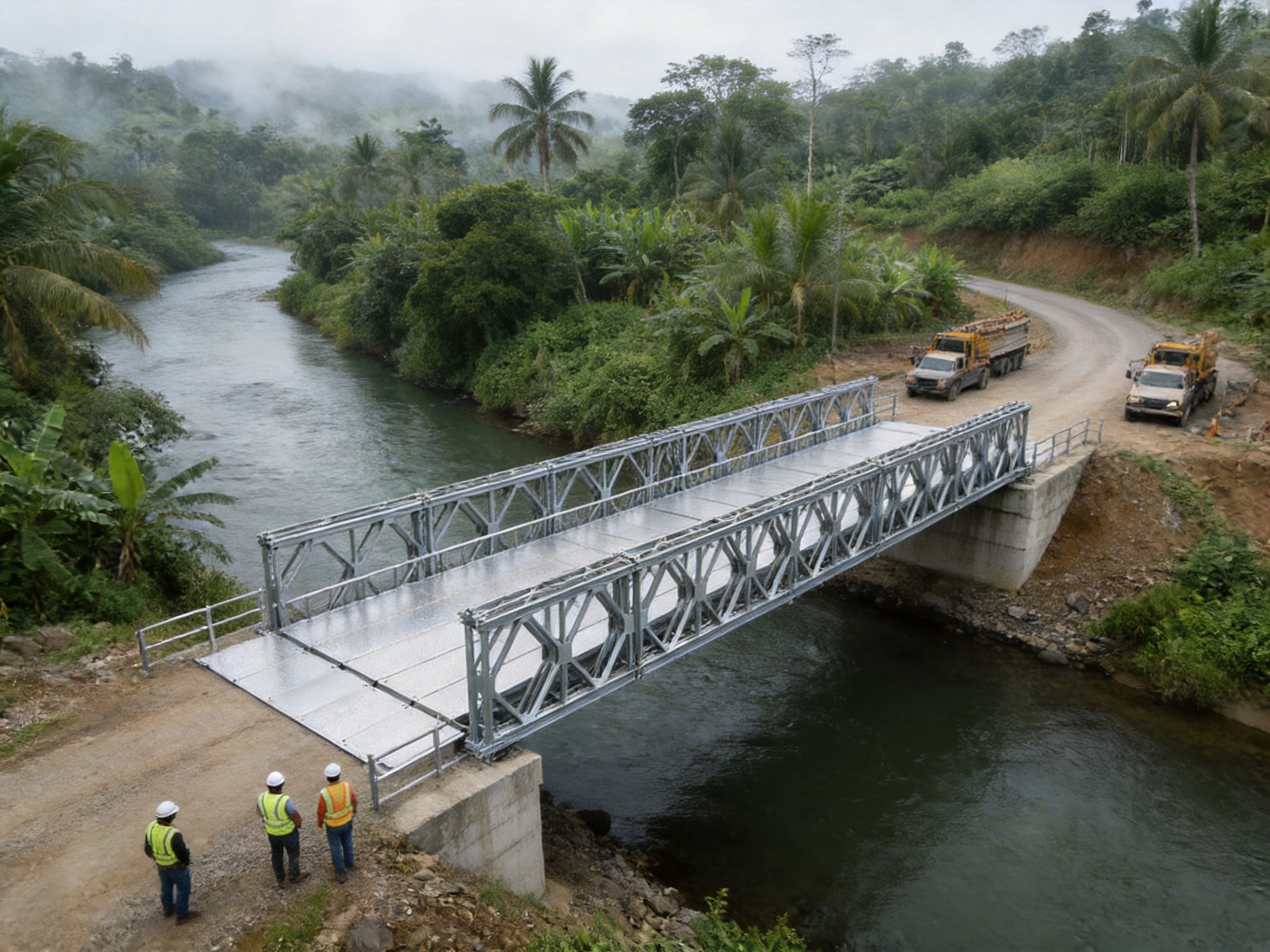
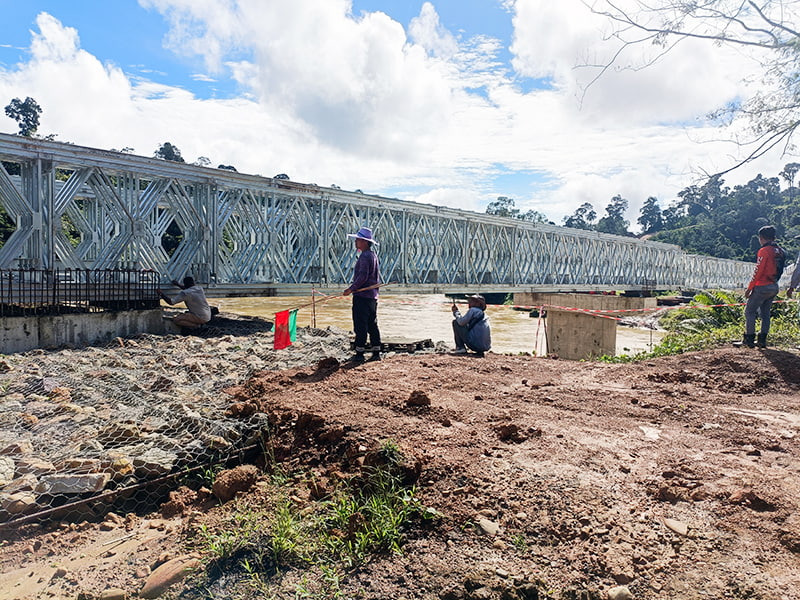
Bridge projects in Nicaragua may face a combination of high rainfall, seasonal flooding, humid air, intense sunlight, challenging transportation routes, and varying ground conditions. In some locations, bridge construction must also account for limited access to heavy lifting equipment, remote work areas, or a need to maintain local traffic during construction. A modular steel bridge can address these challenges when its design and delivery are carefully coordinated.
The customized bridge was developed to meet the requirements of the local project rather than relying on an unsuitable standard arrangement. The engineering process considers the required crossing length, traffic type, expected load, bridge width, site access, erection sequence, and support conditions. These factors influence the selection and layout of the modular panels and supporting steel components.
A project-specific arrangement can also improve construction efficiency. For example, a bridge intended for construction vehicles may require a different deck and load arrangement from a pedestrian crossing. A bridge serving local traffic may need a wider carriageway, stronger lateral bracing, and improved approach transitions. A bridge located in a wet or coastal environment may require enhanced corrosion protection. By addressing these factors before production, the manufacturer can reduce the likelihood of costly modifications after shipment.
Design adaptation is especially important for international projects because the site environment, construction practices, available equipment, and regulatory expectations may differ from those of the manufacturing location. A reliable supplier must therefore combine standardized production capacity with the ability to communicate technical details, prepare accurate drawings, coordinate shipping requirements, and provide practical erection guidance.
Core Structural Components
Bailey Panels
Bailey panels form the principal longitudinal load-carrying units of the bridge. Their truss configuration provides strength while maintaining a relatively manageable component size for transportation and assembly. Multiple panels can be connected side by side and end to end to create different bridge widths, lengths, and structural arrangements.
The quality of the panels directly affects the performance of the completed bridge. Accurate dimensions, consistent hole locations, proper weld quality, and controlled material properties are essential for achieving reliable connections and correct structural alignment. The use of standardized panel production also makes it easier to replace damaged components or expand the bridge system in the future.
Transoms and Stringers
Transoms support the deck system and distribute loads between the side trusses. Stringers or longitudinal deck members transfer vehicle and pedestrian loads to the transoms and main panels. Their arrangement must be coordinated with the deck material, expected loading, bridge width, and required stiffness.
Precise fabrication of these members helps maintain a level and stable deck. Inaccurate dimensions can create installation difficulties, uneven load distribution, or unwanted stress concentrations. Factory-controlled production minimizes these risks and supports a smoother erection process.
Connections and Fixings
Bolted connections, pins, braces, fasteners, and other fixing components are essential to the structural integrity of a modular bridge. These parts must be produced and supplied as a coordinated package. Correct bolt grades, hole alignment, connection geometry, and tightening procedures all contribute to the performance of the finished structure.
The Nicaragua bridge project included the manufacture of various connection, fixation, and supporting components by the same company responsible for the primary panels. This integrated supply arrangement reduces the possibility of mismatched parts and simplifies project coordination. It also allows the manufacturer to maintain more consistent quality control across the entire bridge system.
Deck and Supporting Elements
The deck is the interface between the bridge and its users. Depending on the application, a modular bridge may incorporate steel deck panels, reinforced roadway elements, pedestrian flooring, anti-slip surfaces, guardrails, curbs, or maintenance walkways. Supporting elements may include bearings, approach components, bracing assemblies, ramps, and temporary erection equipment.
Each supporting component contributes to the overall usability of the bridge. A bridge that is structurally strong but difficult to access, poorly protected against vehicle impact, or unsuitable for local traffic cannot provide a complete infrastructure solution. For this reason, customized bridge design must consider the full operating environment rather than only the main truss.
Advantages of Hot-Dip Galvanizing
Corrosion is one of the most important threats to steel bridge durability. Moisture, oxygen, salts, industrial pollutants, and repeated wet-dry cycles can gradually reduce the thickness and strength of unprotected steel. Tropical and coastal environments may accelerate this process, especially when bridge components are exposed to heavy rainfall, high humidity, standing water, or airborne salt.
Hot-dip galvanizing protects steel by immersing prepared components in molten zinc. During the process, metallurgical reactions form zinc-iron alloy layers that are firmly bonded to the steel substrate, along with an outer zinc layer. This coating provides both barrier protection and sacrificial protection. If the surface is locally scratched, zinc can help protect exposed steel through galvanic action in many atmospheric conditions.
For a modular bridge intended for Nicaragua, galvanizing provides several practical benefits:
1. Improved resistance to atmospheric corrosion in humid and rainy environments.
2. Longer service intervals compared with inadequately protected painted steel.
3. Reduced maintenance requirements during the bridge’s operating life.
4. Better protection for complex steel surfaces, edges, holes, and connection areas when the galvanizing process is properly controlled.
5. Improved suitability for projects where repainting access is difficult or expensive.
6. A consistent metallic coating that supports a longer-lasting appearance and structural protection.
Galvanizing does not eliminate the need for engineering inspection or routine maintenance. Drainage, joint condition, deck wear, fastener tightness, impact damage, and local coating damage should still be monitored. However, it provides a strong first line of defense and is particularly valuable for bridges exposed to demanding environmental conditions.
Controlled Material Selection and Production
The performance of a modular bridge begins with the quality of its raw materials. Structural steel must possess suitable strength, toughness, weldability, dimensional consistency, and resistance to fabrication-related defects. Material selection must be aligned with the design requirements, applicable technical specifications, and intended service conditions.
Jiangsu Zhonghai Bridge Equipment Co., Ltd. applies quality control from raw material selection through production and processing. This continuous approach is more effective than relying only on final inspection. Material certificates, dimensional checks, welding procedures, fabrication records, surface preparation, and coating results all contribute to traceability and consistency.
During fabrication, steel plates, sections, tubes, and other components are cut and formed according to approved drawings and production requirements. Accurate cutting reduces dimensional variation and helps ensure that connection holes and welded parts align correctly during assembly. Forming operations must be controlled to avoid unintended deformation or residual stress that could affect the final geometry.
Standardized production workflows also improve repeatability. When the same component is manufactured repeatedly using controlled procedures, the manufacturer can establish consistent inspection points, tooling arrangements, welding parameters, and dimensional tolerances. This is particularly important for Bailey bridge panels because many individual parts must be interchangeable within the modular system.
Advanced Welding and Fabrication Capabilities
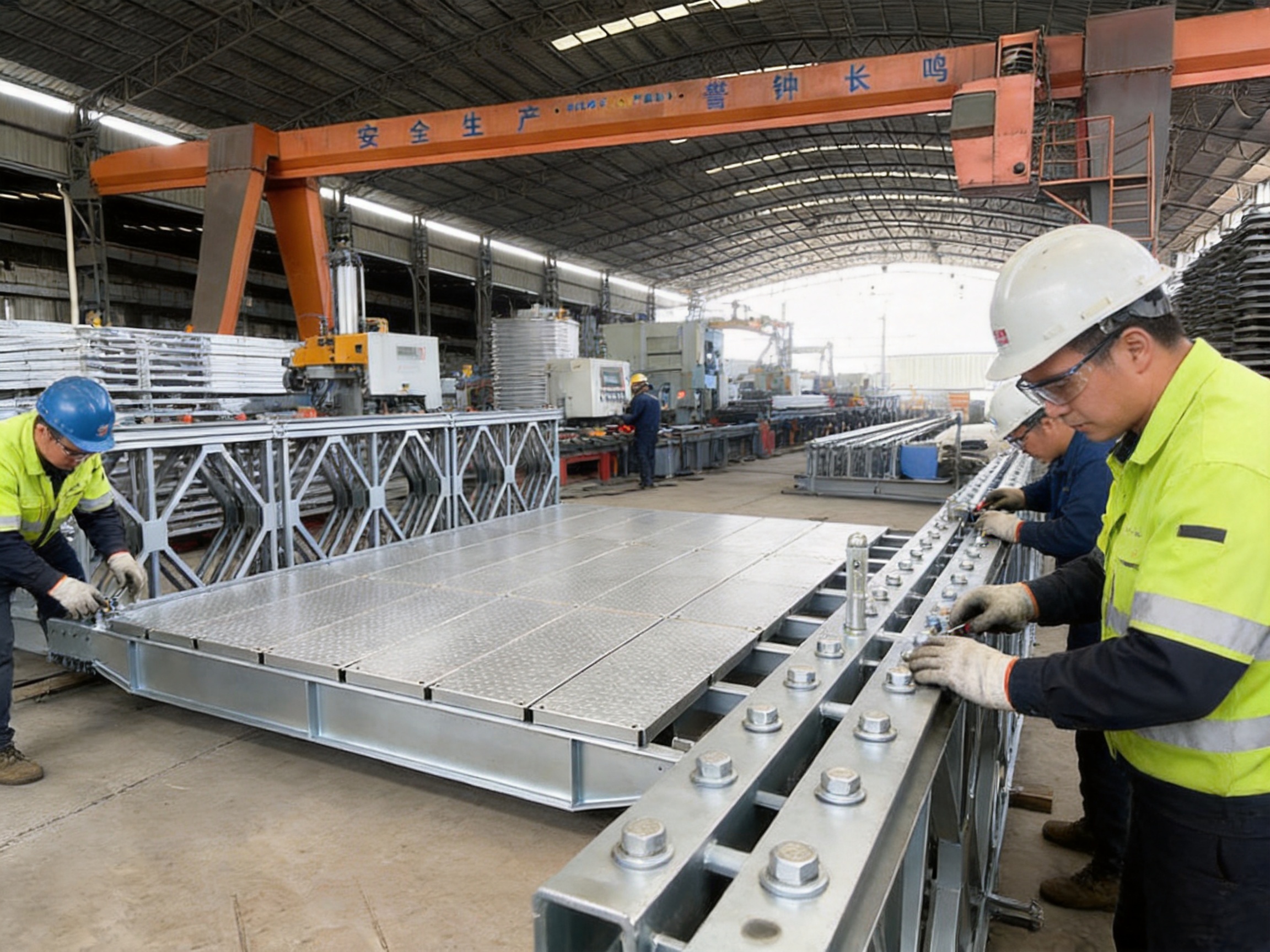
Welding is a critical manufacturing operation in modular steel bridge production. Welded joints connect plates, stiffeners, braces, brackets, and other structural elements. Poor welding can lead to incomplete fusion, porosity, undercut, distortion, or fatigue-sensitive defects. Therefore, welding quality must be managed through qualified procedures, trained personnel, suitable equipment, and systematic inspection.
The company’s production capabilities include automated welding and precision steel fabrication. Automation can improve consistency by controlling welding speed, heat input, torch movement, and joint positioning. It can also increase production efficiency for repeated components while reducing variation between individual assemblies.
Automated welding does not replace engineering supervision. Components must still be correctly fitted, surfaces prepared, and welding parameters selected for the material thickness and joint configuration. Skilled technicians and quality personnel remain essential for monitoring production, handling complex joints, inspecting finished welds, and addressing any deviation from the approved process.
Precision fabrication is equally important. Modular bridge components must meet dimensional requirements so that they can be assembled without excessive force, field cutting, or unplanned modification. Accurate fabrication improves the fit of panels, transoms, braces, deck members, and connection parts. It also reduces the risk that site workers will need to alter galvanized components, which could expose unprotected steel and require additional treatment.
Quality Checks During Fabrication
Quality checks may include verification of material certificates, visual inspection, dimensional measurement, weld inspection, hole alignment checks, surface preparation inspection, coating thickness measurement, and final assembly verification. The exact inspection plan should correspond to the bridge design, project requirements, applicable standards, and customer documentation needs.
Maintaining records throughout production provides useful evidence of conformity and supports future maintenance. Traceability can help identify the origin of components, confirm inspection status, and simplify communication between the manufacturer, contractor, consultant, and owner.
Factory Pre-Assembly and Trial Fitting
One of the most important advantages of the Nicaragua project is that the complete bridge underwent factory pre-assembly before shipment. Pre-assembly is a practical quality assurance step in which components are arranged and connected in a controlled manufacturing environment to verify the intended configuration.
During this process, the manufacturer can check whether panels, transoms, braces, deck components, fixings, and supporting parts fit together as expected. The process can reveal dimensional discrepancies, missing items, incorrect labels, connection interference, or assembly sequence issues before the bridge reaches the project site.
Factory pre-assembly also allows the production team to evaluate structural stability and connection performance. Although a factory trial fit is not a substitute for formal structural design verification or site inspection, it provides valuable confirmation that the physical components correspond to the engineered arrangement.
For international projects, this benefit is particularly significant. Correcting an assembly problem after shipment may require additional freight, replacement parts, site welding, equipment rental, or construction delays. Resolving potential problems at the factory is usually faster and less expensive. It also allows the supplier to document component identification and prepare clearer packing and installation instructions.
The pre-assembly process can support the following activities:
1. Verification of bridge geometry and component compatibility.
2. Confirmation of connection positions and fixing requirements.
3. Identification of components that require adjustment before surface treatment or shipment.
4. Review of the planned erection sequence.
5. Confirmation that all major structural and supporting components are included.
6. Preparation of clearer installation documentation and packing lists.
7. Reduction of on-site assembly uncertainty.
Why Pre-Assembly Improves On-Site Construction
Modular bridges are often selected because they can be erected faster than conventional bridge structures. However, the actual construction time depends on the accuracy of the components, the clarity of the erection plan, site access, lifting equipment, foundation readiness, and workforce experience. Factory pre-assembly improves several of these factors before the project begins.
When components have already been checked in their intended arrangement, installation teams can work with greater confidence. They are less likely to encounter unexpected interference between braces or connection parts. Component labels and packing sequences can be organized according to the erection sequence, reducing the time required to identify parts on-site.
Pre-assembly can also support safer work practices. A clear installation sequence helps supervisors plan lifting operations, temporary supports, work zones, and personnel access. Fewer unplanned modifications mean less cutting, drilling, hot work, or improvised fitting at height. These improvements may reduce exposure to construction hazards while supporting more predictable progress.
For remote or difficult-to-access locations, the value of pre-assembly is even greater. Transporting additional tools, replacement parts, and specialized personnel to a distant project site can be expensive and time-consuming. A thoroughly checked bridge package reduces the risk of such requirements and helps contractors use local resources more effectively.
Competitive Advantages Over Conventional Bridge Solutions
Faster Delivery and Installation
A customized Bailey bridge can be manufactured from modular components and delivered in an organized package. Compared with a fully site-fabricated bridge, this approach reduces the amount of cutting, welding, and fitting required in the field. Pre-assembly further improves the installation process by identifying issues before shipment.
Compared with conventional cast-in-place concrete bridges, modular steel systems may offer a shorter construction schedule because the main superstructure can be fabricated while foundations or abutments are being prepared. This parallel workflow can be valuable when a project must restore transportation quickly or maintain access during infrastructure development.
Transportation Efficiency
Bailey bridge components are designed to be transported as manageable units. Panels and modular members can often be loaded, handled, and stored more easily than a large one-piece bridge structure. This feature is useful for international shipments, remote construction areas, and locations where road access restricts the size of delivery vehicles.
Efficient packing and component identification are important parts of the logistics process. A coordinated manufacturer can prepare the bridge for containerized or conventional shipment while taking account of weight distribution, corrosion protection, handling points, and erection sequence.
Adaptability
Standard modular bridge systems can be adapted for different spans, widths, load requirements, and uses. A bridge may serve as a temporary access crossing, a construction road, a flood-response structure, a pedestrian bridge, a utility crossing, or a semi-permanent transportation connection. The ability to configure the system for different applications provides greater flexibility than many conventional bridge types.
Reduced Site Labor Requirements
Because a large portion of the manufacturing work is completed in a controlled facility, the project site may require less specialized fabrication labor. On-site teams can focus on foundation preparation, component positioning, bolted assembly, deck installation, alignment, and inspection. This can be especially useful where qualified welding or fabrication personnel are not readily available.
Improved Corrosion Protection
The hot-dip galvanized finish gives the bridge an advantage over unprotected or poorly coated steel systems. A durable zinc coating can reduce the frequency of repainting and improve performance in wet environments. For owners seeking lower lifecycle maintenance, this is an important consideration.
Maintainability and Replaceability
Because the bridge is made from modular components, individual damaged or worn parts may be easier to identify and replace than sections of a monolithic structure. Standardized panels and connections can support long-term maintenance planning. The owner may also be able to reconfigure or relocate the bridge if project requirements change, subject to engineering review.
Comparison of Bridge Solution Characteristics
| Evaluation Factor | Galvanized Customized Bailey Bridge | Site-Fabricated Steel Bridge | Conventional Cast-In-Place Concrete Bridge |
|---|---|---|---|
| Manufacturing environment | Controlled factory production with pre-assembly | Partly dependent on site conditions | Construction mainly performed at the project site |
| Installation speed | Fast modular erection after foundations are ready | Moderate, depending on field fabrication | Generally longer due to formwork, reinforcement, curing, and finishing |
| Adaptability | High; panels and components can be configured for project needs | Moderate; changes may require additional fabrication | Lower after construction begins |
| Transport requirements | Individual modular components can be packed and shipped efficiently | May require transport of larger fabricated assemblies | Bulk materials and construction equipment must be delivered to the site |
| Corrosion protection | Hot-dip galvanizing provides durable protective coating | Depends on field or factory coating quality | Concrete cover protects reinforcement when properly designed and constructed |
| Maintenance flexibility | Individual modular parts may be inspected and replaced | Repairs may require site cutting or welding | Repairs can be more disruptive and difficult after concrete placement |
| Suitability for remote or emergency projects | Strong, especially where rapid installation is required | Dependent on local fabrication capacity | Less suitable where curing time and heavy site resources are limited |
Manufacturing Strengths of the Supplier
Jiangsu Zhonghai Bridge Equipment Co., Ltd. has developed an integrated manufacturing and engineering capability for modular bridge systems and supporting steel structures. Its location in Zhenjiang, Jiangsu Province, provides access to an established industrial and transportation network, supporting the procurement of materials, factory production, domestic logistics, and international shipment.
The company’s strength lies in combining several capabilities rather than treating bridge supply as a simple component transaction. Engineering design, fabrication, quality management, pre-assembly, surface treatment coordination, packing, and technical support are connected within one project workflow. This integration can reduce communication gaps and improve accountability throughout the order.
The company serves transportation, water conservancy, military logistics, disaster relief, international development, and construction access applications. These markets often require strong schedule control, reliable structural components, and the ability to respond to different site conditions. Experience across multiple application areas helps the manufacturer understand that each bridge project has distinct requirements for loading, installation, durability, and logistics.
Its production portfolio includes modular steel bridges, Bailey bridge systems, customized steel components, bridge erection and construction support equipment, automated welding, and precision steel fabrication. This broad capability allows the company to coordinate primary bridge elements with auxiliary components, rather than requiring the customer to source every part from separate suppliers.
The company also reports experience supporting projects in China and overseas, including coastal engineering, temporary access bridges, structural components for major public facilities, railway-related Bailey bridges, and flood-response deployments. Such experience is relevant to international customers seeking a supplier capable of handling both standard products and customized bridge packages.
Quality Management from Design to Shipment
Quality control should begin before fabrication. The design must be reviewed for consistency, the bill of materials must correspond to the drawings, and project-specific requirements must be clearly communicated to the production team. Changes should be documented and approved through an organized process to prevent discrepancies between design intent and manufactured components.
During production, inspection should focus on both individual components and system compatibility. A panel may meet its dimensional requirements while still creating a problem if it is not compatible with the transoms or connection parts. This is one reason factory pre-assembly is so valuable: it evaluates the bridge as an integrated system.
Surface protection requires its own quality checks. Before hot-dip galvanizing, steel surfaces must be properly prepared. Oil, grease, mill scale, rust, welding residues, and other contaminants can affect coating quality. Drainage and venting considerations are also important for hollow or enclosed sections. After galvanizing, the coating should be visually checked and, where required, measured for thickness and continuity.
Final inspection before shipment may include checking the condition of galvanized surfaces, confirming component quantities, verifying markings, reviewing packing lists, examining bolts and accessories, and ensuring that installation documentation is complete. Proper packaging protects parts from damage during handling and transport. Clear identification allows the site team to locate components efficiently after delivery.
Installation Considerations
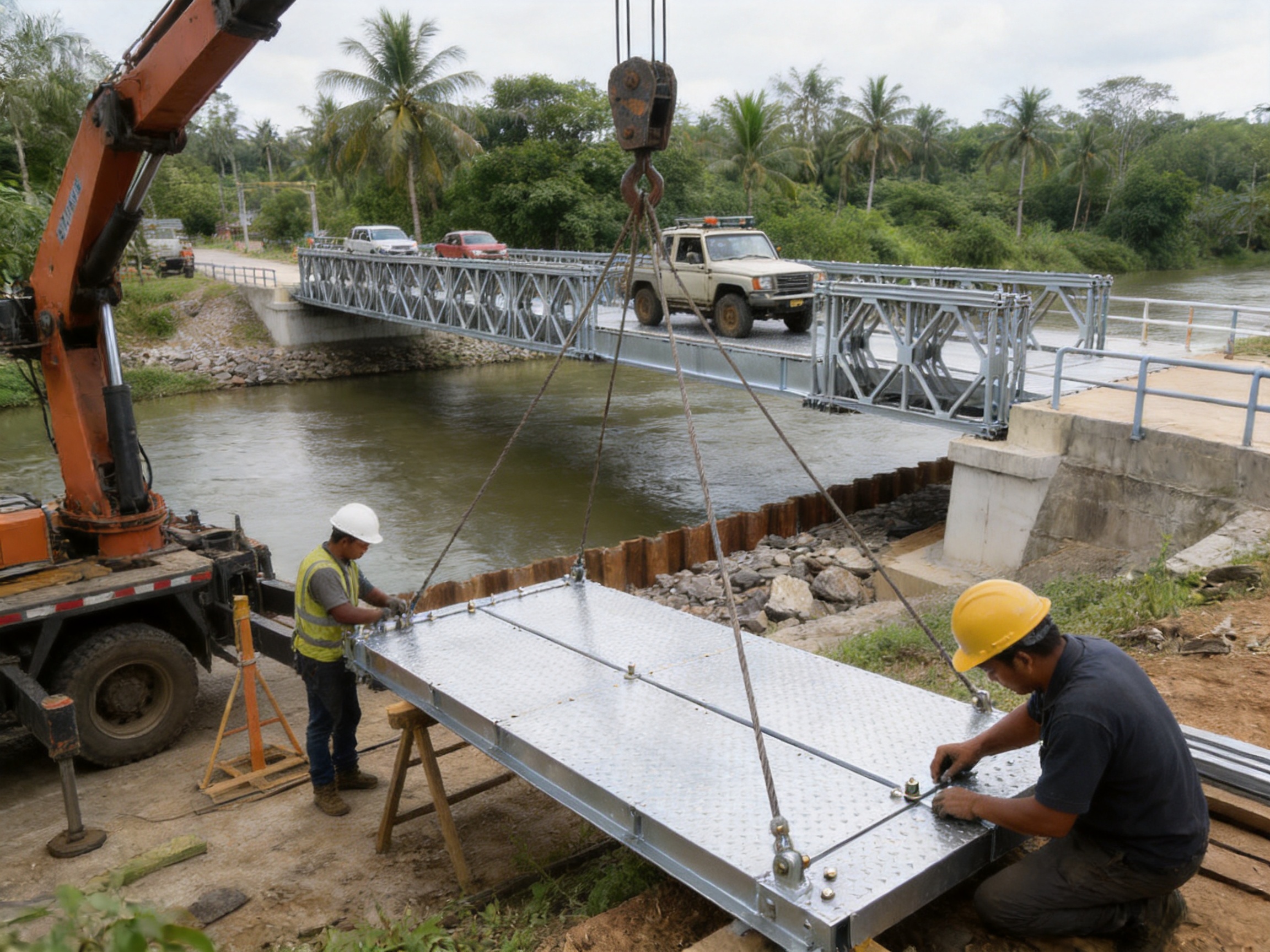
Although modular bridges can be assembled quickly, installation must follow an approved method statement and engineering plan. The foundations, abutments, piers, bearings, and approach areas must be prepared to support the design loads and maintain the intended geometry. The final erection method depends on span length, site access, available cranes or launching equipment, water conditions, traffic restrictions, and local safety requirements.
Before assembly, the contractor should inspect delivered components for transport damage, missing parts, coating damage, deformation, or incorrect identification. Any discrepancy should be reported before the affected component is installed. Damaged galvanized areas may require an approved repair procedure to restore corrosion protection.
During erection, temporary bracing and supports must be used as required by the design. A modular bridge may experience different load paths during construction than it does in service. Workers should not assume that an incomplete bridge is stable simply because the final structure is designed for the required traffic load.
Connection installation must follow the specified procedures. Bolts should be of the correct type and grade, installed in the correct locations, and tightened according to the approved requirements. Pins, braces, deck members, guardrails, and other accessories must be checked for correct orientation and fit.
After erection, the completed bridge should be inspected for alignment, deck level, connection condition, bearing position, lateral bracing, approach transitions, guardrail installation, drainage, and signs of damage. Load restrictions and traffic management measures should be implemented where required by the project engineer or local authority.
Lifecycle Performance and Maintenance
A galvanized modular bridge can provide long-term service when it is properly designed, installed, inspected, and maintained. The protective coating reduces atmospheric corrosion, but bridge components remain exposed to mechanical wear, traffic impact, debris accumulation, standing water, and environmental stress. A routine inspection program is therefore necessary.
Inspection should pay particular attention to deck panels, expansion or movement areas, bolted connections, bracing members, bearing zones, drainage points, approach transitions, and locations where dirt or water can accumulate. Any impact from vehicles, construction equipment, floating debris, or flood conditions should be assessed promptly.
Small defects should be addressed before they become major problems. Loose fasteners, damaged deck surfaces, blocked drainage paths, or locally damaged galvanizing may be relatively simple to repair when identified early. Delayed maintenance can allow water retention, corrosion, deformation, or fatigue-related deterioration to progress.
Owners should retain design information, component lists, inspection records, coating documentation, and maintenance history. Because the bridge is modular, accurate records can simplify the ordering of replacement panels, deck components, fasteners, or accessories. They can also support future relocation, extension, or reconfiguration subject to technical approval.
Applications Beyond the Nicaragua Project
The same manufacturing and engineering approach can support a wide range of bridge applications. Modular galvanized Bailey bridges are suitable for temporary and semi-permanent transportation crossings, construction access roads, emergency restoration, rural connectivity, industrial logistics, flood-response operations, mining access, forestry routes, and infrastructure maintenance.
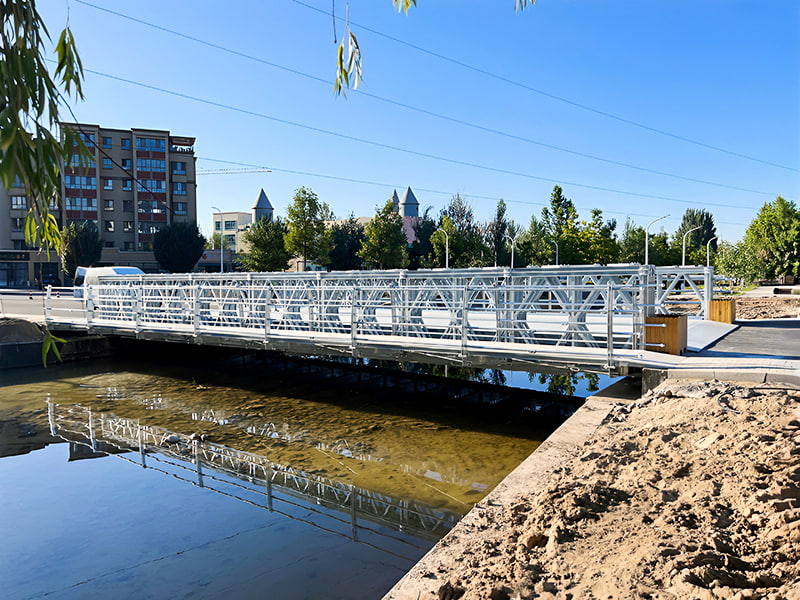
Pedestrian and utility applications may require different configurations from vehicle bridges. A pedestrian bridge may emphasize walkway width, guardrails, handrails, anti-slip deck surfaces, lighting supports, and accessibility. A modular pipe bridge may be designed to carry water, process lines, cables, or other utilities across an obstacle. A truss bridge for industrial or transportation use may require greater load capacity and additional lateral stability.
The modular nature of the system allows the supplier to adapt the basic structural principle to different end uses. However, every application still requires appropriate engineering review. Load conditions, wind exposure, seismic considerations, support settlement, water levels, impact risks, and local regulations should be evaluated before final production.
How Customers Can Select the Right Configuration
Customers should begin by identifying the bridge’s purpose. The expected users may include pedestrians, passenger vehicles, heavy trucks, construction equipment, railway maintenance vehicles, or utility services. The type and frequency of traffic influence the structural design, deck arrangement, safety accessories, and maintenance requirements.
The required span and width should then be established. Site surveys should document the crossing geometry, ground conditions, water levels, flood history, access routes, overhead restrictions, and available assembly areas. Even preliminary measurements can help the manufacturer recommend a suitable configuration and identify potential construction constraints.
Environmental conditions are also important. Humidity, rainfall, salt exposure, industrial pollution, temperature variation, and flood debris can affect material protection and maintenance planning. Hot-dip galvanizing is a strong option for many environments, but additional design details may be required for highly aggressive exposure or areas subject to abrasion and immersion.
Customers should also discuss delivery and installation resources. Available cranes, lifting capacity, transport vehicles, labor skills, temporary supports, and site storage space can influence the preferred component arrangement. Early coordination helps ensure that the bridge can be delivered and assembled using realistic local resources.
Q&A
What is the main advantage of a customized galvanized Bailey bridge?
The main advantage is the combination of modular installation and project-specific engineering. The bridge can be adapted to local span, width, load, traffic, environmental, and construction requirements while retaining the transport and assembly benefits of standardized Bailey bridge components. Hot-dip galvanizing further improves corrosion resistance in humid and demanding environments.
Why was the Nicaragua bridge pre-assembled at the factory?
Factory pre-assembly was completed to verify component fit, structural arrangement, connection compatibility, and overall stability before shipment. It also helped identify potential issues in a controlled environment, reducing the risk of delays, field modifications, or missing-part problems during on-site installation.
Does factory pre-assembly replace on-site inspection?
No. Factory pre-assembly is an additional quality assurance measure, not a replacement for site inspection. The contractor must still verify foundations, supports, delivered components, connections, alignment, deck installation, safety equipment, and final structural condition after erection.
How does hot-dip galvanizing protect the bridge?
Hot-dip galvanizing applies a bonded zinc coating to prepared steel surfaces. The coating acts as a barrier against moisture and oxygen and can provide sacrificial protection if small areas are damaged. This helps reduce corrosion and maintenance requirements, especially in wet, tropical, coastal, or industrial environments.
Can a Bailey bridge be used as a permanent bridge?
Bailey bridges can serve temporary, semi-permanent, or long-term applications when they are properly designed, manufactured, installed, inspected, and maintained. Suitability depends on the design life, traffic loading, environmental exposure, foundations, local regulations, and owner requirements.
Can the bridge width and load capacity be customized?
Yes. Modular Bailey bridge systems can generally be configured with different panel arrangements, deck widths, reinforcement levels, and supporting components. The final configuration must be determined through engineering design based on the intended traffic and site conditions.
What kinds of projects can use this bridge system?
Applications include rural road crossings, emergency bridges, construction access, flood-response routes, industrial logistics, pedestrian crossings, utility crossings, water conservancy projects, military logistics, railway support, and international infrastructure development.
What does the manufacturer provide besides the main panels?
A coordinated bridge package may include transoms, stringers, bracing, bolts, pins, deck components, guardrails, bearings, fixings, supporting steel parts, erection equipment, technical documentation, and construction support. The exact supply scope depends on the project requirements.
How can customers reduce installation problems?
Customers can reduce installation problems by providing accurate site information, confirming design loads and dimensions early, preparing foundations before delivery, following the approved erection sequence, checking all components upon arrival, using suitable lifting equipment, and communicating promptly with the manufacturer about any discrepancy.
What makes an experienced modular bridge supplier valuable?
An experienced supplier can coordinate design, material selection, fabrication, welding, galvanizing, pre-assembly, packing, shipment, and technical support as one process. This reduces communication gaps and helps ensure that the delivered components function as a complete bridge system rather than as unrelated steel parts.
Conclusion
The galvanized customized Bailey bridge produced for the Nicaragua project illustrates the value of combining modular design with disciplined manufacturing and project-specific engineering. Its standardized panels and supporting components support efficient transportation and rapid assembly, while customization allows the structure to respond to local geographic, traffic, and construction requirements.
Hot-dip galvanizing provides an important durability advantage by improving resistance to moisture and atmospheric corrosion. This is particularly relevant in tropical and humid environments where unprotected steel may require frequent maintenance. The factory pre-assembly process adds another layer of confidence by verifying component fit, connection arrangements, and structural configuration before shipment.
Jiangsu Zhonghai Bridge Equipment Co., Ltd. strengthens this product solution through integrated engineering, precision fabrication, automated welding, quality control, modular bridge expertise, and international project support. From raw material selection to final packing, the company’s production approach is designed to improve accuracy, adaptability, and construction efficiency.
For infrastructure owners, contractors, emergency agencies, and international development organizations, a customized galvanized Bailey bridge can provide a practical balance of speed, durability, flexibility, maintainability, and cost control. When supported by correct engineering, factory verification, professional installation, and routine inspection, the system can help create safer and more efficient connections in locations where conventional bridge construction may be too slow, complex, or difficult to implement.
References
1. American Institute of Steel Construction. Steel Construction Manual and structural steel design guidance.
2. ASTM International. Standards and practices related to structural steel, fasteners, welding, and protective coatings.
3. European Committee for Standardization. Eurocode guidance for the design of steel structures and bridge components.
4. International Organization for Standardization. Quality management principles and manufacturing quality-control guidance.
5. International Zinc Association. Technical guidance on hot-dip galvanizing and corrosion protection of steel.
6. American Welding Society. Structural welding codes and recommended practices for steel construction.
7. Federal Highway Administration. Modular bridge, temporary bridge, bridge inspection, and construction safety guidance.
8. Bridge engineering textbooks covering truss behavior, modular bridge design, load distribution, erection methods, and maintenance planning.
Product: Galvanized Customized Bailey Bridge


We respond quickly to all international requests and provide technical support when needed.
Product Category
Bailey Bridge/Modular Bridge Modular Steel Bridge Pedestrian Bridge Modular Pipe Bridge Truss Bridge Steel StructureContact Us

+86-511-84522866
+86-13921582699

zhwm@zjql.com

Building 1,83#, dantu New Town, Yanjiang Road, Dantu District, Zhenjiang, Jiangsu, China
Copyright © Jiangsu Zhonghai Bridge Equipment Co., Ltd. All
Rights
Reserved
China bailey bridge for sale
bailey bridge supplier from china
