
 English
 русский
 Español
 Português


Guo Zhenyi — Customer Support and Installation Coordinator
Large-Span Heavy-Load Construction Platforms for Bridges
Content
- 1 1. The Role of Construction Platforms in Modern Bridge Engineering
- 2 2. Product Design for Large-Span and Heavy-Load Applications
- 3 3. Applications in Underwater Pile Foundation Construction
- 4 4. Applications in Cross-River and Cross-Sea Bridge Projects
- 5 5. Support for Box Girder Erection and Formwork Operations
- 6 6. Advantages Over Conventional Temporary Platforms
- 7 7. Manufacturing Strength and Engineering Capability
- 8 8. Materials, Surface Protection, and Durability
- 9 9. Installation, Commissioning, and Site Operation
- 10 10. Safety Benefits for Personnel and Equipment
- 11 11. Environmental and Logistical Advantages
- 12 12. Comparison with Alternative Construction Methods
- 13 13. Project Planning and Technical Selection
- 14 14. International Manufacturing and Project Support
- 15 15. Why Engineered Modularity Provides a Competitive Advantage
- 16 16. Typical Benefits for Contractors and Project Owners
- 17 17. Frequently Asked Questions
- 17.1 What is a large-span heavy-load construction platform?
- 17.2 Where can this type of platform be used?
- 17.3 Can the platform be customized?
- 17.4 What equipment can the platform support?
- 17.5 Is the platform suitable for underwater construction?
- 17.6 Can it be used over active roads or railways?
- 17.7 How does a modular platform reduce project costs?
- 17.8 What manufacturing capabilities are important for this product?
- 17.9 How is platform safety maintained during operation?
- 17.10 Can the platform be reused on another project?
- 17.11 What information is needed for a quotation or preliminary design?
- 17.12 Why choose a manufacturer with bridge equipment experience?
- 18 18. Conclusion
- 19 References
- 20 Product: Large Span Heavy Load Construction Platforms for Bridges
Large-span heavy-load construction platforms are essential temporary and semi-permanent structures for demanding bridge projects. They provide a stable working base for construction personnel, cranes, formwork systems, transport equipment, reinforcing operations, and other machinery used during bridge erection. When a project crosses a river, sea channel, valley, road corridor, railway, or difficult industrial site, a properly engineered construction platform can determine whether work proceeds safely, efficiently, and according to schedule.
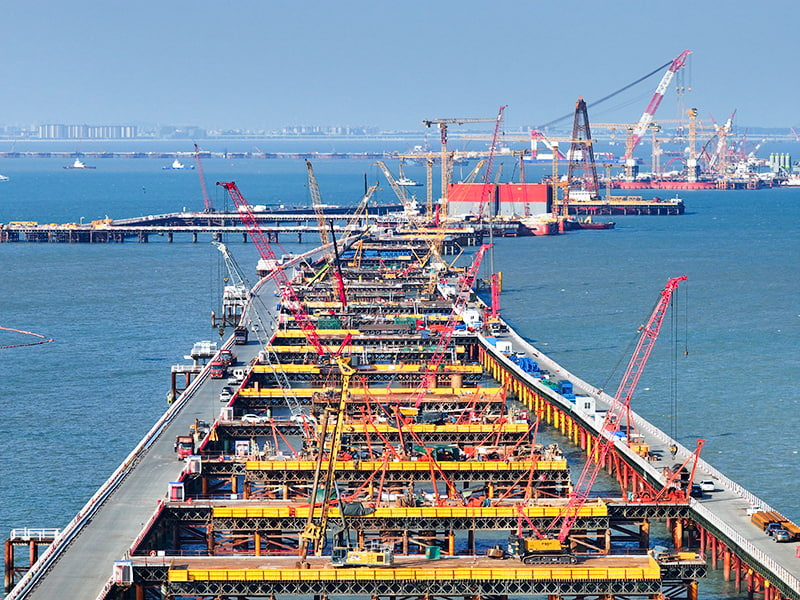
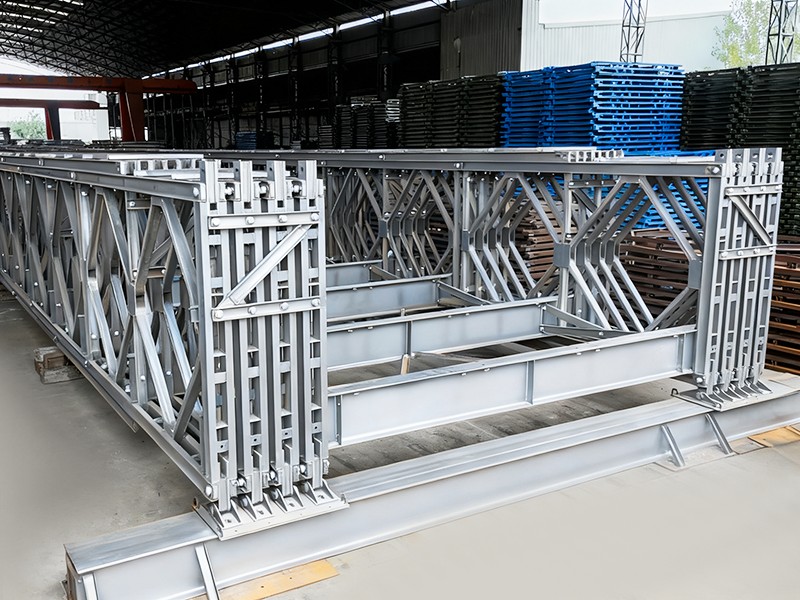
The Bridge Construction Platform developed and manufactured by Jiangsu Zhonghai Bridge Equipment Co., Ltd. is designed for complex construction conditions that require high load capacity, modular assembly, reliable structural performance, and flexible site adaptation. Its applications include underwater pile foundation construction, pier construction, cross-river bridge projects, cross-sea bridge projects, box girder erection, formwork support, overhead operations, and other infrastructure activities requiring a secure elevated or waterborne working platform.
Unlike basic temporary work decks that are limited to light-duty access or simple material handling, a large-span heavy-load platform is engineered as an integrated structural system. It must support substantial concentrated loads, withstand dynamic construction forces, accommodate changing work sequences, and remain stable in challenging environments. The product combines modular steel bridge technology, truss-based structural design, precision fabrication, and practical erection methods to offer a dependable solution for modern bridge construction.
Its principal advantage is the balance between strength and adaptability. The platform can be configured for different spans, widths, load requirements, elevations, and site conditions. Components can be manufactured according to project requirements, transported efficiently, assembled in stages, and reused on future construction sites. This modular approach reduces the need for completely new temporary works for every project and helps contractors control costs, logistics, and construction time.
Large Span Heavy Load Construction Platforms for Bridges
1. The Role of Construction Platforms in Modern Bridge Engineering
Bridge construction often takes place where ordinary ground-based equipment cannot operate effectively. Rivers, tidal zones, deep water, unstable soil, steep slopes, active transportation corridors, and densely developed urban areas can prevent contractors from installing conventional scaffolding or building permanent access roads. A construction platform creates a temporary working environment where no suitable natural working surface exists.
For underwater bridge construction, the platform may be used to support drilling rigs, casing installation equipment, reinforcement cages, concrete operations, survey instruments, pumps, and lifting machinery. It can provide access around pile foundations and piers while reducing the dependence on floating vessels. A properly planned platform also establishes defined working zones, improving movement control and reducing interference between personnel and equipment.
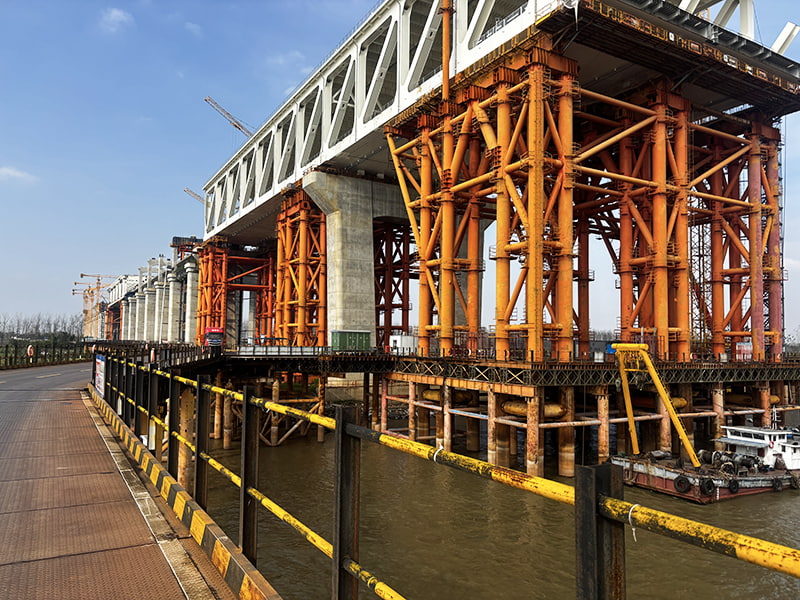
For large river and sea-crossing projects, the platform can support pier formwork, reinforcement assembly, concrete placement, inspection activities, and equipment transfer. It may be installed at an elevated level above the water, connected to temporary access bridges, or integrated with a larger modular bridge system. Depending on the construction sequence, the platform may be used as a fixed work area, a movable support structure, a launching base, or an assembly deck.
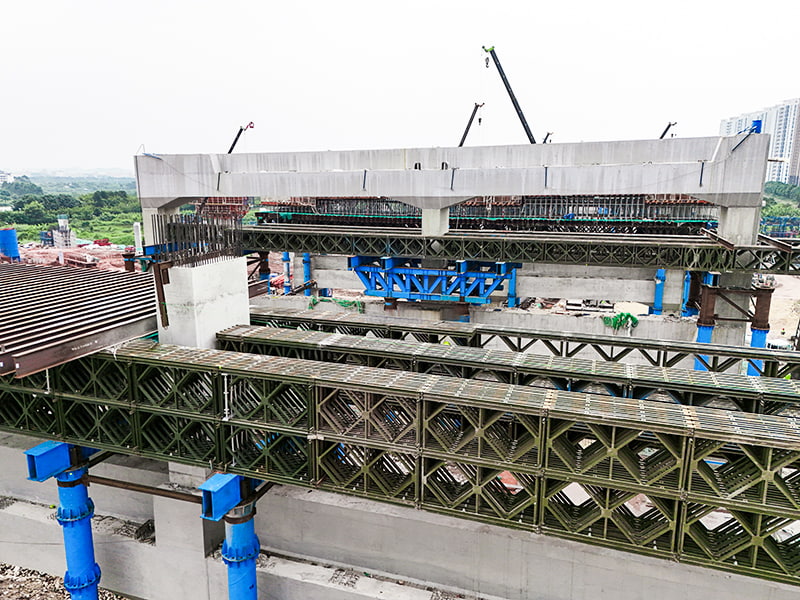
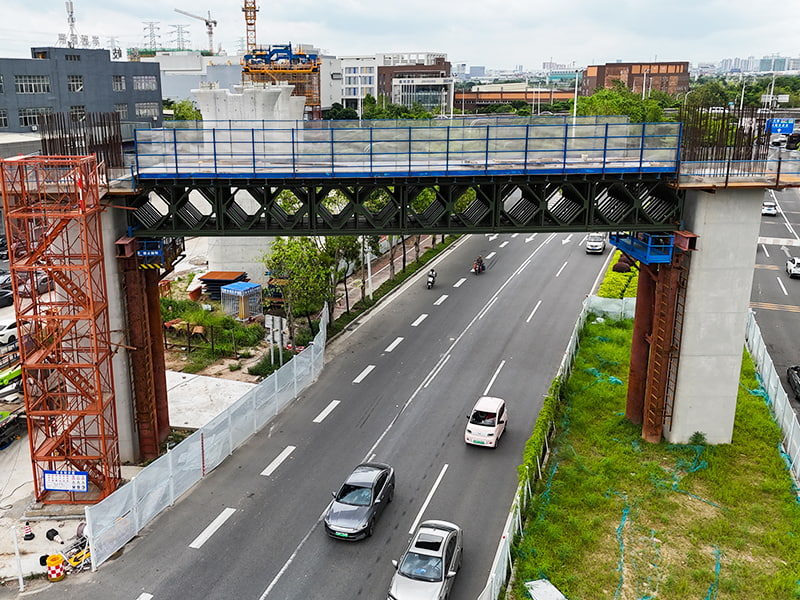
During box girder erection, a platform can provide a secure location for lifting equipment, temporary bearings, alignment tools, workers, and installation materials. It can also support formwork and related systems during the construction of cast-in-place structural sections. In overhead construction, the platform helps establish a controlled workspace above roads, railways, waterways, or existing facilities where direct access from below is not possible.
The platform therefore serves more than one function. It is a structural foundation for temporary construction operations, a logistics surface for transporting materials, a safety barrier between work activities and the surrounding environment, and a coordination point for multiple construction teams. Its design must account for all these roles rather than treating the platform as a simple steel deck.
2. Product Design for Large-Span and Heavy-Load Applications
The core design objective is to create a platform that can carry heavy loads across a relatively large unsupported distance while maintaining structural stability and practical constructability. Large-span applications reduce the number of supports required in water or difficult terrain. Fewer supports can reduce interference with navigation, river flow, existing foundations, and environmental protection zones.
A typical platform may use modular longitudinal beams, transverse beams, truss units, deck panels, bracing members, connection assemblies, support stools, and access components. The exact configuration depends on the design load, span arrangement, elevation, foundation conditions, construction equipment, and anticipated environmental forces. By selecting appropriate components and arranging them according to engineering calculations, the platform can be adapted to a wide variety of bridge sites.
Heavy-load capacity is achieved through several coordinated design features. The primary structural members resist bending and axial forces, while transverse beams distribute loads across the platform width. Diagonal bracing improves lateral stability and limits deformation. Deck panels transfer local wheel and equipment loads into the main framing system. Connections are designed to maintain the behavior of the assembled structure and to allow efficient installation and removal.
The system can be engineered for evenly distributed loads as well as concentrated loads. Construction cranes, drilling equipment, concrete pumps, lifting frames, and transport vehicles often apply loads at specific points. If these loads are not properly considered, excessive local stress or uneven settlement may occur. A heavy-duty platform is therefore assessed for the complete construction operation, including equipment positions, movement routes, material storage areas, lifting stages, impact effects, and temporary load changes.
Large-span platforms also need adequate stiffness. Strength alone is not sufficient if excessive deflection affects formwork alignment, equipment operation, or worker safety. Controlled deformation helps maintain the accuracy of pile, pier, girder, and deck construction. It also reduces vibration and improves the operating conditions for workers and machinery.
Modular structural arrangement
Modularity allows the platform to be divided into repeatable units that can be manufactured, inspected, transported, and assembled efficiently. Standardized members simplify replacement and maintenance, while project-specific components can be introduced where unusual geometry or load requirements exist. This combination of standard and customized parts provides greater flexibility than either a completely fixed design or an entirely improvised temporary structure.
Modular construction also supports phased installation. A contractor may first assemble a working section near the shore, then extend the platform toward the center of a river or across a construction zone. Additional units can be installed as the bridge progresses. This approach can reduce the need for large lifting operations in the middle of a waterway and can help maintain access for construction vessels or other site activities.
Connection reliability
Connections are among the most important elements of a modular platform. They must transfer vertical, horizontal, and occasionally uplift forces while remaining practical for field assembly. Bolted connections, fitted components, reinforced joints, and engineered connection plates can be selected according to the structural arrangement and project requirements.
Reliable connections offer several benefits. They allow the platform to be assembled without extensive field welding, reduce dependence on weather-sensitive site operations, and make inspection more straightforward. They also support disassembly and reuse. Where field welding is necessary, it can be limited to designated areas and completed under controlled procedures.
3. Applications in Underwater Pile Foundation Construction
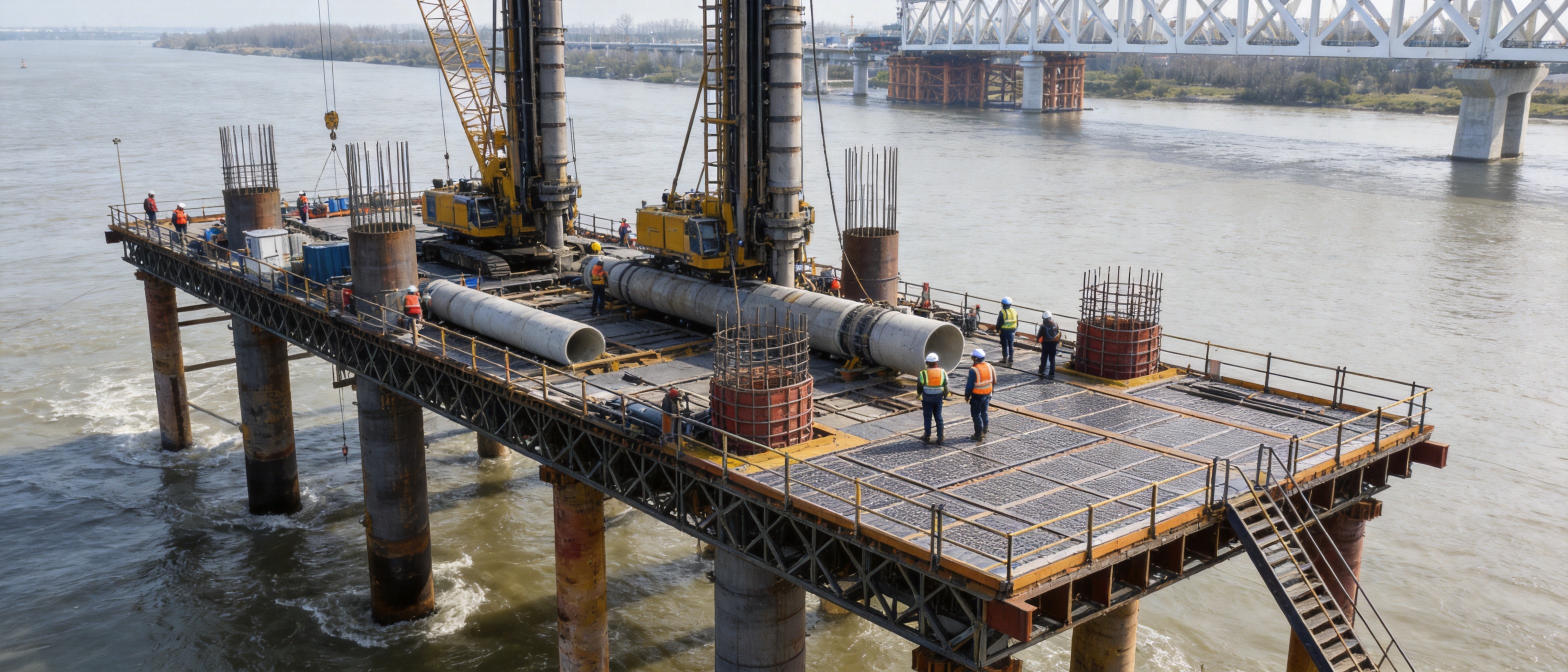
Underwater pile foundation construction is one of the most demanding applications for a bridge construction platform. Workers and equipment must operate above or near water while dealing with current, waves, changing water levels, restricted visibility, and limited access. The platform provides a defined working surface and helps organize the construction process.
For drilled piles, the platform may support drilling rigs, casing systems, slurry treatment equipment, reinforcement cages, concrete delivery systems, and temporary storage. The platform must accommodate the operating radius of the drilling equipment and provide enough space for personnel to perform inspection, alignment, and maintenance tasks safely.
For driven piles or other pile installation methods, the platform can carry piling machinery, guide frames, lifting equipment, and material handling systems. The structural design must consider vibration, impact, and repeated operating cycles. These dynamic effects can be more demanding than a simple static load and should be included in the project-specific design assessment.
The platform may also support the construction of pile caps. Once piles are installed, workers often need to place reinforcement, install formwork, pump concrete, and conduct finishing and inspection activities around the foundation. A stable working platform provides access for these operations and can be configured to surround the pile group or connect with temporary walkways.
In water environments, stability depends not only on the steel frame but also on the support arrangement. Piles, temporary foundations, stools, pontoons, or other support systems may be used depending on water depth, soil conditions, current velocity, and construction method. The platform manufacturer can coordinate the structural design with the support concept so that the complete temporary works system functions as an integrated unit.
Performance in harsh aquatic environments
Water construction introduces additional concerns such as corrosion, wave action, current pressure, floating debris, vessel impact risk, and difficult maintenance access. The platform can be specified with suitable coating systems, drainage details, access provisions, and inspection points to improve durability during the project period.
Where the platform remains in service for an extended period, regular inspections should verify the condition of deck panels, bracing, bolts, welds, support interfaces, and protective coatings. The modular nature of the system allows damaged or worn components to be isolated and replaced without necessarily dismantling the entire platform.
4. Applications in Cross-River and Cross-Sea Bridge Projects
Cross-river and cross-sea bridges frequently involve long construction zones with limited land access. A bridge construction platform can connect work areas, support pier construction, and facilitate the movement of equipment along the alignment. It may operate independently or form part of a larger temporary access and erection system.
For cross-river projects, the platform can be designed to minimize obstruction to navigation and maintain designated channels. Its arrangement may include removable sections, controlled clearances, or staged construction zones. By reducing the number of supports in the water, a large-span system can help address requirements related to flow, navigation, and environmental protection.
For cross-sea applications, the platform must be planned for more severe exposure. Wind, waves, tides, saltwater corrosion, and longer material transport distances can significantly affect construction planning. A modular platform helps contractors prepare components onshore, transport them in manageable units, and assemble them using a controlled sequence.
The system can also provide temporary links between piers or work areas. These links can improve material movement and reduce the number of times workers or equipment must be transferred by boat. Safe access routes, handrails, edge protection, and designated lifting areas can be incorporated into the platform layout.
In areas with changing water levels, adjustable support details or carefully selected elevation arrangements can help maintain usable working space. Engineering calculations should consider the highest and lowest expected water levels, wave effects, flood conditions, and the possibility of floating objects striking the structure.
5. Support for Box Girder Erection and Formwork Operations
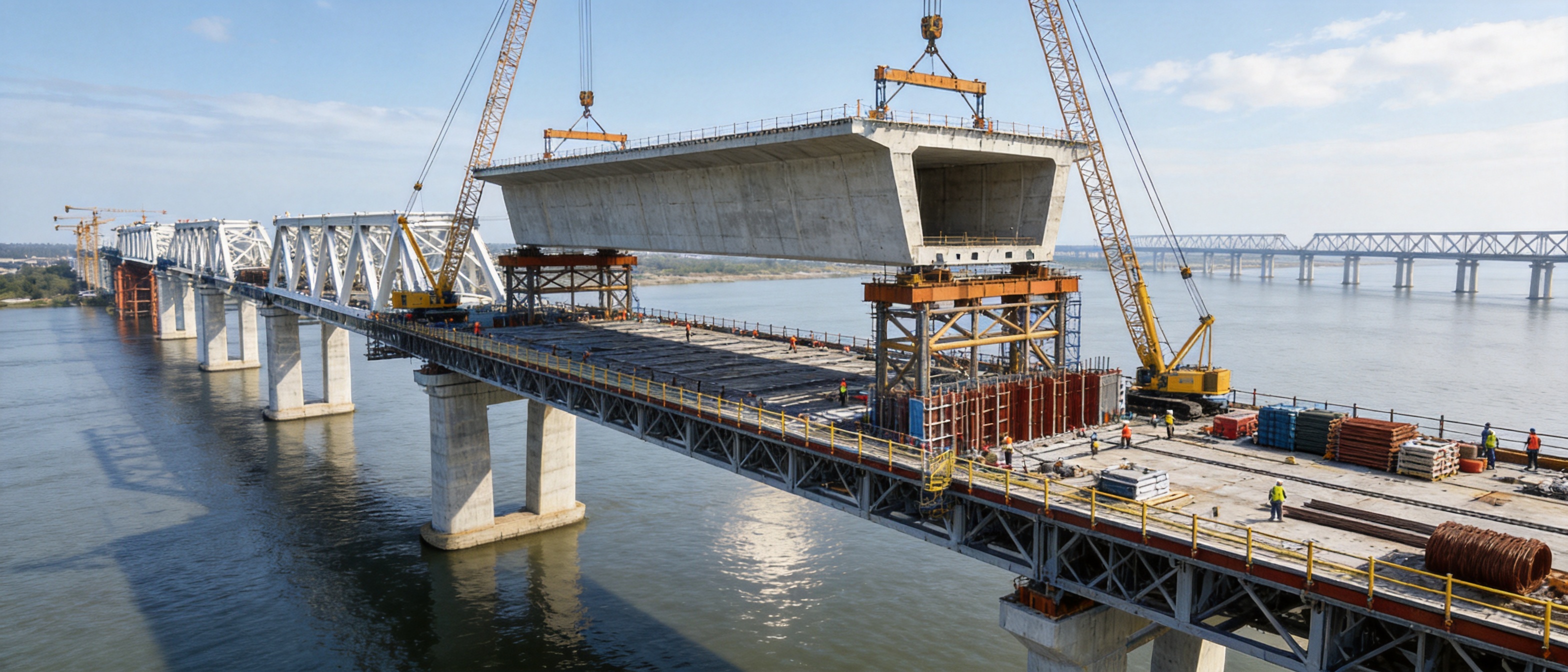
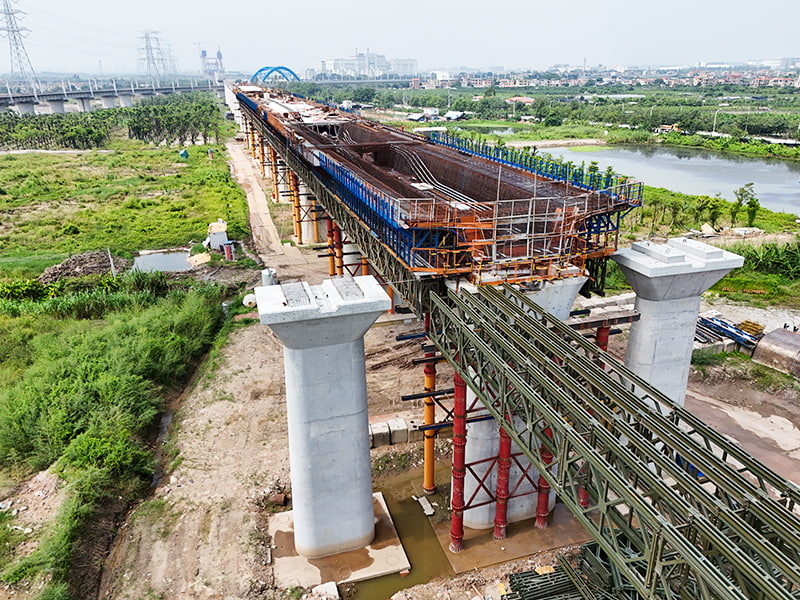
Box girder construction often requires temporary support during lifting, positioning, connecting, casting, or alignment. A heavy-load construction platform can provide a stable base for erection equipment and formwork systems, especially where the girder is assembled over water or above an active transportation route.
During girder erection, loads may shift as sections are lifted, rotated, positioned, and connected. The platform must be checked for temporary load cases rather than only the final equipment arrangement. Crane reactions, lifting points, eccentric loads, wind forces, and accidental impact effects may influence the design.
For cast-in-place box girders, the platform may support falsework, formwork, reinforcement, concrete delivery equipment, workers, and curing-related materials. It should provide sufficient stiffness to limit movement and maintain the designed geometry of the girder. The platform layout must also permit access for inspection, concrete vibration, finishing, and removal of temporary components.
Formwork support is particularly sensitive to settlement and deflection. If a support point moves unexpectedly, the finished bridge section may develop dimensional deviations or uneven stress. A properly engineered steel platform distributes loads and provides predictable support conditions, helping the construction team achieve better alignment and quality control.
Integration with construction equipment
The platform can be designed around the equipment selected for the project. Crane outriggers, drilling rigs, concrete pumps, transport vehicles, winches, lifting frames, and other machinery require different support conditions. Their wheel loads, outrigger reactions, operating envelopes, and access routes should be included during the design stage.
This equipment-oriented design approach is a major advantage over generic temporary decks. A generic deck may appear adequate under a uniform load but perform poorly under a concentrated crane reaction or repeated vehicle movement. Engineering the platform around actual construction operations creates a safer and more efficient working environment.
6. Advantages Over Conventional Temporary Platforms
Many temporary platforms are built from miscellaneous steel sections or site-modified components. Although such methods may be suitable for small and uncomplicated works, they can create problems on large infrastructure projects. Inconsistent member quality, uncertain connection performance, slow installation, difficult inspection, and limited reuse can increase project risk.
The modular heavy-load platform offers several advantages compared with conventional temporary structures.
Higher load capacity and structural predictability
Purpose-designed members and engineered load paths provide more predictable structural behavior. The platform can be calculated for project-specific static and dynamic loads, including equipment reactions and construction-stage conditions. This is more reliable than estimating the capacity of improvised steel frames assembled without a unified structural model.
Longer useful service life
High-quality steel fabrication, controlled welding, suitable surface protection, and replaceable components help extend the service life of the platform. A reusable modular system can support multiple projects when properly inspected, maintained, and reconfigured.
Faster installation and removal
Standardized parts and bolted assembly can shorten field installation time. Reduced site welding also lowers the need for hot-work controls and minimizes weather-related delays. After the construction phase, the platform can be dismantled in planned sections and transported to another location.
Better adaptation to difficult sites
The platform can be configured for different widths, elevations, span arrangements, and access requirements. It is suitable for water, high-altitude, urban, industrial, and emergency construction environments. Its modular nature makes it easier to work around existing piers, navigation routes, pipelines, roads, and other site restrictions.
Reduced lifecycle cost
Although a heavy-duty engineered platform may require a higher initial investment than a basic temporary deck, its reusable components, shorter installation period, reduced maintenance burden, and improved operational reliability can lower the total lifecycle cost. Contractors may also reduce indirect costs associated with delays, unsafe access, equipment downtime, and repeated fabrication.
Improved safety and organization
A dedicated platform can include controlled walkways, handrails, edge protection, equipment zones, lifting points, and material storage areas. This creates a more organized worksite and reduces the likelihood of workers entering hazardous areas or sharing narrow access routes with heavy equipment.
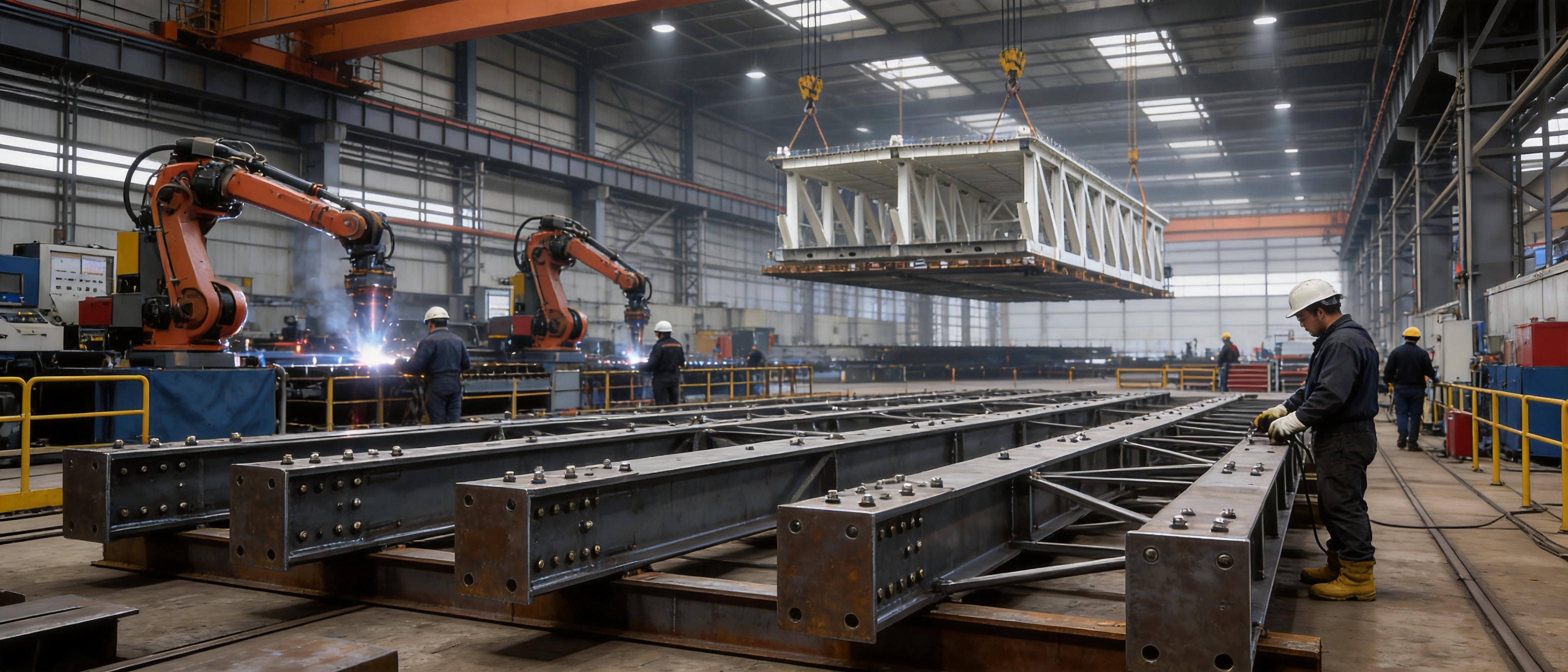
7. Manufacturing Strength and Engineering Capability
Jiangsu Zhonghai Bridge Equipment Co., Ltd. combines engineering design, precision manufacturing, quality management, and on-site support. This integrated capability is important because the performance of a construction platform depends on the relationship between design, material selection, fabrication accuracy, inspection, and field installation.
The company is based in Zhenjiang, Jiangsu Province, an important industrial and transportation hub in China. Its location supports access to industrial supply chains, skilled manufacturing resources, transportation networks, and port-related logistics. This is beneficial for both domestic projects and international orders requiring coordinated shipment of large steel structures.
The company specializes in modular steel bridges, Bailey bridge systems, customized steel components, bridge erection equipment, construction support equipment, automated welding, and precision steel fabrication. These capabilities are directly relevant to the production of large-span construction platforms because many platform components share design and manufacturing principles with modular bridge systems.
Engineering design and customization
Each major construction platform should be designed according to the actual project rather than selected solely from a general product catalog. The engineering process may consider span length, platform width, design loads, support conditions, equipment arrangement, construction sequence, water level, wind exposure, transport limitations, and installation method.
Customization can include platform dimensions, deck configuration, truss depth, beam spacing, connection details, support interfaces, access walkways, lifting points, handrails, equipment openings, and protective coating requirements. This allows the platform to function as part of the contractor’s complete construction method.
The engineering team can also coordinate platform design with modular bridge systems, temporary access bridges, launching arrangements, and other steel structures. This integrated approach can reduce compatibility problems between separate suppliers and simplify project management.
Automated welding and precision fabrication
Automated welding can improve consistency across repeated structural components. Controlled welding parameters help reduce variation in weld quality, improve production efficiency, and support more uniform fabrication. For large-volume modular members, automation is especially valuable because it allows repeatable manufacturing under monitored conditions.
Precision fabrication helps ensure that components fit correctly during assembly. Accurate cutting, drilling, forming, and welding reduce the need for field modification. Better dimensional control also improves the alignment of bolted connections and helps maintain the intended geometry of the assembled platform.
Factory-based production provides a more controlled environment than unrestricted field fabrication. Material handling, welding procedures, inspection activities, coating application, and dimensional checks can be organized according to standardized workflows. This helps improve production planning and reduces the uncertainty often associated with temporary steelwork fabricated entirely at the construction site.
Quality management
Quality management begins with material traceability and continues through fabrication, inspection, surface treatment, packing, delivery, and field support. Important quality activities may include verification of steel grades, inspection of cutting and drilling, weld inspection, dimensional checks, coating inspection, bolt verification, and final assembly review.
For international infrastructure projects, documentation is also important. Manufacturing records, inspection reports, packing lists, component identification, drawings, and installation instructions can help the contractor manage the platform throughout its service life. Clear documentation supports site assembly, inspection, maintenance, and future reuse.
8. Materials, Surface Protection, and Durability
Structural steel for a heavy-load platform must provide an appropriate combination of strength, weldability, toughness, and durability. The material selection should reflect the design loads, service environment, temperature range, fabrication method, and applicable project standards.
Waterborne construction presents particular corrosion challenges. Freshwater exposure, saltwater exposure, spray zones, condensation, and contact with wet materials can affect unprotected steel. A suitable coating system can help protect the structure during the project period. Surface preparation, primer selection, intermediate coats, finishing coats, dry film thickness, and repair procedures should be defined according to the environment.
Drainage and detailing also influence durability. Water should not be allowed to collect in enclosed areas, around connection plates, or on deck surfaces. Good detailing can reduce crevices and make inspection easier. Where components are repeatedly assembled and dismantled, connection areas should be checked for coating damage and repaired as necessary.
Replaceable deck panels and modular members provide a practical maintenance advantage. If a component experiences wear, impact, or localized damage, it may be removed for repair or replaced with a spare unit. This reduces downtime compared with a platform that depends on permanently welded, difficult-to-access components.
9. Installation, Commissioning, and Site Operation
Successful installation begins with a clear erection plan. The plan should define the sequence of component delivery, temporary supports, lifting operations, connection tightening, alignment checks, access control, and inspection points. For water projects, it should also address barge positioning, weather limits, current conditions, navigation coordination, and emergency response.
Components are generally delivered in a sequence that matches the erection plan. This reduces unnecessary handling and prevents the worksite from becoming congested. Identification marks and packing lists help crews locate beams, trusses, deck panels, bracing members, and connection hardware quickly.
Initial assembly may take place on land or on an existing platform. Pre-assembly can improve productivity by allowing workers to connect components at ground level before lifting them into position. Where the platform extends over water, staged installation can reduce the duration of high-risk lifting operations.
After assembly, the platform should be inspected before heavy equipment is allowed to operate on it. Inspection may include checks of member orientation, connection tightening, deck seating, bracing installation, support contact, elevation, access routes, edge protection, and lifting points. Any construction-stage temporary support should remain in place until the permanent or final temporary arrangement is confirmed to be stable.
Operating rules should define allowable equipment positions, maximum loads, movement routes, storage areas, wind limits, water-level restrictions, and inspection frequency. Clear load signage can help prevent accidental overloading. Supervisors should ensure that loads are distributed as assumed in the design and that unauthorized modifications are not made.
Maintenance during service
Routine maintenance can include checking bolts, welds, deck surfaces, bracing, support points, handrails, access ladders, drainage paths, and protective coatings. After unusual events such as flooding, vessel contact, severe storms, heavy impact, or equipment overload, a detailed inspection should be completed before work resumes.
Maintenance records should identify the inspection date, observed condition, corrective action, replacement parts, and responsible personnel. A disciplined inspection program supports both safety and future reuse.
10. Safety Benefits for Personnel and Equipment
A stable working surface improves safety by separating people, tools, and machinery from water, unstable ground, traffic, and other hazards. It provides a defined area for work activities and can reduce the need for workers to operate from small boats, temporary ladders, narrow beams, or irregular support points.
Safety provisions may include guardrails, toe boards, anti-slip deck surfaces, controlled access gates, ladders, lighting supports, equipment barriers, and designated emergency routes. The arrangement should be coordinated with local regulations and the contractor’s project safety plan.
Heavy machinery requires special attention. A platform should provide adequate clearance around moving equipment and maintain safe distances from edges, overhead lines, lifting zones, and water. Crane operations should be controlled according to the manufacturer’s operating limits and the platform’s verified capacity.
Good structural design also supports safety indirectly. A platform with excessive movement, poor alignment, or uncertain load capacity can create anxiety among workers and make equipment operation more difficult. Predictable stiffness and clear operating limits improve confidence and reduce unsafe improvisation.
11. Environmental and Logistical Advantages
Modular platforms can reduce the amount of temporary construction material discarded at the end of a project. Components are designed for removal, inspection, and reuse, which supports more efficient resource utilization. Reusable steel systems can be particularly valuable for contractors involved in multiple bridge, water conservancy, emergency, or industrial projects.
By creating a direct working route across or above water, the platform may reduce the need for repeated small-boat transportation. This can lower fuel consumption, reduce transfer time, and improve the organization of material movement. Fewer transportation movements may also reduce operational interference with navigation and surrounding activities.
Large spans can reduce the number of temporary supports placed in waterways. This may help preserve water flow and reduce disturbance to the riverbed, although the environmental suitability of any arrangement must be assessed for the specific site. Construction planning should consider sediment, aquatic ecology, navigation, flood discharge, and local permitting requirements.
Efficient logistics are another advantage. Modular members can be packed into standardized transport groups and shipped by road, rail, or sea according to project needs. Factory production allows the contractor to plan deliveries in stages and reduce the amount of on-site cutting, welding, and material waste.
12. Comparison with Alternative Construction Methods
A contractor may consider several alternatives when creating a temporary working surface: conventional scaffolding, cast-in-place temporary concrete structures, floating work barges, improvised steel frames, or modular steel platforms. The appropriate solution depends on site conditions and project requirements.
Conventional scaffolding may be economical for low loads and short spans, but it can require many supports and may not be suitable for heavy cranes or water environments. Cast-in-place temporary structures can provide strength but often involve significant construction time, materials, formwork, and demolition work. Floating barges offer mobility but may be affected by waves, current, tides, mooring requirements, and equipment stability.
Improvised steel frames can be quickly assembled for small projects, but their capacity, connection quality, and dimensional accuracy may be difficult to verify. A modular heavy-load system provides a more controlled engineering solution. It combines the strength of a steel structure with the transportability and adaptability of modular components.
| Evaluation Factor | Modular Heavy-Load Platform | Basic Temporary Deck | Floating Work Barge |
| Load capability | Designed for heavy and concentrated construction loads | Usually limited to light or moderate loads | Depends on buoyancy, stability, and mooring conditions |
| Span flexibility | Suitable for engineered large-span arrangements | Often requires frequent supports | Provides mobility but not always a fixed elevated surface |
| Assembly method | Modular components with planned connections | May require extensive site fabrication | Requires marine positioning and mooring operations |
| Reuse potential | High when inspected and reconfigured | Often limited by site-specific fabrication | Reusable but subject to marine operating requirements |
| Site adaptation | Can be customized for span, width, elevation, and equipment | Less predictable for complex conditions | Adaptable in position but sensitive to water conditions |
| Operational stability | Provides a stable working surface when properly supported | Varies with construction quality | May move with wave, wind, or current action |
| Maintenance | Replaceable modular members and accessible inspection points | Can be difficult to inspect consistently | Requires marine equipment and specialized checks |
13. Project Planning and Technical Selection
Selecting a construction platform should begin with a clear definition of the work to be performed. The contractor should identify the equipment, materials, personnel, construction sequence, expected service period, and environmental conditions. These factors determine the platform’s dimensions and design requirements.
Important technical information includes the required span, clear width, deck elevation, support spacing, maximum distributed load, maximum concentrated load, vehicle axle loads, crane reactions, drilling equipment loads, wind exposure, water current, wave conditions, flood level, and access arrangements.
Site investigation is also important. Soil conditions influence temporary foundations and support piles. Water depth and current affect installation methods. Existing bridge foundations, navigation channels, utility lines, pipelines, and environmental restrictions may limit the platform footprint.
The construction sequence should be reviewed together with the platform designer. A platform may experience different load cases during assembly, equipment transfer, formwork installation, concrete placement, girder erection, and dismantling. Designing only for the final operating stage may overlook more severe temporary conditions.
Contractors should also consider transport dimensions. A platform component that is structurally efficient but difficult to ship may increase project cost and delay delivery. Modular design allows large structures to be divided into practical transport units without sacrificing the efficiency of final assembly.
14. International Manufacturing and Project Support
Jiangsu Zhonghai Bridge Equipment Co., Ltd. serves transportation, water conservancy, military logistics, disaster relief, and international development projects. Its experience includes coastal engineering in the Maldives, temporary access bridges for the Shenzhen–Zhongshan Corridor, structural components for the Hangzhou Expo Center, multi-span Bailey bridges for the Lalin Railway, and flood-response and emergency bridge deployments in multiple regions.
Experience across different applications helps a manufacturer understand the practical challenges of transportation, assembly, changing site conditions, and urgent infrastructure requirements. It also supports the development of standardized components that can be adapted to different project environments.
International delivery requires more than producing steel members. It involves technical communication, drawing coordination, packing, export documentation, loading plans, installation guidance, and responsive problem solving. A manufacturer with integrated engineering and production capabilities can coordinate these stages more efficiently than a supplier focused only on fabrication.
On-site support may include assembly guidance, component identification, installation sequence review, connection inspection, and technical clarification. This assistance is particularly valuable when the platform is part of a complex bridge construction method involving several temporary works systems.
15. Why Engineered Modularity Provides a Competitive Advantage
The strongest competitive advantage of a modular heavy-load platform is not one individual component. It is the combination of engineering, manufacturing, standardization, customization, and service. Competitors may offer steel decks, temporary bridges, or fabricated beams, but a complete platform solution must address the entire construction operation.
Engineered modularity allows the product to be repeated without becoming inflexible. Standard components lower production and replacement costs, while customized arrangements allow the platform to match a specific bridge site. This balance is difficult to achieve with purely standard products or entirely one-off designs.
Manufacturing consistency is another advantage. When components are produced through controlled factory workflows, the contractor receives a more predictable product. Accurate dimensions, repeatable weld quality, organized identification, and documented inspection reduce field uncertainty.
Reuse strengthens the economic case. After one project, the platform can be inspected, repaired, resized, and redeployed. This provides contractors with a long-term temporary works asset rather than a disposable structure. Reusable components can also support emergency response, flood recovery, military logistics, and rapid-access construction where deployment speed is important.
Finally, the platform can be integrated with a broader product portfolio that includes modular steel bridges, Bailey bridge systems, truss structures, pipe bridges, pedestrian bridges, and customized steel components. This gives clients access to compatible structural technologies from one experienced manufacturer.
16. Typical Benefits for Contractors and Project Owners
For contractors, the platform can improve construction planning by providing a dependable work surface with known structural characteristics. It can reduce field fabrication, improve equipment access, and support a more orderly work sequence. Faster installation and removal may help shorten the temporary works period and reduce interference with permanent construction.
For project owners, a well-designed platform can improve schedule reliability and reduce the risks associated with unsafe or improvised temporary structures. It can also support better quality control during pile, pier, girder, and formwork operations. Reusable steel components may provide value beyond the original project.
For workers, the platform creates a more secure and organized environment. Defined access routes, stable deck surfaces, edge protection, and planned equipment zones can reduce exposure to water, unstable ground, and uncontrolled material movement.
For communities and transportation users, efficient construction platforms can help limit disruption. They may reduce the need for extensive ground access roads, shorten construction periods over active routes, and support safer separation between bridge works and existing traffic or navigation activities.
17. Frequently Asked Questions
What is a large-span heavy-load construction platform?
It is an engineered temporary or semi-permanent steel structure that provides a stable working surface for bridge construction activities. It is designed to carry construction personnel, materials, machinery, formwork, cranes, drilling equipment, and other project loads across water, difficult terrain, or elevated work areas.
Where can this type of platform be used?
It can be used for underwater pile foundation construction, pier construction, cross-river bridges, cross-sea bridges, box girder erection, formwork support, overhead construction, temporary access, emergency bridge works, and other infrastructure projects requiring a heavy-duty working deck.
Can the platform be customized?
Yes. The platform can be customized according to span, width, elevation, load capacity, support arrangement, equipment requirements, access needs, environmental conditions, and applicable project standards. Customized components can be combined with standardized modular members.
What equipment can the platform support?
Depending on the project-specific design, it may support drilling rigs, cranes, concrete pumps, reinforcement equipment, formwork systems, transport vehicles, lifting frames, winches, inspection equipment, and material storage. Equipment loads and operating positions must be provided during the engineering stage.
Is the platform suitable for underwater construction?
Yes. It is designed for applications involving underwater pile foundations, pier construction, pile caps, and related operations. The complete system must be designed for the specific water depth, current, wave conditions, support arrangement, corrosion environment, and construction sequence.
Can it be used over active roads or railways?
It can support overhead construction where a stable work area is required above an existing road, railway, or other facility. The design must address clearance, protective measures, lifting restrictions, traffic management, and the requirements of the relevant authorities.
How does a modular platform reduce project costs?
It can reduce costs through faster assembly, lower field fabrication requirements, component reuse, standardized replacement parts, improved logistics, and reduced construction delays. The total economic benefit should be evaluated over the complete project lifecycle rather than by purchase price alone.
What manufacturing capabilities are important for this product?
Important capabilities include structural engineering, automated welding, precision cutting and drilling, dimensional inspection, coating application, quality documentation, component identification, packing, and technical support. Integrated manufacturing helps ensure that the delivered system matches the approved design.
How is platform safety maintained during operation?
Safety depends on correct design, proper installation, connection inspection, load control, edge protection, access management, regular maintenance, and compliance with the project safety plan. Equipment should be operated only within the verified capacity and designated zones of the platform.
Can the platform be reused on another project?
Yes. Modular members can generally be dismantled, inspected, repaired if necessary, and reconfigured for another project. Reuse depends on the condition of each component, the new project loads, the new span arrangement, and the results of engineering verification.
What information is needed for a quotation or preliminary design?
Useful information includes the required span and width, design loads, equipment types, construction sequence, platform elevation, support conditions, water depth, current and wave information, access requirements, expected service period, delivery location, and applicable design standards.
Why choose a manufacturer with bridge equipment experience?
A manufacturer experienced in modular bridges and bridge construction equipment understands load transfer, temporary works, field assembly, connection behavior, transport constraints, and changing construction conditions. This experience supports better integration between the platform and the wider bridge construction method.
18. Conclusion
Large-span heavy-load construction platforms are essential tools for modern bridge construction in locations where conventional ground access is unavailable or unsuitable. By providing a stable, engineered working surface, they support underwater foundations, pier construction, cross-river and cross-sea bridge works, box girder erection, formwork, equipment movement, and other complex operations.
The modular platform supplied by Jiangsu Zhonghai Bridge Equipment Co., Ltd. combines flexible configuration, heavy-load performance, large-span capability, reusable steel components, and manufacturing precision. Its design can be adapted to project-specific conditions, while its factory production process supports consistent quality, efficient delivery, and practical field assembly.
Compared with improvised temporary structures or basic work decks, the system offers better structural predictability, improved installation efficiency, greater reuse potential, more organized safety provisions, and stronger adaptation to challenging environments. Automated welding, precision fabrication, quality management, and integrated engineering support further strengthen its value for domestic and international infrastructure projects.
For contractors and project owners, the most important consideration is not simply whether a platform can carry a load. It must carry the right loads, in the right locations, throughout every construction stage, while remaining safe, maintainable, transportable, and economical. A properly engineered modular platform addresses these requirements and provides a dependable foundation for safer, faster, and more efficient bridge construction.
References
1. Bridge construction temporary works planning and structural load assessment principles.
2. Modular steel bridge design, fabrication, assembly, inspection, and maintenance practices.
3. General engineering guidance for temporary platforms used in pile foundation and pier construction.
4. Structural steel welding, dimensional control, corrosion protection, and quality management practices.
5. Construction safety principles for elevated work platforms, waterborne operations, lifting activities, and heavy equipment access.
6. Temporary works planning guidance for box girder erection, formwork support, and overhead bridge construction.
7. International practices for reusable steel structures in transportation, water conservancy, emergency response, and disaster relief projects.
8. Project information and technical product materials supplied by Jiangsu Zhonghai Bridge Equipment Co., Ltd.
Product: Large Span Heavy Load Construction Platforms for Bridges


We respond quickly to all international requests and provide technical support when needed.
Product Category
Bailey Bridge/Modular Bridge Modular Steel Bridge Pedestrian Bridge Modular Pipe Bridge Truss Bridge Steel StructureContact Us

+86-511-84522866
+86-13921582699

zhwm@zjql.com

Building 1,83#, dantu New Town, Yanjiang Road, Dantu District, Zhenjiang, Jiangsu, China
Copyright © Jiangsu Zhonghai Bridge Equipment Co., Ltd. All
Rights
Reserved
China bailey bridge for sale
bailey bridge supplier from china
