
 English
 русский
 Español
 Português


Guo Zhenyi — Customer Support and Installation Coordinator
CB100 Modular Pipe Bridge: A Faster, Safer, and More Efficient Solution for Elevated Pipeline Infrastructure
Content
- 1 Introduction
- 2 What Is a Modular Pipe Bridge?
- 3 Why Elevated Pipeline Crossings Are Increasingly Important
- 4 Major Advantages of the CB100 Modular Pipe Bridge
- 4.1 1. Efficient Crossing of Rivers and Difficult Terrain
- 4.2 2. Reduced Riverbed and Environmental Disturbance
- 4.3 3. Better Use of Limited Space
- 4.4 4. Faster Modular Construction
- 4.5 5. Improved Inspection and Maintenance Access
- 4.6 6. Reduced Construction Disruption
- 4.7 7. Flexible Use for Permanent and Temporary Projects
- 5 Comparison with Conventional Pipeline Installation Methods
- 6 Engineering Considerations for a Modular Pipe Bridge
- 7 Advanced Manufacturing and Quality Control
- 8 From Design to Installation
- 9 Advantages for Different Applications
- 10 Lifecycle Cost and Operational Value
- 11 Why Manufacturing Capability Matters
- 12 Selection Guide for Project Owners and Contractors
- 13 Maintenance Recommendations
- 14 Frequently Asked Questions
- 14.1 What is the primary purpose of the CB100 Modular Pipe Bridge?
- 14.2 Can the bridge carry more than one pipeline?
- 14.3 Is the CB100 system suitable for permanent infrastructure?
- 14.4 Can it be used over navigable rivers?
- 14.5 Does a pipe bridge eliminate the need for foundations?
- 14.6 How does modular construction reduce project time?
- 14.7 Is the bridge suitable for areas with limited land?
- 14.8 How is pipeline maintenance performed on an elevated bridge?
- 14.9 What information is needed for a quotation or preliminary design?
- 14.10 What manufacturing standards can be supported?
- 14.11 Can the structure be customized?
- 15 Conclusion
- 16 References
- 17 Product: CB100 Modular Pipe Bridge
Introduction
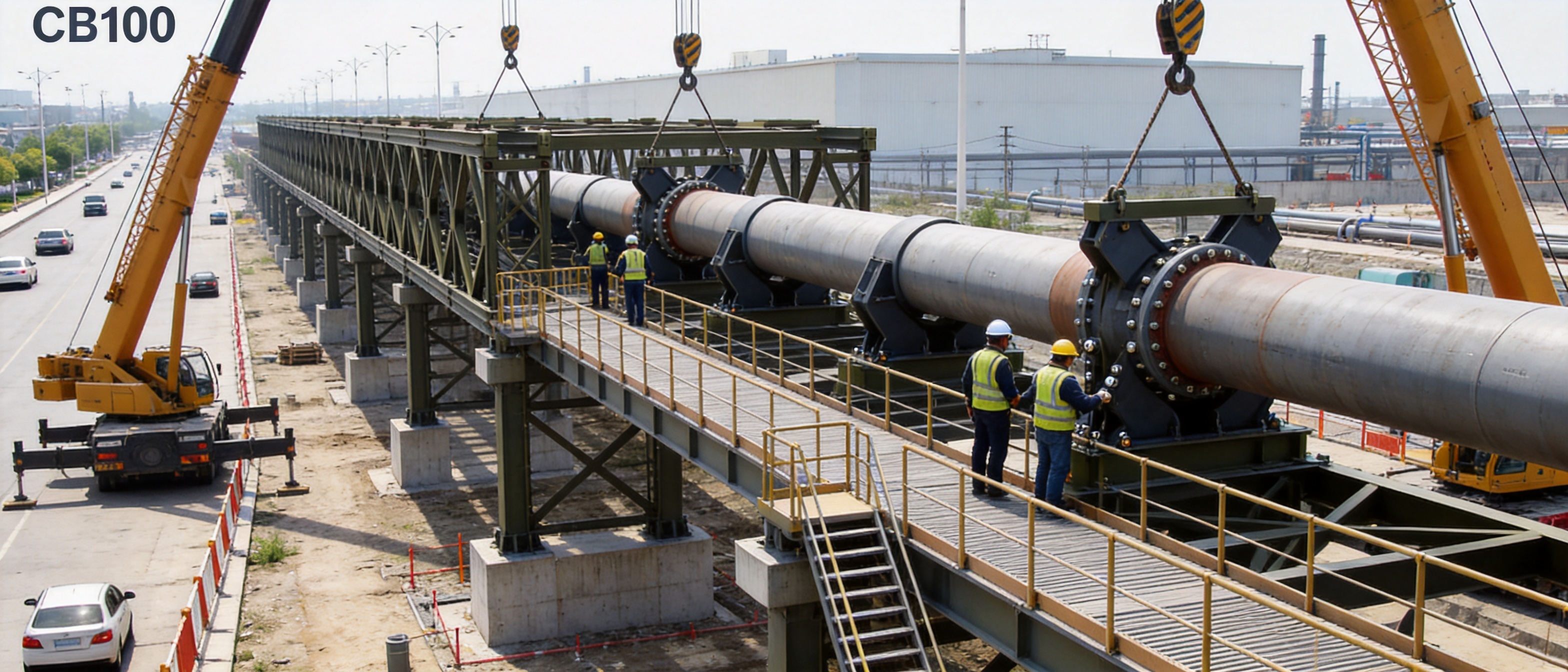
Modern infrastructure projects increasingly require pipelines to cross rivers, transportation corridors, industrial zones, steep valleys, and densely developed urban areas. Traditional underground or underwater installation methods can create major challenges, including difficult geological conditions, disruption to riverbeds, lengthy construction schedules, complex environmental approvals, and high inspection costs. The CB100 Modular Pipe Bridge provides an alternative approach by supporting pipelines above ground on a prefabricated steel bridge structure.
Designed for modular construction, the CB100 Modular Pipe Bridge combines factory-produced steel components with efficient on-site assembly. This approach allows project owners and contractors to establish reliable pipeline crossings while reducing the amount of outdoor fabrication and minimizing interference with surrounding areas. The system is suitable for water pipelines, utility pipelines, process pipelines, temporary service lines, and other applications where pipelines must cross obstacles safely and efficiently.
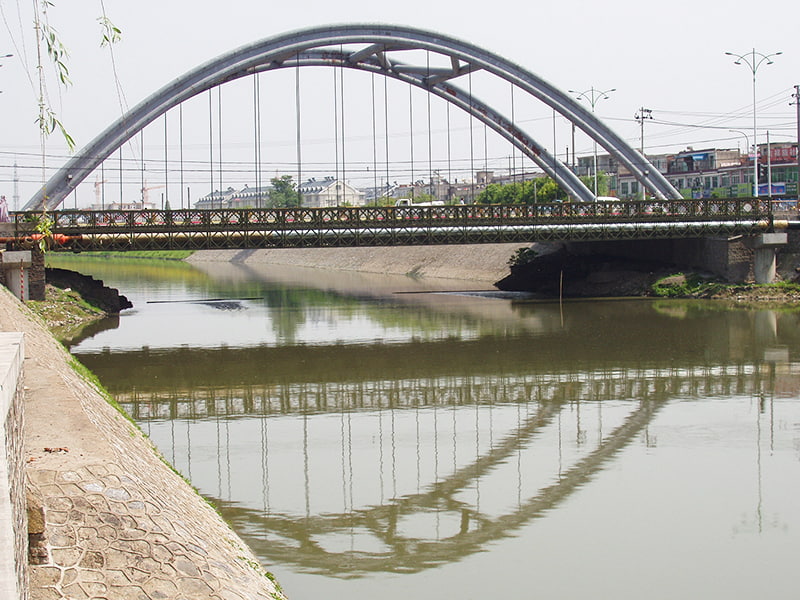
Unlike a conventional pipeline laid beneath a river or buried through congested underground corridors, a pipe bridge creates a dedicated elevated route. This route can improve accessibility, simplify inspection, and reduce conflicts with existing infrastructure. It can also provide a practical solution in locations where river navigation, flood control, bank erosion, steep terrain, or limited land availability make conventional construction difficult.
The CB100 system is supported by the engineering and manufacturing capabilities of Jiangsu Zhonghai Bridge Equipment Co., Ltd., a manufacturer specializing in modular steel bridges, Bailey bridge systems, customized steel components, and engineered structural products. Through standardized production, precision fabrication, automated welding, quality management, and project-oriented technical support, the company provides a bridge solution designed for demanding infrastructure environments.
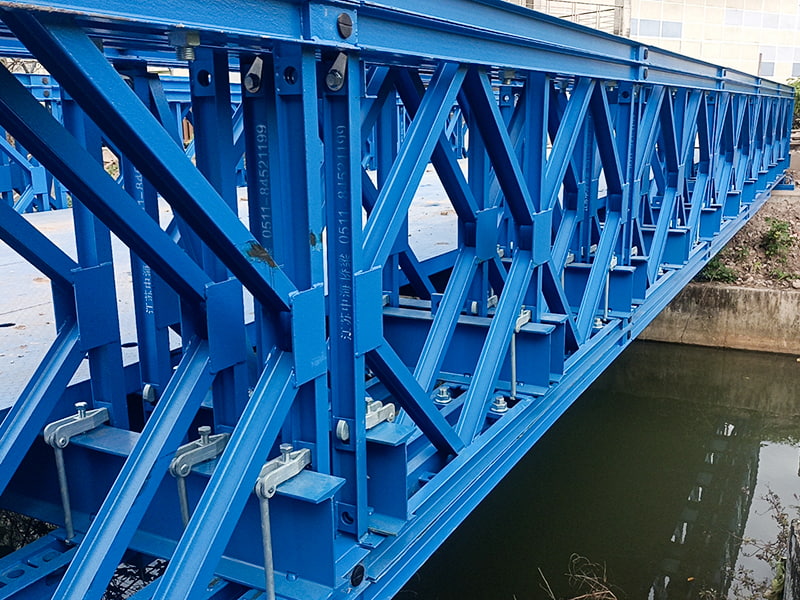
CB100 Modular Pipe Bridge
What Is a Modular Pipe Bridge?
A modular pipe bridge is an elevated steel structure designed to carry one or more pipelines across an obstacle or along a designated route. The structure typically consists of prefabricated truss or bridge members, support components, connection systems, pipeline support assemblies, and foundation interfaces. Instead of constructing every structural element on site, the main components are manufactured in a controlled factory environment and transported to the project location for assembly.
The modular concept provides a high degree of flexibility. Bridge components can be arranged according to the required span, loading conditions, pipeline configuration, clearance requirements, and site restrictions. Multiple pipelines may be installed in a vertical or organized arrangement, helping project designers use the available corridor more efficiently.
The CB100 Modular Pipe Bridge is particularly suited to projects in which pipeline continuity is essential but ground-level or underground construction is impractical. It can support infrastructure crossing rivers, ravines, transportation routes, industrial compounds, drainage channels, and other areas where direct excavation would be disruptive or technically demanding.
By placing pipelines on an elevated structural route, the system separates pipeline infrastructure from many obstacles at ground level. This can help preserve river flow, reduce interference with navigation, avoid damage to underground facilities, and provide clear access for future inspection and maintenance.
Core Components of the System
A modular pipe bridge is more than a simple steel truss. It is an engineered infrastructure system made up of several coordinated elements. The primary structure carries the imposed loads and transfers them to the supports or foundations. Cross members and connection components maintain structural stability. Pipe saddles, clamps, brackets, or support frames hold the pipelines in their intended position.
Depending on the project requirements, the system may also include maintenance walkways, inspection platforms, handrails, access ladders, expansion provisions, protective coatings, utility supports, and service attachments. The final configuration is determined by the pipeline diameter, total weight, operating conditions, thermal movement, wind exposure, seismic requirements, required clearance, and site environment.
Because the system is modular, its components can be selected and configured to meet the needs of different projects. This makes the CB100 concept applicable to permanent infrastructure as well as temporary or semi-permanent pipeline crossings.
Why Elevated Pipeline Crossings Are Increasingly Important
Pipeline infrastructure is often installed in areas where space is limited and the surrounding environment is sensitive. Urban expansion, industrial development, water management, transportation construction, and emergency response operations all require dependable methods for moving water, fuel, chemicals, utilities, or process materials from one location to another.
Buried pipelines can be effective in suitable conditions, but excavation may be difficult in areas with dense utilities, weak soil, high groundwater, protected landscapes, or heavy traffic. Underwater installation presents additional challenges. It may require specialized equipment, temporary diversion works, submerged welding, complex testing, and careful management of riverbed disturbance.
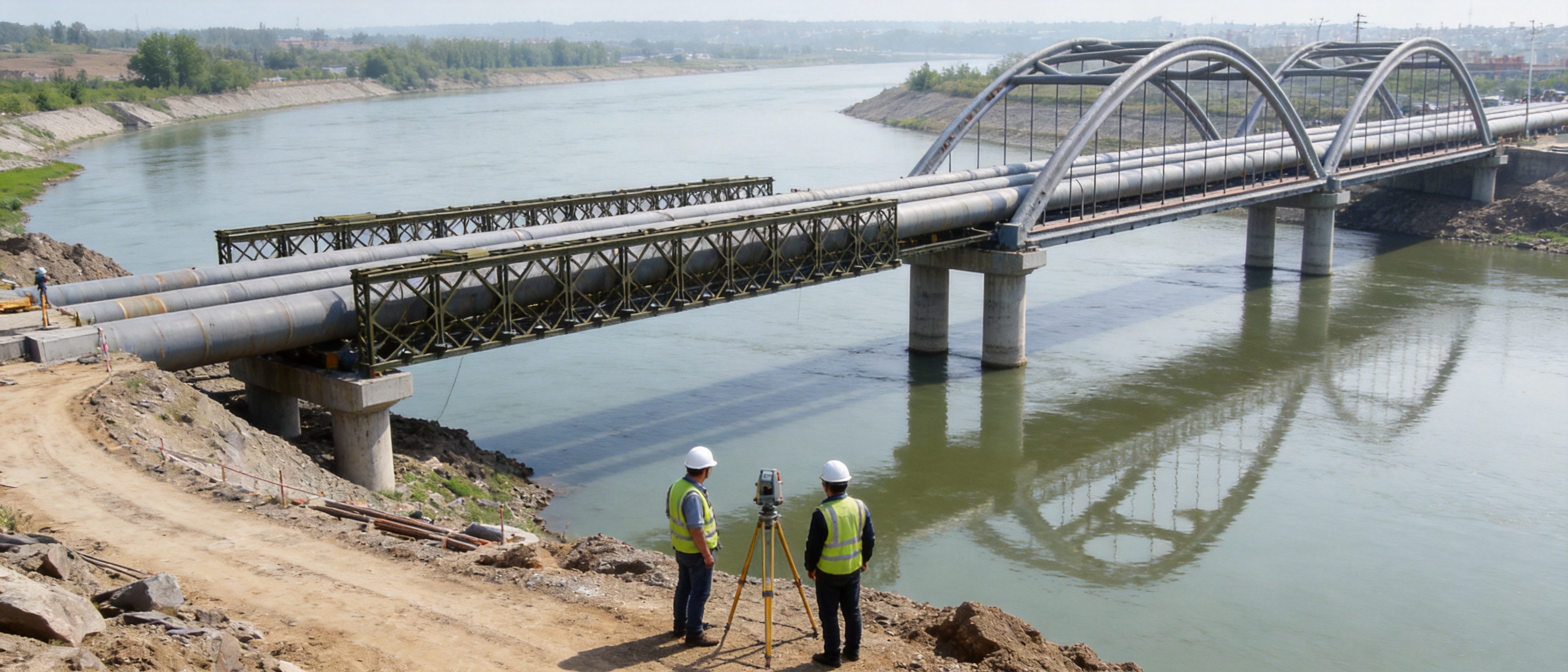
An elevated pipe bridge can reduce these difficulties by creating a visible and accessible crossing. The pipeline route can pass above a river or channel while maintaining water flow and navigation clearance below. In steep terrain, a bridge structure can reduce the need for extensive excavation and retaining works. In industrial parks, an organized pipe bridge can provide a dedicated utility corridor without consuming large amounts of underground space.
The approach is also valuable when construction speed is a priority. Factory fabrication allows many activities to proceed before the foundation or site preparation work is complete. Once the components arrive, assembly can progress in a planned sequence, reducing the amount of welding, cutting, and fitting required in the field.
Major Advantages of the CB100 Modular Pipe Bridge
1. Efficient Crossing of Rivers and Difficult Terrain
The CB100 Modular Pipe Bridge is designed to address crossing conditions that can be difficult for conventional pipeline installation. Rivers with severe bank erosion, frequent navigation, strong seasonal flow, or changing water levels may present substantial risks to underground or underwater construction. A pipe bridge places the pipeline above the waterway and allows the crossing structure to be designed around the required navigation and flood-control clearances.
In canyon areas and steep valleys, an elevated bridge can reduce the need to follow the natural ground profile. Instead of excavating a deep trench or constructing a long underground route, the pipeline can use a direct supported span. This can shorten the route and simplify access for construction and future maintenance.
Each project still requires a detailed structural and geotechnical assessment. However, the modular bridge concept gives designers an additional option when traditional methods are limited by water, terrain, or environmental constraints.
2. Reduced Riverbed and Environmental Disturbance
Underwater and riverbed construction can affect sediment movement, aquatic habitats, water quality, and local navigation. It may also require temporary cofferdams, diversion channels, heavy equipment access, or extended work inside the watercourse. These activities can increase both construction costs and environmental management requirements.
An elevated pipe bridge can reduce the need for direct intervention in the riverbed. With appropriately positioned supports and carefully planned construction access, much of the work can be completed from the riverbanks or from designated installation areas. This does not eliminate all environmental considerations, but it can substantially reduce the amount of work performed in or immediately below the waterway.
For projects located near environmentally sensitive areas, the modular construction approach can also help shorten the duration of intensive site activity. Less time spent on site can reduce noise, traffic, dust, temporary access requirements, and disruption to local communities.
3. Better Use of Limited Space
Land and underground corridors are increasingly valuable in cities, industrial parks, ports, utility zones, and transportation hubs. Conventional pipeline routes may compete with roads, buildings, subway systems, drainage networks, underground cables, foundations, and other utility systems.
The CB100 pipe bridge uses vertical and elevated space to organize pipeline infrastructure. Several pipelines can potentially be arranged in a structured configuration, subject to engineering review and project requirements. This can reduce the amount of land needed for separate routes and help prevent conflicts with existing underground facilities.
Vertical organization can be particularly useful where the available corridor is narrow but the required pipeline capacity is high. Instead of spreading pipelines across a wide horizontal area, project planners may be able to use a compact bridge arrangement with clearly defined maintenance access.
4. Faster Modular Construction
One of the key differences between a modular pipe bridge and a fully site-built structure is the location of manufacturing activity. Main bridge components can be cut, formed, welded, drilled, inspected, and finished at the factory. This provides a more controlled environment than outdoor fabrication at a remote project location.
Once the components reach the site, workers can focus on foundation preparation, component positioning, bolted or engineered connections, pipeline support installation, and final alignment. The reduction in field fabrication can shorten the installation period and help contractors maintain a more predictable construction schedule.
Factory prefabrication also allows production activities to continue while other project tasks are underway. For example, site investigation, foundation design, access preparation, and component manufacturing can proceed in parallel. This can improve overall project coordination and reduce the idle time often associated with conventional construction.
5. Improved Inspection and Maintenance Access
Pipeline reliability depends not only on initial installation but also on regular inspection, leak detection, corrosion monitoring, valve access, and repair. Buried pipelines can be difficult to inspect without excavation or specialized monitoring systems. An elevated pipeline is more visible and can provide direct access to important sections of the route.
Maintenance personnel can inspect external surfaces, support points, joints, valves, protective coatings, and surrounding structural elements. If a leak occurs, visible signs may be detected more quickly than with a deeply buried pipeline. Early detection can reduce the duration and consequences of a failure.
A pipe bridge can also make future repair operations more organized. Access walkways, platforms, and service areas may be incorporated into the design where required. These features should be evaluated according to safety regulations, pipeline contents, maintenance procedures, and site-specific conditions.
6. Reduced Construction Disruption
Traditional trenching can affect roads, sidewalks, farmland, industrial operations, drainage systems, and local traffic. Long excavation corridors may remain open for extended periods and can require extensive reinstatement after the pipeline has been installed.
A modular pipe bridge can reduce the length and duration of ground disturbance. Since the main steelwork is produced before delivery, the installation area may require less cutting, welding, and material storage. This can be beneficial in operating industrial facilities, urban areas, and locations where construction access is restricted.
Reduced disruption can also improve safety management. A smaller active work zone is generally easier to control, although all lifting, assembly, working-at-height, and pipeline installation activities must still follow an approved safety plan.
7. Flexible Use for Permanent and Temporary Projects
Modular bridge systems are often valued for their adaptability. A pipe bridge can be configured for a long-term installation or used as a temporary crossing during emergency response, disaster recovery, construction staging, or utility restoration.
For emergency projects, the ability to use standardized components can be especially important. Floods, landslides, earthquakes, industrial incidents, and infrastructure failures may require pipelines to be rerouted or restored quickly. A modular system can offer a practical framework for establishing a temporary elevated route while permanent infrastructure is designed or repaired.
For permanent projects, the same modular principles can support future expansion, replacement, or reconfiguration. The feasibility of modification depends on the original engineering design, loading reserves, connection details, foundation capacity, and applicable regulations.
Comparison with Conventional Pipeline Installation Methods
The best installation method depends on the project location, pipeline function, soil conditions, environmental requirements, and lifecycle objectives. The CB100 Modular Pipe Bridge does not replace every possible pipeline method, but it offers important advantages in situations where an elevated route is technically and economically appropriate.
| Evaluation Factor | CB100 Modular Pipe Bridge | Traditional Buried Pipeline | Underwater Pipeline Installation |
|---|---|---|---|
| Construction approach | Factory prefabrication followed by site assembly | Excavation, pipe placement, joining, testing, and backfilling | Specialized underwater or riverbed construction |
| Riverbed disturbance | Generally reduced because the pipeline is elevated | May require trenching through banks or river approaches | Potentially significant depending on the crossing method |
| Inspection access | Visible and accessible structural and pipeline components | Often requires monitoring systems or excavation | May require specialized underwater inspection |
| Urban space usage | Uses elevated and organized vertical space | Requires an underground corridor | Usually limited to water crossings |
| Field fabrication | Reduced through factory production | Varies by pipe material and site conditions | Can require complex field or underwater operations |
| Adaptability | Modular arrangement can support varied layouts | Modification may require excavation and service interruption | Modification can be technically complex |
| Maintenance visibility | Potentially high, subject to access and safety design | Lower direct visibility after backfilling | Limited direct visibility without specialist equipment |
This comparison is intended as a planning guide rather than a substitute for engineering analysis. Pipeline materials, fluid characteristics, pressure, temperature, soil conditions, seismic exposure, corrosion environment, fire risk, and regulatory requirements must all be considered before selecting the final system.
Engineering Considerations for a Modular Pipe Bridge
Structural Loading
The bridge structure must be designed for the combined effects of pipeline weight, operating fluid, insulation, fittings, valves, supports, walkways, handrails, wind, temperature, seismic action, construction loads, and other applicable forces. Empty-pipe and full-pipe conditions may create different loading cases. Maintenance activities and temporary lifting operations should also be considered.
Dynamic effects may be relevant when pipelines carry flowing fluids or when the bridge is exposed to wind-induced vibration. Expansion and contraction can occur as pipeline temperature changes. The bridge, supports, and pipeline attachments must be coordinated so that movement is controlled without imposing damaging forces on the pipeline.
Span and Support Arrangement
The required span is determined by the obstacle being crossed, the location of foundations, navigation requirements, flood levels, terrain, and structural design. A modular arrangement can be adapted to different span configurations, but the final geometry must be verified by qualified engineers.
Support spacing affects structural efficiency, foundation loads, deflection, installation sequence, and pipeline support requirements. In some locations, a longer clear span may reduce work in the river or channel. In other locations, additional supports may reduce member sizes and simplify erection. The best solution depends on the complete site assessment.
Pipeline Support and Alignment
Pipeline supports must maintain alignment and distribute loads without damaging the pipe wall or protective coating. Support details may include saddles, clamps, rollers, guides, anchors, or sliding arrangements, depending on the pipeline material and movement requirements.
Special attention should be given to transitions between the bridge and ground-level pipeline sections. These locations may experience differential movement, settlement, thermal expansion, and changes in direction. Properly designed flexible connections, expansion provisions, and anchorage systems can help maintain system integrity.
Clearance and Safety
The bridge must provide adequate clearance above watercourses, roads, railways, navigation channels, drainage systems, and other assets. Clearance requirements may be established by local authorities, transportation agencies, water management authorities, or project-specific standards.
Where personnel access is required, walkways, guardrails, ladders, platforms, lighting, and fall-protection systems should be considered. The design must also account for safe access during inspection, emergency response, and repair activities.
Corrosion Protection
Steel bridge structures may be exposed to rain, humidity, salt spray, industrial chemicals, condensation, and other corrosive conditions. The protection system should be selected according to the exposure environment and expected service life. Surface preparation, coating application, coating thickness, inspection, and repair procedures are all important.
In marine or coastal locations, corrosion protection may require additional attention. Drainage, sealed details, water traps, inaccessible surfaces, and contact points should be addressed during design and fabrication. Routine inspection can help identify coating damage before corrosion becomes extensive.
Advanced Manufacturing and Quality Control
Factory-Based Production
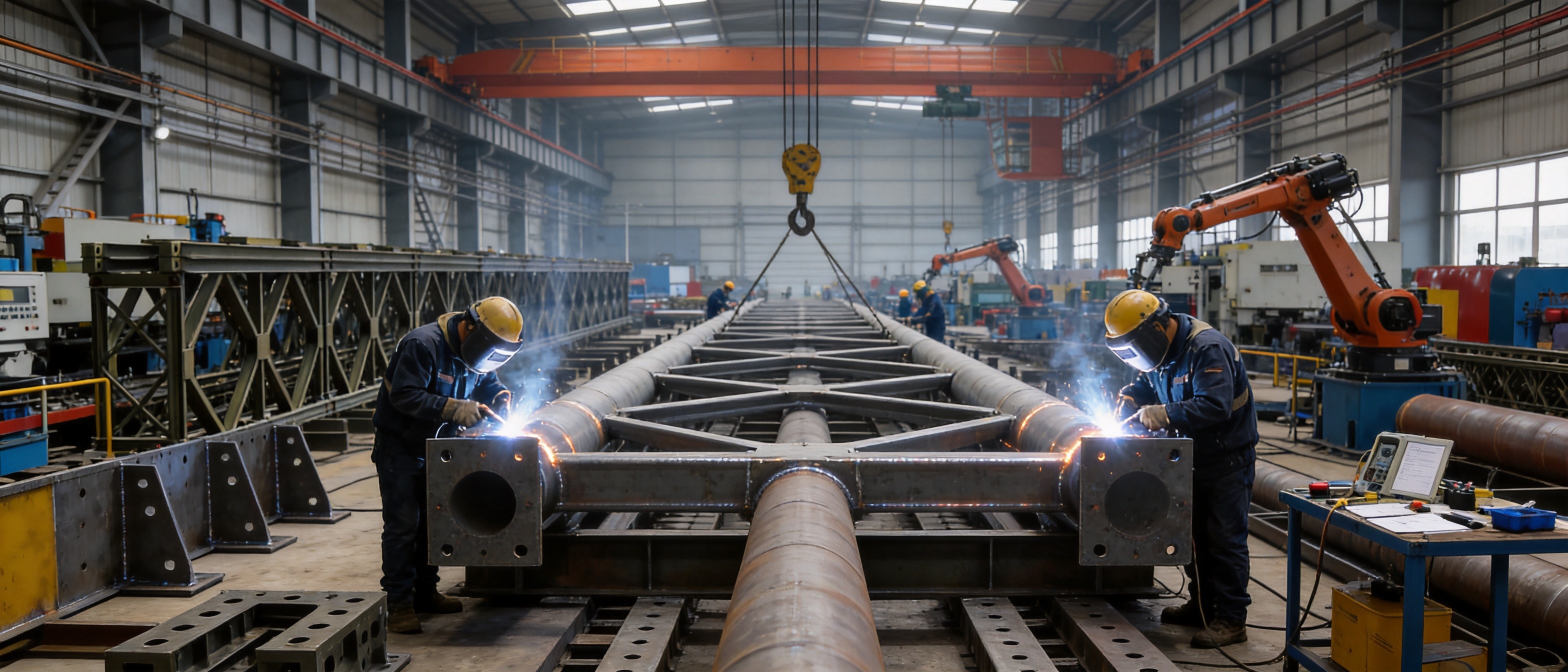
The performance of a modular pipe bridge depends heavily on the accuracy and consistency of its components. Factory production enables controlled material handling, standardized procedures, repeatable welding operations, organized inspection, and more efficient correction of fabrication issues before shipment.
Jiangsu Zhonghai Bridge Equipment Co., Ltd. integrates engineering design, precision manufacturing, quality management, and project support within its production process. This integrated approach helps connect the design intent with the actual fabricated components. It also supports the production of modular bridge members, customized steel parts, and related structural equipment.
Standardized manufacturing workflows can improve interchangeability between components and reduce uncertainty during assembly. When parts are produced according to approved drawings, documented procedures, and controlled tolerances, contractors can spend less time resolving fit-up problems at the project site.
Automated Welding
Welding quality is a critical factor in steel bridge fabrication. Automated and semi-automated welding processes can provide more consistent travel speed, heat input, weld geometry, and production repeatability than uncontrolled manual operations. Automation does not eliminate the need for skilled technicians or inspection; instead, it supports a more stable manufacturing process.
Welded assemblies should be produced in accordance with approved welding procedures and qualified personnel requirements. Depending on the project, inspections may include visual examination, dimensional checks, and nondestructive testing. The inspection scope is determined by the structural category, design code, client specification, and applicable regulations.
Precision Steel Fabrication
Modular structures rely on accurate dimensions and reliable connection interfaces. Cutting, drilling, forming, plate preparation, and assembly must be carefully controlled so that components align during site erection. Precision fabrication is particularly important for bolt holes, connection plates, support brackets, stiffeners, and pipeline attachment points.
Digital drawings, production planning, inspection records, and controlled revision management can help ensure that the fabricated components correspond to the approved design. Dimensional verification before shipment can reduce rework and prevent avoidable delays during installation.
Material Traceability
For infrastructure projects, material identification and documentation are important elements of quality assurance. Steel plates, sections, fasteners, welding consumables, coatings, and other critical materials should be managed according to the project quality plan.
Traceability records can support inspection, certification, maintenance, and future modifications. They also help project stakeholders verify that the supplied materials meet the required specifications and that production activities were conducted under controlled conditions.
Compliance with Engineering Standards
Jiangsu Zhonghai Bridge Equipment Co., Ltd. states that its manufacturing activities support products designed and produced in accordance with ASTM, EN, and national specifications, depending on project requirements. The applicable standard should always be confirmed during project development because different countries and industries may impose specific requirements for structural design, welding, materials, coatings, fasteners, lifting, and commissioning.
Compliance is not limited to selecting a standard on a drawing. It also involves design calculations, material certificates, qualified procedures, inspection records, dimensional verification, coating documentation, and installation controls. A complete quality system helps ensure that these elements are coordinated throughout the project lifecycle.
From Design to Installation
Step 1: Site Investigation
The process begins with a detailed understanding of the site. Important information includes river width, bank condition, flood level, navigation requirements, existing utilities, soil characteristics, access routes, environmental restrictions, wind conditions, seismic conditions, and available space for lifting and assembly.
For an industrial or urban project, the investigation should also identify existing pipelines, electrical systems, roadways, railways, buildings, cranes, and emergency access routes. Early identification of conflicts can improve the bridge layout and reduce later design changes.
Step 2: Pipeline and Structural Coordination
The pipeline design and bridge design must be developed together. Information about pipe diameter, material, operating pressure, fluid density, temperature, insulation, valves, fittings, expansion, and maintenance requirements affects the bridge structure.
Similarly, the bridge span, support locations, deflection limits, access arrangements, and connection details affect the pipeline. Close coordination between civil, structural, mechanical, process, and construction teams is essential.
Step 3: Engineering Design
Qualified engineers prepare the structural calculations, general arrangement drawings, component details, connection designs, support details, foundation requirements, erection plans, and inspection criteria. The design should address both completed-service conditions and temporary construction stages.
Temporary stages may include transportation, lifting, partial assembly, launching, temporary bracing, and connection work. A structure that is safe after completion may require additional controls during erection. Therefore, the installation method should be considered early rather than treated as a separate activity.
Step 4: Factory Fabrication
After design approval, the components are manufactured according to the production plan. Activities may include material preparation, cutting, drilling, forming, subassembly, welding, surface preparation, coating, dimensional inspection, marking, and packing.
Factory production allows the manufacturer to organize work in a logical sequence and inspect assemblies before they are shipped. Components can be labeled according to erection drawings, helping site personnel identify the correct parts during installation.
Step 5: Transport and Site Preparation
Transportation planning should consider component dimensions, weight, road restrictions, lifting equipment, storage areas, and delivery sequencing. On site, the contractor prepares foundations, access routes, lifting areas, temporary supports, and safety zones.
Because modular bridge projects may involve large steel components, the logistics plan should be coordinated with local authorities and site operators. A carefully sequenced delivery plan can prevent congestion and reduce the time components remain exposed to weather or site damage.
Step 6: Assembly and Erection
Site assembly may use cranes, lifting frames, temporary supports, or other approved erection equipment. Workers install the modular members according to the erection sequence, complete structural connections, verify alignment, and install pipeline supports and access systems.
Bolted connections, welded field joints, or other connection methods must follow the approved design and quality procedures. Inspection should take place progressively rather than only at the end of the erection process.
Step 7: Pipeline Installation and Commissioning
Once the bridge structure and pipeline supports are ready, the pipeline sections can be positioned, joined, aligned, tested, and connected to the broader network. The commissioning process may include pressure testing, leak testing, cleaning, flushing, coating repair, insulation checks, valve verification, and documentation.
The bridge itself should also receive a completion inspection. This may include checking structural connections, alignment, coating condition, access systems, drainage, protective barriers, and signs or markings. All test and inspection records should be retained as part of the project handover documentation.
Advantages for Different Applications
Water Supply and Water Management
Water pipelines frequently need to cross rivers, drainage channels, reservoirs, and uneven terrain. A modular pipe bridge can provide a direct and inspectable route while reducing the need for underwater construction. It can be used for municipal water supply, irrigation, industrial water, flood-control systems, and temporary water transfer.
In disaster response, an elevated pipeline crossing may help restore water service when roads, underground utilities, or existing bridges have been damaged. The modular arrangement can support rapid deployment when compatible components and equipment are available.
Industrial Parks and Process Facilities
Industrial facilities often contain multiple process pipelines, utility lines, cooling systems, firewater networks, and service connections. A pipe bridge can organize these systems above ground and provide a defined corridor for future inspection and maintenance.
Where underground corridors are crowded, elevated pipe bridges may reduce conflicts with foundations, drainage, electrical systems, and transportation routes. The design must account for fire safety, hazardous materials, thermal exposure, access control, and the specific requirements of the industrial process.
Transportation and Infrastructure Corridors
Road, rail, port, and airport projects may require pipelines to cross active transportation corridors without interrupting operations. A modular bridge can be assembled with carefully planned work windows and can provide the required clearance above traffic or rail routes.
Construction planning is particularly important in these areas. Erection methods, lifting times, temporary closures, impact protection, and communication with transportation authorities must be incorporated into the project execution plan.
Emergency and Temporary Utility Routes
Floods, storms, landslides, earthquakes, and industrial failures can damage existing pipelines and access roads. A modular pipe bridge can provide a temporary route for water, drainage, or other utilities while permanent works are being designed and constructed.
Its usefulness in emergency conditions comes from the combination of standardized components, rapid assembly potential, and reduced dependence on extensive excavation. The actual deployment speed depends on component availability, site access, engineering approval, foundation conditions, and local safety requirements.
Lifecycle Cost and Operational Value
The initial purchase price is only one part of the economic evaluation of a pipeline crossing. Project owners should also consider construction duration, traffic disruption, environmental mitigation, inspection, repair, service interruptions, and future modification requirements.
A modular pipe bridge can create lifecycle value through several mechanisms. Factory fabrication may reduce field labor and shorten the active construction period. Elevated access may reduce the cost of locating leaks and inspecting support conditions. Organized pipeline routing may simplify future expansion or replacement. Reduced excavation can also decrease restoration costs in roads, industrial yards, and developed areas.
Lifecycle performance depends on proper engineering and maintenance. Corrosion protection must be inspected, drainage must remain effective, structural connections must be monitored, and pipeline supports must be checked for wear or movement. A well-designed bridge is not maintenance-free, but it can make maintenance more visible, planned, and manageable.
Why Manufacturing Capability Matters
The quality of a modular bridge is strongly influenced by the manufacturer’s ability to control the entire production chain. A supplier must understand structural design, steel processing, welding, dimensional control, coating, logistics, field assembly, and project documentation.
Jiangsu Zhonghai Bridge Equipment Co., Ltd. combines engineering design, manufacturing, quality management, and technical support. Its production focus includes modular steel bridges, Bailey bridge systems, customized steel components, bridge erection equipment, automated welding, and precision steel fabrication.
This breadth of capability is valuable because pipe bridge projects often require more than a standard catalog product. The structure may need customized pipeline supports, access platforms, special connection details, adapted spans, unusual clearances, or coordination with existing infrastructure. A manufacturer with engineering and fabrication experience can help convert project requirements into producible and installable components.
The company’s industrial base in Zhenjiang, Jiangsu, provides access to established transportation and manufacturing networks. Its experience in domestic and international infrastructure projects supports the coordination required for export packaging, technical documentation, delivery scheduling, and project-specific quality requirements.
Reported project experience includes coastal engineering in the Maldives, temporary access bridges for the Shenzhen–Zhongshan Corridor, structural components for the Hangzhou Expo Center, multi-span Bailey bridges for the Lalin Railway, and flood-response and emergency bridge deployments. These types of projects reflect the importance of reliable steel fabrication, transport planning, and field support in varied operating environments.
Selection Guide for Project Owners and Contractors
Before selecting a modular pipe bridge, project stakeholders should prepare a complete technical brief. The brief should identify the crossing location, required span, pipeline quantity, pipe dimensions, operating conditions, access needs, environmental conditions, construction schedule, applicable standards, and expected service life.
| Information Category | Recommended Project Data |
|---|---|
| Site conditions | Terrain, river or channel dimensions, bank stability, soil information, flood levels, wind, seismic exposure, and access restrictions |
| Pipeline data | Diameter, material, empty and operating weight, pressure, temperature, insulation, fluid characteristics, fittings, and expansion requirements |
| Bridge requirements | Clear span, support locations, elevation, clearance, walkway needs, maintenance access, and future expansion requirements |
| Construction planning | Delivery route, lifting equipment, assembly area, erection sequence, temporary works, work windows, and safety controls |
| Quality requirements | Applicable design standards, material certification, welding procedures, inspection scope, coating system, testing, and documentation |
| Commercial requirements | Delivery schedule, packaging, installation support, warranty expectations, spare components, and lifecycle service |
Providing accurate information at the beginning of the project helps the manufacturer develop a practical solution. It also reduces the risk of late changes caused by incomplete site data or unclear pipeline requirements.
Maintenance Recommendations
A modular pipe bridge should be included in a planned inspection program. Visual inspections can identify coating damage, corrosion, loose or damaged connections, deformation, drainage problems, settlement, damaged handrails, and changes in pipeline support conditions.
Inspection frequency should reflect the environment and operational risk. Bridges located near saltwater, industrial emissions, heavy traffic, flood zones, or severe weather may require more frequent review. Particular attention should be paid to connection areas, water traps, support interfaces, pipe clamps, expansion devices, and locations where dissimilar materials meet.
Maintenance records should document inspection dates, observed conditions, photographs, repair actions, coating work, testing, and any changes to the pipeline system. A clear history supports better decision-making and helps identify recurring problems before they become major failures.
When repair or modification is required, the work should be reviewed by qualified technical personnel. Adding a pipeline, walkway, cable tray, valve, or other attachment may change the structural loading and should not be performed without engineering verification.
Frequently Asked Questions
What is the primary purpose of the CB100 Modular Pipe Bridge?
The primary purpose is to provide an elevated steel route for pipelines across rivers, channels, valleys, roads, industrial areas, and other obstacles. It is intended to simplify construction, improve access for inspection, and reduce dependence on difficult underground or underwater installation methods.
Can the bridge carry more than one pipeline?
The modular pipe bridge can be designed to support multiple pipelines where the structural capacity, support arrangement, clearance, maintenance access, and safety requirements permit. The final number and layout of pipelines must be determined through project-specific engineering.
Is the CB100 system suitable for permanent infrastructure?
It can be considered for permanent infrastructure when the structure, foundations, pipeline supports, corrosion protection, and maintenance arrangements are designed for the required service conditions. It can also be used in temporary or emergency applications where a modular elevated route is needed.
It may be suitable for navigable rivers if the bridge provides the required vertical and horizontal clearance and satisfies the requirements of the relevant waterway authorities. Navigation, flood levels, vessel dimensions, construction restrictions, and support placement must be assessed during design.
Does a pipe bridge eliminate the need for foundations?
No. The bridge transfers loads to supports, abutments, piers, or other foundation systems. Foundation type and arrangement depend on the soil, span, water conditions, structural loads, and site geometry.
How does modular construction reduce project time?
Modular construction moves much of the cutting, welding, drilling, assembly, and inspection work into the factory. Site activities can then focus on foundations, transport, lifting, connections, pipeline supports, and commissioning. This can reduce field labor and allow manufacturing and site preparation to proceed in parallel.
Is the bridge suitable for areas with limited land?
Yes, one of its important advantages is the ability to use elevated and organized vertical space. This can be valuable in city centers, industrial parks, utility corridors, and areas where underground space is already occupied by subway systems, drainage networks, cables, or other facilities.
How is pipeline maintenance performed on an elevated bridge?
Maintenance may include visual inspection of the pipeline and bridge, coating checks, support inspection, valve access, leak detection, corrosion monitoring, and repair. Walkways, ladders, platforms, and other access features can be incorporated where required by the project.
What information is needed for a quotation or preliminary design?
Important information includes the location, required span, pipeline diameter and weight, operating conditions, number of pipelines, required clearance, support locations, environmental exposure, applicable standards, construction schedule, and whether installation support is required.
What manufacturing standards can be supported?
Projects may be developed according to ASTM, EN, national specifications, or other applicable standards. The correct standard depends on the client’s location, project type, design authority, and regulatory requirements. It should be confirmed before engineering and procurement begin.
Can the structure be customized?
Modular systems provide standardized components, but the overall arrangement and supporting details can be adapted to project requirements. Customization may include span configuration, pipeline supports, walkways, handrails, access systems, coatings, connection details, and other engineered elements.
Conclusion
The CB100 Modular Pipe Bridge offers a practical alternative for pipeline crossings where conventional underground or underwater installation creates excessive technical, environmental, spatial, or maintenance challenges. Its elevated configuration can help preserve river channels, maintain navigation and flood-control functions, reduce interference with underground infrastructure, and provide improved visibility for inspection.
The modular construction method is one of its most important advantages. Factory prefabrication, automated welding, precision steel fabrication, controlled quality procedures, and planned site assembly can reduce field work and improve construction consistency. The result is a bridge system that can be adapted to permanent infrastructure, temporary utility routes, emergency response, industrial facilities, and water management projects.
Jiangsu Zhonghai Bridge Equipment Co., Ltd. supports this solution through integrated engineering, manufacturing, quality management, and technical services. Its experience in modular steel bridge systems, Bailey bridge equipment, structural components, automated welding, and international project delivery provides a foundation for developing project-specific pipe bridge solutions.
For owners and contractors, the most effective approach is to evaluate the bridge as a complete lifecycle system rather than as an isolated steel structure. Site conditions, pipeline requirements, structural loading, foundations, erection methods, corrosion protection, maintenance access, and future modifications should all be considered from the beginning. When properly engineered and manufactured, the CB100 Modular Pipe Bridge can help create safer, faster, more accessible, and more efficient pipeline connections.
References
1. American Society of Civil Engineers, structural steel design and bridge engineering guidance.
2. ASTM International, standards for structural steel materials, fasteners, coatings, and fabrication quality.
3. European Committee for Standardization, European standards for steel structures, execution, welding, and corrosion protection.
4. International Organization for Standardization, quality management and welding quality assurance principles.
5. International Association for Bridge and Structural Engineering, guidance on modular bridge design and construction.
6. American Welding Society, recommended practices for structural welding, weld qualification, and inspection.
7. International Pipeline and Offshore Contractors Association, guidance on pipeline construction safety and field execution.
8. Engineering manuals concerning river crossings, hydraulic clearances, environmental protection, and pipeline maintenance.
9. Manufacturer technical information concerning modular steel bridge systems, engineered structural components, automated welding, and precision steel fabrication.
Product: CB100 Modular Pipe Bridge


We respond quickly to all international requests and provide technical support when needed.
Product Category
Bailey Bridge/Modular Bridge Modular Steel Bridge Pedestrian Bridge Modular Pipe Bridge Truss Bridge Steel StructureContact Us

+86-511-84522866
+86-13921582699

zhwm@zjql.com

Building 1,83#, dantu New Town, Yanjiang Road, Dantu District, Zhenjiang, Jiangsu, China
Copyright © Jiangsu Zhonghai Bridge Equipment Co., Ltd. All
Rights
Reserved
China bailey bridge for sale
bailey bridge supplier from china
