
 English
 русский
 Español
 Português


Guo Zhenyi — Customer Support and Installation Coordinator
Galvanized Steel Approach Bridges for Reliable Transport Connections
Content
- 1 1. The Role of an Approach Bridge in Modern Infrastructure
- 2 2. Product Overview
- 3 3. Galvanized Protection for Harsh Outdoor Conditions
- 4 4. Structural and Functional Advantages
- 5 5. Comparison with Conventional Alternatives
- 6 6. Manufacturing Strengths and Engineering Capability
- 7 7. Application in Mozambique
- 8 8. Installation and Project Execution
- 9 9. Maintenance and Service-Life Considerations
- 10 10. Safety, Standards, and Responsible Engineering
- 11 11. International Manufacturing and Project Support
- 12 12. Sustainability and Lifecycle Value
- 13 13. Why This Product Is a Competitive Choice
- 14 14. Frequently Asked Questions
- 14.1 What is the main purpose of a steel approach bridge?
- 14.2 Why is galvanizing important for this bridge?
- 14.3 Can the bridge be used as a temporary structure?
- 14.4 Can it support heavy construction equipment?
- 14.5 Is the bridge suitable for Mozambique’s climate?
- 14.6 How is the bridge transported to the project site?
- 14.7 Does modular construction reduce installation time?
- 14.8 What maintenance does galvanized steel require?
- 14.9 Can the bridge be customized?
- 14.10 What manufacturing capabilities support this product?
- 14.11 Which standards may apply to the bridge?
- 14.12 Can the approach bridge be reused?
- 15 15. Conclusion
- 16 References
- 17 Product: Galvanized Steel Approach Bridge
A steel approach bridge is a critical link between a primary bridge structure and the adjacent roadway, embankment, work platform, or shore. Although it may appear to be a secondary component, its performance directly affects the safety, usability, and service life of the entire crossing. A well-designed approach bridge must carry traffic smoothly, withstand changing environmental conditions, support construction and emergency operations, and connect efficiently with different ground levels and bridge configurations.
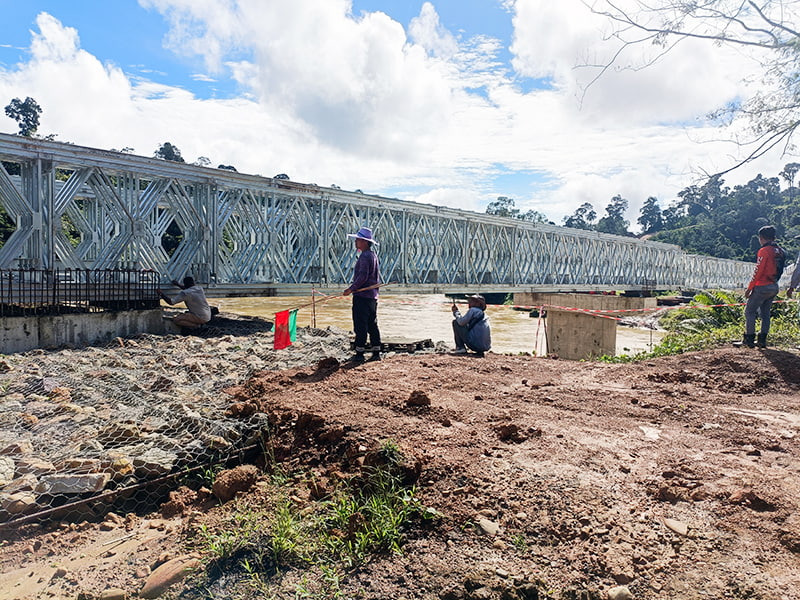
The Galvanized Steel Approach Bridge developed for use in Mozambique is designed to meet these practical requirements. It combines modular steel construction with galvanized anti-corrosion protection, creating a durable solution for areas exposed to high temperatures, frequent rainfall, humidity, and demanding outdoor service conditions. The bridge provides a stable transition from land to the main bridge while supporting transportation, construction logistics, water-land connectivity, and emergency access.
Manufactured by Jiangsu Zhonghai Bridge Equipment Co., Ltd., the system reflects an industrial approach to bridge production. Engineering design, structural fabrication, automated welding, quality management, surface treatment, and delivery support are integrated into a coordinated manufacturing process. This allows the bridge to be produced with consistent dimensions, controlled material quality, and reliable assembly performance.
Compared with conventional untreated steel structures, improvised temporary crossings, and some low-specification modular bridge products, the galvanized approach bridge offers important advantages. These include improved corrosion resistance, repeatable modular assembly, reduced maintenance requirements, adaptable load-bearing capability, efficient transportation, and suitability for both planned infrastructure work and urgent field deployment.
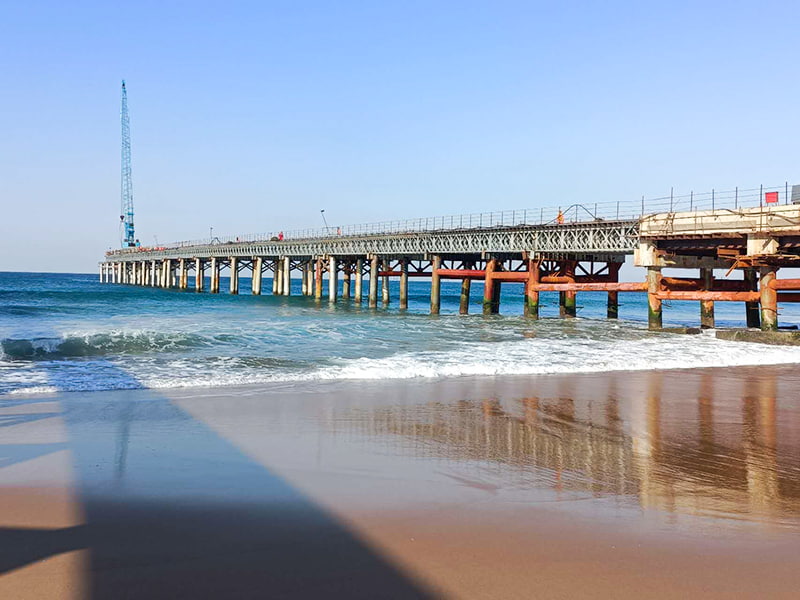
Galvanized Steel Approach Bridge
1. The Role of an Approach Bridge in Modern Infrastructure
An approach bridge forms the transition zone between a bridge deck and the land on either side. This transition must be structurally secure and geometrically smooth. If the connection is poorly designed, vehicles may experience impact loads, uneven movement, or restricted access. In construction projects, an inadequate approach structure can delay the movement of materials, equipment, workers, and emergency vehicles.
In many locations, the approach section must cross soft ground, drainage channels, temporary excavation zones, flood-prone land, or irregular terrain. It may also need to connect a permanent bridge to a temporary road, cofferdam, construction platform, or access embankment. These conditions require more than a simple steel platform. They require a coordinated structural system capable of transferring loads safely while adapting to the surrounding site.
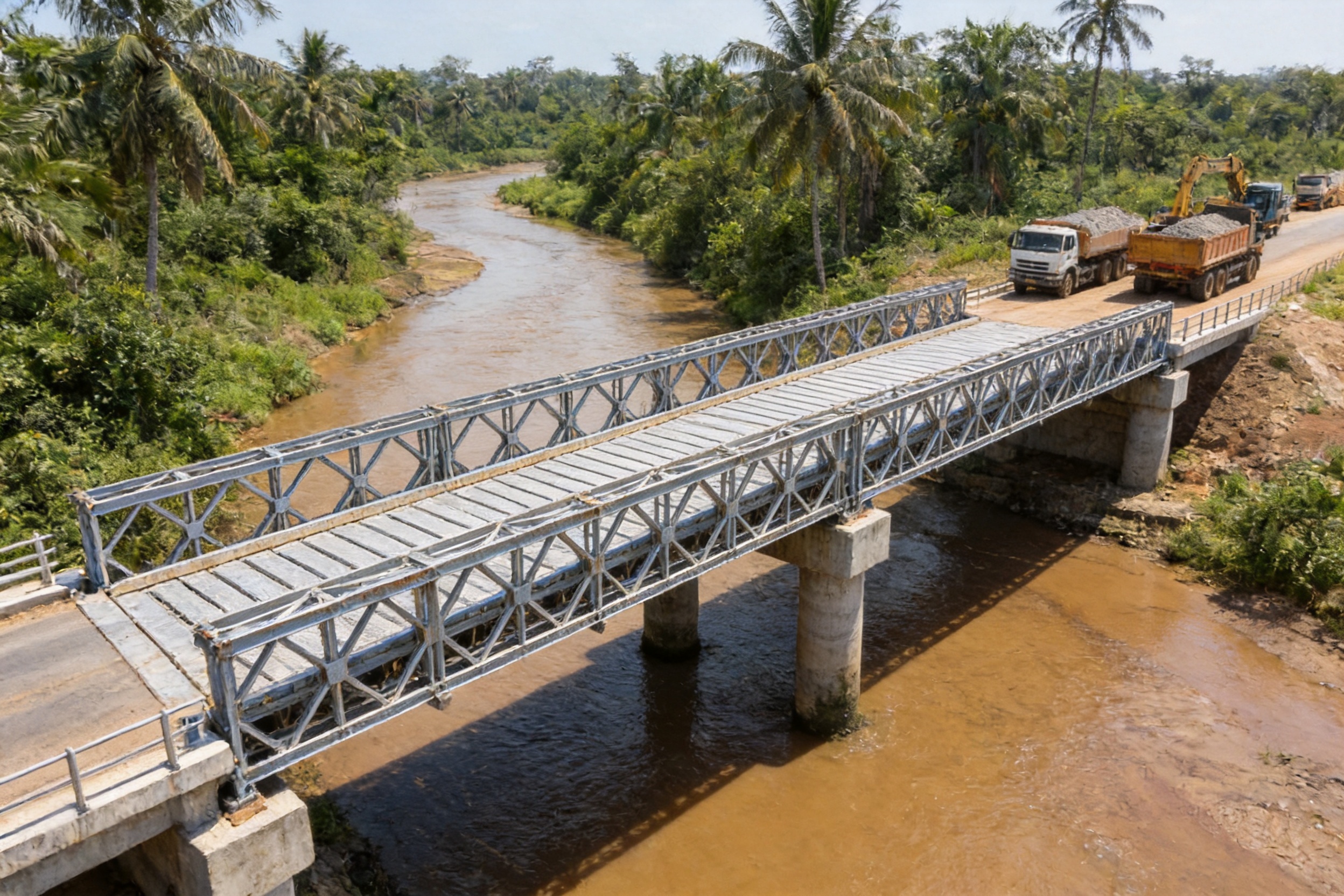
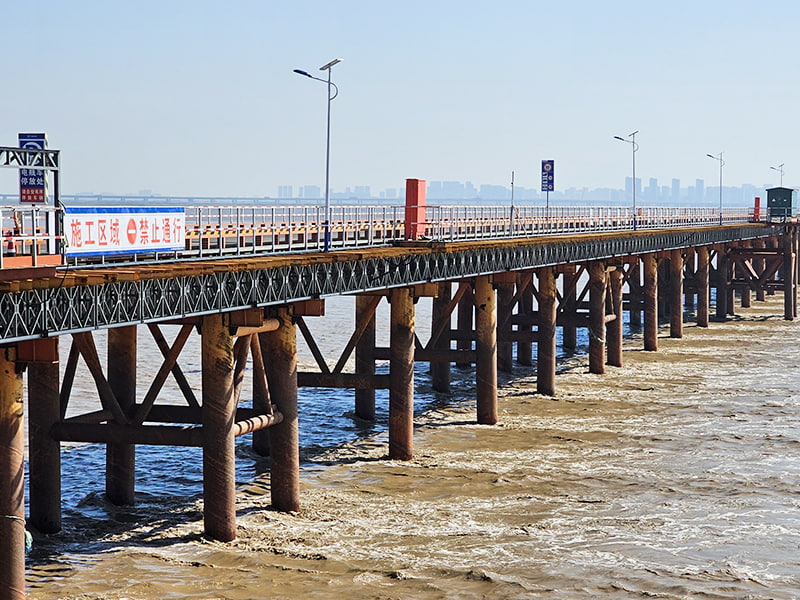
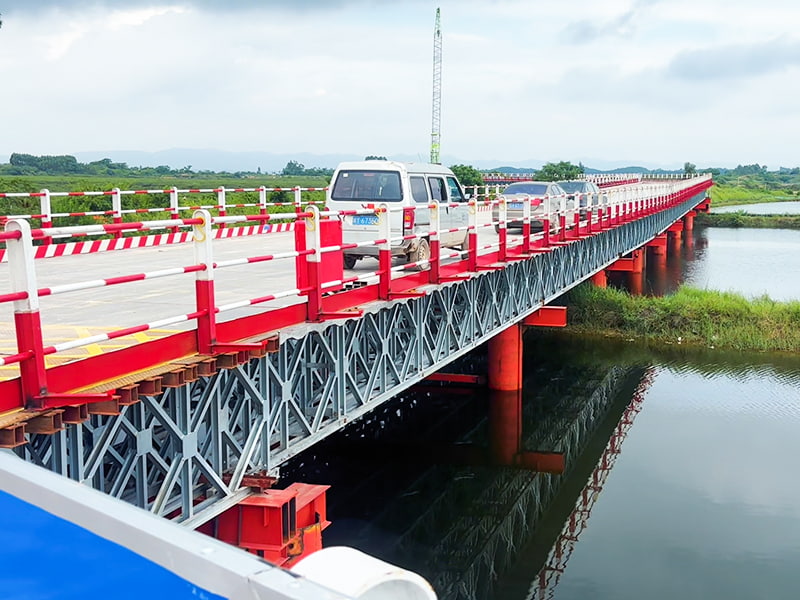
The Mozambique project demonstrates the value of a purpose-built steel approach bridge in a complex outdoor environment. The bridge links the main crossing with the land connection and supports the movement of people, vehicles, construction materials, and equipment. Its role is especially important where water-land traffic must remain dependable during changing weather and construction conditions.
An effective approach bridge should provide the following functions:
• Create a stable and safe connection between the main bridge and the roadway.
• Carry expected traffic and construction loads without excessive deformation.
• Resist moisture, rainwater, humidity, and atmospheric corrosion.
• Allow efficient transportation of components to the project site.
• Support rapid erection with limited specialized equipment.
• Permit inspection, repair, modification, and partial replacement when necessary.
• Maintain reliable service in both ordinary transportation and emergency engineering applications.
These objectives are addressed through the combined use of modular steel design, standardized components, engineered connections, and galvanized surface protection.
2. Product Overview
The Galvanized Steel Approach Bridge is a modular structural system designed for practical installation and dependable service. Its primary function is to establish a strong approach route to a bridge or crossing. Depending on the project configuration, the system can be adapted to different spans, widths, access conditions, traffic requirements, and construction sequences.
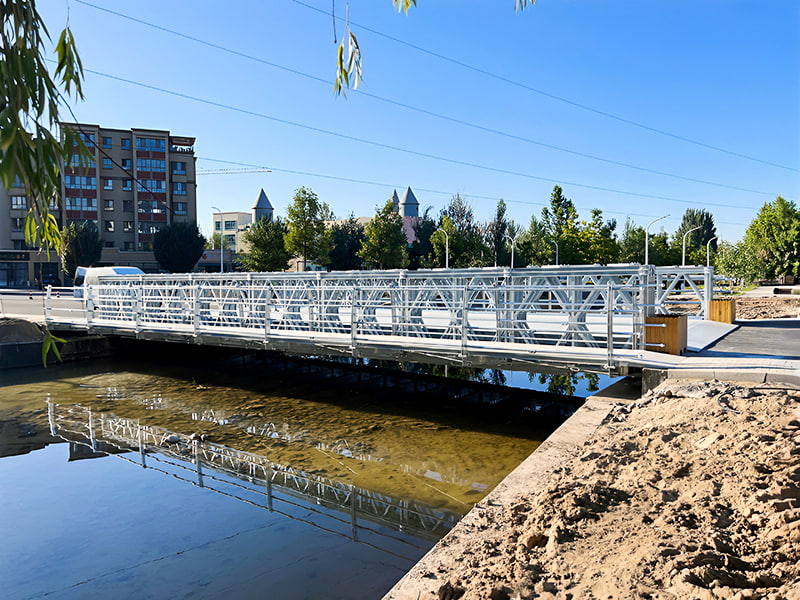
The system is categorized as a steel approach bridge and may be applied in projects involving modular bridges, Bailey-type bridge systems, pedestrian crossings, pipe bridge access, truss bridge connections, and other steel structure applications. Its modular character allows the bridge to be configured from standardized structural elements rather than fabricated as one indivisible unit.
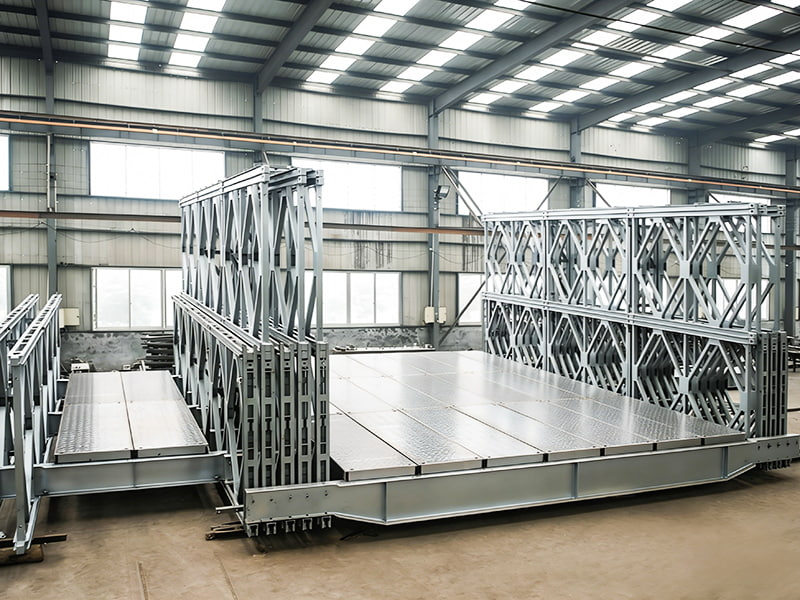
Modular construction offers several operational advantages. Components can be manufactured under controlled factory conditions, checked before shipment, transported in manageable sections, and assembled at the site. If site conditions change, the configuration can often be adjusted by changing the arrangement or quantity of compatible components rather than redesigning the entire structure.
The bridge is suitable for applications such as:
• Approach connections for permanent or temporary bridge projects.
• Construction access over wet ground, drainage zones, and difficult terrain.
• Industrial and infrastructure logistics routes.
• Water conservancy and flood-response projects.
• Emergency transportation links following storms, flooding, or infrastructure damage.
• Temporary access for heavy equipment and engineering vehicles.
• Pedestrian and light-vehicle bridge configurations where project conditions require them.
• Supporting access routes for bridge erection and maintenance work.
3. Galvanized Protection for Harsh Outdoor Conditions
Steel is widely used in bridge engineering because of its high strength, predictable structural behavior, fabrication efficiency, and ability to form modular components. However, unprotected steel is vulnerable to corrosion when exposed to rain, humidity, condensation, airborne contaminants, and repeated wet-dry cycles. Corrosion can reduce section thickness, affect connection performance, increase inspection requirements, and shorten the useful life of the structure.
Galvanizing addresses this challenge by applying a protective zinc coating to the steel surface. The coating creates a physical barrier between the steel and the surrounding environment. It also provides sacrificial protection in areas where the surface may receive minor scratches or local damage. As a result, galvanized steel can offer stronger resistance to ordinary atmospheric corrosion than untreated steel.
This protection is particularly valuable in regions characterized by high temperature and frequent rainfall. Mozambique contains many environments where bridges may be exposed to intense sunlight, seasonal storms, high humidity, standing water, and difficult maintenance access. In such conditions, corrosion protection is not simply a cosmetic consideration. It is a major factor in structural durability and lifecycle cost.
The galvanized finish also contributes to a clean and uniform appearance. The surface is suitable for infrastructure projects where the visual quality of the steelwork matters, including public access routes, municipal connections, industrial facilities, and development projects supported by international agencies.
The principal benefits of galvanized protection include:
• Improved resistance to rainwater and atmospheric moisture.
• Reduced risk of rapid surface rusting.
• Lower frequency of repainting compared with many untreated or conventionally painted systems.
• Better protection during transportation, storage, assembly, and outdoor service.
• Reduced maintenance exposure for workers in remote or difficult locations.
• Longer service potential when combined with appropriate structural design and inspection.
It is important to understand that galvanizing does not eliminate the need for engineering inspection. Drainage, joint detailing, contact surfaces, fasteners, impact zones, and areas exposed to abrasive conditions should still be reviewed during the service life of the bridge. However, a properly applied galvanized coating provides a strong first line of defense and helps reduce the overall burden of corrosion management.
4. Structural and Functional Advantages
4.1 Reliable Load Transfer
An approach bridge must transfer vehicle, equipment, pedestrian, and environmental loads into the supporting structure and foundations. Modular steel members are designed to work together as an integrated system. Main beams or truss elements carry longitudinal forces, transverse members distribute loads across the bridge width, and deck components provide the running surface and load-transfer interface.
When properly engineered, this arrangement provides a balanced path for forces from the deck to the supports. The system can be configured for the expected traffic category and project conditions. Load requirements may include routine vehicle traffic, construction machinery, material delivery, emergency vehicles, or controlled pedestrian use.
4.2 Adaptable Configuration
Different projects require different lengths, widths, elevations, and connection details. A fixed-size bridge may be unsuitable when the site changes or when the crossing must be installed in stages. Modular construction improves adaptability by using standardized elements that can be combined into different arrangements.
Configuration decisions may consider the required clear span, approach gradient, traffic lane width, support spacing, deck height, site access, and available erection equipment. The same general product family can therefore serve more than one application while retaining manufacturing consistency.
4.3 Efficient Transportation
Large bridge structures can be difficult and expensive to transport, especially to remote locations. Modular elements can be packaged, loaded, and shipped more efficiently than a fully assembled bridge. This is valuable for international projects where transportation distance, port handling, road access, and local lifting capacity influence the project schedule.
Manageable components also simplify temporary storage. Elements can be inspected upon arrival and moved to the assembly area as required. This reduces the need for large-scale fabrication facilities at the project site.
4.4 Rapid Installation
Approach bridges are often needed within a limited construction window. Delays may interrupt traffic, prevent access to the main bridge, or restrict the movement of construction resources. A modular system supports a planned erection sequence in which prepared components are assembled progressively.
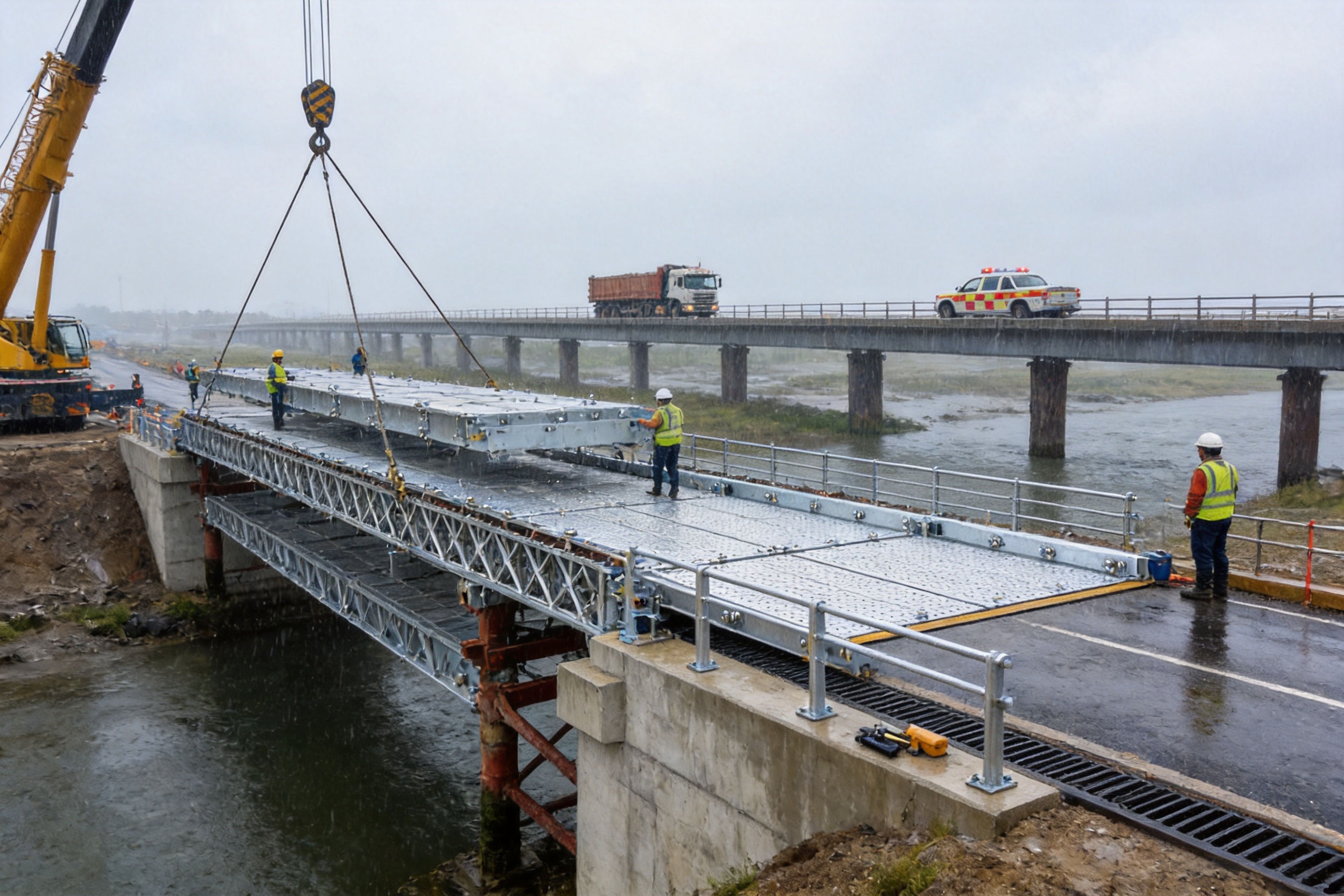
Depending on the design and site conditions, installation may use cranes, lifting equipment, temporary supports, bolted connections, launching methods, or other established bridge erection procedures. The exact method should be determined by qualified engineers based on span, terrain, load requirements, weather, and available equipment.
4.5 Reduced Lifecycle Burden
A bridge that is inexpensive to purchase but difficult to maintain may create higher costs over its service life. Galvanized protection helps reduce the need for frequent surface treatment, while modular components simplify inspection and replacement. Standardized elements also make it easier to identify compatible replacement parts or extend the system for later project phases.
The result is a more predictable ownership profile. Project owners can plan routine inspection and maintenance around the actual environmental exposure rather than responding continually to premature rusting or coating failure.
5. Comparison with Conventional Alternatives
Several types of approach structures may be considered for a bridge project. These include cast-in-place concrete approaches, untreated structural steel, painted steel, timber crossings, temporary access platforms, and low-cost prefabricated systems. Each option has a suitable application, but the galvanized modular steel approach bridge provides a useful combination of strength, speed, durability, and adaptability.
| Evaluation Factor | Galvanized Modular Steel Approach Bridge | Untreated Steel Structure | Cast-In-Place Concrete Approach | Temporary Improvised Crossing |
|---|---|---|---|---|
| Corrosion resistance | High atmospheric protection through galvanized coating | Low unless additional protection is applied | Generally good, but reinforcement and cracking require attention | Often inconsistent and dependent on available materials |
| Installation speed | Fast assembly from prefabricated components | Can be fast, but may require additional site treatment | Usually slower because of formwork, curing, and site preparation | Potentially fast, but safety and reliability may be limited |
| Adaptability | High due to modular configuration | Moderate, depending on fabrication method | Low after construction | Low to moderate and often difficult to standardize |
| Transport efficiency | Good because components are shipped separately | Good for modular designs | Dependent on local materials and construction logistics | Varies widely |
| Maintenance demand | Reduced surface-maintenance burden, subject to inspection | High if corrosion protection is inadequate | Focused on cracking, settlement, joints, and drainage | Often high because of irregular materials and exposure |
| Reuse potential | Strong potential for reconfiguration and relocation | Possible if designed for modular use | Limited after installation | Usually limited |
Compared with untreated steel, galvanized steel offers a more durable surface protection strategy. Compared with cast-in-place concrete, modular steel can reduce installation time and provide greater relocation or reconfiguration potential. Compared with improvised crossings, an engineered system provides more predictable load behavior, connection quality, and inspection procedures.
These advantages do not mean that one bridge type is suitable for every situation. Soil conditions, foundation requirements, hydraulic behavior, design loads, local regulations, and project duration must always be considered. The value of the galvanized modular system lies in its balanced performance across many demanding applications.
6. Manufacturing Strengths and Engineering Capability
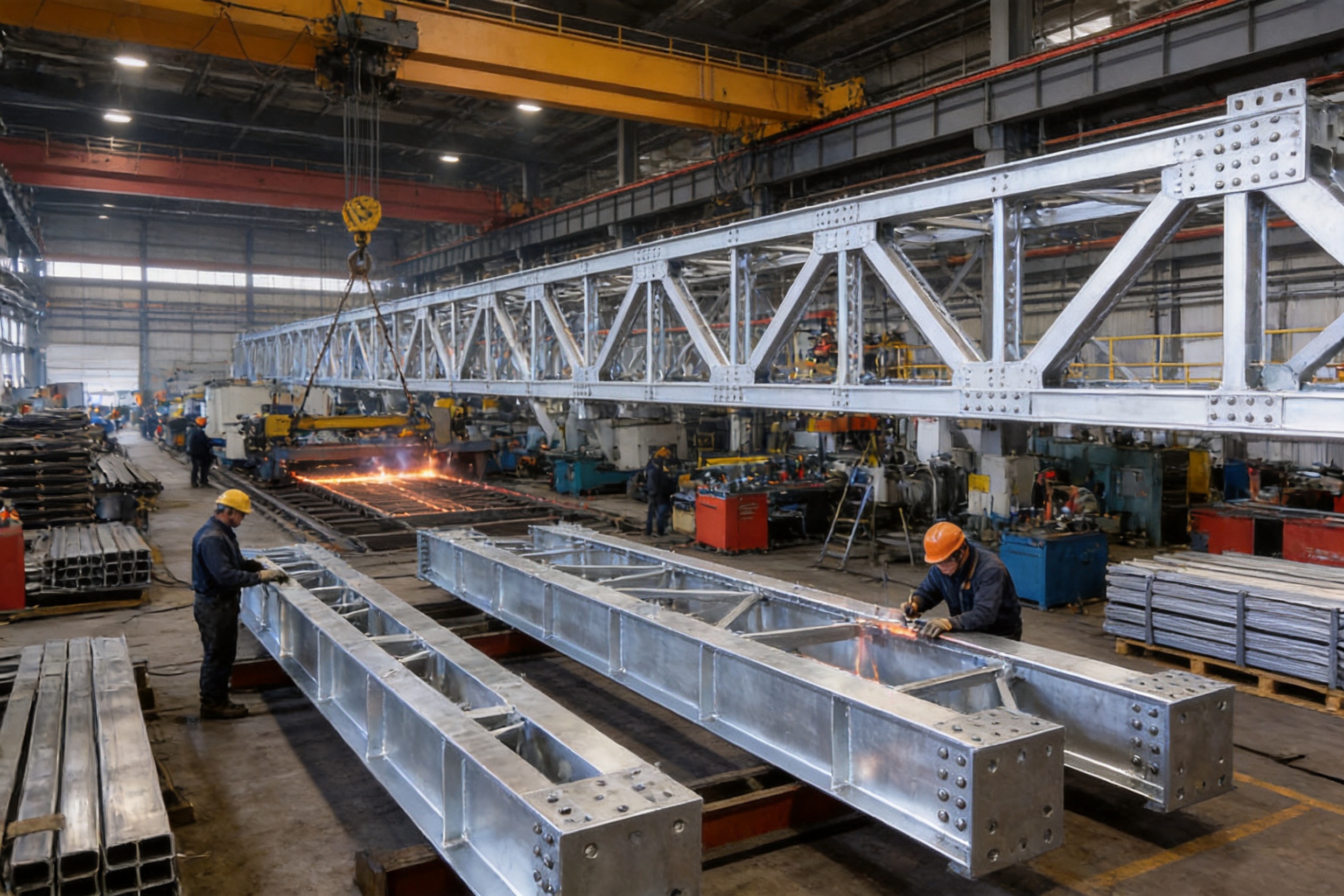
The performance of a modular bridge depends not only on its design but also on the accuracy and consistency of manufacturing. Small deviations in hole positions, member dimensions, weld quality, or coating coverage can affect assembly efficiency and long-term reliability. For this reason, industrial-scale production and standardized workflows are important advantages.
Jiangsu Zhonghai Bridge Equipment Co., Ltd. integrates engineering design, precision manufacturing, quality management, and project support. Its production activities focus on modular steel bridges, Bailey bridge systems, customized steel components, bridge erection equipment, automated welding, and precision steel fabrication.
6.1 Engineering Design and Configuration
The manufacturing process begins with engineering interpretation of the required bridge function. Project requirements may include span length, carriageway width, traffic type, design loading, environmental exposure, connection arrangement, approach geometry, erection sequence, and transportation limitations.
These requirements are translated into structural drawings, component schedules, connection details, fabrication instructions, and inspection criteria. Modular design principles help ensure that the selected components fit together accurately and can be assembled according to a controlled sequence.
Design coordination is especially important for approach bridges because the structure must connect with other systems. These may include the main bridge, road pavement, embankment, abutment, temporary supports, drainage facilities, or construction platforms. A properly coordinated design reduces field modification and helps prevent delays during installation.
6.2 Material Preparation and Traceability
Steel material preparation affects the dimensional stability and mechanical performance of the finished product. Plates, sections, connection components, and stiffeners must be selected and processed according to the approved design requirements. Material identification and production records support quality traceability from incoming material through fabrication and final inspection.
Traceability is valuable for international projects because it allows manufacturing teams and project owners to review the origin, processing route, inspection status, and application of key components. It also supports efficient investigation if a question arises during assembly or service.
6.3 Precision Cutting and Forming
Modern steel fabrication relies on controlled cutting and forming operations to produce consistent parts. Accurate dimensions help maintain alignment during welding and assembly. They also reduce the amount of field adjustment required when components are connected at the project site.
Precision processing is particularly important for modular systems because components may be produced in different batches and later assembled together. Consistency between batches helps ensure interchangeability and reduces the risk of mismatched parts.
6.4 Automated and Controlled Welding
Welding quality is a major factor in steel bridge fabrication. Automated welding and standardized welding procedures can improve repeatability, productivity, and control of weld geometry. Where manual welding is required, qualified personnel and documented procedures remain essential.
Controlled welding helps reduce common fabrication risks such as incomplete fusion, excessive distortion, inconsistent penetration, and dimensional deviation. Welded assemblies can then be inspected according to the applicable project requirements before they move to subsequent processing stages.
6.5 Assembly Verification
Before shipment, modular bridge components may be checked for dimensional accuracy, connection alignment, surface condition, and completeness. Trial assembly or partial fit-up can help verify that critical members and connection points correspond to the approved drawings.
Assembly verification is especially valuable for bridge systems that must be installed rapidly in remote locations. Discovering a mismatch at the factory is significantly more efficient than correcting it after the components have been transported to the project site.
6.6 Galvanizing and Surface Treatment
After fabrication and appropriate surface preparation, steel components receive galvanized anti-corrosion protection. The treatment process must be coordinated with fabrication details, drainage provisions, venting requirements, lifting points, and the geometry of hollow or enclosed sections.
Surface treatment quality affects both appearance and durability. Coating coverage, adhesion, uniformity, handling, and storage practices should be managed carefully. Components must also be protected from unnecessary damage during loading, shipping, and erection.
6.7 Final Quality Management
Quality management continues through final inspection, packaging, documentation, and dispatch. The objective is to ensure that the delivered bridge matches the approved technical requirements and that the site team receives the correct components in an identifiable and usable condition.
A disciplined quality system can include drawing review, material verification, dimensional inspection, welding inspection, coating inspection, component marking, packing lists, and shipment documentation. This systematic approach provides confidence to contractors, owners, consultants, and international procurement teams.
7. Application in Mozambique
The Mozambique Steel Approach Bridge is designed for a setting where environmental exposure and infrastructure demands must be considered together. High temperatures and frequent rainfall can accelerate deterioration of inadequately protected steel. At the same time, road and water transport connections may be essential for communities, construction projects, industrial activity, and emergency response.
The galvanized structure provides a durable connection between the main bridge and the land route. This connection helps maintain traffic continuity and supports the movement of vehicles, workers, tools, construction materials, and engineering equipment. Its function is not limited to normal daily traffic. It can also support temporary construction phases and urgent access requirements.
In water-related environments, approach structures may be affected by splash, runoff, humidity, mud, and changing ground conditions. Proper site planning is therefore necessary. The bridge support arrangement, drainage strategy, deck elevation, and connection to the roadway should be reviewed according to local conditions.
The system can contribute to infrastructure development in several ways:
• It can help connect new bridges with existing road networks.
• It can support access during bridge construction and rehabilitation.
• It can provide a reliable route for construction and maintenance vehicles.
• It can improve continuity between land-based transport and water-crossing infrastructure.
• It can assist emergency logistics following flooding or other disruptive events.
• It can reduce delays caused by the fabrication of a complete bridge structure at the site.
The actual design capacity, configuration, foundation method, and operating restrictions should be confirmed through project-specific engineering. Nevertheless, the product’s galvanized and modular characteristics make it well suited to the environmental and logistical challenges associated with many outdoor infrastructure projects in Mozambique.
8. Installation and Project Execution
Successful bridge installation depends on preparation as much as on the structural components themselves. Before erection begins, the project team should verify the site survey, support locations, ground conditions, access routes, lifting equipment, temporary works, weather conditions, and safety controls.
A typical installation process may include the following stages:
1. Confirm the final alignment, elevation, span, and support arrangement.
2. Prepare foundations, bearings, abutments, temporary supports, or other load-transfer points.
3. Receive, identify, and inspect components at the project site.
4. Organize members according to the erection sequence.
5. Assemble primary structural elements and install required bracing.
6. Complete deck, handrail, connection, and approach interface work.
7. Check geometry, fastener installation, coating condition, and connection security.
8. Conduct engineering inspection before opening the bridge to traffic.
9. Establish an inspection and maintenance schedule for the operating period.
The exact sequence may change according to span length, terrain, equipment, traffic control, water conditions, and local construction rules. In all cases, erection should be supervised by competent personnel familiar with modular steel bridge construction.
One advantage of factory-produced modular components is that much of the quality control occurs before the bridge reaches the site. This does not remove the need for field inspection, but it reduces the amount of cutting, drilling, welding, and corrective fabrication required under variable outdoor conditions.
9. Maintenance and Service-Life Considerations
Galvanized steel bridges generally require less surface maintenance than untreated steel, but a planned inspection program remains necessary. Maintenance teams should examine the deck, structural members, connections, supports, drainage paths, impact-prone areas, and locations where soil, debris, or standing water may accumulate.
Inspection frequency should reflect the environment, traffic intensity, bridge importance, and project requirements. Bridges in humid, coastal, industrial, or flood-prone areas may require more frequent observation than bridges in dry inland conditions.
Routine maintenance may include:
• Removing mud, debris, vegetation, and accumulated materials.
• Checking drainage and ensuring that water does not remain against structural members.
• Inspecting bolts, pins, plates, bracing, and deck connections.
• Monitoring settlement, alignment, vibration, or unusual deformation.
• Reviewing areas affected by vehicle impact or construction equipment.
• Recording coating damage and evaluating whether local repair is required.
• Confirming that approach surfaces remain level, stable, and properly connected.
• Checking that load restrictions and operating instructions remain visible and understood.
Maintenance requirements are also influenced by the way the bridge is used. Overloading, uncontrolled vehicle speed, poor drainage, unauthorized modification, and collision can reduce service performance even when the original structure was properly manufactured.
When a galvanized surface is damaged, repair methods should be selected according to the extent and location of the damage. Small areas may be treated using compatible zinc-rich repair systems, while more significant damage should be evaluated by qualified technical personnel. Any repair should preserve the structural function of the member and avoid creating new water traps or stress concentrations.
10. Safety, Standards, and Responsible Engineering
A modular bridge should be designed, manufactured, erected, and operated according to applicable engineering standards and project specifications. The manufacturer’s production capabilities include work aligned with ASTM, EN, and national specifications, but the governing standard for a specific project must be confirmed by the owner, designer, and local authorities.
Safety considerations include structural capacity, stability, fatigue, wind effects, vehicle impact, pedestrian protection, deck slip resistance, drainage, lifting operations, temporary works, and emergency access. Approach bridges may experience changing load conditions during construction, so the design should distinguish between construction-stage loads and final operating loads.
Clear communication is essential when the bridge is used by different categories of traffic. Information may be required regarding maximum vehicle weight, lane width, speed, clearance, one-way operation, pedestrian separation, or temporary restrictions. These controls help protect the structure and reduce the risk of unsafe use.
Responsible engineering also means recognizing site-specific conditions. Soil bearing capacity, scour, flooding, settlement, seismic exposure, wind, corrosion environment, and access limitations may affect the final design. A factory-produced bridge component cannot compensate for inadequate foundations or unsuitable site preparation. The complete crossing must therefore be treated as an integrated engineering system.
11. International Manufacturing and Project Support
International bridge projects require more than the production of steel components. They require coordination between engineering teams, procurement departments, logistics providers, contractors, site supervisors, and local authorities. A manufacturer with experience in international delivery can help reduce communication gaps and improve project coordination.
Jiangsu Zhonghai Bridge Equipment Co., Ltd. is based in Zhenjiang, Jiangsu Province, a major industrial and transportation region in China. The company serves transportation, water conservancy, military logistics, disaster relief, and international development applications. Its experience includes coastal engineering in the Maldives, temporary access bridges for the Shenzhen–Zhongshan Corridor, structural components for the Hangzhou Expo Center, multi-span Bailey bridges for the Lalin Railway, and emergency bridge deployments in different regions.
These project experiences demonstrate the importance of manufacturing flexibility. A bridge supplier may need to support a permanent infrastructure project in one case and an urgent temporary connection in another. The required approach, documentation, packaging, erection support, and delivery schedule can vary significantly.
For buyers, useful supplier capabilities include:
• Engineering review before quotation and production.
• Clear component lists and technical documentation.
• Consistent manufacturing and inspection procedures.
• Experience with modular bridge systems and steel structures.
• Support for customized dimensions and project-specific requirements.
• International packaging and transportation coordination.
• Guidance for erection, inspection, and maintenance.
• Ability to combine standard products with engineered modifications.
A manufacturer that integrates these capabilities can provide more value than a supplier focused only on the sale of individual steel members. The goal is to deliver a usable bridge solution that performs as intended from factory production through field installation and service.
12. Sustainability and Lifecycle Value
Steel is a recyclable construction material, and modular bridge systems can offer reuse advantages when they are designed for disassembly and reconfiguration. Components may be relocated, repaired, or incorporated into another compatible arrangement at the end of a project phase. This can reduce material waste compared with structures that are difficult to dismantle or adapt.
Galvanizing also supports lifecycle value by reducing the frequency of repainting and corrosion-related repairs. Lower maintenance demand can reduce material consumption, labor requirements, traffic interruptions, and the need to transport maintenance equipment to remote sites.
Modular construction may further reduce site disturbance because much of the fabrication occurs in a controlled factory environment. Shorter installation periods can limit disruption to local traffic, waterways, communities, and nearby activities. These benefits should be evaluated alongside foundation works, transport impacts, and the complete project lifecycle.
Sustainable performance depends on responsible design and use. Proper drainage, efficient material selection, accurate fabrication, controlled erection, regular inspection, and planned reuse all contribute to a better environmental and economic result.
13. Why This Product Is a Competitive Choice
The Galvanized Steel Approach Bridge stands out because it combines several performance characteristics in one coordinated system. Corrosion resistance alone is not enough, and modularity alone does not guarantee reliability. The product’s competitive value comes from the combination of galvanized protection, engineered steel construction, standardized manufacturing, adaptability, and international project support.
Against low-cost untreated structures, it offers stronger protection against ordinary outdoor corrosion and a more predictable maintenance profile. Against heavily site-fabricated solutions, it offers better dimensional consistency and less dependence on local welding and drilling. Against permanent concrete approaches, it can offer faster deployment, lower site preparation complexity in some applications, and greater potential for relocation or reuse.
Its practical advantages include:
• Durable galvanized protection for humid and rainy environments.
• Modular construction suitable for varied bridge and approach configurations.
• Reliable steel strength for traffic and construction applications.
• Efficient shipping of separated components to international destinations.
• Reduced site fabrication and faster project execution.
• Compatibility with bridge erection and construction support operations.
• Lower surface-maintenance demand than many untreated alternatives.
• Production supported by automated welding and precision fabrication.
• Quality systems aligned with recognized international and national specifications.
• Engineering support for transportation, water conservancy, emergency response, and infrastructure development.
For project owners and contractors, these benefits can translate into reduced schedule risk, improved access reliability, and a more durable connection between the main bridge and the land transportation network.
14. Frequently Asked Questions
What is the main purpose of a steel approach bridge?
A steel approach bridge connects a main bridge with the adjacent roadway, embankment, platform, or land route. It provides a stable transition for vehicles, pedestrians, construction equipment, and emergency traffic.
Why is galvanizing important for this bridge?
Galvanizing applies a protective zinc coating to steel surfaces. The coating helps resist moisture and atmospheric corrosion, which is particularly important in regions with high temperatures, frequent rainfall, humidity, and difficult maintenance access.
Can the bridge be used as a temporary structure?
Yes. Its modular construction makes it suitable for temporary construction access, emergency transportation, bridge erection support, flood-response routes, and other applications where rapid installation or future relocation may be required. The approved design must match the intended temporary load and service conditions.
Can it support heavy construction equipment?
The bridge can be engineered for different traffic and construction loads, but the actual capacity must be confirmed through project-specific design. Vehicle weight, axle arrangement, traffic frequency, span, support conditions, and dynamic effects should all be reviewed before operation.
Is the bridge suitable for Mozambique’s climate?
The galvanized anti-corrosion system is well suited to outdoor environments characterized by high temperatures and frequent rainfall. However, local soil, flooding, drainage, foundation, and operating conditions must still be evaluated by the project engineering team.
How is the bridge transported to the project site?
Modular components are generally transported separately and organized for efficient loading, storage, and assembly. The final packaging and shipping plan depends on component dimensions, project location, delivery route, port requirements, and available site handling equipment.
Does modular construction reduce installation time?
It can reduce installation time because components are prefabricated, standardized, and prepared before reaching the site. The actual schedule depends on foundation readiness, equipment, weather, traffic management, worker experience, and the selected erection method.
What maintenance does galvanized steel require?
Maintenance normally includes regular inspection, cleaning of debris, checking drainage, examining connections, monitoring alignment and settlement, and evaluating any impact or coating damage. Galvanizing can reduce routine surface treatment, but it does not eliminate structural inspection.
Can the bridge be customized?
Modular bridge systems can often be configured or engineered for different spans, widths, elevations, loads, and connection conditions. Customization should be reviewed during the engineering stage so that modified components remain compatible with manufacturing and erection requirements.
What manufacturing capabilities support this product?
The product is supported by engineering design, precision steel fabrication, automated welding, standardized production workflows, quality management, surface treatment, component inspection, and international delivery coordination.
Which standards may apply to the bridge?
Applicable requirements depend on the project location and contract documents. Manufacturing may be aligned with ASTM, EN, and national specifications, while the final design must follow the standards and regulations approved for the specific project.
Can the approach bridge be reused?
Modular steel components may have strong reuse potential when they are carefully dismantled, inspected, and reconfigured for a new application. Reuse must be based on a technical assessment of member condition, connection integrity, corrosion exposure, and the requirements of the new site.
15. Conclusion
The Galvanized Steel Approach Bridge provides a practical and durable solution for connecting main bridge structures with land-based transportation routes. Its value is especially clear in demanding outdoor environments where high temperatures, frequent rainfall, humidity, construction activity, and limited maintenance access create significant challenges.
By combining galvanized anti-corrosion protection with modular steel engineering, the bridge supports reliable traffic flow, faster installation, efficient transportation, and adaptable project execution. It can serve routine transportation needs while also supporting construction, emergency response, water conservancy, and infrastructure development.
The manufacturing strength behind the product is equally important. Integrated engineering, precision fabrication, automated welding, quality management, surface treatment, and international project support help ensure that the delivered components are consistent, traceable, and ready for efficient assembly.
For owners, contractors, and infrastructure agencies seeking a dependable approach connection, this system offers a balanced alternative to untreated steel, heavily site-fabricated structures, and less adaptable conventional solutions. With appropriate project design, foundation preparation, installation supervision, and scheduled inspection, the galvanized modular approach bridge can provide a safe, efficient, and durable link between bridges and the communities, roads, and worksites they serve.
References
1. American Society for Testing and Materials. Standards and guidance for structural steel materials, fabrication, and corrosion protection.
2. European Committee for Standardization. Structural steelwork execution and design principles for bridge-related applications.
3. International Organization for Standardization. General quality management principles for manufacturing and industrial production.
4. American Association of State Highway and Transportation Officials. Bridge design, loading, inspection, and maintenance guidance.
5. International Zinc Association. Technical information on hot-dip galvanizing and atmospheric corrosion protection.
6. International Federation for Structural Concrete and related infrastructure authorities. Guidance on bridge approach transitions, durability, and lifecycle performance.
7. Jiangsu Zhonghai Bridge Equipment Co., Ltd. Product and manufacturing information for modular steel bridges, Bailey bridge systems, and engineered steel structures.
8. General bridge engineering practice concerning modular erection, temporary works, construction access, drainage, and structural inspection.
Product: Galvanized Steel Approach Bridge


We respond quickly to all international requests and provide technical support when needed.
Product Category
Bailey Bridge/Modular Bridge Modular Steel Bridge Pedestrian Bridge Modular Pipe Bridge Truss Bridge Steel StructureContact Us

+86-511-84522866
+86-13921582699

zhwm@zjql.com

Building 1,83#, dantu New Town, Yanjiang Road, Dantu District, Zhenjiang, Jiangsu, China
Copyright © Jiangsu Zhonghai Bridge Equipment Co., Ltd. All
Rights
Reserved
China bailey bridge for sale
bailey bridge supplier from china
